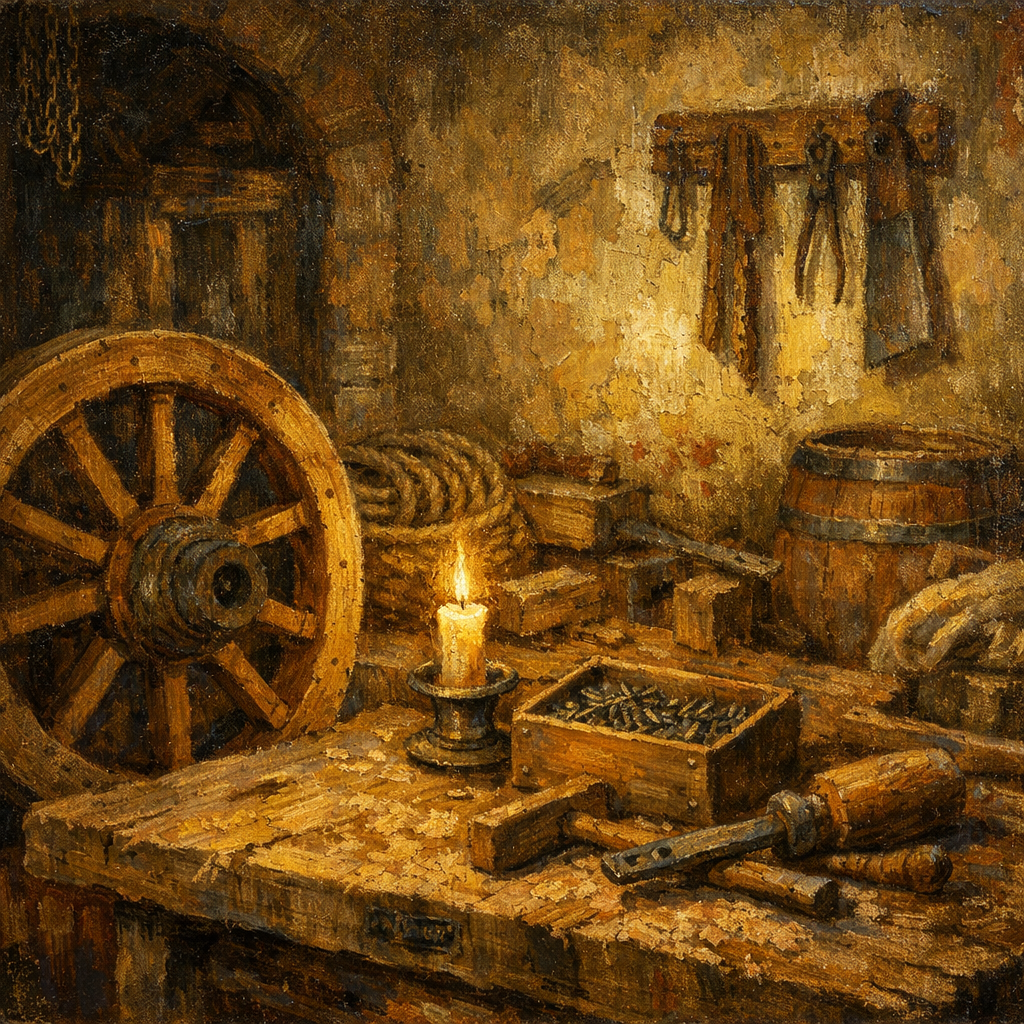
Whispers in the Candlelight
Critique
1. Introduction This oil painting presents a quiet, evocative still life of a traditional workshop, likely that of a wheelwright or carpenter. The scene is illuminated by the soft, flickering light of a single candle, which creates a dramatic interplay of light and shadow. The composition captures the timeless essence of manual labor and the specialized tools that define a craft. 2. Description The foreground is dominated by a sturdy wooden workbench covered with tools, including a mallet, a chisel, and a small wooden box filled with nails or screws. A single lit candle in a metal holder sits near the center, providing the primary light source. To the left, a large wooden wagon wheel leans against the workbench, its spokes radiating outward. In the background, a wooden barrel stands on the right, and various tools such as pliers and a saw hang from a rack on the textured, weathered wall. A coil of rope and other indistinct workshop items are tucked into the shadows. 3. Analysis The composition is carefully balanced, with the large circular form of the wheel on the left countering the solid mass of the barrel on the right. The candle serves as the central focal point, casting a warm, golden glow that highlights the rugged textures of the wood and metal. A palette of earthy browns, ochres, and deep crimsons dominates the piece, creating a sense of warmth and antiquity. The artist employs heavy impasto and visible brushstrokes to emphasize the materiality of the worn surfaces, giving the scene a tangible, lived-in quality. 4. Interpretation and Evaluation This work is a meditative exploration of the tools of a trade and the environment in which they are used. The choice of candlelight suggests a sense of historical continuity and the quiet dedication of a craftsman working into the night. The absence of a human figure allows the objects themselves to tell the story of labor and skill. The artist demonstrates exceptional skill in rendering the subtle variations of light on different surfaces, from the rough wood of the workbench to the smooth curve of the barrel. 5. Conclusion What initially appears to be a simple collection of workshop items reveals itself as a profound tribute to the dignity of craftsmanship. By focusing on the humble tools and the warm illumination of the candle, the painting invites the viewer to reflect on the enduring value of manual work. It is a masterful still life that captures both the physical reality and the spiritual atmosphere of a traditional artisan's space.
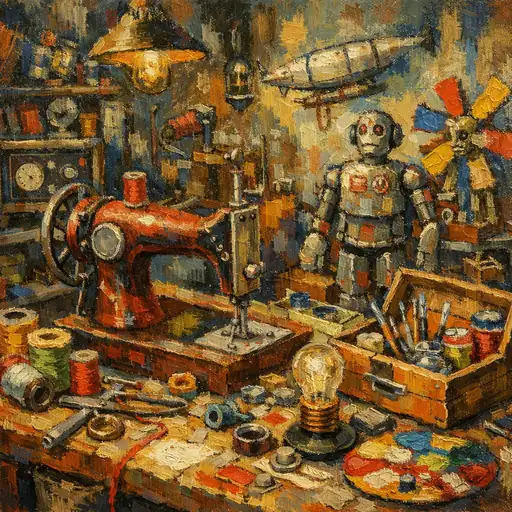 Steampunk Workshop
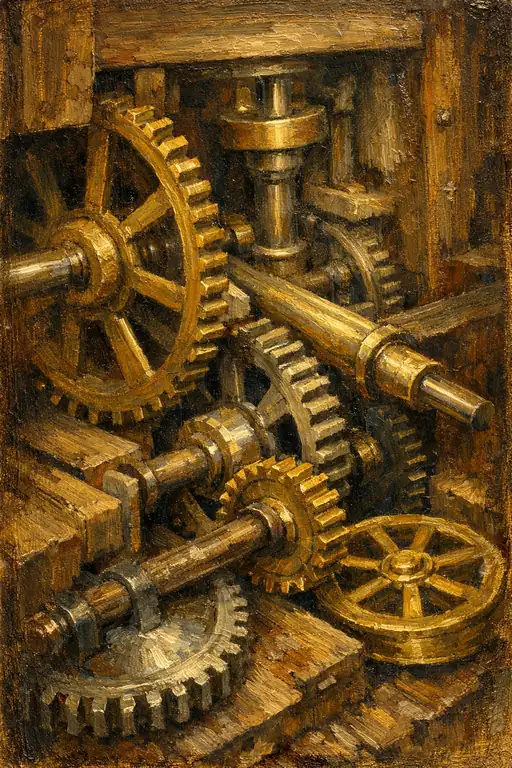 The Golden Heart of Invention
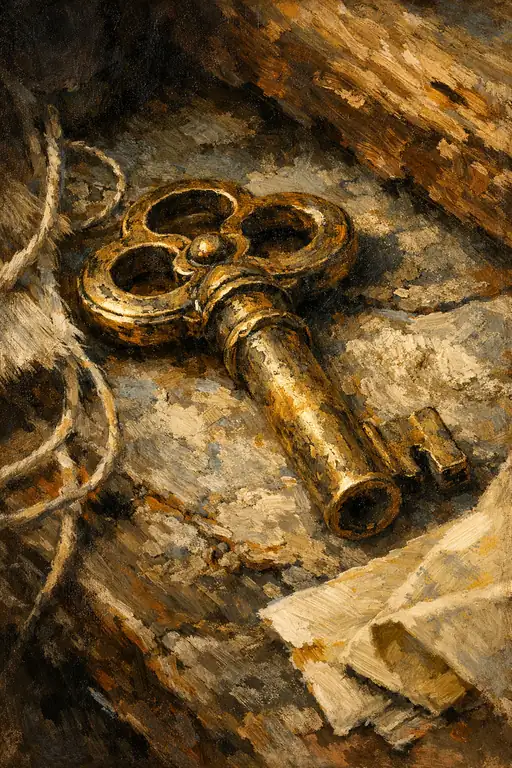 The Weight of Forgotten Doors
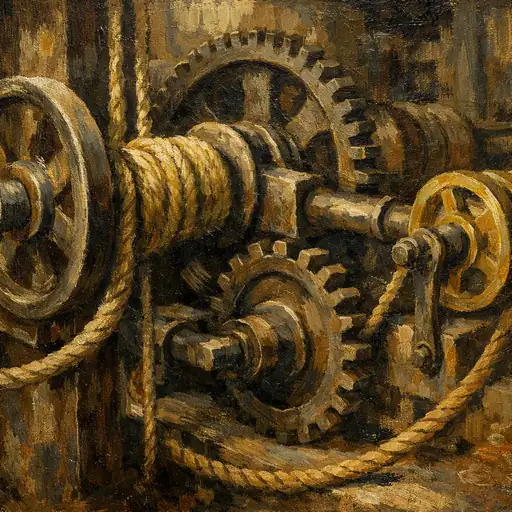 Tension in the Heart of Iron
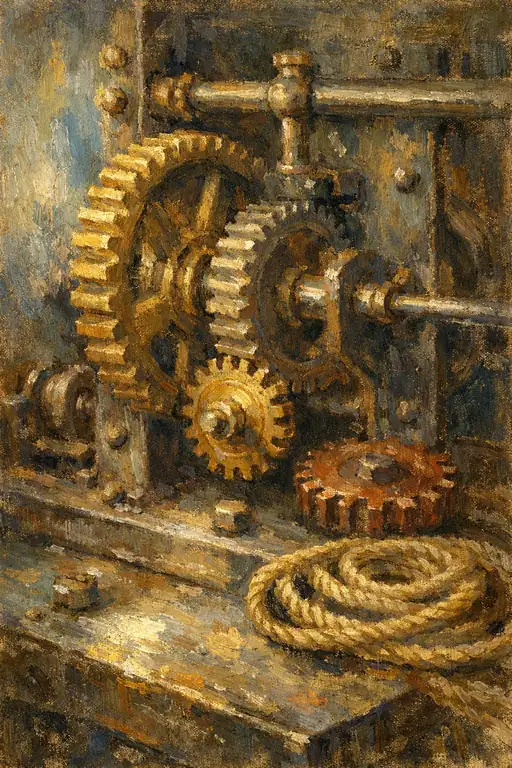 The Slumbering Giant's Gold
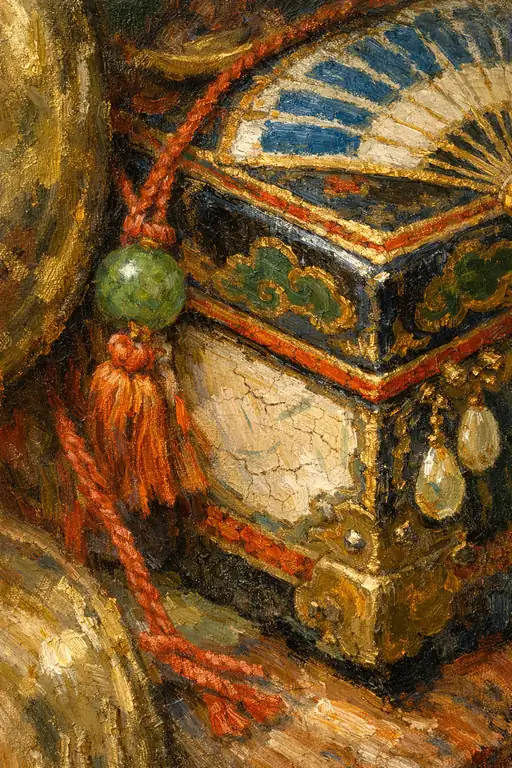 Secrets Held in Lacquer and Gold
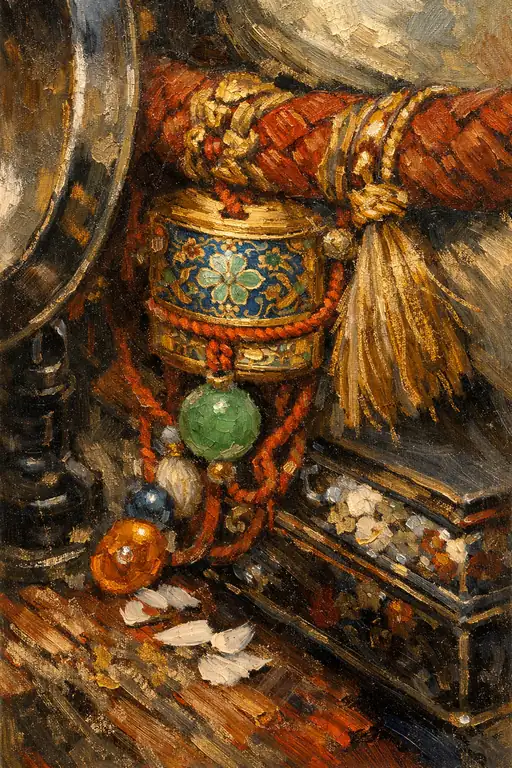 Echoes of a Forgotten Dynasty
 Sunlight Distilled in Glass
 Prelude to the Masquerade
 Apothecary's Preserved Memories