Clockwork Heart of the Old Shop
Critique
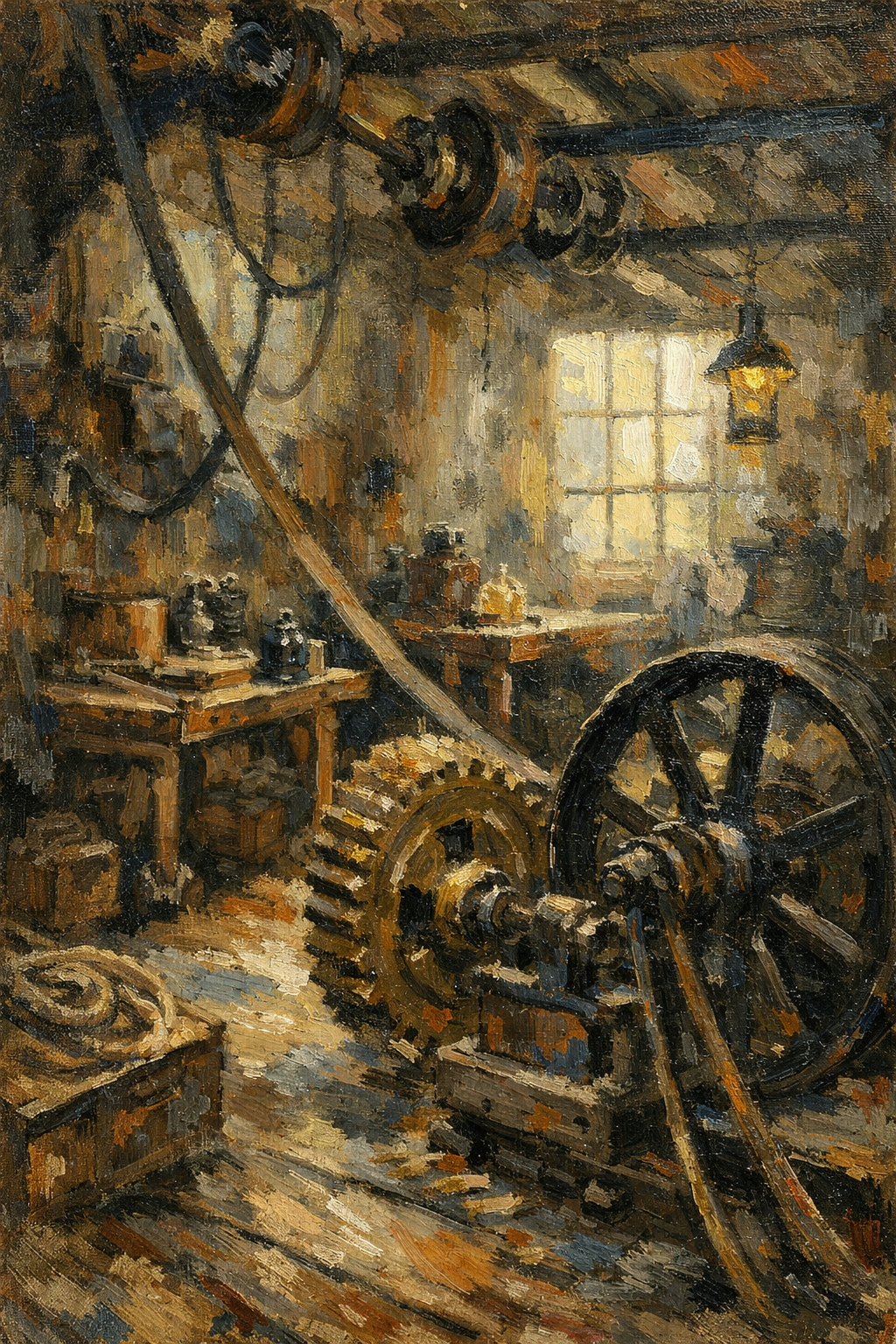
1. Introduction The oil painting of a vintage machine shop offers a compelling study of early industrial technology through an artistic lens. This work features the complex interplay of gears, belts, and pulleys that powered the production of a bygone era. By focusing on the mechanical skeleton of a workshop, the painting elevates functional machinery to the status of a profound aesthetic subject, capturing the weight and motion of human invention. 2. Description In the foreground, two massive gear wheels窶俳ne wooden and one iron窶播ominate the lower right quadrant, connected by thick drive belts that extend toward the ceiling. To the left, a sturdy wooden workbench is covered with various small components and tools, arranged in a functional yet cluttered manner. A large window in the background provides a soft, diffused light, while a glowing hanging lantern adds a warm, localized radiance to the upper right. 3. Analysis The artist employs a rugged impasto technique, using thick, rhythmic brushstrokes to define the worn surfaces of the wooden gears and the dusty floor. The composition is structured around the strong diagonal of the drive belt, which creates a sense of dynamic tension against the static weight of the machinery. The lighting is particularly effective, with the cool light from the window contrasting against the warm, amber glow of the internal lamp. 4. Interpretation and Evaluation This artwork successfully bridges the gap between mechanical precision and painterly expression, finding beauty in the heavy, grease-stained environment of industry. The choice of a muted, earthy color palette reinforces the historical setting and the physical reality of a hard-working factory. Technically, the artist demonstrates a high degree of skill in rendering the complex geometries of the gears without sacrificing the expressive energy of the brushwork. 5. Conclusion Ultimately, the painting serves as a thoughtful meditation on the legacy of the industrial age and the enduring fascination with mechanical forms. While the initial view presents a bewildering array of hardware, a more patient observation reveals a sophisticated organization of light and shadow. The transformation of a utilitarian space into a dramatic visual landscape confirms the artist's ability to find poetic resonance in the most unexpected places.
 The Blacksmith's Eternal Flame
 Sunbeams on the Silent Lathe
 Echoes of Forgotten Letters
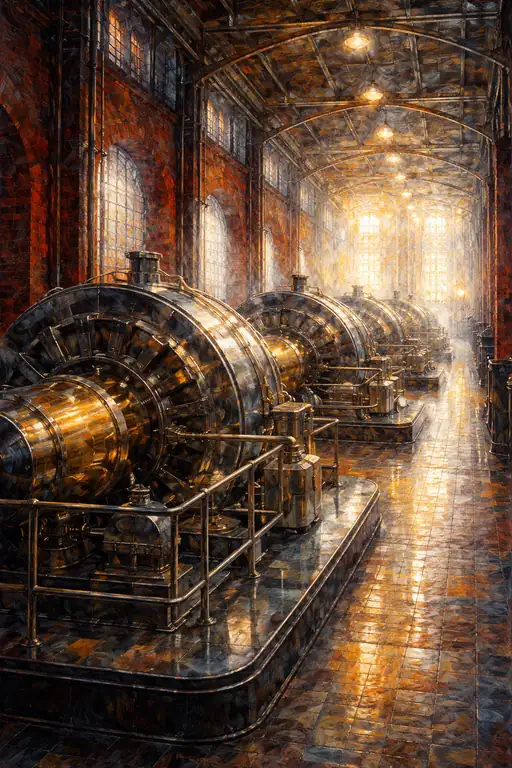 Heartbeat of the Iron Colossus
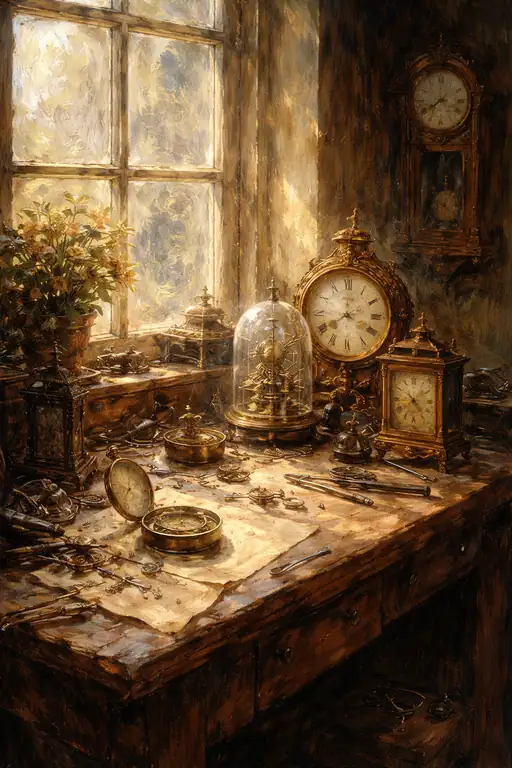 The Clockmaker's Sunlit Workshop
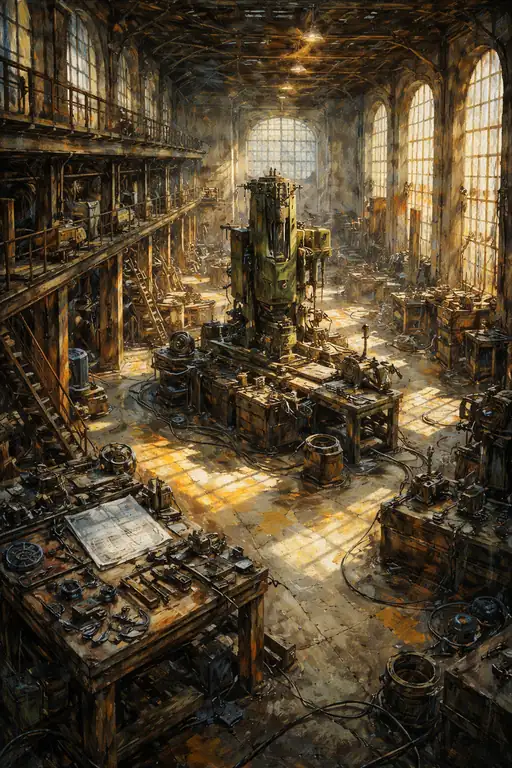 Slumber of the Clockwork Soul
 Harmony Within the Artistic Chaos
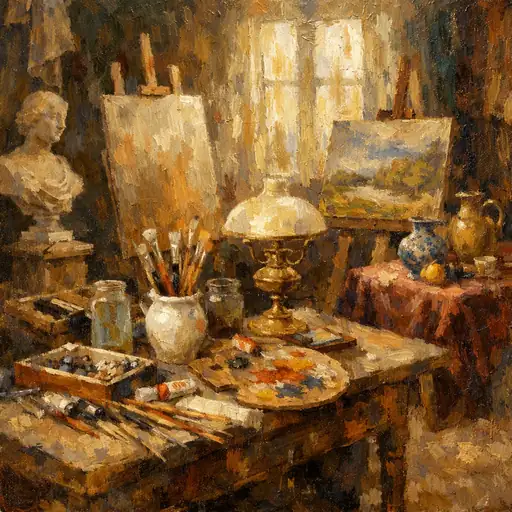 Echoes of Creation
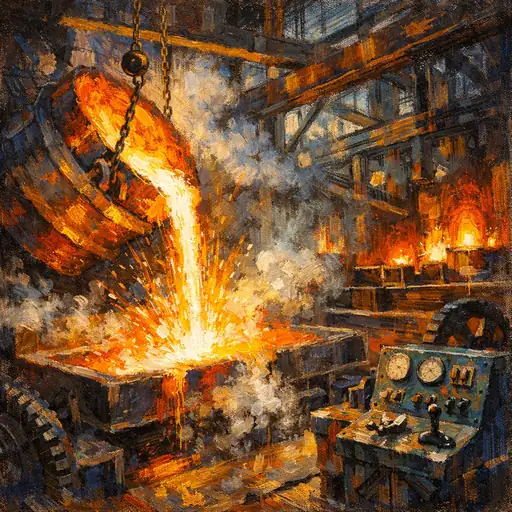 Tears of Molten Gold
 Symphony of the Sunlit Kiln