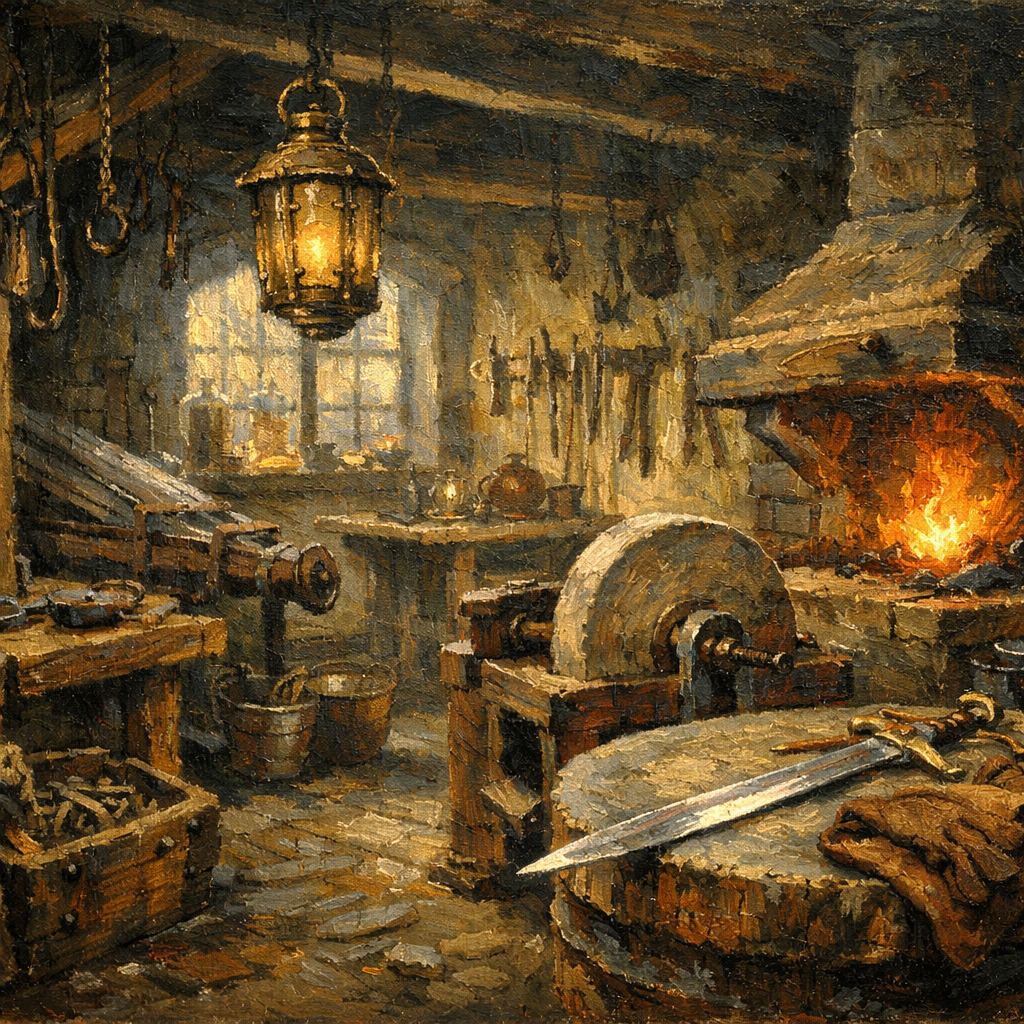
The Armorer's Fiery Sanctum
Critique
1. Introduction This work presents an evocative interior view of a historical armorer's workshop, focusing on the tools of the trade and the atmospheric lighting of the space. The artist masterfully captures the essence of medieval craftsmanship, portraying a scene where metalwork and light interact within a rustic, functional environment. Viewed from an educational and objective perspective, the painting effectively reconstructs a site of traditional labor. The thematic choice emphasizes the dignity of manual work and the weight of historical continuity. 2. Description In the foreground, a finely crafted sword rests on a heavy wooden block, its blade reflecting light with a sharp metallic gleam. A large circular grindstone occupies the middle ground, set within a sturdy wooden frame that shows signs of long use. To the right, a forge hearth glows with intense orange flames, casting a powerful warmth across the interior. A hanging lantern from the ceiling provides an additional warm light source, while a window in the background offers a subtle hint of daylight filtering onto the walls lined with various tools. 3. Analysis The composition is organized around the diagonal line created by the sword in the foreground, leading the eye toward the circular form of the grindstone and the glowing hearth. The artist utilizes a rich palette of earthy browns, deep blacks, and vibrant oranges to create a sense of historical age and interior warmth. Thick, expressive brushwork adds a tactile quality to the wooden structures and the uneven stone floor. The balance between different light sources creates a complex and engaging spatial depth. 4. Interpretation and Evaluation The painting succeeds in conveying a sense of quiet industry and the physical reality of artisanal labor through its focus on specific tools. The contrast between the flickering firelight and the steady glow of the lantern adds a dramatic yet serene quality to the workshop. The technical execution is highly proficient, particularly in the rendering of metal surfaces and the play of light across varied textures. This ability to harmonize industrial elements with atmospheric beauty demonstrates a strong original vision. 5. Conclusion While the initial impression may be of a cluttered workspace, closer study reveals a carefully structured composition that celebrates the integrity of traditional craftsmanship. It is an impressive study of light and form within a historical context, achieving a significant artistic result. The transition from observing the individual tools to understanding the overall atmosphere of the forge is handled with great skill. Ultimately, the work leaves a lasting impact through its combination of realistic detail and evocative mood.
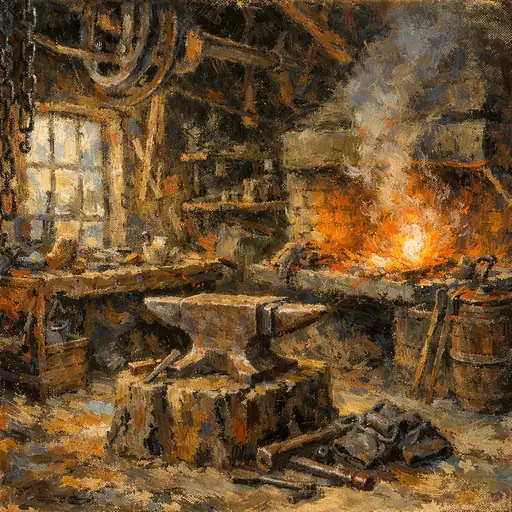 Crucible of the Iron Soul
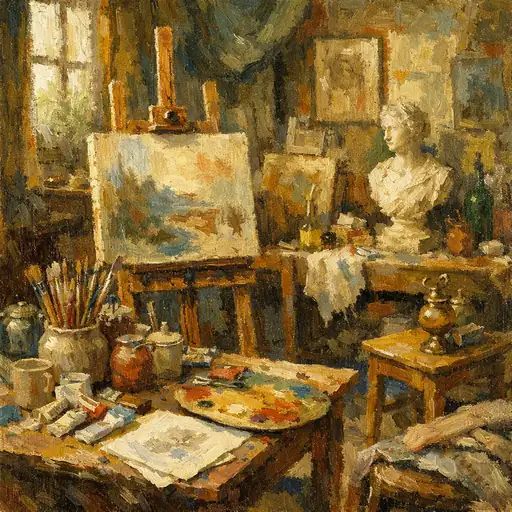 Harmony Within the Artistic Chaos
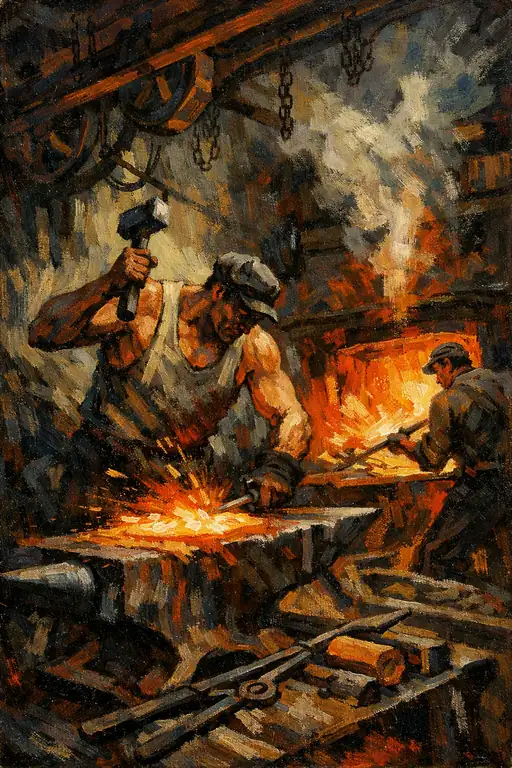 Sparks of the Forge's Heart
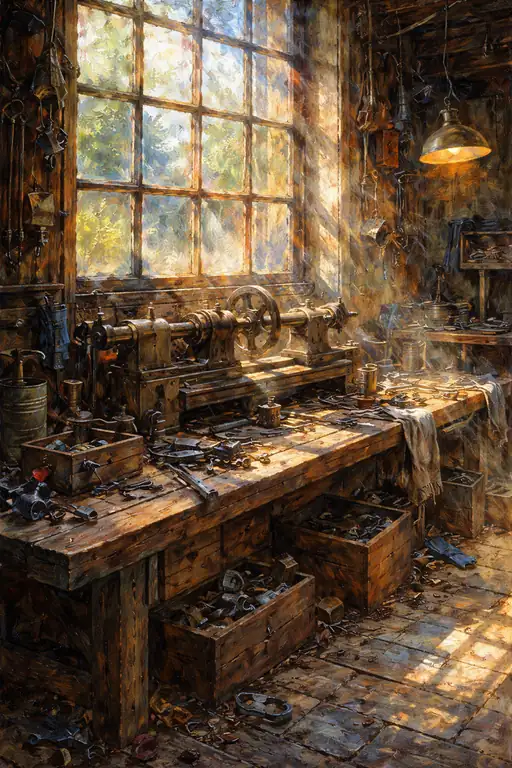 Sunbeams on the Silent Lathe
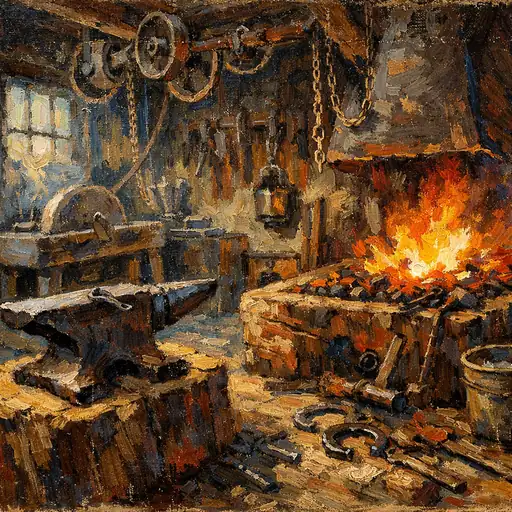 The Blacksmith's Eternal Flame
 Taming the Fire: A Glowing Heart of Glass
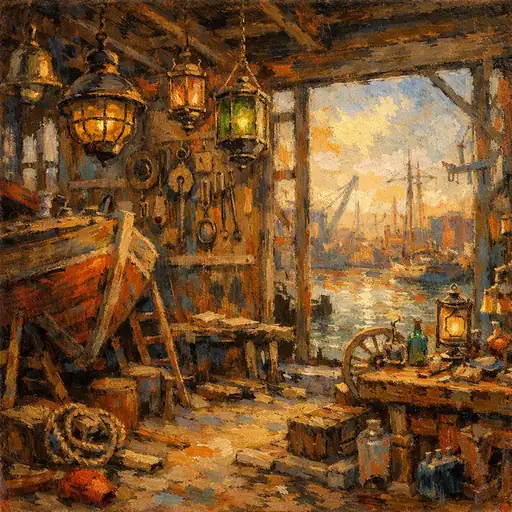 Vessel of the Golden Twilight
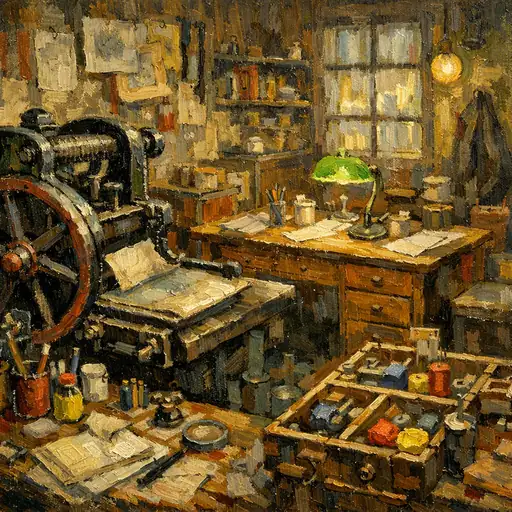 Echoes of Forgotten Letters
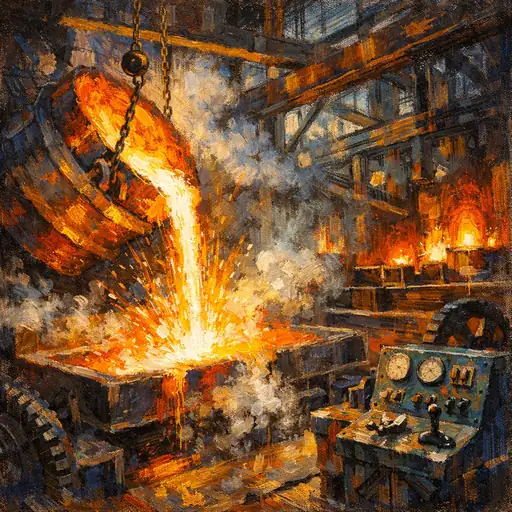 Tears of Molten Gold
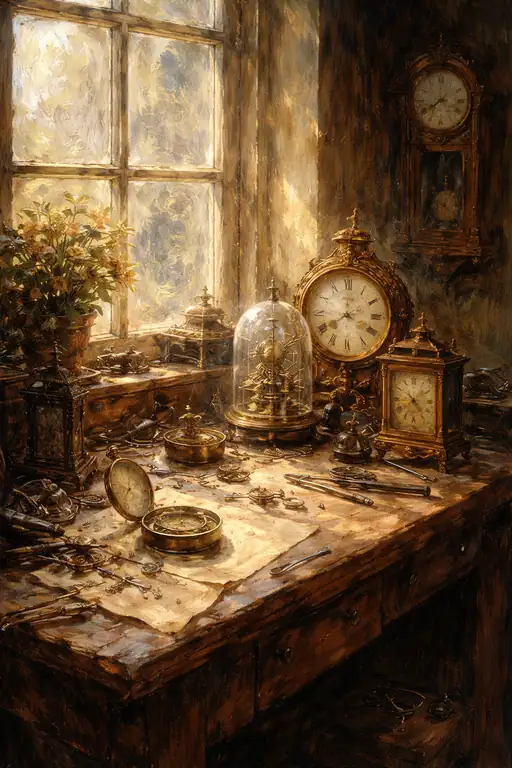 The Clockmaker's Sunlit Workshop
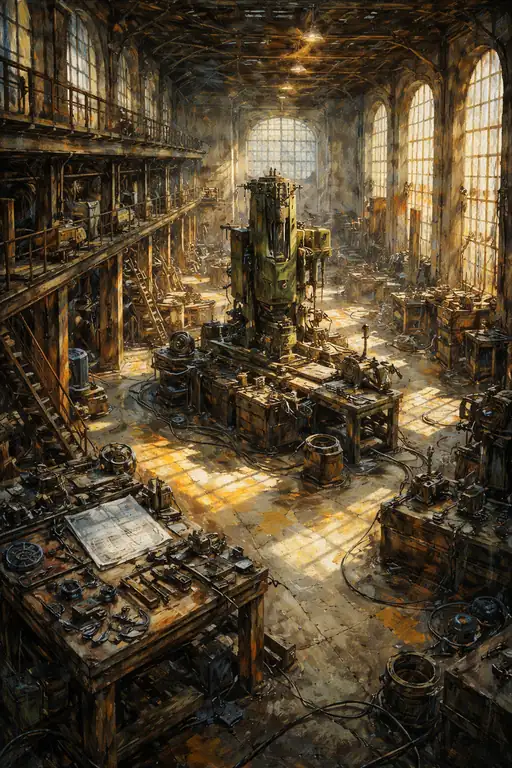 Slumber of the Clockwork Soul