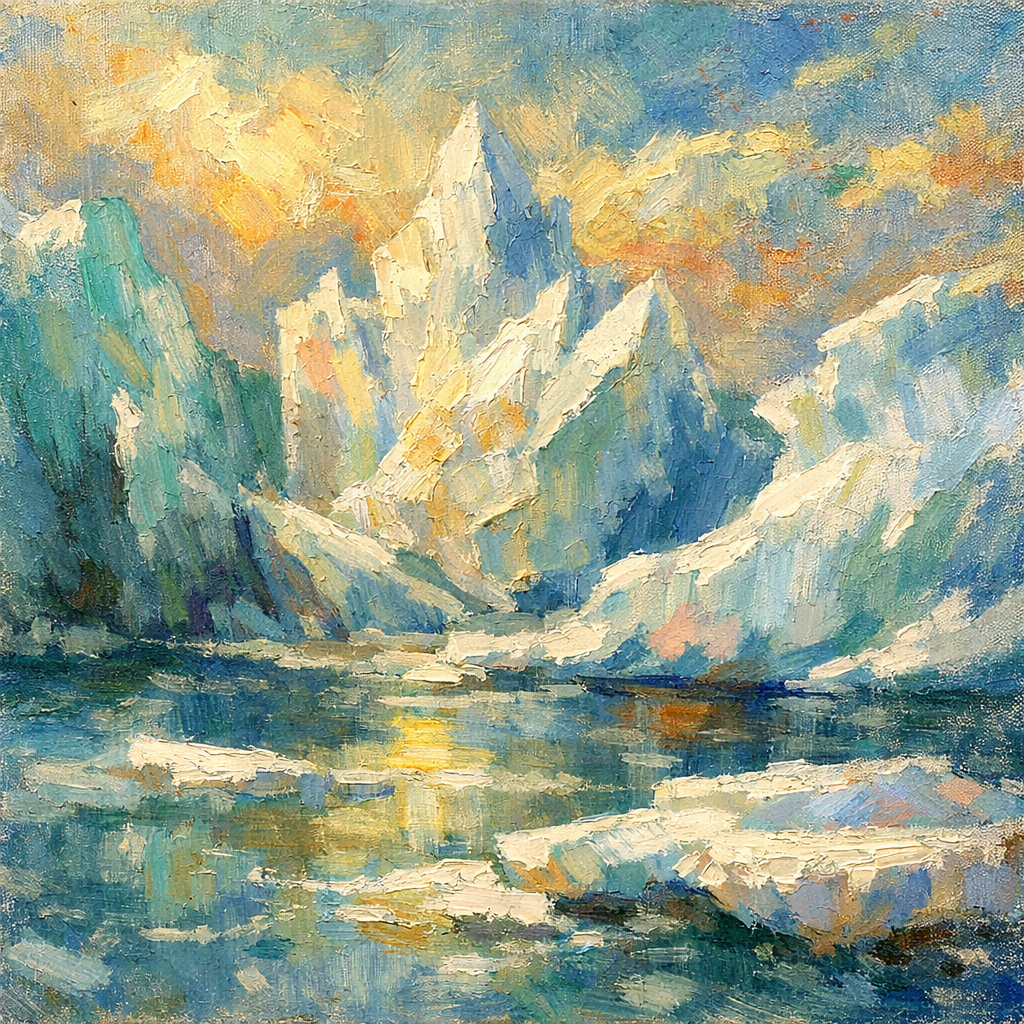
Echoes of the Glacier: The Golden Ice
Critique
1. Introduction The painting depicts a polar landscape featuring icebergs in cold waters. This composition focuses on the rugged beauty of the Arctic or Antarctic, highlighting the interplay between ice and light. The work is characterized by a powerful sense of scale and a dynamic application of paint that conveys the energy of nature. 2. Description A central iceberg rises against a sky filled with golden clouds. Several smaller icy formations surround the main peak, creating an array of frozen structures. In the foreground, fragments of ice drift on the water's surface, reflecting the glow of the sun. The palette consists of blue and white, with accents of yellow and orange. 3. Analysis The artist utilizes a heavy impasto technique, applying thick layers of paint to create a textured surface. These bold brushstrokes effectively mimic the fractured planes of the ice. Color harmony is established through the contrast between cool blues and luminous tones of the sky. Light is used as a structural element, defining the sharp edges. 4. Interpretation and Evaluation This work serves as a testament to the beauty of the Earth's polar regions. The towering presence of the ice suggests a sense of permanence, while drifting fragments in the water hint at a world in motion. The technique is expressive, demonstrating the painter's ability to translate mass into a visual language. The impact is one of respect for the natural world. 5. Conclusion Initially, the scene appears as a study of ice and light, but the complexity of textures reveals a profound depth. The composition successfully captures the atmosphere of a remote wilderness. This painting remains an example of how a landscape subject can be revitalized through a vigorous approach to texture.
Same Subcategory
 Nocturnal Symphony of Radiant Lanterns and Blooming Souls
Similar Artworks
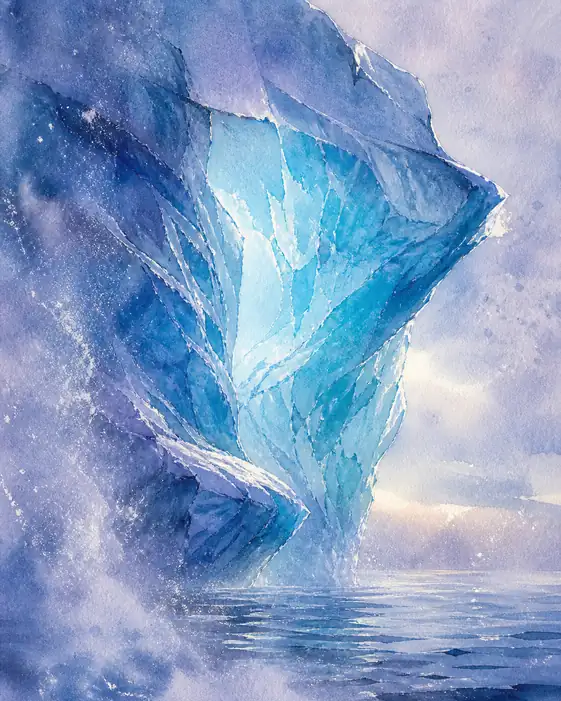 The Sacred Core of Eternal Blue
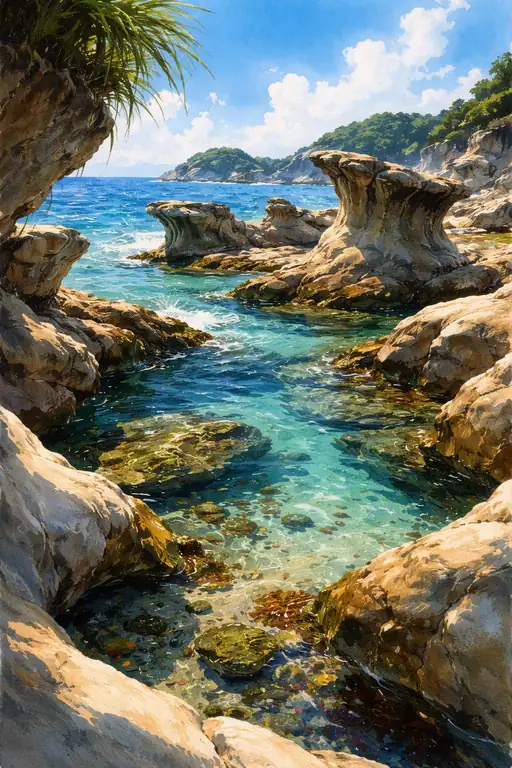 Pillars of the Crystalline Shallow
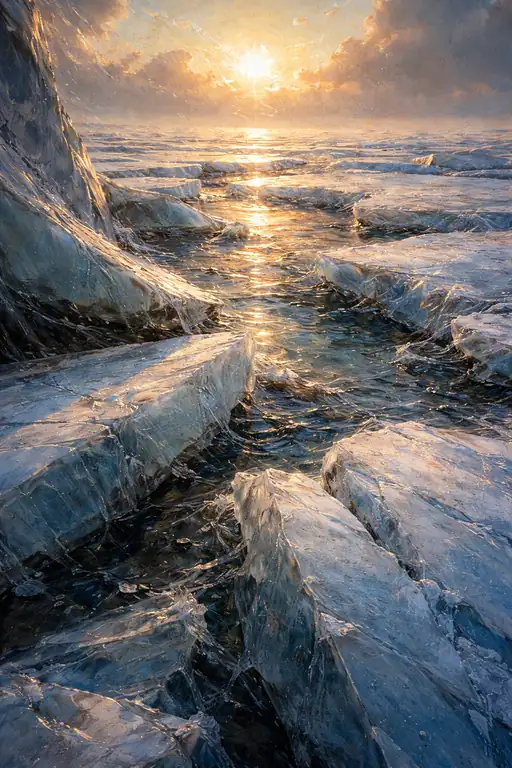 Golden Light on the Silent Ice
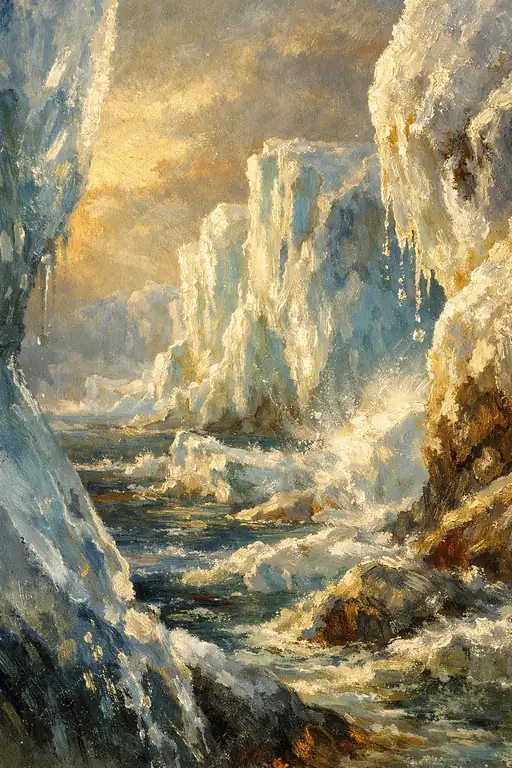 The Frozen Majesty of the Deep
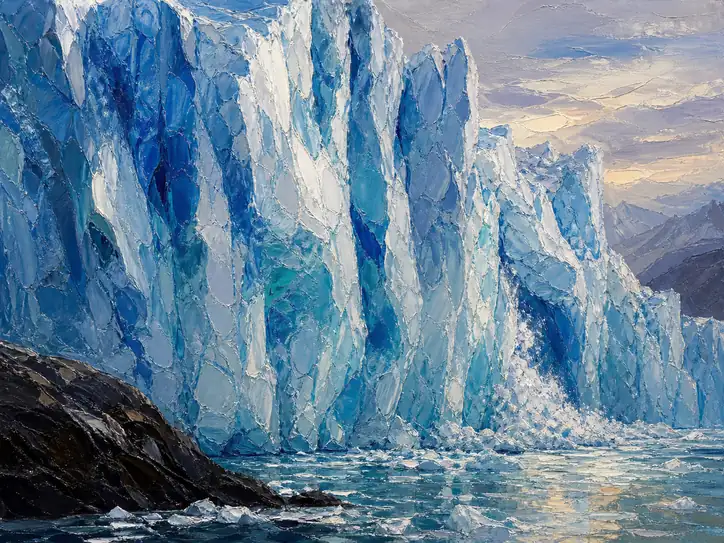 The Awakening of the Ancient Blue
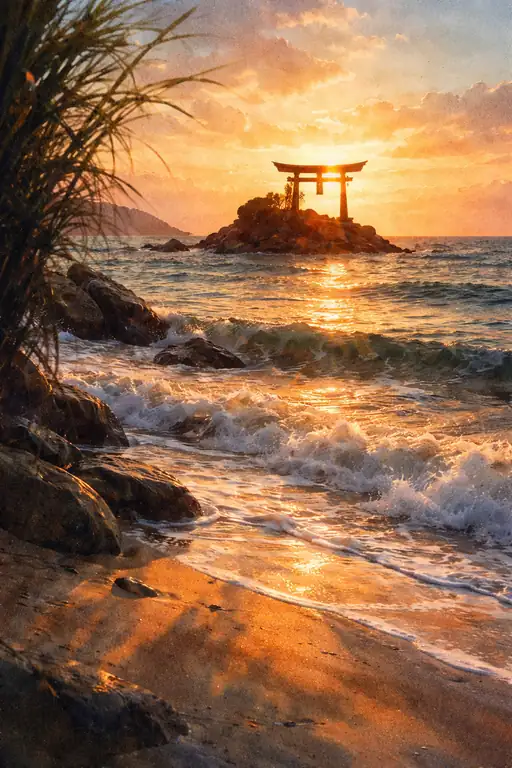 Crimson Dawn Over the Tranquil Sea
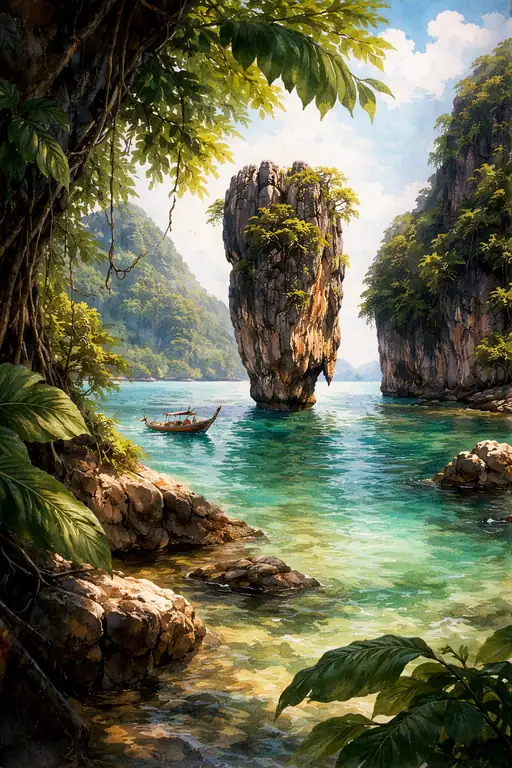 Majestic Solitude in the Turquoise Bay
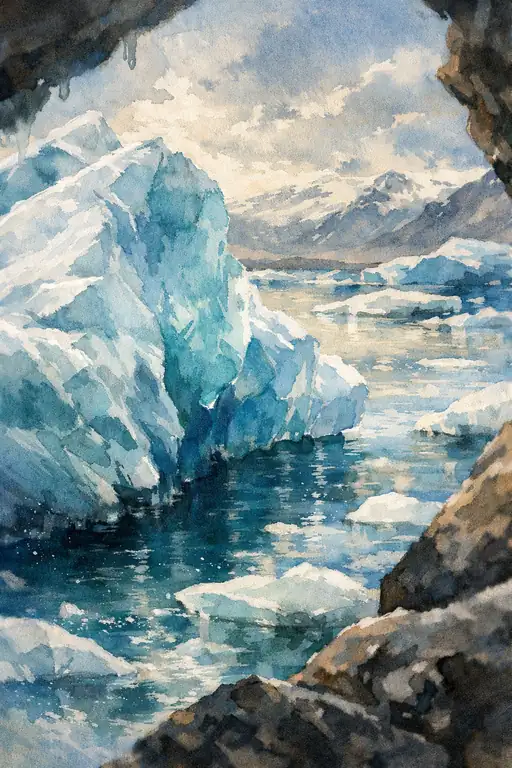 The Ice Giant's Silence
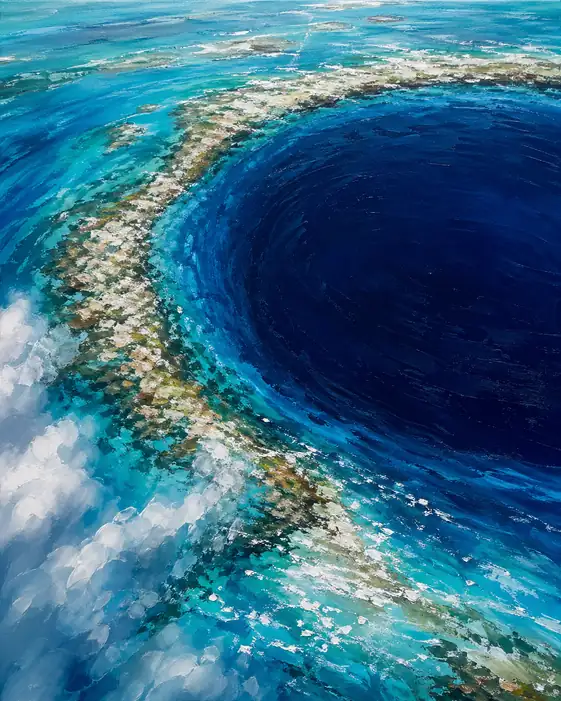 Eye of the Infinite Deep
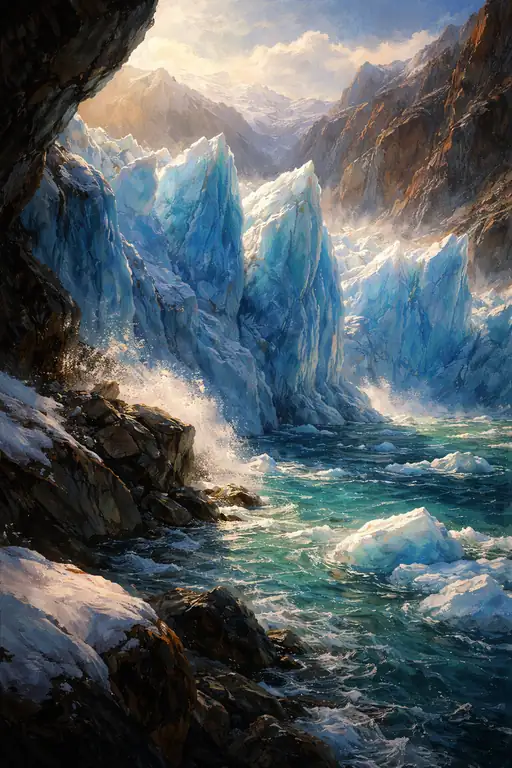 Dramatic Iceberg Waves