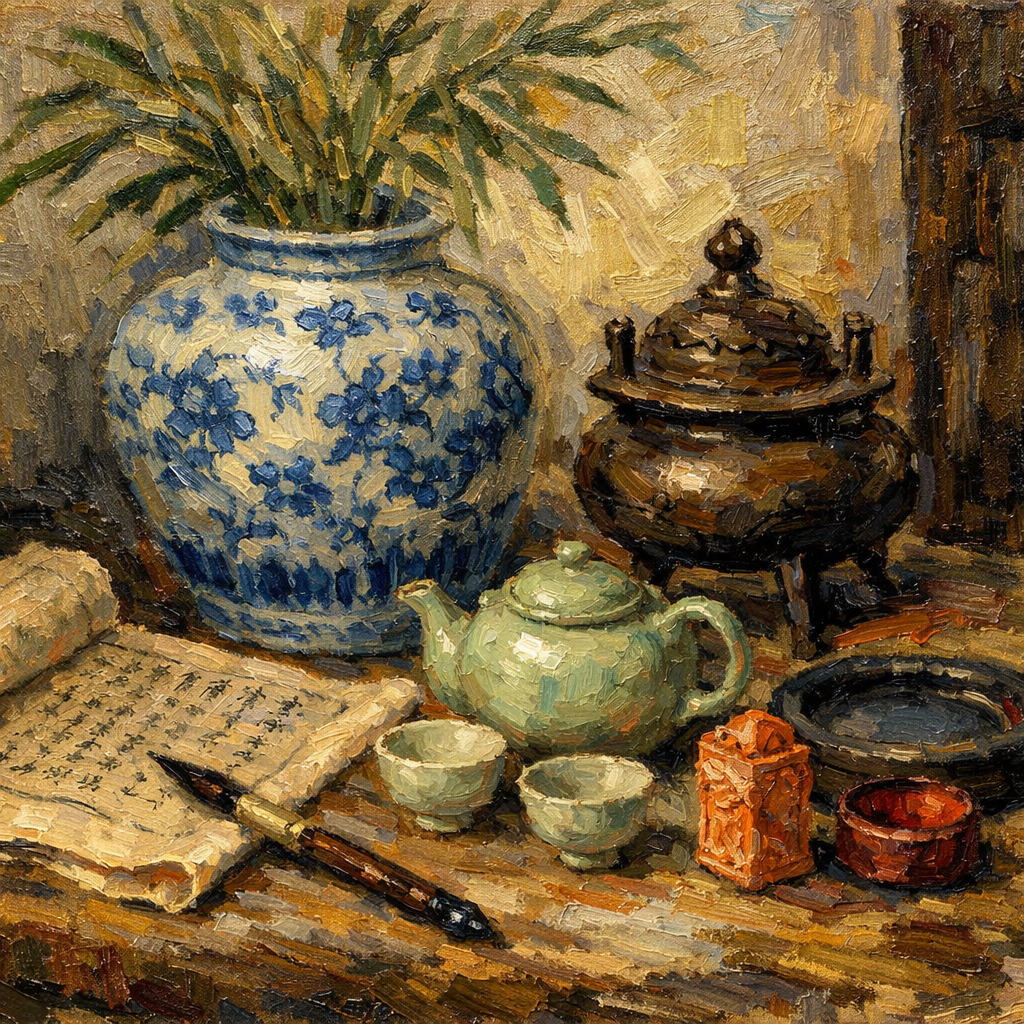
The Scholar's Reverie: Celadon and Ink
Critique
1. Introduction This oil painting presents a scholarly still life, featuring a collection of traditional East Asian artifacts arranged on a rustic wooden surface. The composition includes a blue and white porcelain jar with bamboo, a dark bronze incense burner, a celadon tea set, and various calligraphy tools, evoking a sense of refined intellectual pursuit. This work captures the quiet dignity of a cultural heritage through a modern, tactile lens. 2. Description In the center, a pale green celadon teapot and two matching cups sit ready for use. To the left, a large porcelain jar decorated with intricate blue floral patterns holds several bamboo stalks, positioned next to an open scroll displaying rhythmic ink characters and a bamboo-handled brush. On the right, a heavy bronze tripod vessel stands behind a bright orange carved seal and a small red lacquer bowl, adding both visual weight and a pop of color to the arrangement. 3. Analysis The artist employs a dense impasto technique, where visible, textured brushstrokes define the rounded forms of the vessels and the flat surface of the scroll. The color palette is characterized by the cool contrast between the blue porcelain and green celadon against the warm, earthy tones of the table. The use of light creates subtle highlights on the glazed ceramics, emphasizing their smooth curves despite the rugged and vigorous application of paint. 4. Interpretation and Evaluation The work successfully captures the harmony between different artistic traditions窶廃ottery, metalwork, and calligraphy. The deliberate grouping of objects suggests a life of spiritual richness and quiet contemplation. The vigorous texture of the paint provides a modern counterpoint to the ancient subject matter, demonstrating a successful integration of classical motifs with impressionistic execution. The artist窶冱 ability to render material variety through such a bold technique is highly commendable. 5. Conclusion This still life offers a compelling window into a world of tradition and focused study. Through the careful rendering of light and physical texture, the viewer is invited to appreciate the formal beauty inherent in these functional, historical objects. What begins as a study of cultural items ends as a profound statement on the enduring value of artistic heritage. The work serves as a powerful bridge between the aesthetic values of the past and the expressive techniques of the present.
Same Subcategory
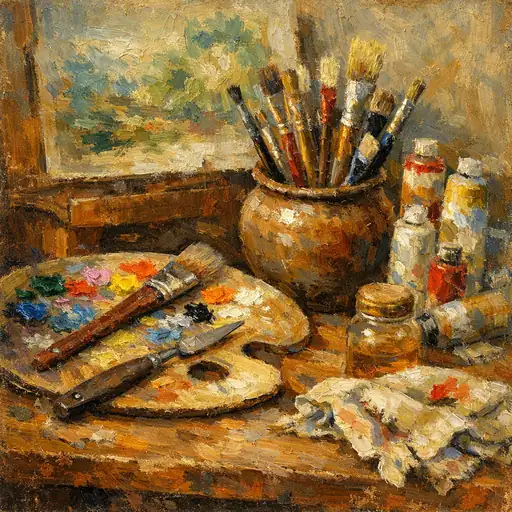 The Alchemy of Color: Still Life of a Painter's Soul
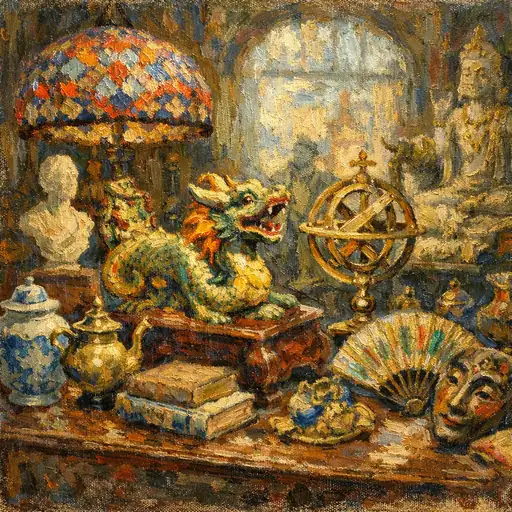 Journey through the Curiosities
Similar Artworks
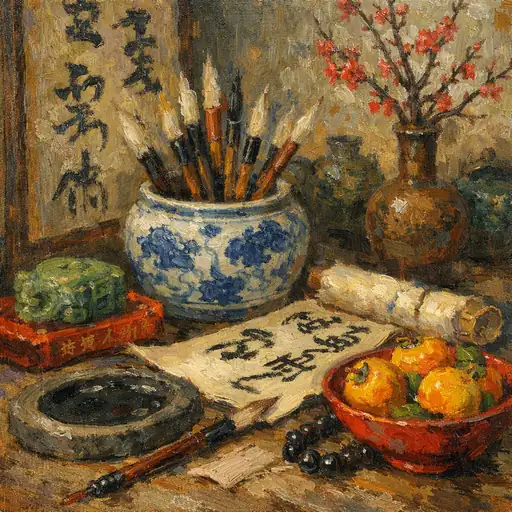 The Quiet Contemplation
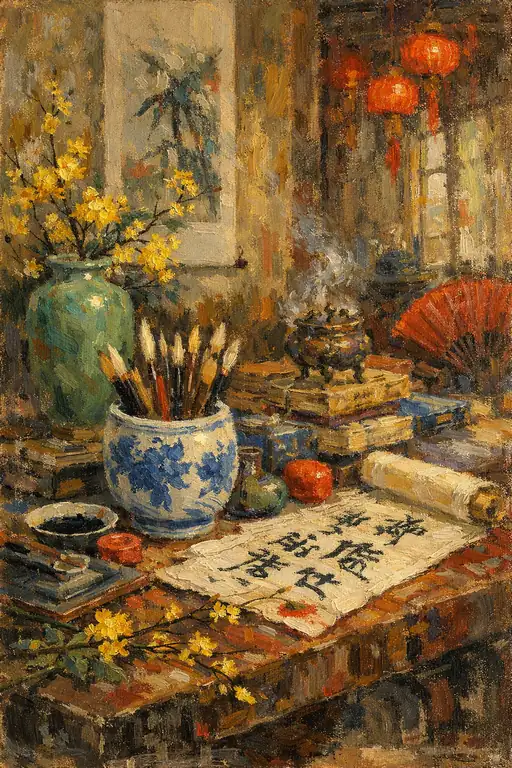 Echoes of Ancient Wisdom
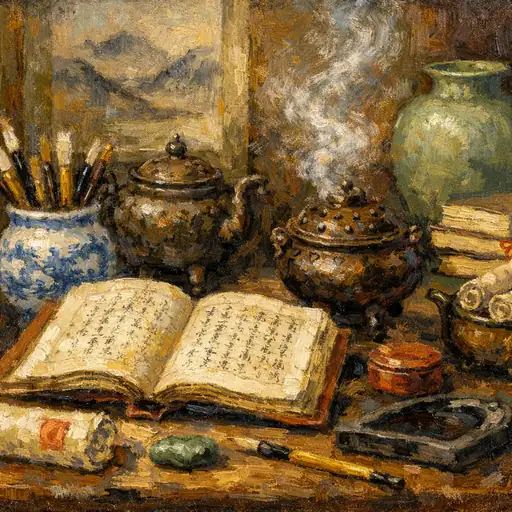 Scholar's Desk with Ancient Texts and Incense
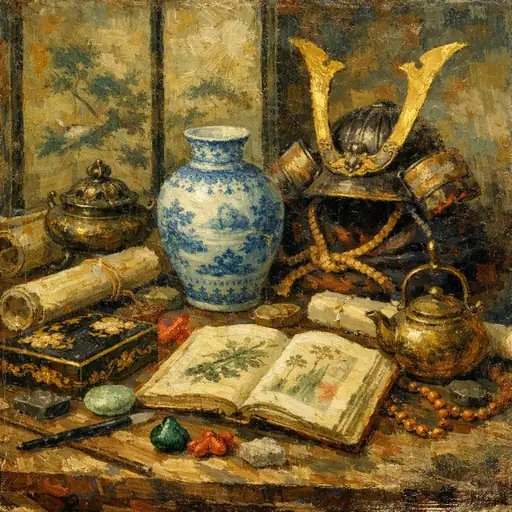 The Weight of Wisdom
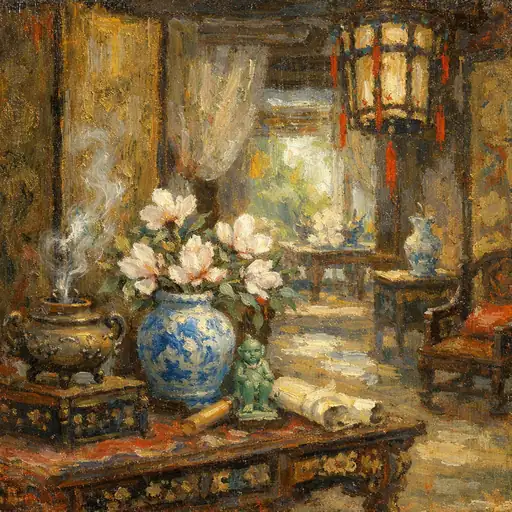 Golden Haze of the Scholar's Room
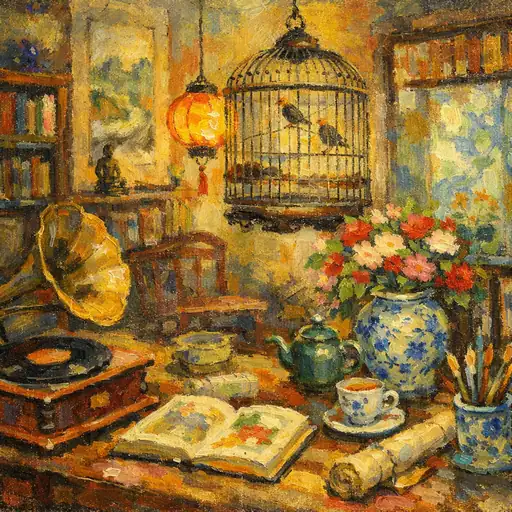 Echoes of the Past in a Warm Embrace
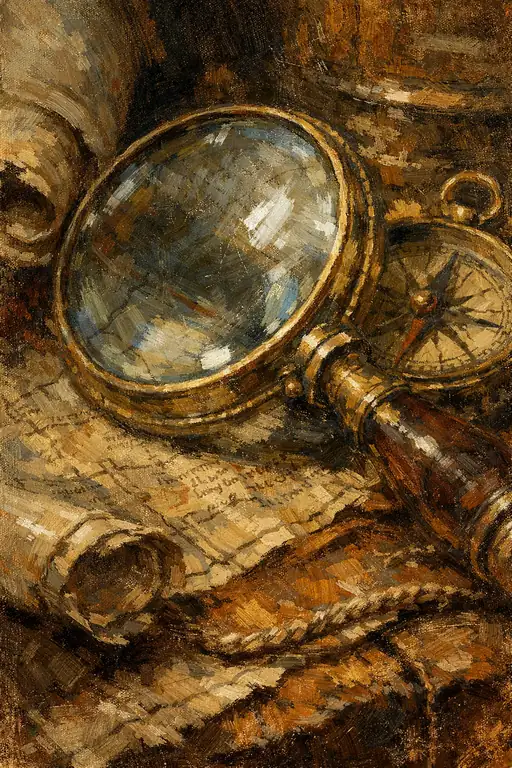 The Navigator's Golden Dream
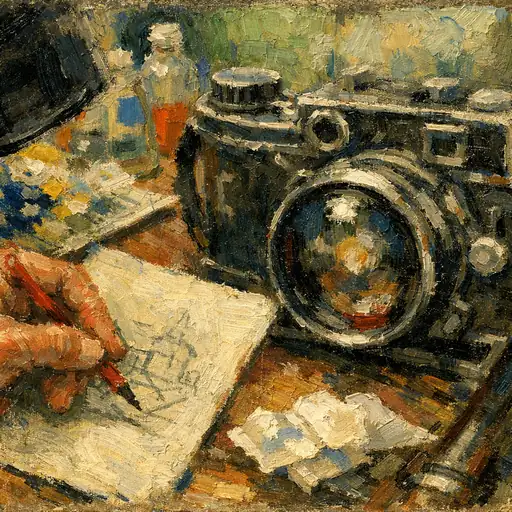 Capturing the Fleeting Moment
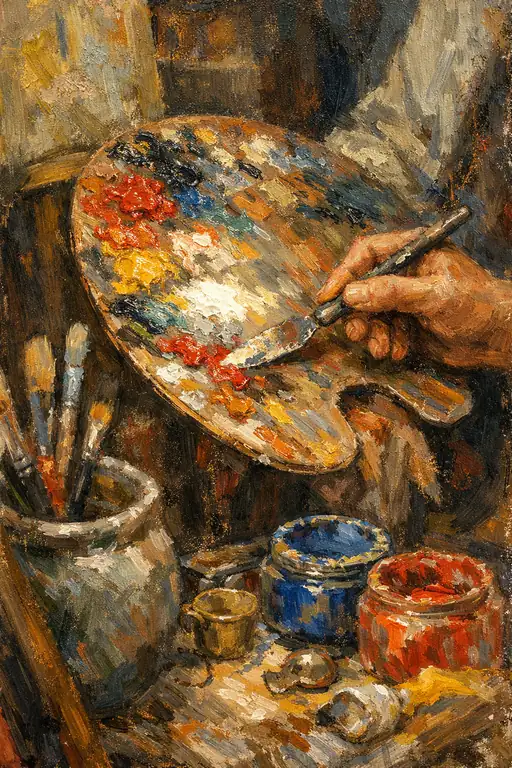 The Golden Dawn of Memory
 The Warm Embrace of Endless Knowledge