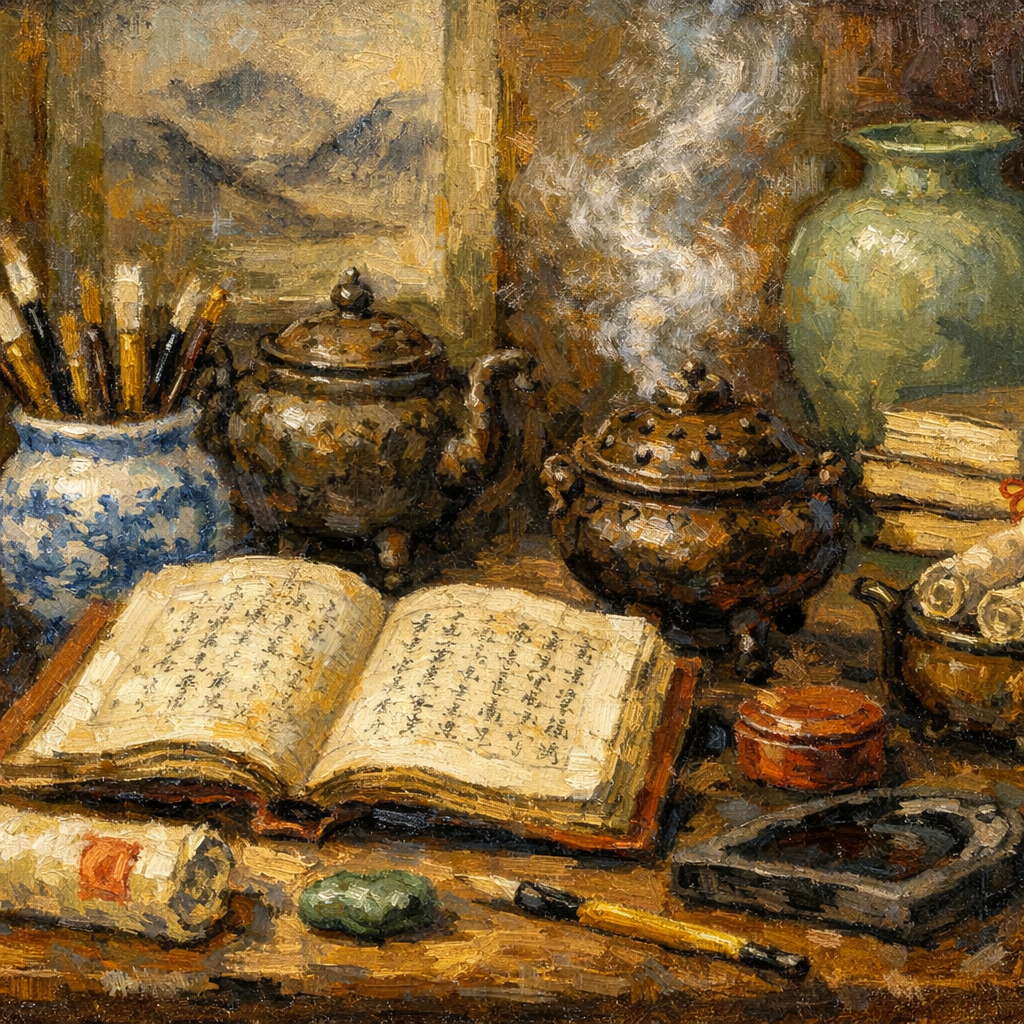
Scholar's Desk with Ancient Texts and Incense
Critique
1. Introduction This oil painting presents a scholarly still life, depicting the desk of a literatus with an emphasis on historical and intellectual depth. The work captures a collection of traditional academic tools, rendered with a powerful and expressive painting style. It reflects a sophisticated blend of classical subject matter and modern impasto techniques, creating a scene that is both contemplative and physically present. 2. Description An open book of classical Chinese texts occupies the foreground, its pages displaying calligraphic strokes. Behind it, two metallic incense burners are positioned, with thin wisps of smoke rising from the one on the right. To the left, a blue and white porcelain jar holds numerous brushes, while the background reveals a landscape scroll and a green ceramic vase. Various other items, including scrolls, small boxes, and an inkstone, are densely arranged across the desk's surface. 3. Analysis The color palette is dominated by warm amber and earth tones, suggesting the aged quality of paper and wood, accented by the cool blue of the porcelain and the soft green of the vase. The brushwork is exceptionally dynamic, using thick layers of paint to build physical volume and texture for each object. The play of light creates strong highlights and shadows, emphasizing the different material qualities of metal, ceramic, and ancient paper. 4. Interpretation and Evaluation The painting visualizes a space of intellectual pursuit as a realm of physical richness and sensory experience. By using traditional motifs in an almost expressionistic manner, the artist injects energy into what would otherwise be a static and silent scene. The technical skill in rendering textures and the movement of smoke is noteworthy, as is the complex multi-layered composition that invites detailed exploration. Overall, the work is a highly original and robust example of still life painting. 5. Conclusion This piece possesses a profound spiritual quality, suggesting the personal narratives behind each scholarly object. While the subject is classical, the bold execution provides a modern vitality that bridges the gap between past and present. The successful integration of a quiet theme with dynamic painterly action marks this work as a significant achievement in contemporary still life representation.
Same Subcategory
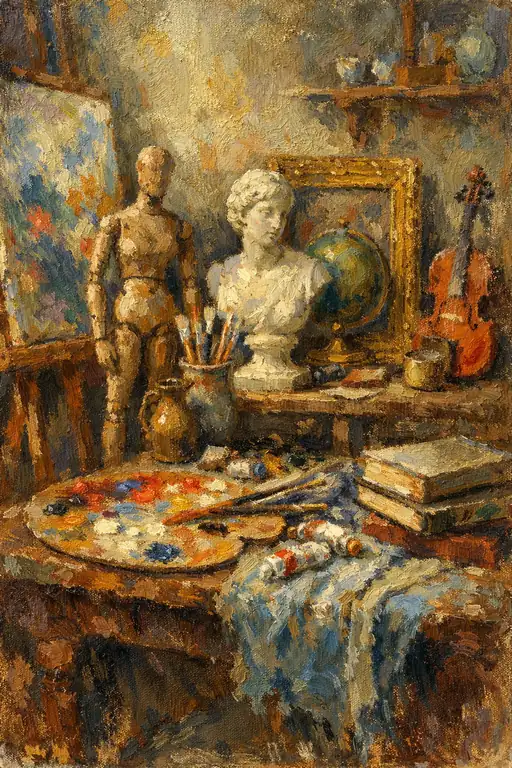 Still Life in the Artist's Studio
Similar Artworks
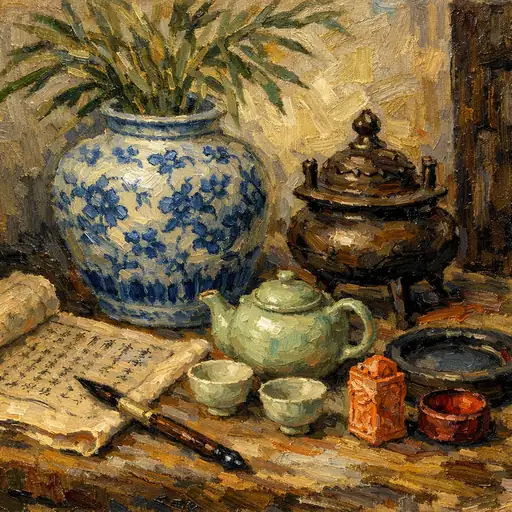 The Scholar's Reverie: Celadon and Ink
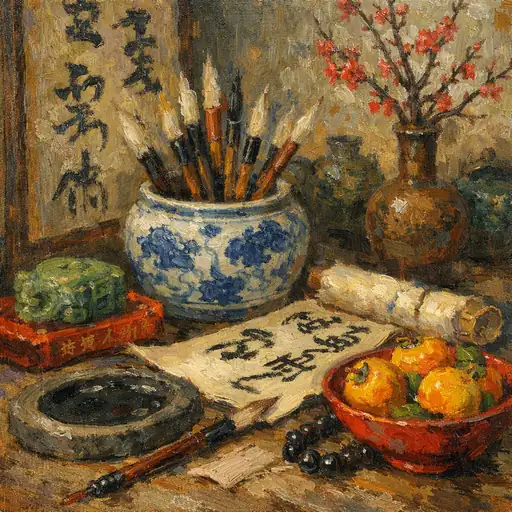 The Quiet Contemplation
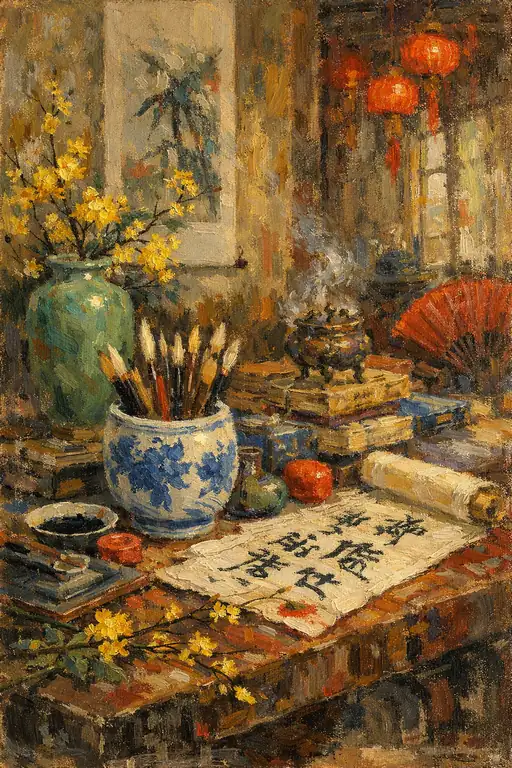 Echoes of Ancient Wisdom
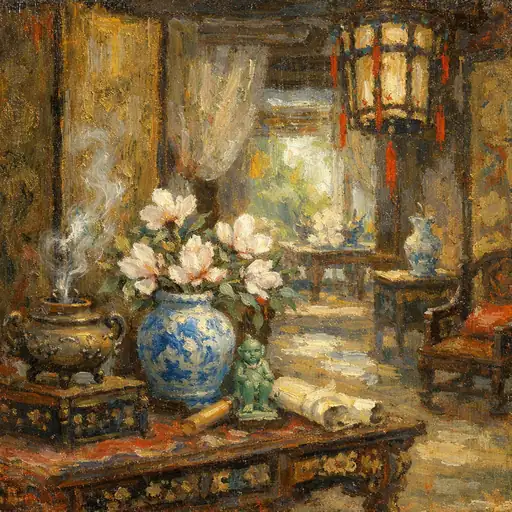 Golden Haze of the Scholar's Room
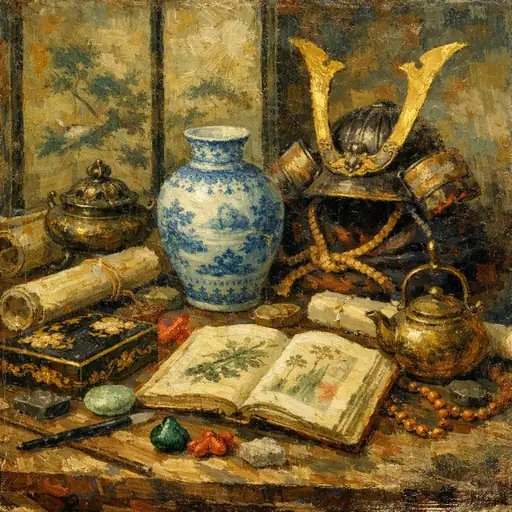 The Weight of Wisdom
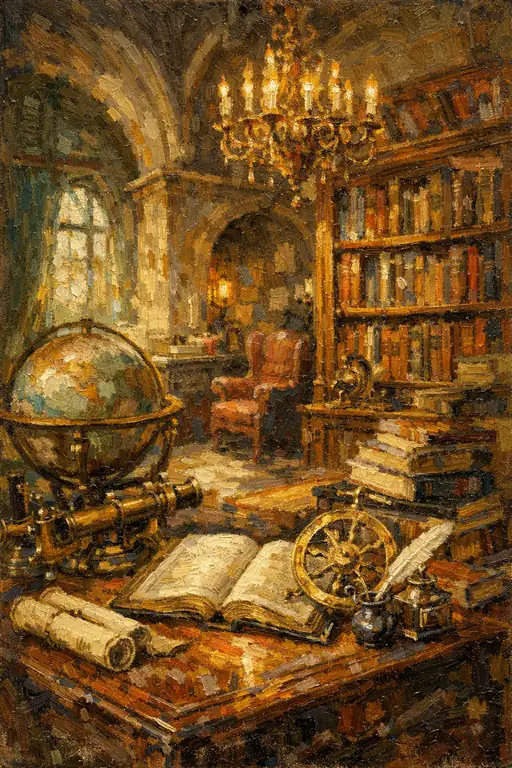 The Warm Embrace of Endless Knowledge
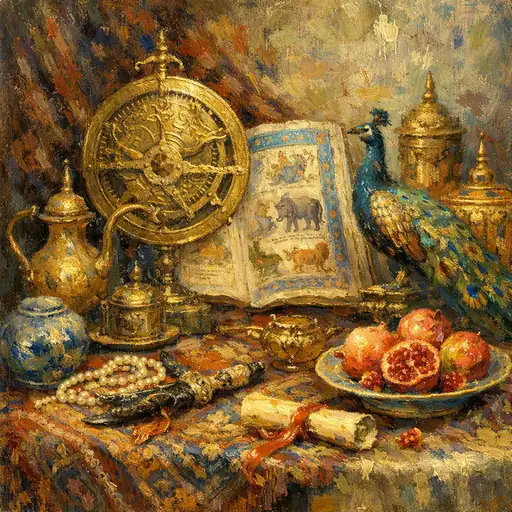 Symphony of the Golden Quest
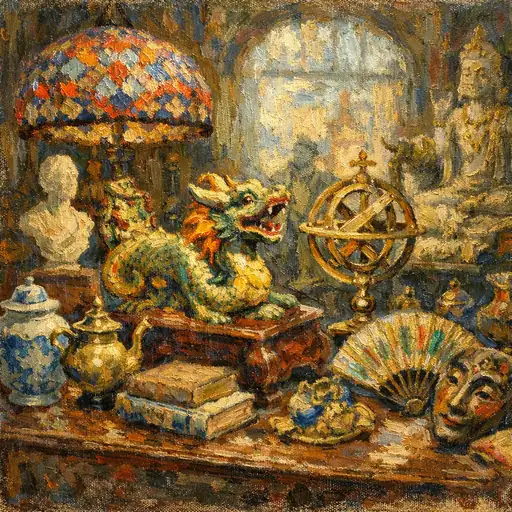 Journey through the Curiosities
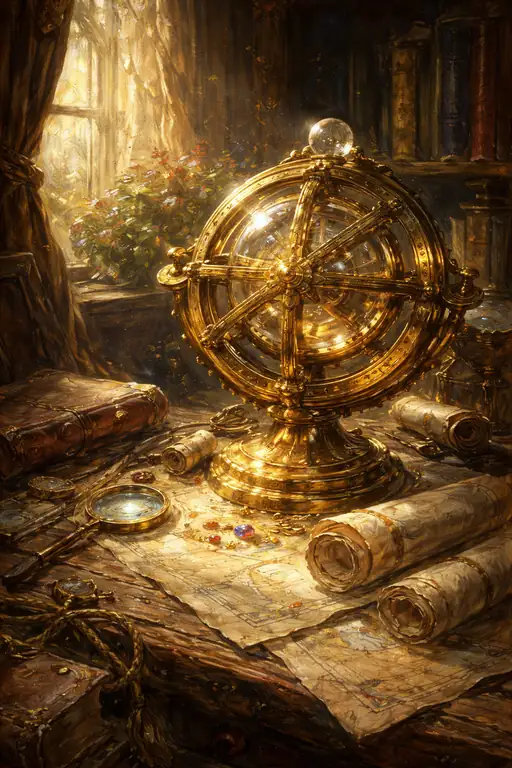 Wandering Through the Celestial Spheres
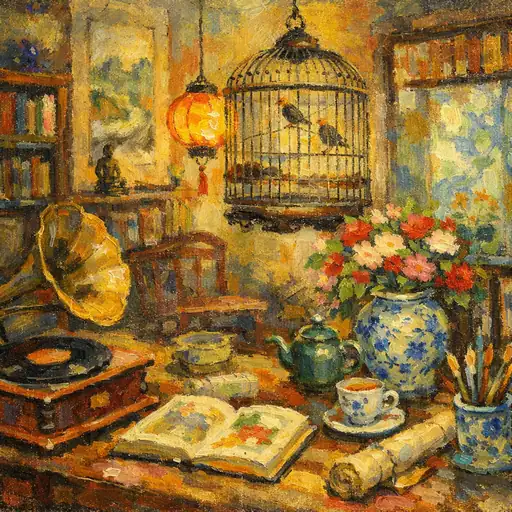 Echoes of the Past in a Warm Embrace