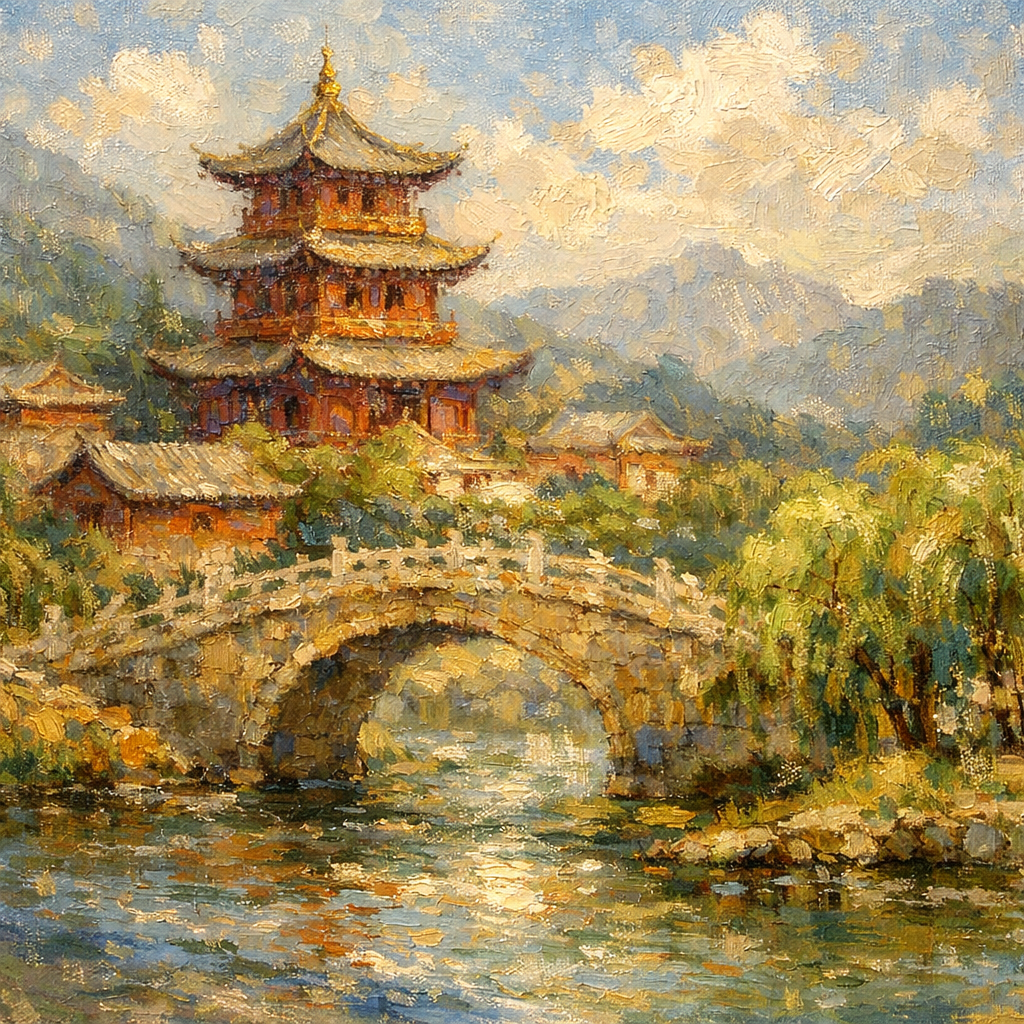
Golden Light on the Stone Bridge
Critique
1. Introduction This oil painting presents a serene East Asian landscape featuring a traditional three-story pagoda situated near a weathered stone arch bridge. The artist captures a tranquil, sun-drenched moment, employing a vibrant impressionistic style that emphasizes the shimmering effects of light on water and architecture. 2. Description The central focus is the ornate pagoda, rendered in warm reds and ochres, standing amidst lush green foliage. A prominent stone bridge spans the river in the foreground, its rugged texture detailed with thick applications of paint. The background consists of hazy blue mountains under a bright, cloud-filled sky, while the water reflects the golden hues of the sunlight and the surrounding structures. 3. Analysis The work is characterized by a heavy impasto technique, where short, energetic brushstrokes create a dynamic and tactile surface. The color palette is dominated by earth tones and greens, contrasted with the brilliant yellow highlights that suggest a specific time of day, likely late afternoon. Compositionally, the arch of the bridge serves as a structural counterpoint to the verticality of the pagoda, leading the viewer's gaze through the scene. 4. Interpretation and Evaluation This piece successfully evokes a sense of peace and historical continuity, portraying a scene where human architecture and nature exist in harmony. Technically, the artist's ability to manipulate light through texture is highly commendable, particularly in the reflective surfaces of the river. The balance between the solid forms of the architecture and the fluid, atmospheric background demonstrates a sophisticated grasp of landscape painting. 5. Conclusion The painting invites the viewer into a timeless world where light and color define the emotional resonance of the landscape. The initial impression of a picturesque view deepens upon closer inspection, revealing a mastery of texture that breathes life into the static forms of stone and wood.
Same Subcategory
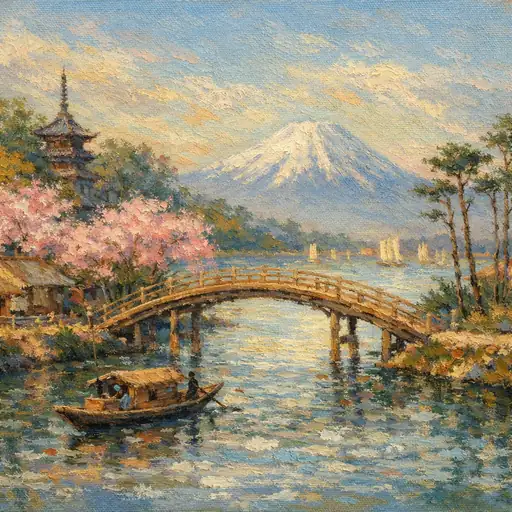 Bridge to Spring: Mount Fuji, Pagoda, and Cherry Blossoms over Tranquil Waters
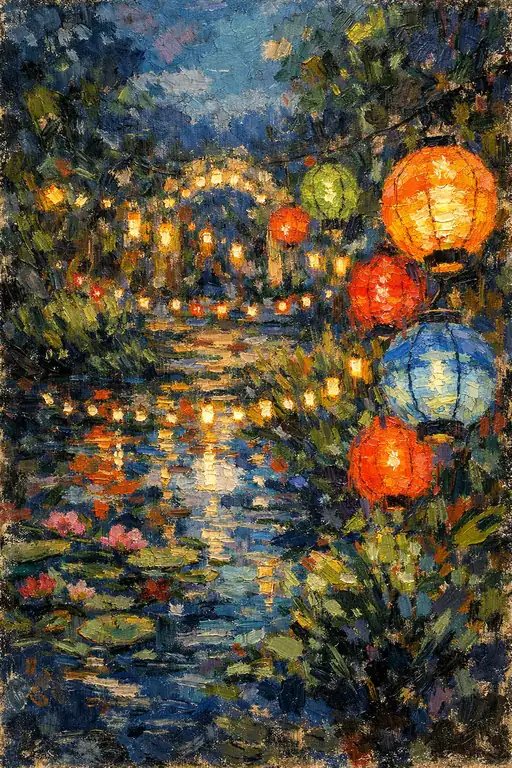 Lanterns Adrift in the Velvet Night
Similar Artworks
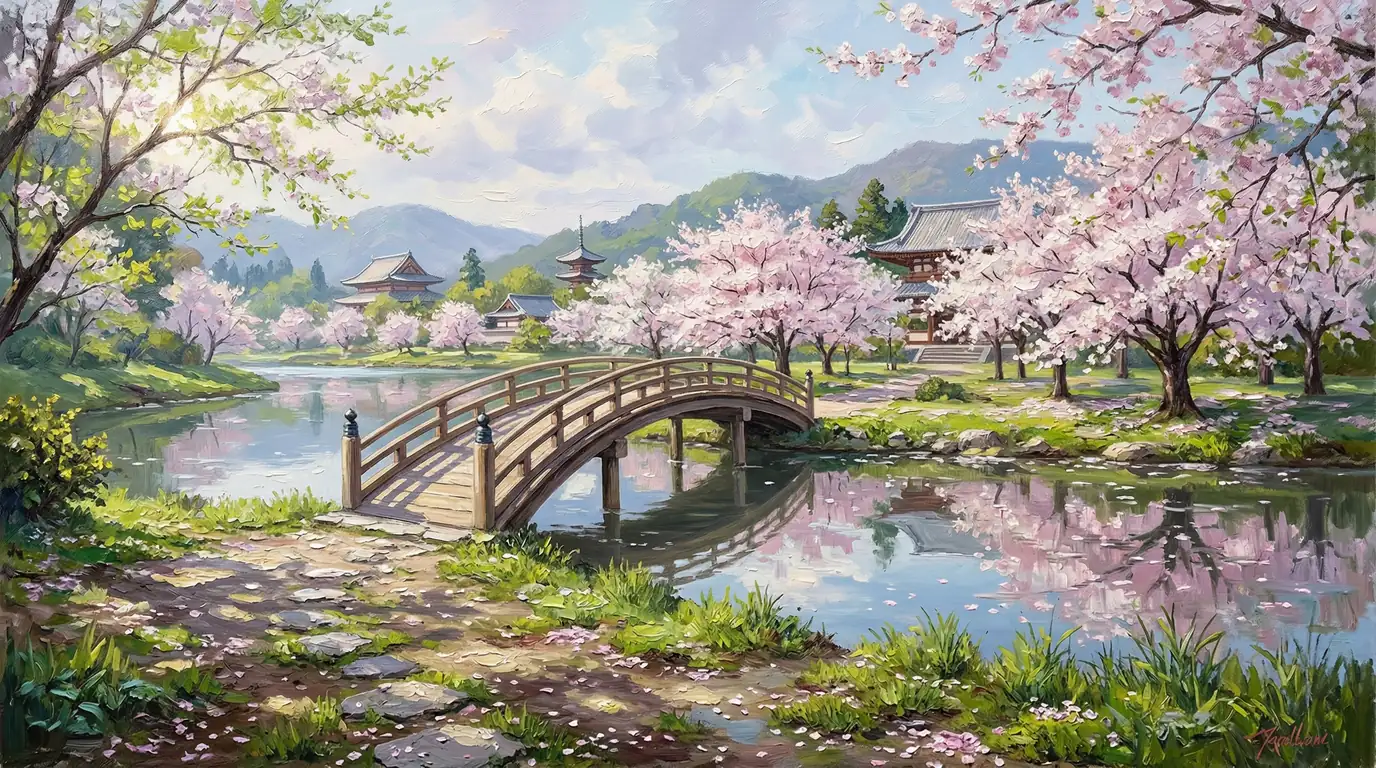 The Bridge of Spring's Awakening
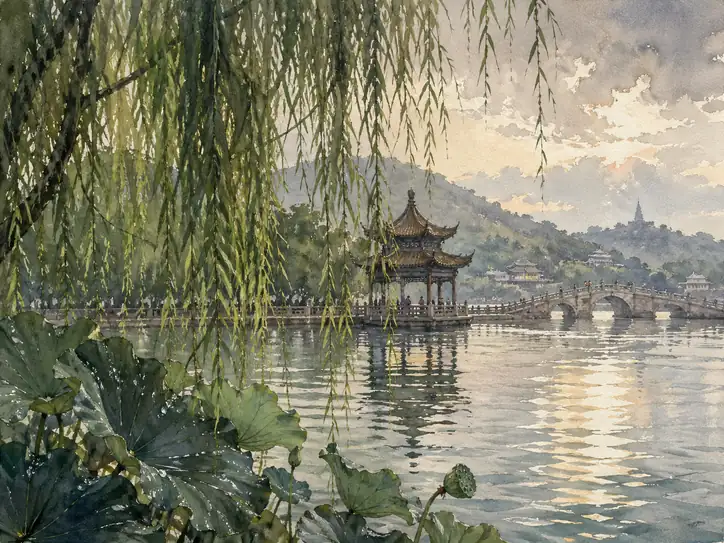 Golden Harmony at West Lake
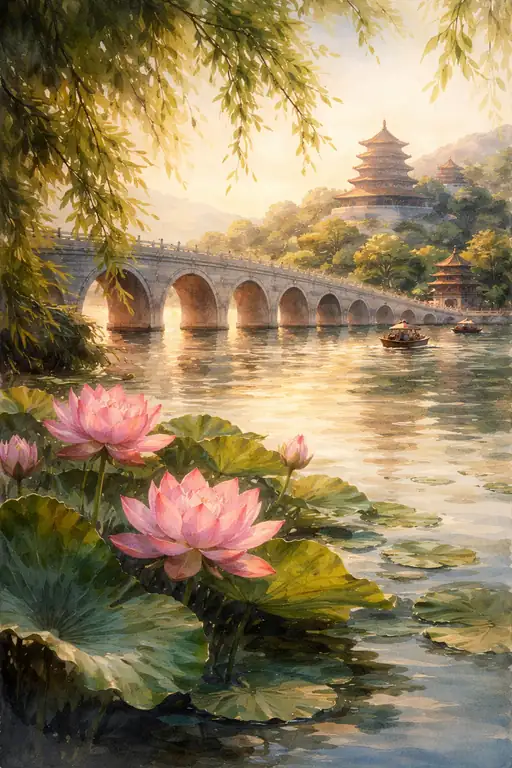 Golden Lotus in the Imperial Garden
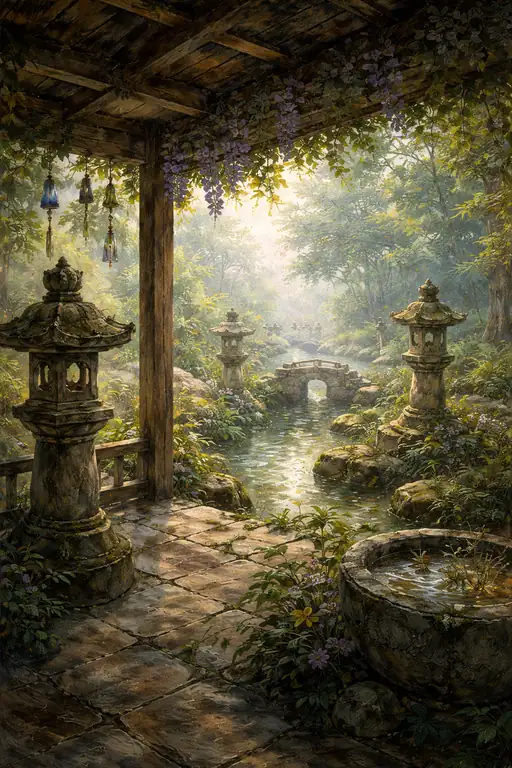 Solace in the Summer Verdure
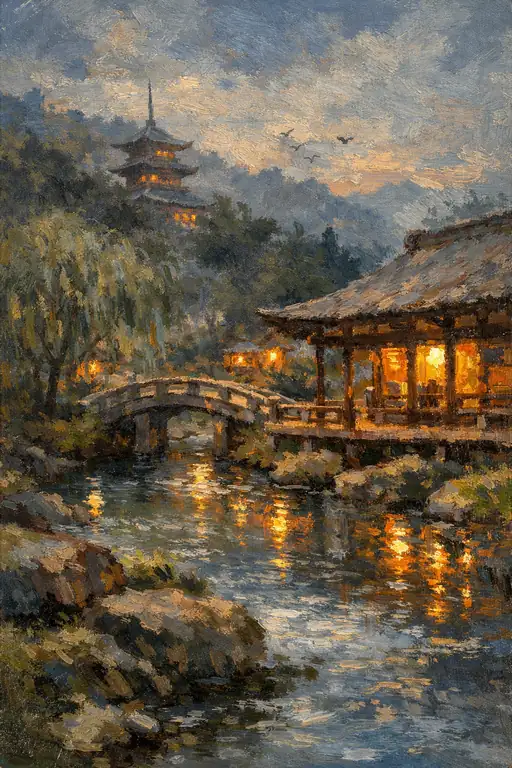 Echoes of the Gilded Twilight: A Serene Voyage Through Time's Painted River
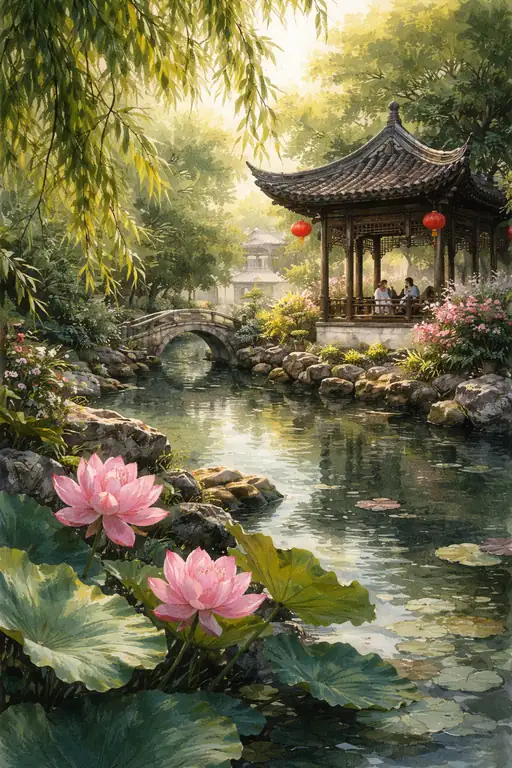 Tranquility in Bloom: The Lotus Pavilion
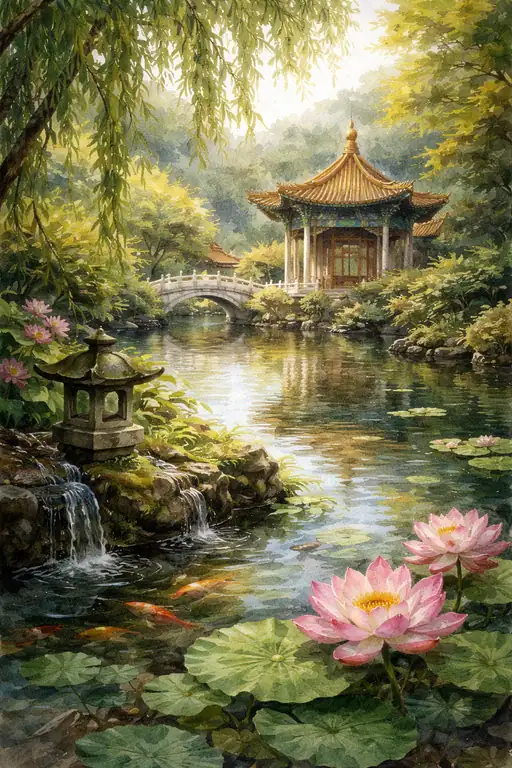 Serenity of the Gilded Pavilion
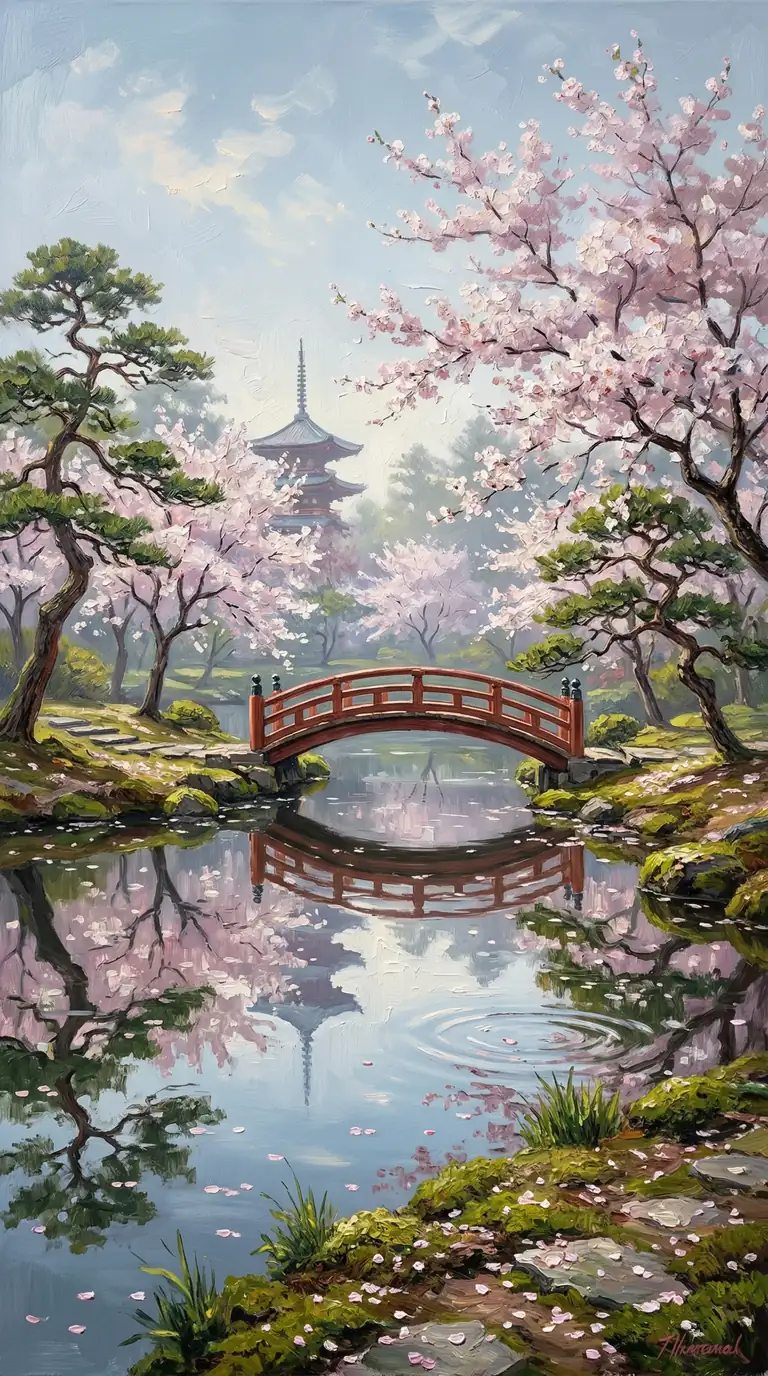 Harmony in Red and Pink: The Eternal Spring Garden
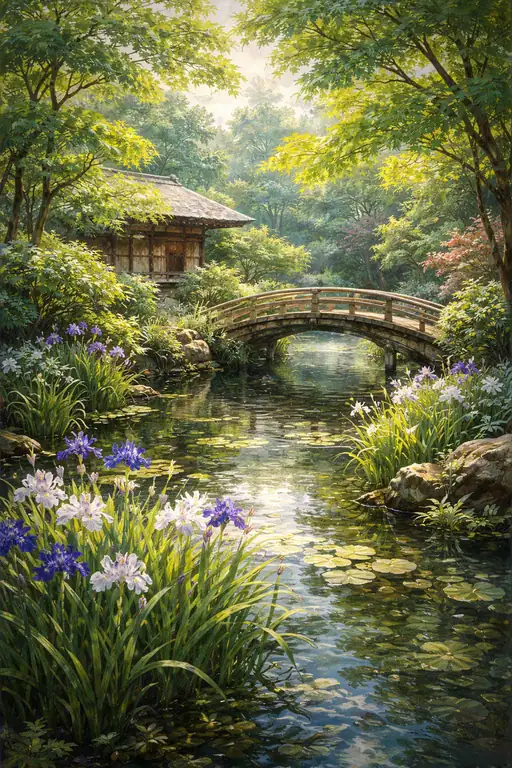 Morning Reflection on the Wooden Arch
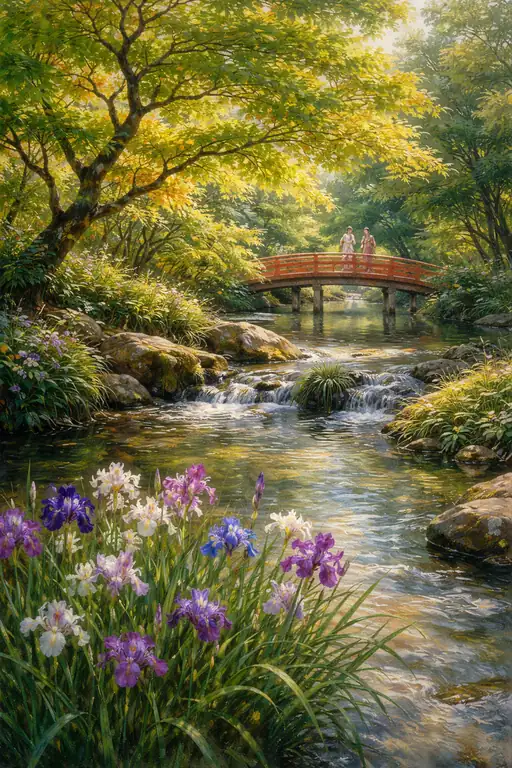 Dance of the Irises by the Crimson Bridge