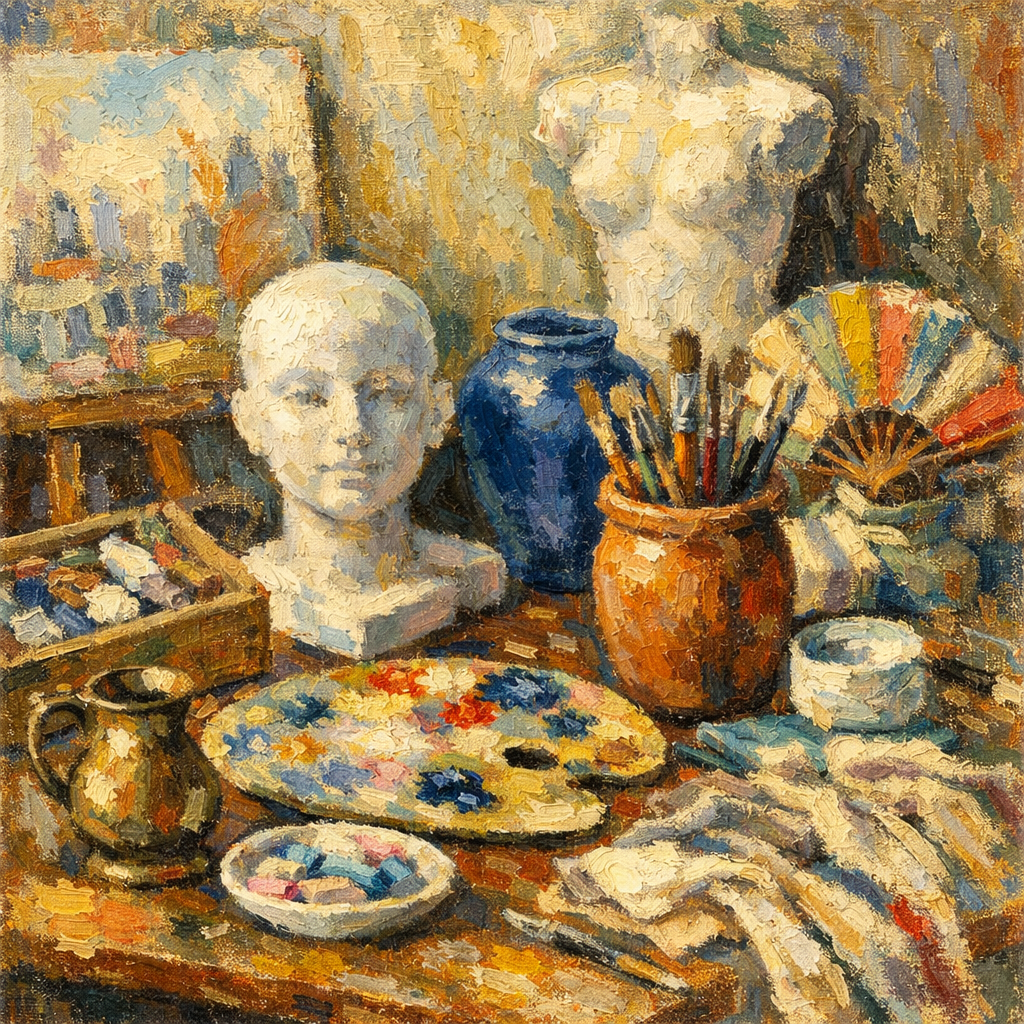
Colors of the Creator's Sanctum
Critique
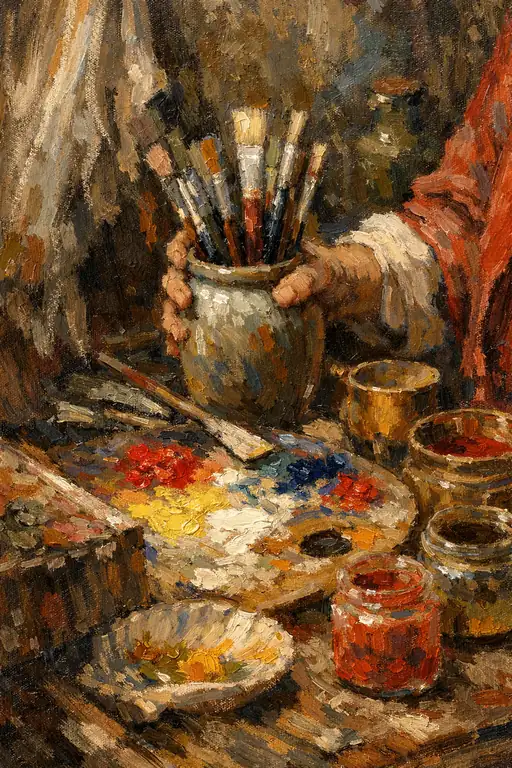
1. Introduction This oil painting presents a captivating still life composition that offers a glimpse into an artist's atelier, showcasing the tools and inspirations of the creative process. The work features a variety of objects, including plaster casts, a paint-laden palette, and a jar of brushes, all arranged on a cluttered workbench. Through its textured surface and vibrant colors, the painting explores themes of artistic labor, classical beauty, and the materiality of art itself. 2. Description The central focus of the composition is a white plaster bust of a youthful head, placed next to a vibrant blue ceramic vase. Behind them stands a classical female torso cast, its form simplified by the play of light. In the foreground, a wooden palette covered in dabs of primary colors lies next to a bowl of pastels and a collection of brushes in a clay jar. To the left, a box of paint tubes is visible, while a colorful folding fan rests on the right. The entire scene is bathed in a warm, directional light that highlights the thick layers of paint across the various surfaces. 3. Analysis The artist utilizes a bold impasto technique, where thick application of paint creates a physical depth that mirrors the three-dimensional nature of the plaster casts. The color palette is rich and varied, with the brilliant blue of the vase serving as a striking contrast to the warm ochres and whites of the studio environment. The composition is densely packed but balanced, with the vertical elements of the casts and jars providing structure against the horizontal planes of the palette and workbench. Visible brushstrokes emphasize the energetic and tactile quality of the work, making the artist's process an integral part of the visual experience. 4. Interpretation and Evaluation This work can be interpreted as a meditation on the nature of creation, where the objects of study and the means of expression are presented together. The inclusion of classical casts suggests a respect for tradition, while the vibrant, modern application of paint points to a dynamic contemporary vision. The artist demonstrates great skill in capturing the varied textures of plaster, ceramic, and dried paint within a unified, atmospheric light. The composition successfully conveys the organized chaos of a working studio, inviting the viewer into the private space of artistic invention. 5. Conclusion In conclusion, the painting effectively captures the essence of artistic life through its meticulous arrangement and powerful use of color and texture. The initial impression of a busy workbench evolves into a deeper understanding of the relationship between the artist's tools and their creative output. This piece stands as a vibrant celebration of the artistic journey, showcasing both the discipline of classical study and the expressive freedom of the painterly medium.
Same Subcategory
 The Weight of Wisdom
 Golden Haze of the Scholar's Room
Similar Artworks
 Echoes of Creation on a Golden Palette
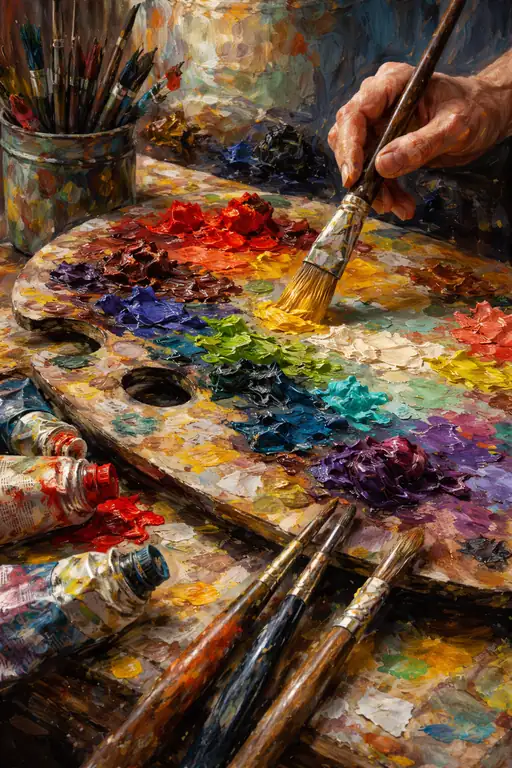 The Vibrant Pulse of the Artist's Soul
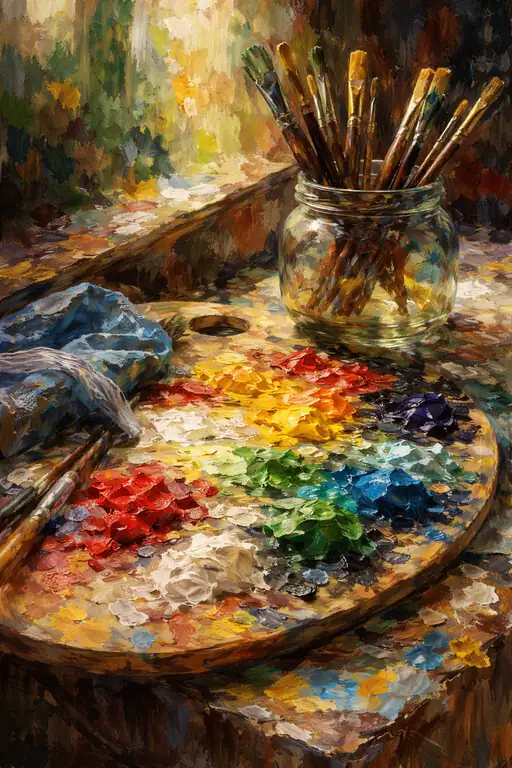 The Silent Heat of Creation
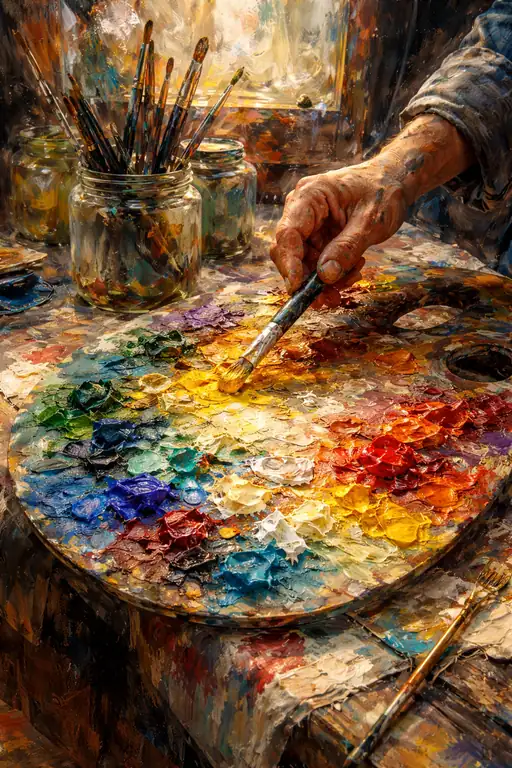 The Alchemist's Chromatic Pulse
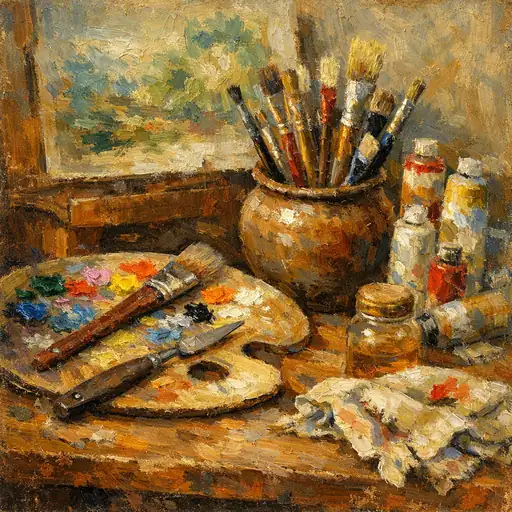 The Alchemy of Color: Still Life of a Painter's Soul
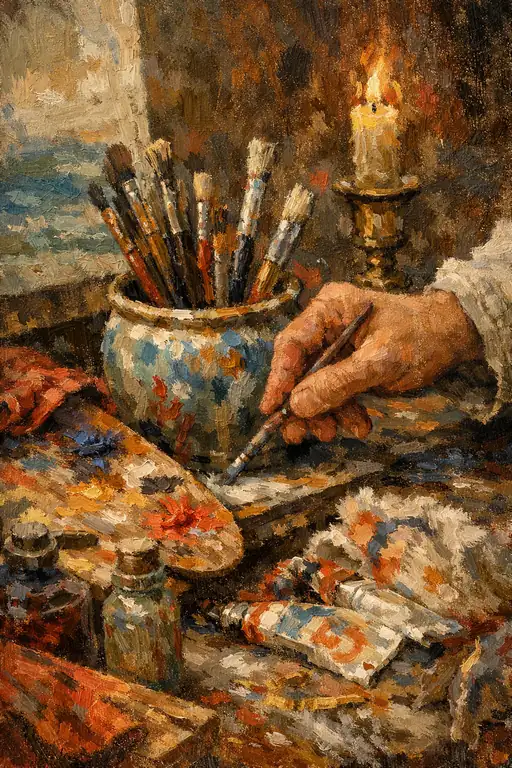 A Symphony of Brush and Candle
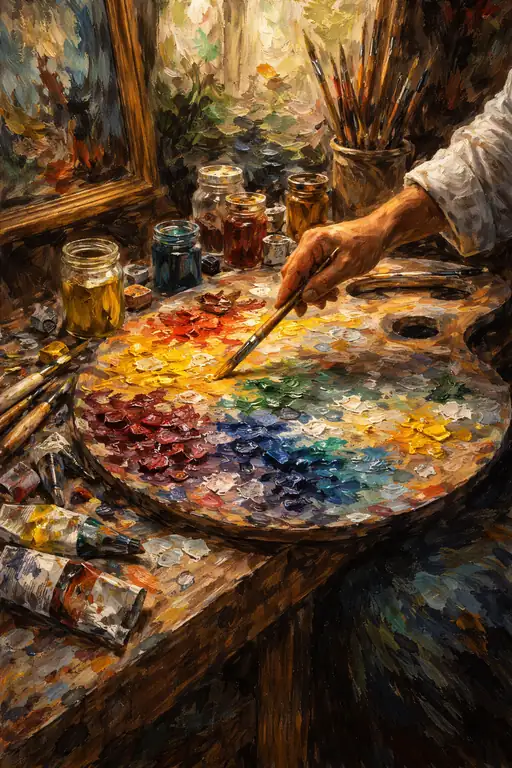 Genesis of a Masterpiece
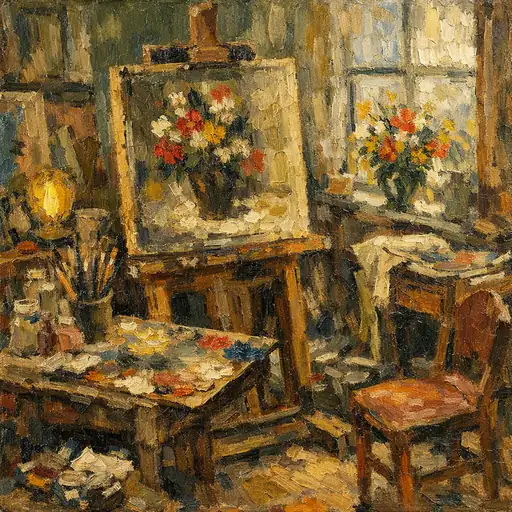 Echoes of the Silent Canvas
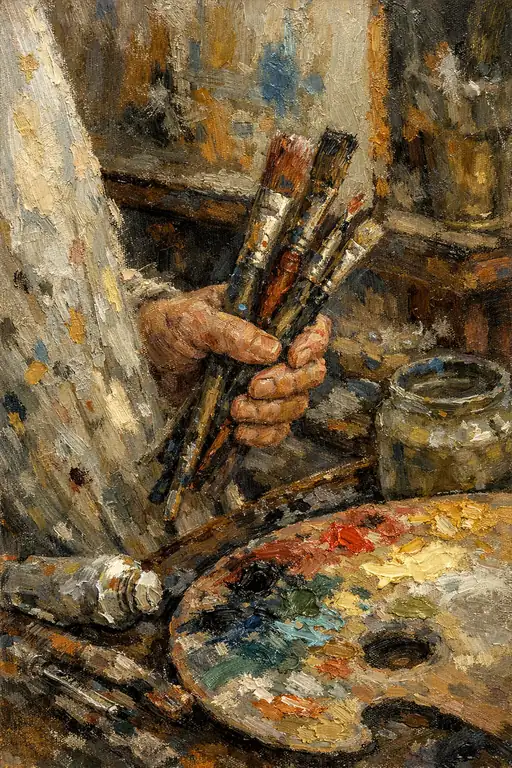 The Pulse of Creation in the Hand
 Chaos of the Muse