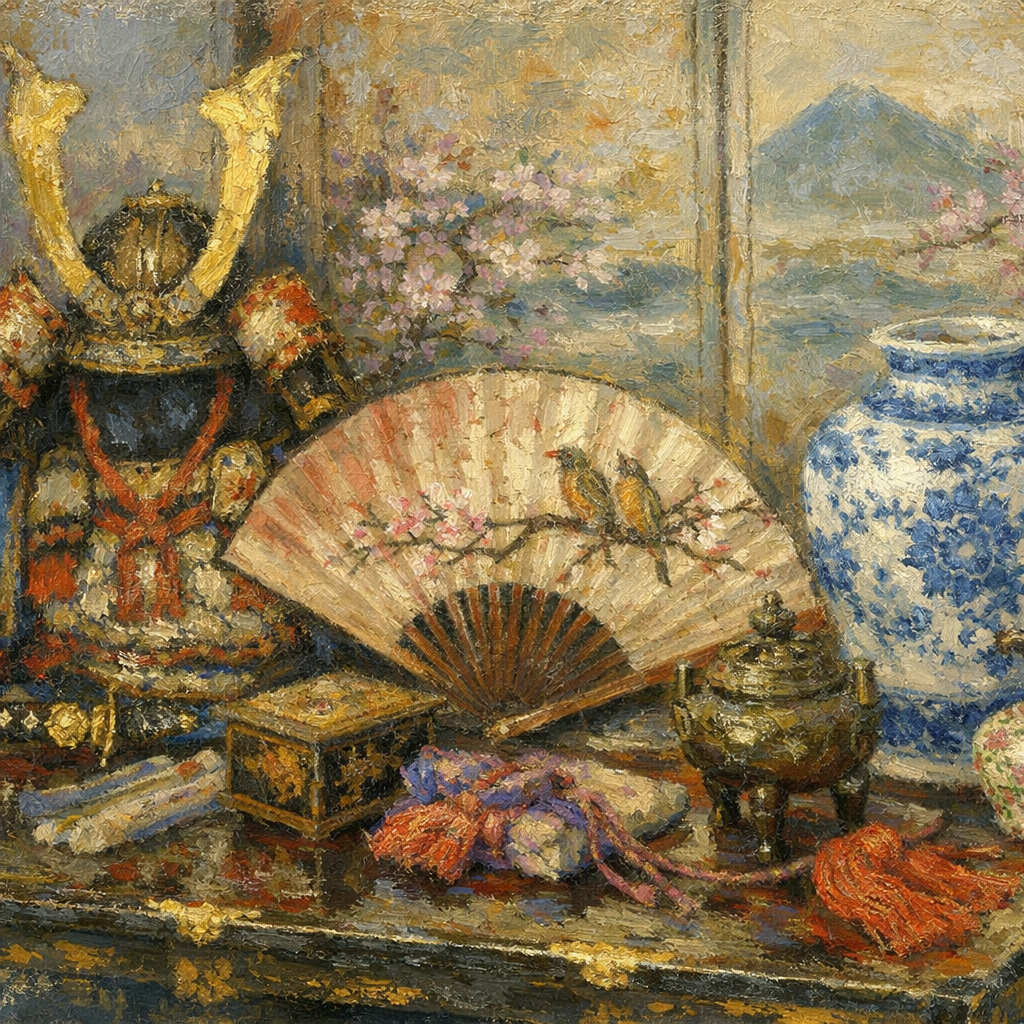
Spirit of the Golden Crest
Critique
1. Introduction This oil painting presents an evocative still life composition that celebrates traditional Japanese culture and aesthetics. The work features an array of historic artifacts, including a samurai helmet and a folding fan, arranged meticulously on a dark, lacquered surface. Through its rich textures and symbolic motifs, the painting explores themes of heritage, honor, and the enduring beauty of classical Japanese art forms. 2. Description To the left of the composition stands a majestic samurai helmet with prominent gold-colored crests, its intricate details highlighted by thick paint. A folding fan, decorated with a scene of two birds on a cherry blossom branch, is positioned centrally, partially leaning against a blue and white porcelain vase. In the foreground, an ornate incense burner, a small black lacquer box, and various silken tassels and scrolls are scattered. The background reveals a serene view of Mount Fuji framed by delicate pink cherry blossoms, bridging the interior still life with the iconic landscape. 3. Analysis The artist utilizes a sophisticated color palette dominated by earthy tones, deep blues, and brilliant golds, all rendered with a heavy impasto technique. The brushwork is particularly energetic, creating a tactile surface that emphasizes the physical presence of each object. The lighting is diffused, casting soft shadows that enhance the three-dimensional quality of the incense burner and the helmet. The composition is structured around the strong vertical of the vase and the fan's elegant curve, which directs the eye toward the distant mountain, creating a sense of balanced depth. 4. Interpretation and Evaluation This work can be interpreted as a respectful exploration of Japonisme, where the artist blends Western oil painting techniques with Eastern subject matter. Each object serves as a vessel for cultural memory, from the martial strength symbolized by the helmet to the fleeting beauty of the cherry blossoms. The artist demonstrates a high level of technical skill in capturing the diverse textures of metal, paper, and ceramic within a unified atmospheric style. The inclusion of Mount Fuji adds a spiritual dimension, transforming the collection of objects into a cohesive narrative of national identity. 5. Conclusion In conclusion, the painting effectively captures the quiet dignity and intricate beauty of Japanese artifacts through its masterful use of texture and composition. While the initial impression is one of a dense collection of objects, a deeper analysis reveals a harmonious balance between the domestic sphere and the natural world. The work stands as a powerful tribute to the timeless appeal of Japanese cultural symbols and the expressive potential of the oil medium.
Same Subcategory
Similar Artworks
 Golden Shadows of the Past
 The Warrior's Resolve
 The Weight of Glory and Sapphire Dreams
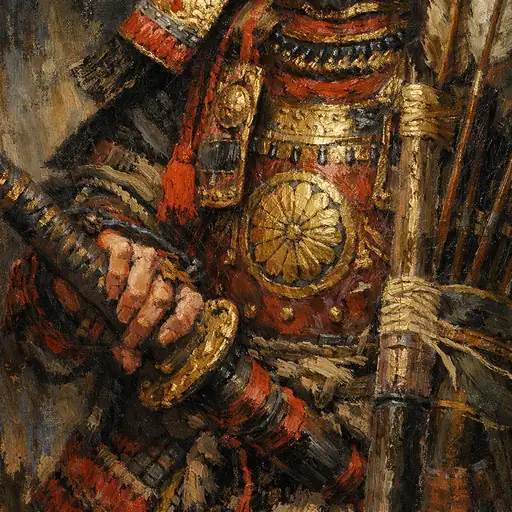 The Silent Will of the Crimson Armor
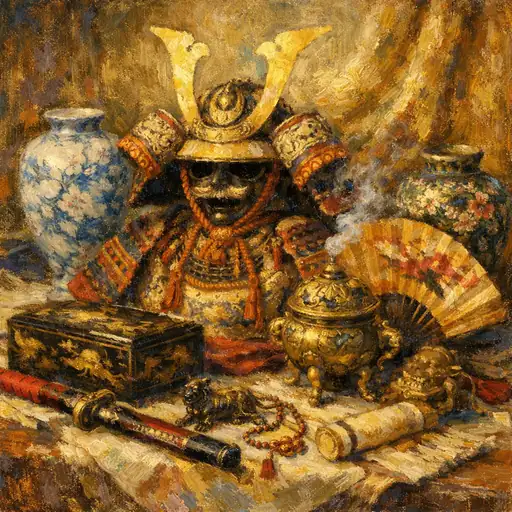 The Warrior's Relics: A Still Life with Samurai Armor
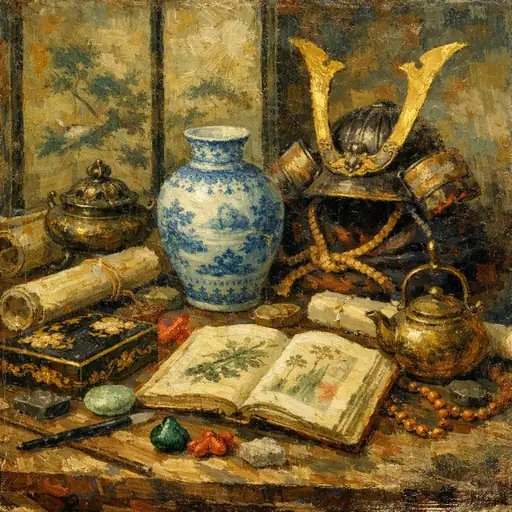 The Weight of Wisdom
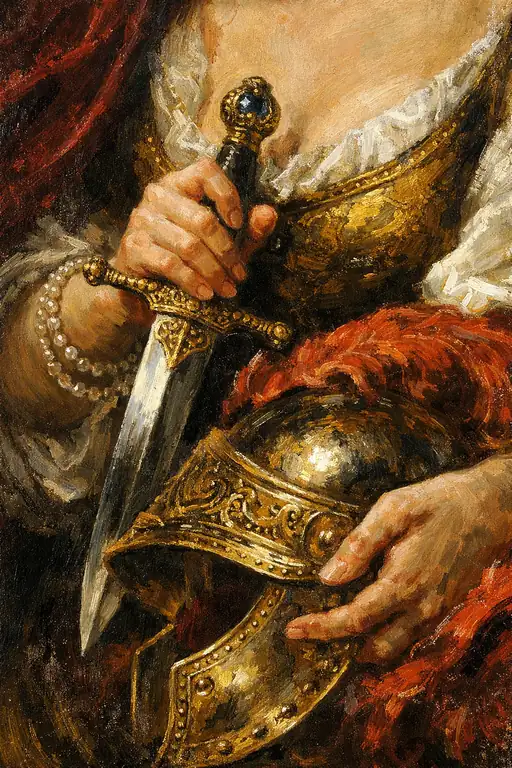 The Golden Burden of Honor
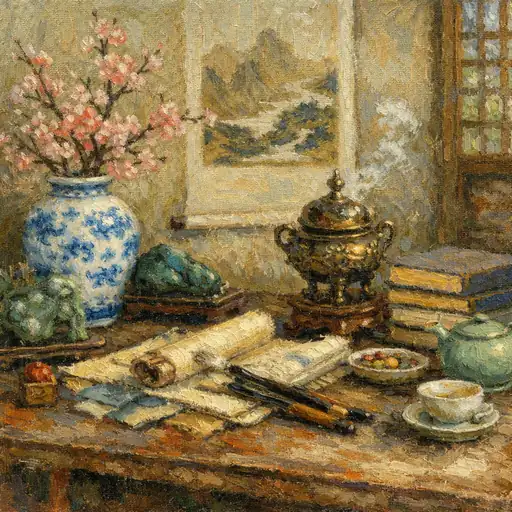 The Scholar's Reverie: Fragrant Smoke and Timeless Ink
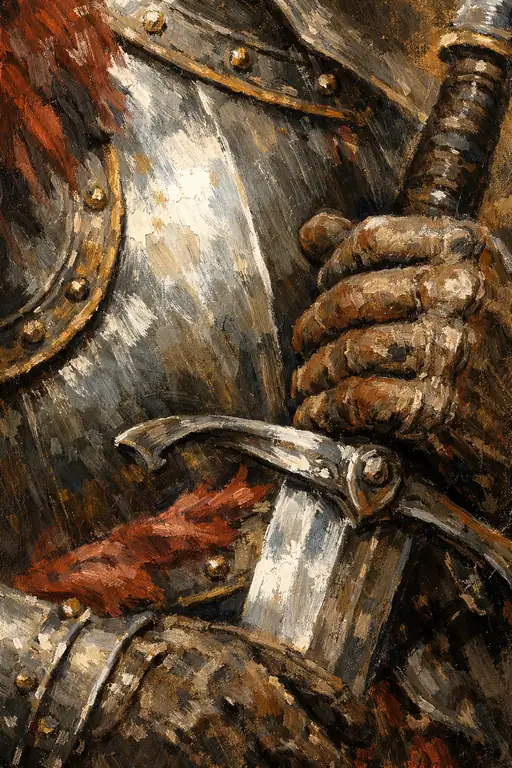 Echoes of a Forgotten Vow
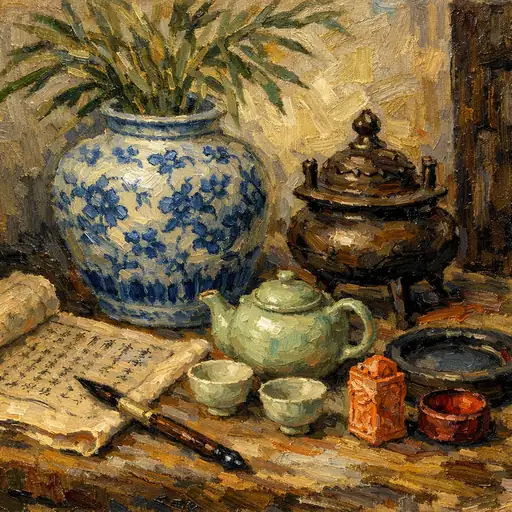 The Scholar's Reverie: Celadon and Ink