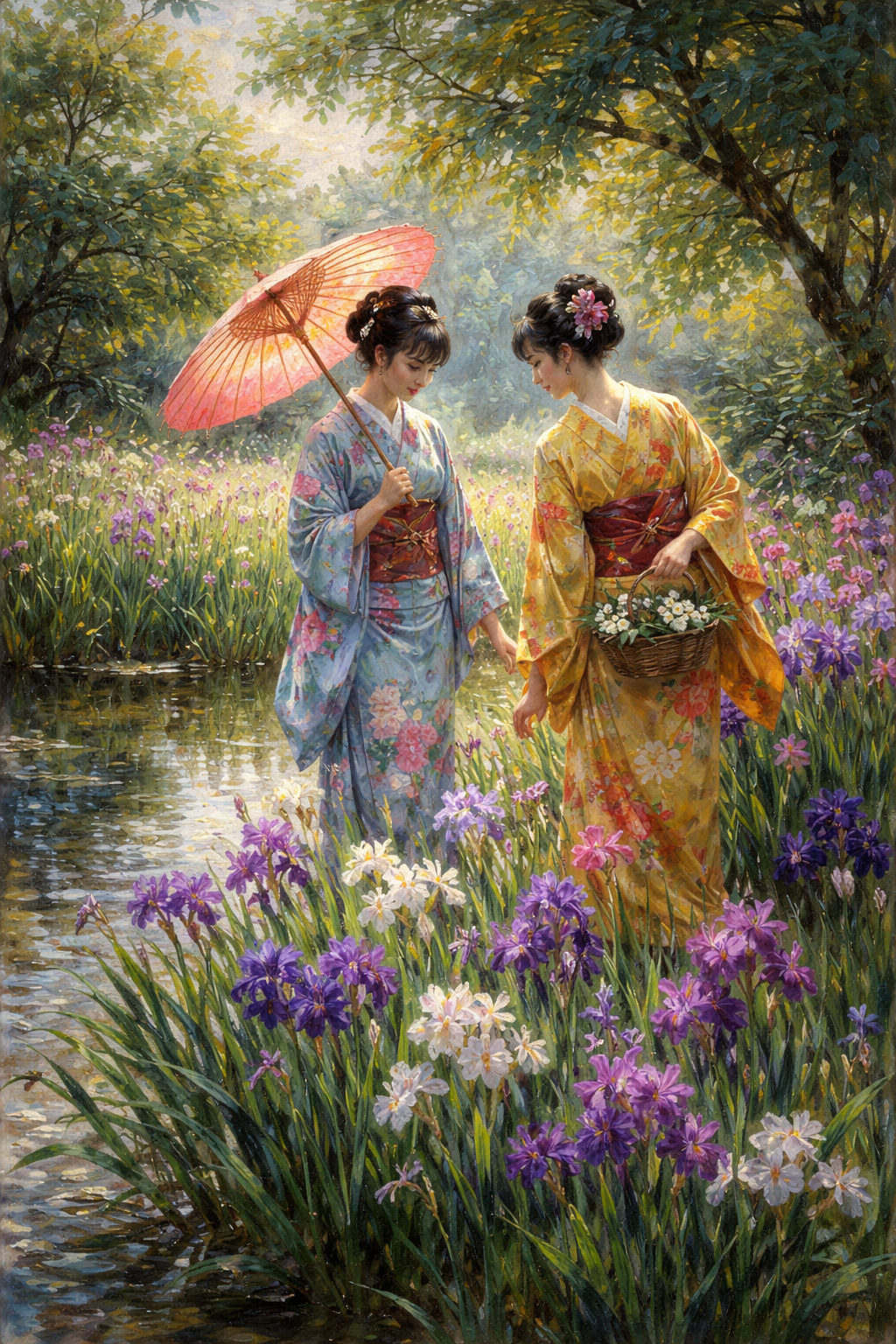
Echoes of Traditions Past
Critique
1. Introduction This oil painting depicts two women dressed in traditional Japanese kimonos strolling through a lush iris garden beside a peaceful pond. The work is characterized by its vibrant color palette and delicate, shimmering brushwork, capturing the harmonious relationship between humanity and the natural world. By approaching a classical Japanese scene through a Western Impressionist lens, the artist achieves a timeless quality that resonates with universal emotional depth. The painting exudes a sense of serene joy under the soft glow of dappled sunlight. 2. Description Two women stand near the center of the composition, surrounded by a sea of blooming irises. The woman on the left wears a light blue kimono and carries a striking red parasol, while the woman on the right is dressed in yellow and holds a basket filled with small white flowers. At their feet, purple and white irises grow in abundance, leading the eye toward the gently rippling pond on the left. The background is filled with dense green trees, through which sunlight filters to create a play of light and shadow. 3. Analysis The color composition utilizes the contrast between the blue and yellow of the kimonos, accented by the bold red of the parasol, to create a visual rhythm. The purple tones of the flowers serve to unify the foreground, while the deep greens of the trees provide a solid backdrop that makes the colors pop. Technically, the use of small, broken strokes effectively visualizes the vibration of light and the movement of the air. Light diffuses from the background, creating soft highlights on the folds of the garments. 4. Interpretation and Evaluation The painting can be interpreted as a celebration of seasonal transition and the human appreciation of nature窶冱 fleeting beauty. The quiet interaction and gentle postures of the women suggest a shared moment of intimacy and peace. Technically, the artist succeeds in rendering a vast number of individual flowers while maintaining overall compositional harmony. The balance between vivid color and delicate light is masterfully handled, providing the viewer with a sense of tranquility. It is a highly accomplished work that skillfully merges tradition with expressive technique. 5. Conclusion What initially appears to be a charming landscape transforms upon closer inspection into a complex study of light and organic form. It is a refined example of how traditional Japanese motifs can be revitalized through the global language of Impressionist oil painting. The work reminds the viewer of the enduring power of nature and the gentleness of the human gaze. Ultimately, it is a testament to the artist窶冱 technical mastery and profound sensitivity, representing a high point of artistic achievement in its synthesis of form and emotion.
Same Subcategory
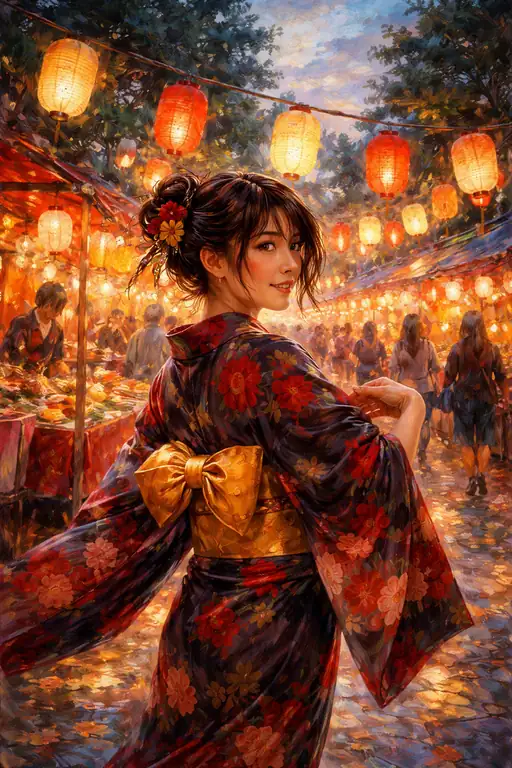 Golden Reverie of the Summer Festival: A Radiant Smile Beneath the Glowing Lanterns
Similar Artworks
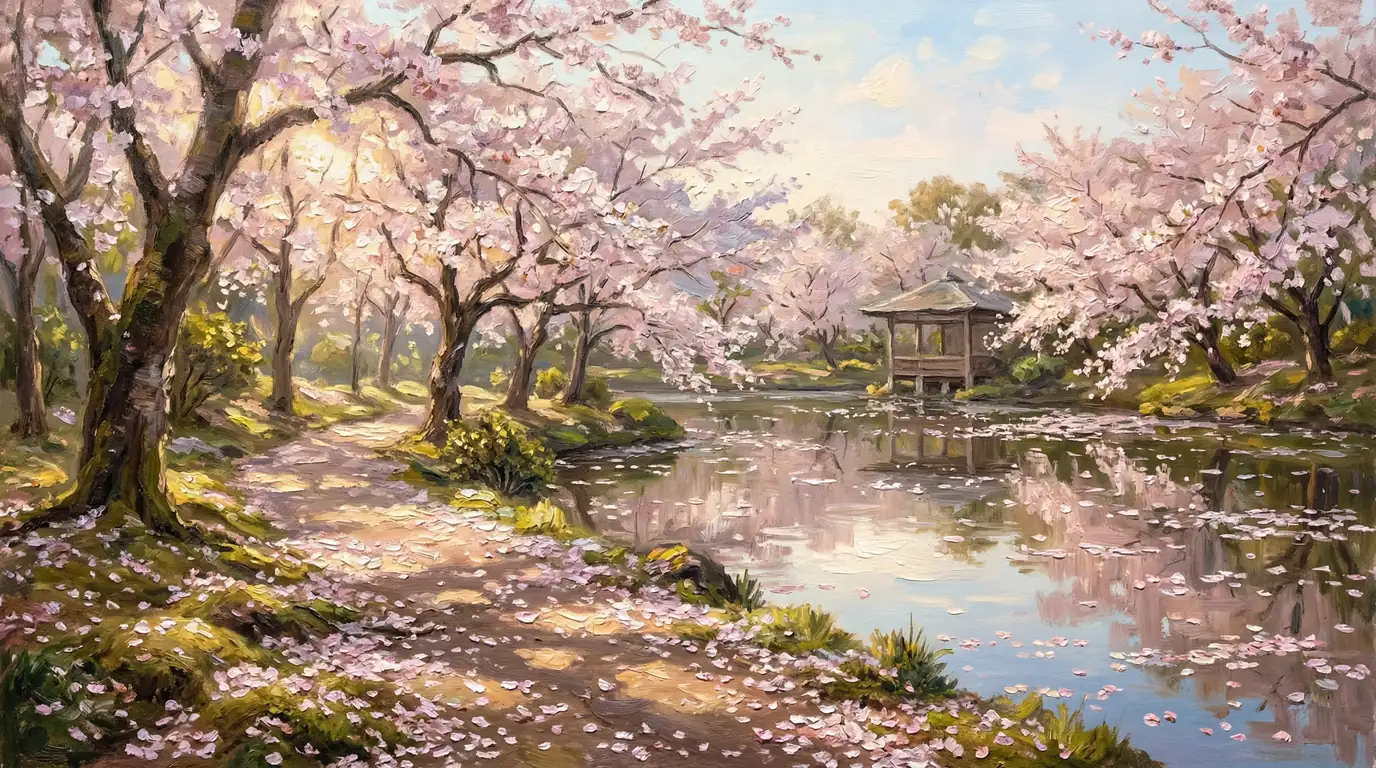 Petals on the Peaceful Pond
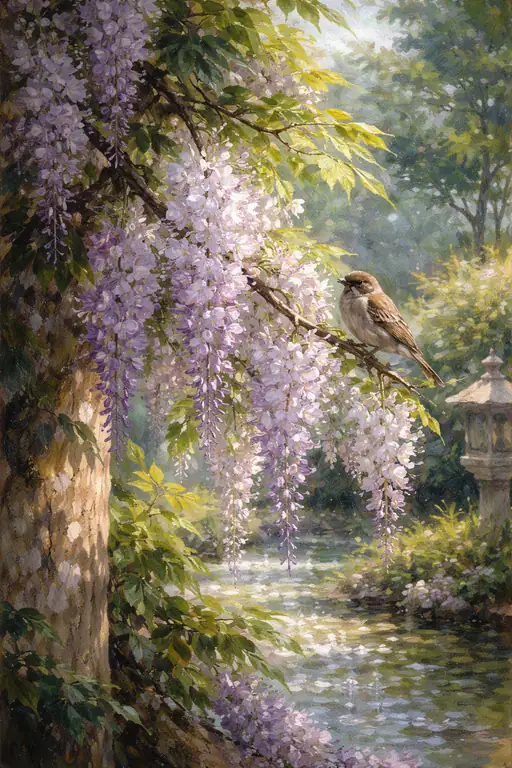 Whispers Beneath the Purple Cascade
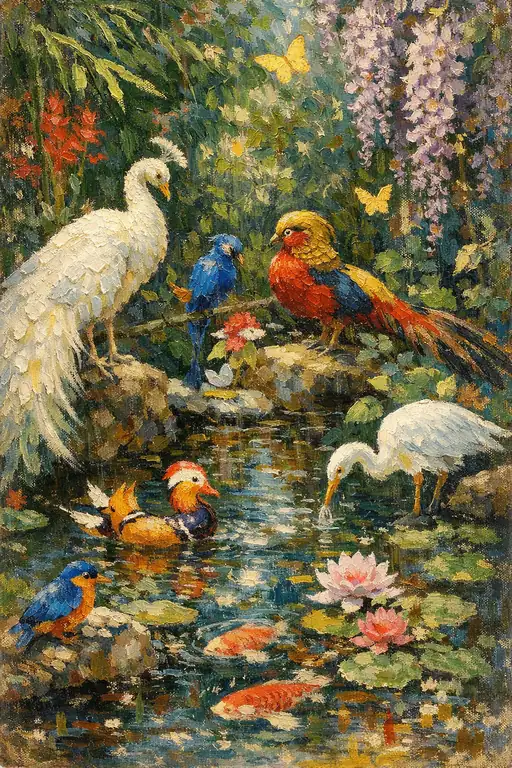 Serenade of the White Peacock in the Forgotten Eden
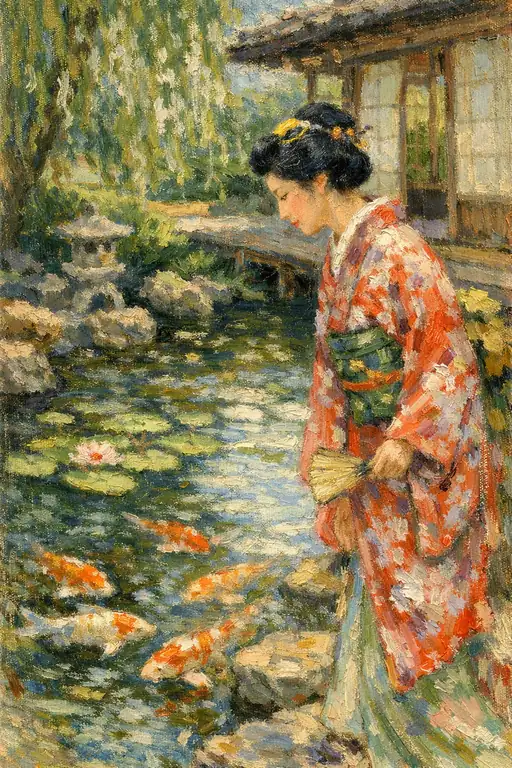 Whispers of the Willow and the Water
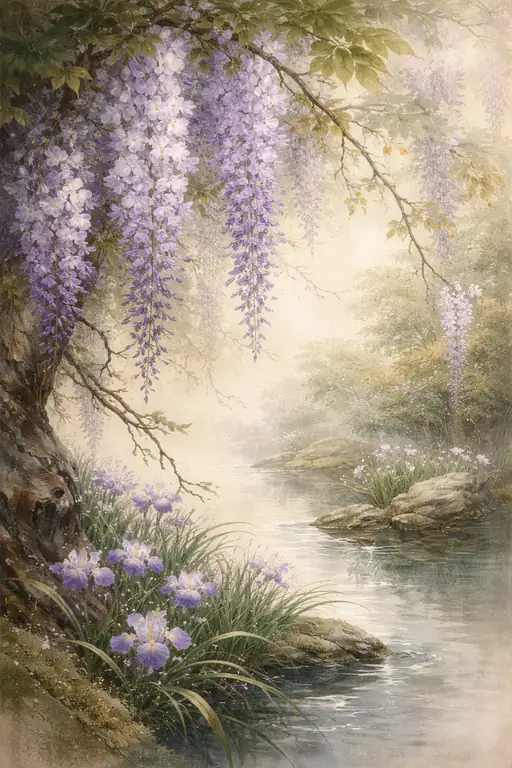 Whispers of the Wisteria Mist
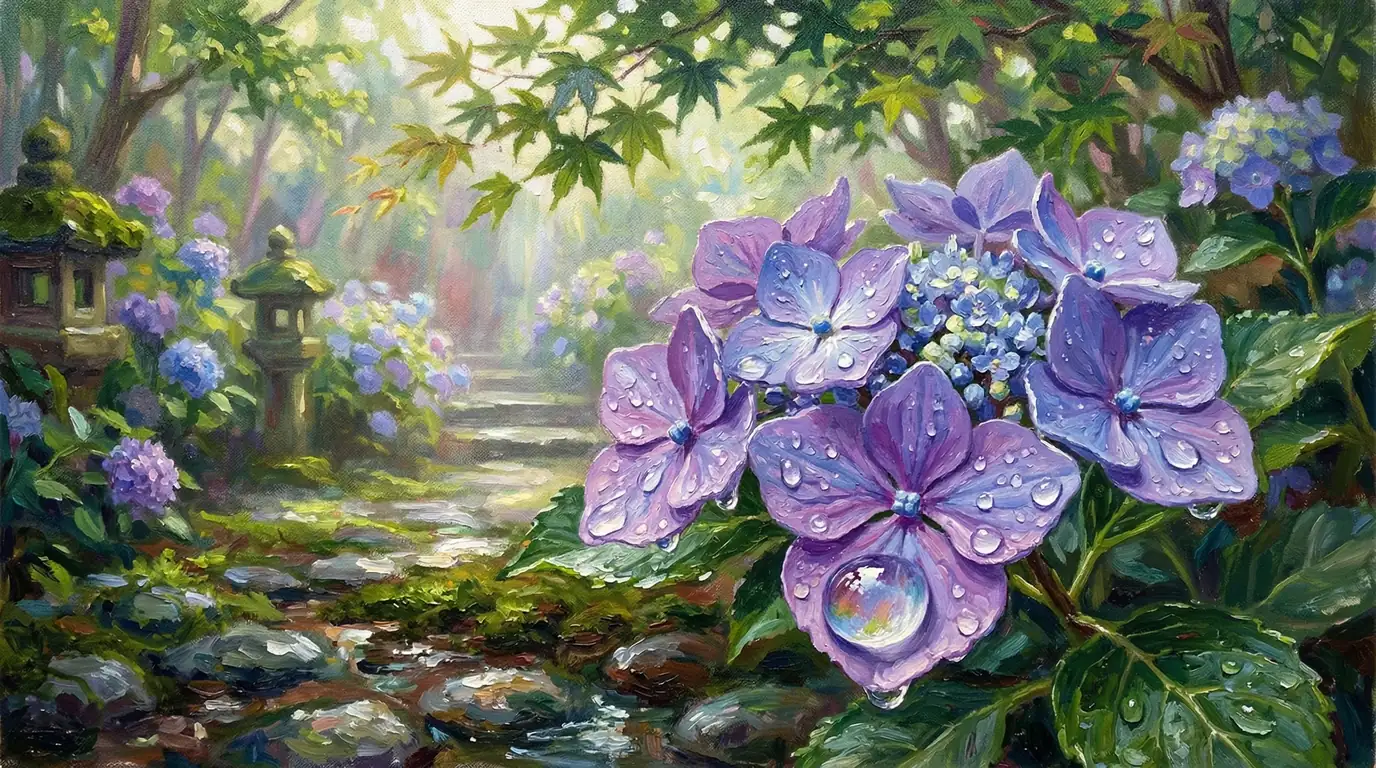 Whispers of the Rainy Garden
 Dance of the Irises by the Crimson Bridge
 Whispers of the Golden Pond
 A Symphony of Petals and Prayer
 Fragments of a Starlit Night