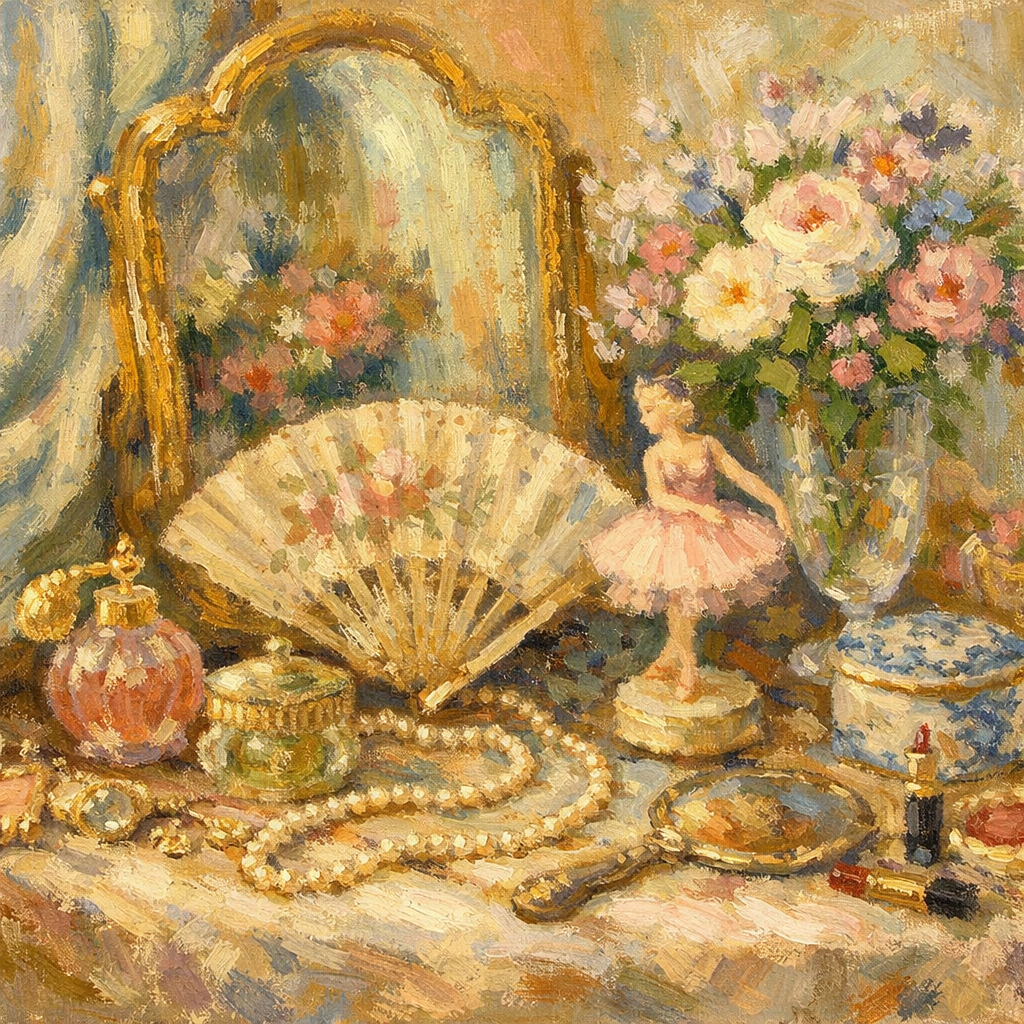
Overture to a Day of Grace
Critique
1. Introduction This still life painting presents an array of elegant items arranged on a vanity or dressing table. The composition includes a gilded mirror, a vase of flowers, a string of pearls, and a delicate ballerina figurine, all depicted with intense painterly energy. The work is characterized by its bold use of oil paint and a vibrant color palette, reflecting a strong influence from late Impressionist techniques. It seeks to elevate the mundane objects of daily life into a rich, visual narrative of beauty and grace. 2. Description At the center of the scene stands a decorative gold-framed mirror, reflecting the soft colors of the room. In front of it, an open fan lies flat, while to the right, a glass vase overflows with pink and white blossoms. A small figurine of a ballerina in a pink tutu stands gracefully nearby. The foreground is filled with a variety of personal items, including a perfume bottle, jewelry boxes, a hand mirror, and a scattered strand of pearls. The background features draped fabric in shades of blue and yellow. 3. Analysis The artist utilizes a sophisticated palette of gold, pink, and cream, accented by cool blues and purples in the shadows to create depth. Light originates from the upper left, casting gentle highlights across the surfaces of the glass, metal, and silk. The impasto technique is particularly evident in the thick strokes used for the floral petals and the ornate mirror frame, adding a tactile quality. Despite the multitude of objects, the balanced arrangement ensures a sense of visual order and harmony. 4. Interpretation and Evaluation The painting can be interpreted as a celebration of femininity and the private rituals of beauty. Each object serves as a symbol of refinement and personal identity, imbuing the still life with a sense of quiet intimacy. Technically, the work is highly effective in its portrayal of light and material texture through expressive brushwork. The artist窶冱 ability to maintain a balance between descriptive detail and painterly abstraction is commendable. It remains a successful exploration of aesthetic pleasure through oil paint. 5. Conclusion Initial observation reveals a collection of luxury items, but a closer study shows a profound engagement with light and form. By integrating traditional themes with bold, modern techniques, the artist achieves a compelling synthesis of past and present. The work stands as a beautiful expression of the joy found in aesthetic appreciation. Ultimately, it is a highly polished and evocative piece that demonstrates the artist窶冱 mastery of both color and composition, inviting the viewer to appreciate the elegance of the mundane.
Same Subcategory
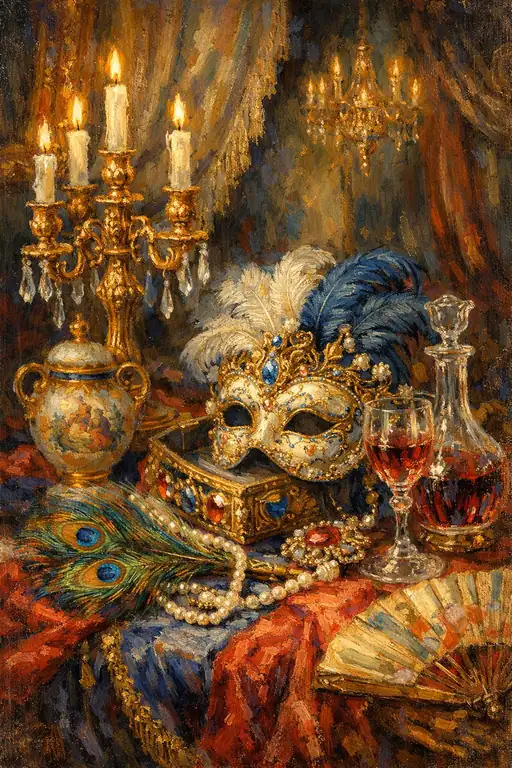 Venetian Masquerade Mask Still Life
Similar Artworks
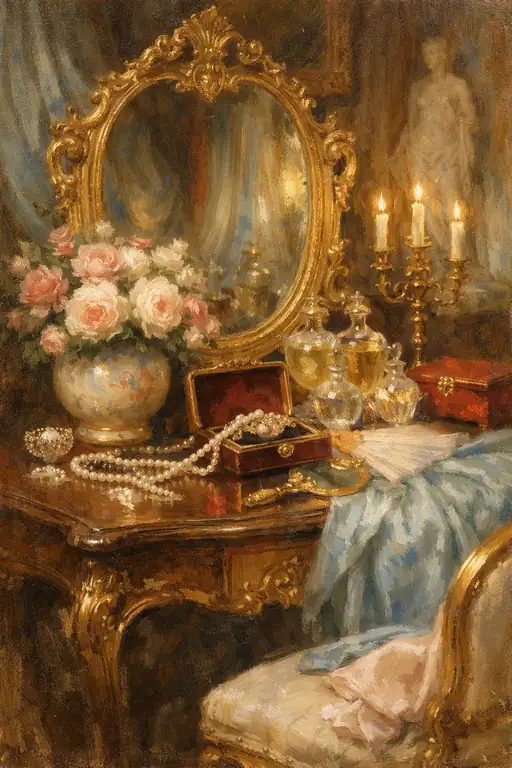 Vintage Vanity Table with Pearls and Roses
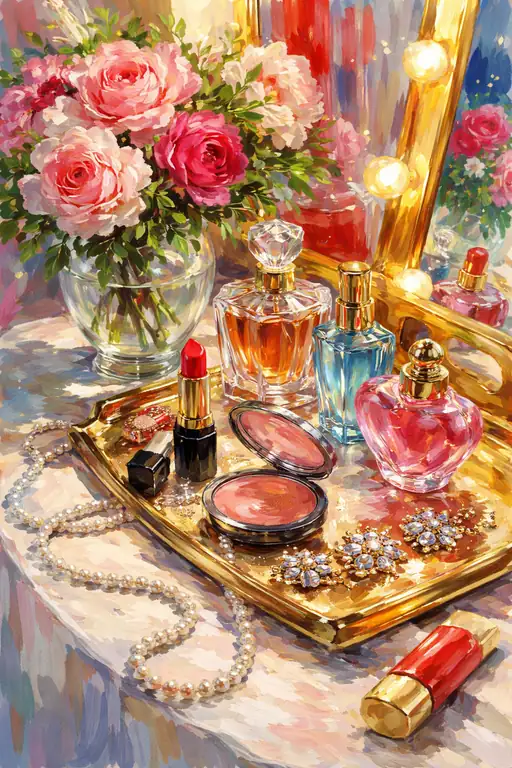 Vanity in Bloom
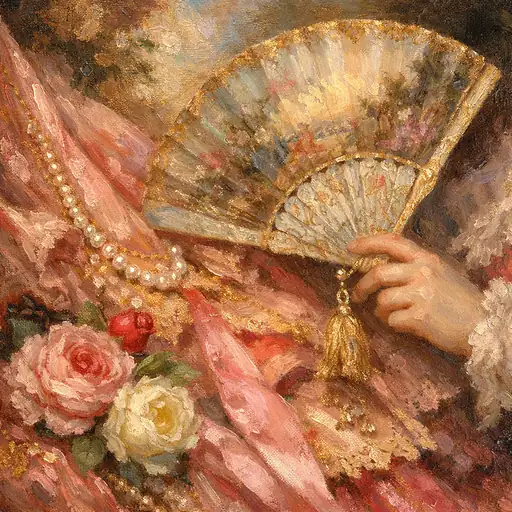 Elegance Enfolded in Silk
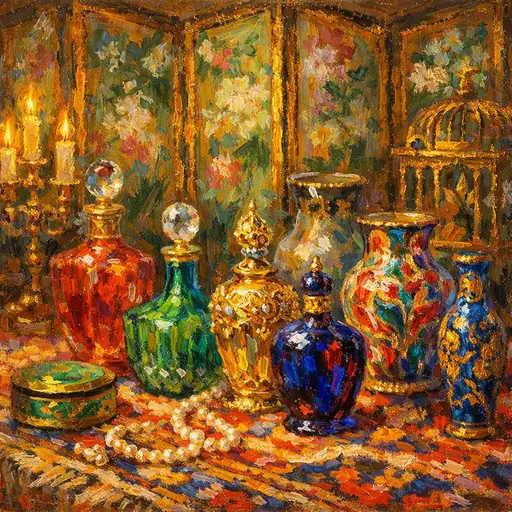 Luxurious Perfume Bottles and Birdcage Still Life
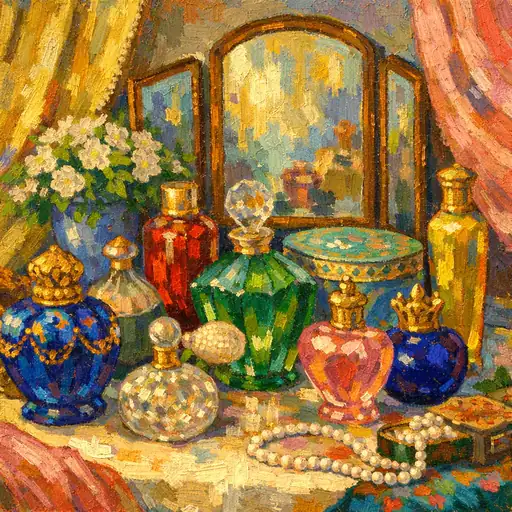 Elegant Vanity with Perfume Bottles and Jewels
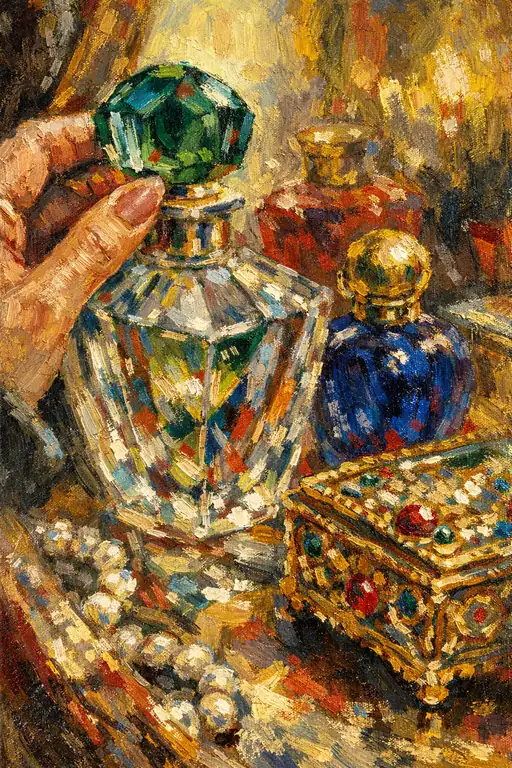 The Intimate Scent of Emerald Memories
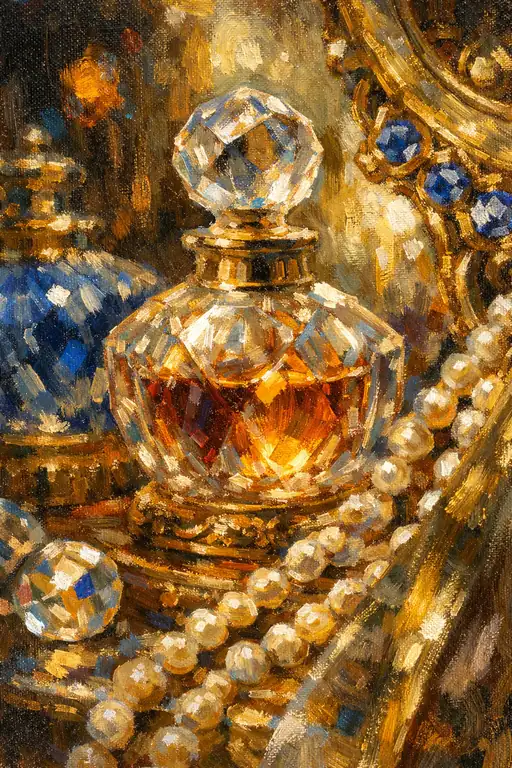 Intimate Reflections of a Gilded Romance
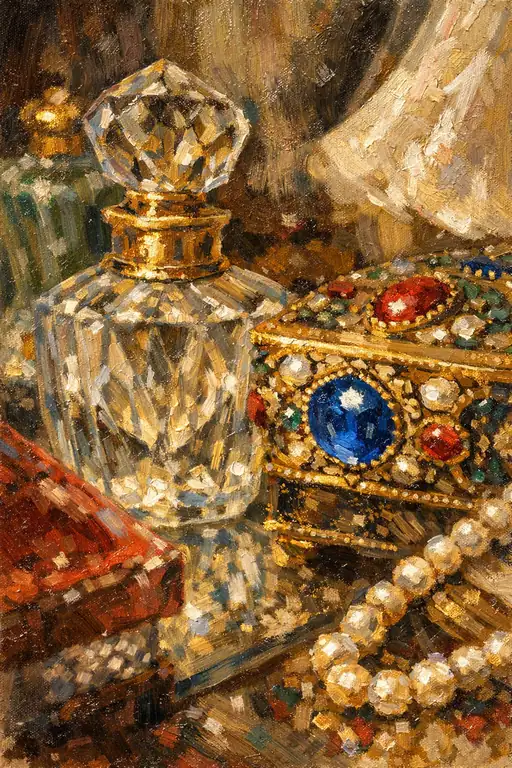 Reflections of a Gilded Dream
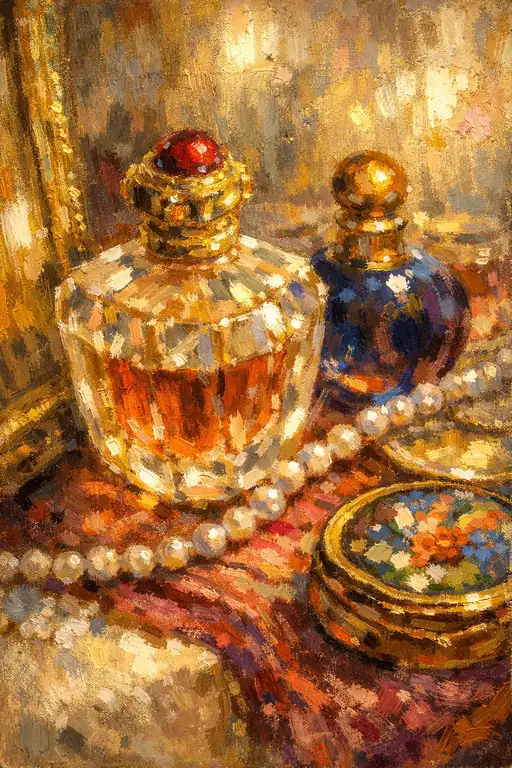 Radiant Moments of Golden Elegance
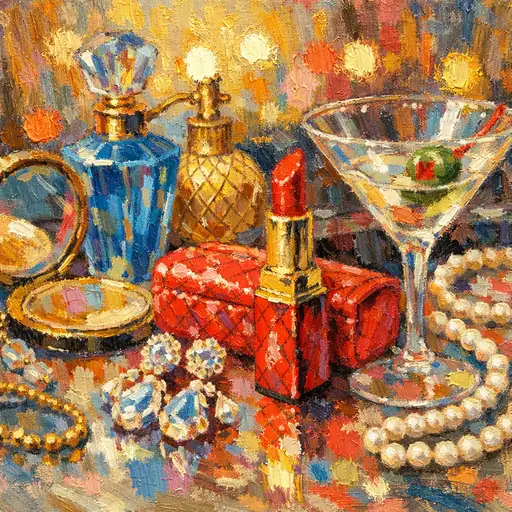 A Timeless Romance of Crimson and Gold