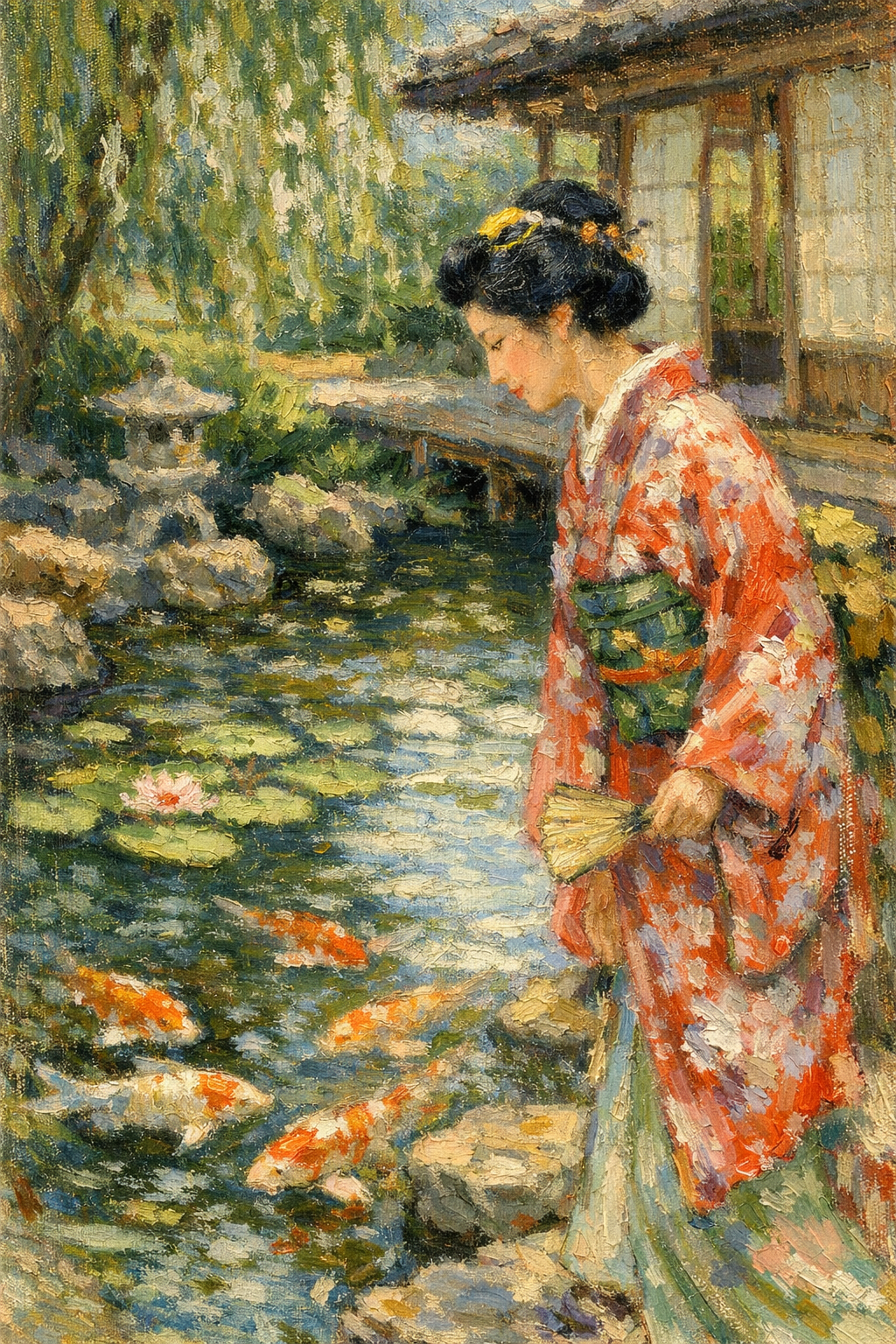
Whispers of the Willow and the Water
Critique
1. Introduction This oil painting depicts a young woman in a traditional Japanese kimono standing beside a garden pond filled with koi fish. The work is characterized by its heavy impasto technique and vibrant color palette, reminiscent of late Impressionist styles. By blending a quintessentially Japanese subject with Western painterly methods, the artist creates a bridge between two distinct cultural aesthetic traditions. The overall atmosphere is one of serene contemplation, capturing a timeless moment in a lush, private garden. 2. Description On the right side of the composition, a woman wearing a richly decorated red and purple kimono gazes down at the water with a gentle expression. She holds a folded fan in her hand, her posture graceful and still as she observes the koi swimming in the clear pond. The background features elements of traditional Japanese architecture, including a wooden veranda and paper sliding doors, partially obscured by the weeping willow branches that cascade from above. Several large rocks and a stone lantern complete the landscape. 3. Analysis The artist窶冱 use of thick, visible brushstrokes adds a tactile dimension to the canvas, effectively conveying the ripples on the water窶冱 surface and the silk of the garment. A sophisticated color palette is employed, where the warm oranges and reds of the fish and clothing contrast sharply with the cool blues and greens of the pond. Light appears to originate from the upper right, illuminating the scene and creating bright highlights on the foliage and the woman窶冱 skin. 4. Interpretation and Evaluation The painting celebrates the harmony between human presence and the natural world. The contrast between the active movement of the koi and the static pose of the woman suggests a balance between vitality and inner peace. Technically, the work is highly successful in its ability to translate the delicate atmosphere of a Japanese garden into the bold language of oil paint. The composition is well-balanced, leading the viewer窶冱 eye naturally through the various elements of the scene. 5. Conclusion While the initial impression is one of a charming genre scene, a deeper analysis reveals a complex study of light and texture. It is a compelling example of how traditional themes can be revitalized through expressive, modern techniques. The work stands as a testament to the enduring beauty of its subject, rendered with a vitality that feels both historic and immediate. Ultimately, the painting invites the viewer to experience a profound sense of cultural and natural harmony.
Same Subcategory
Similar Artworks
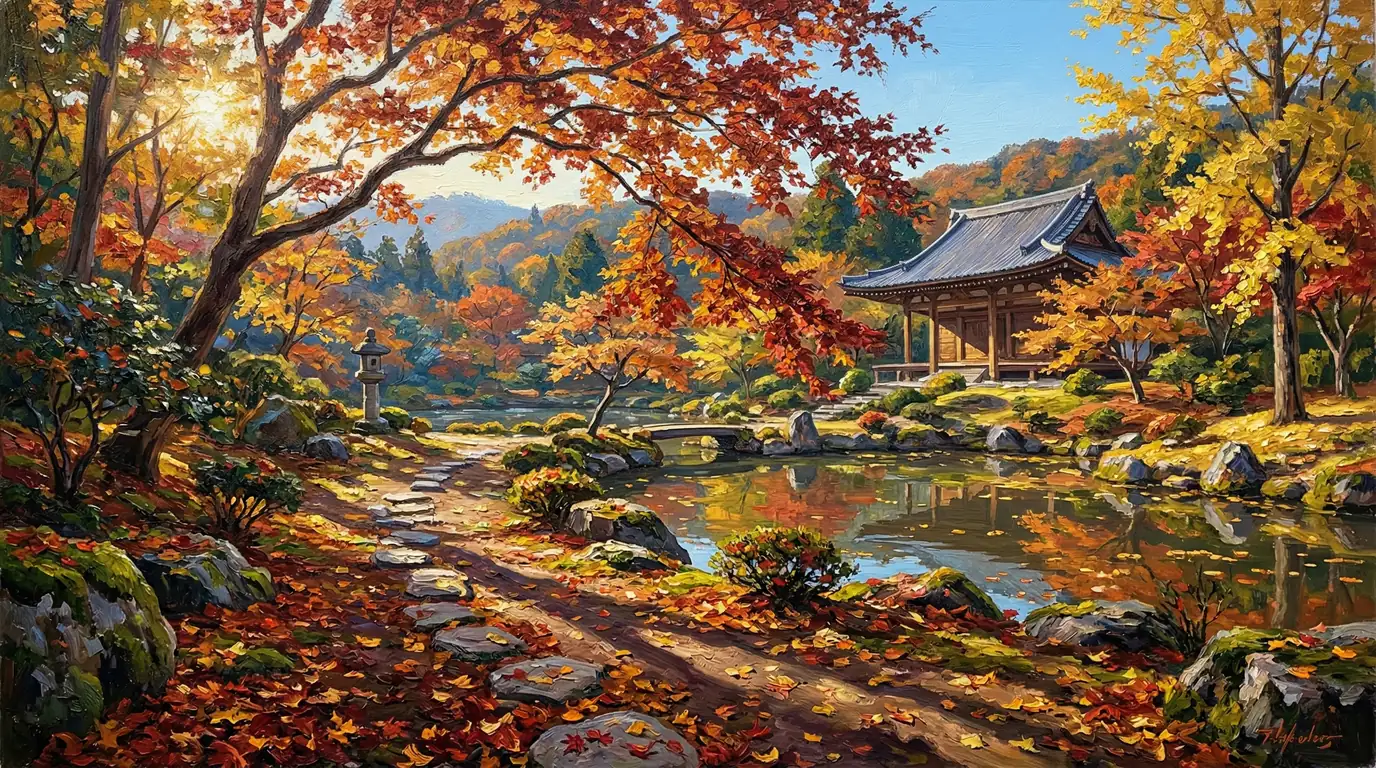 Echoes of Golden Leaves
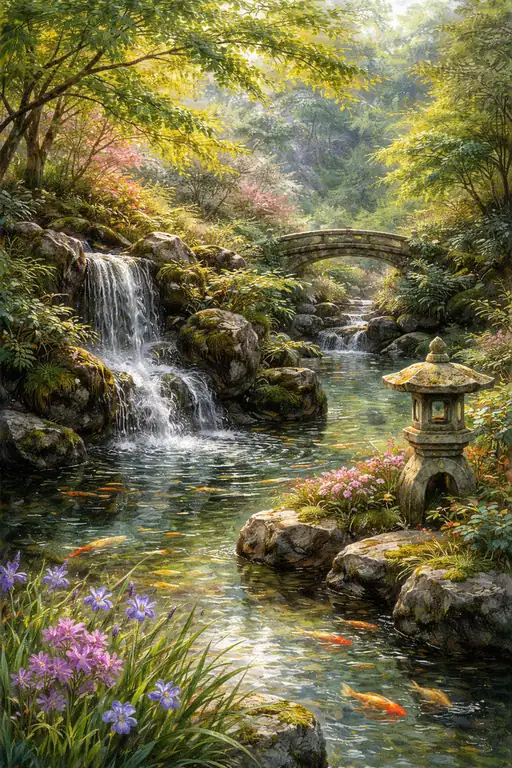 Serenity in the Flow
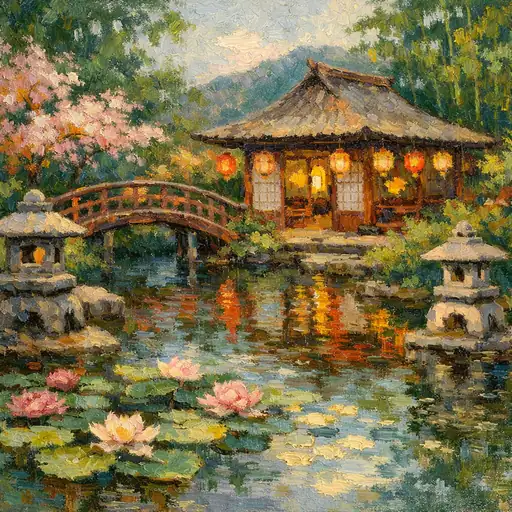 Echoes of Amber: Twilight in the Lotus Garden
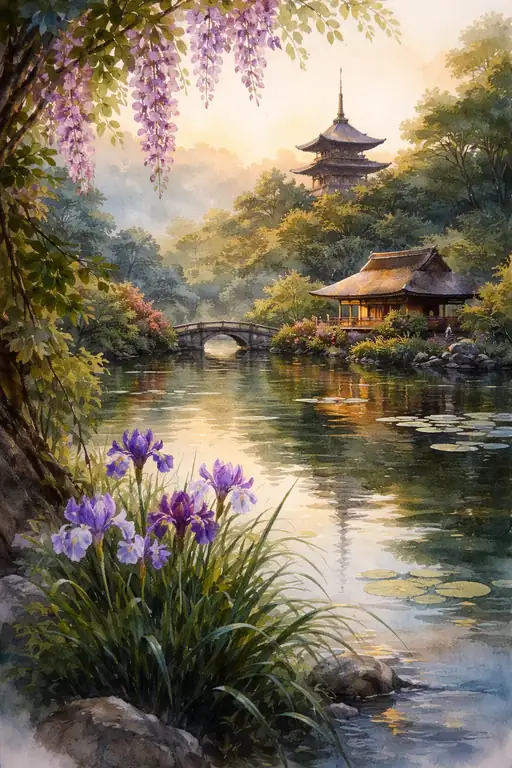 Sunset Harmony in the Temple Garden
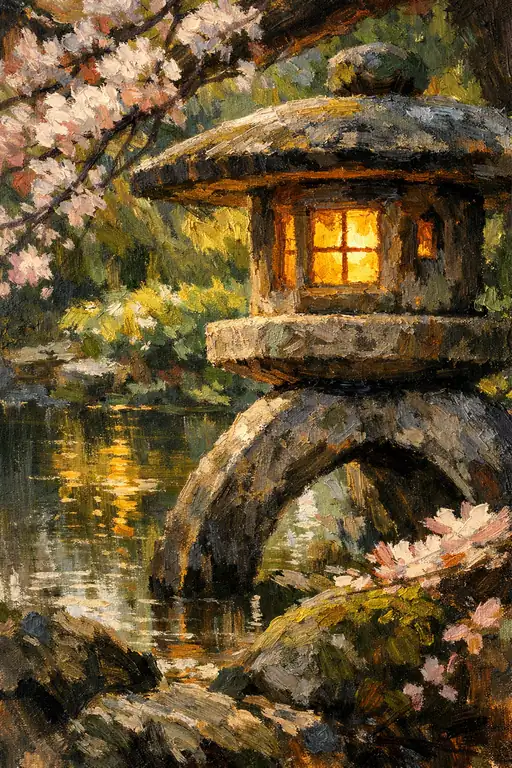 Whispers of the Spring Light
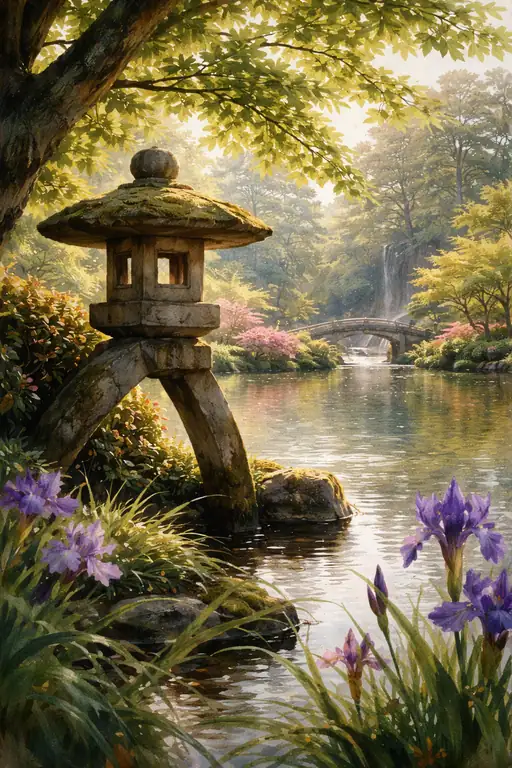 Serenity of the Whispering Waterfall
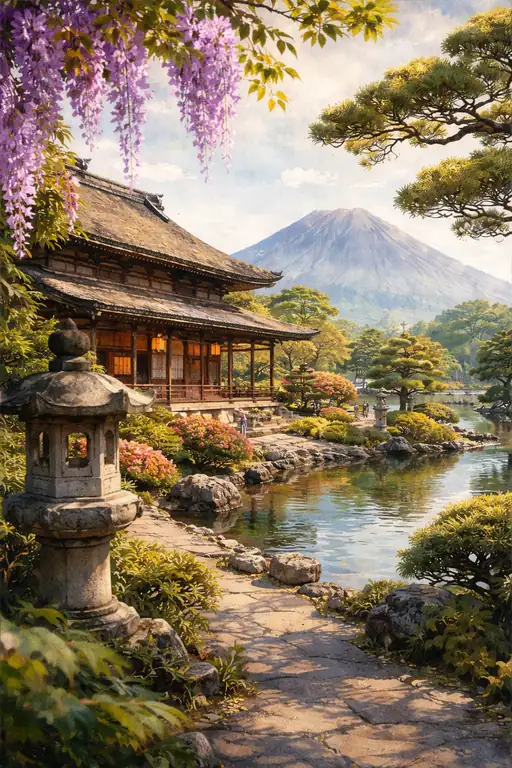 Fuji from the Wisteria Garden
 Reverence Under the Wisteria Veil
 Autumn's Ephemeral Mirror
 Crimson Canopy of Dreams