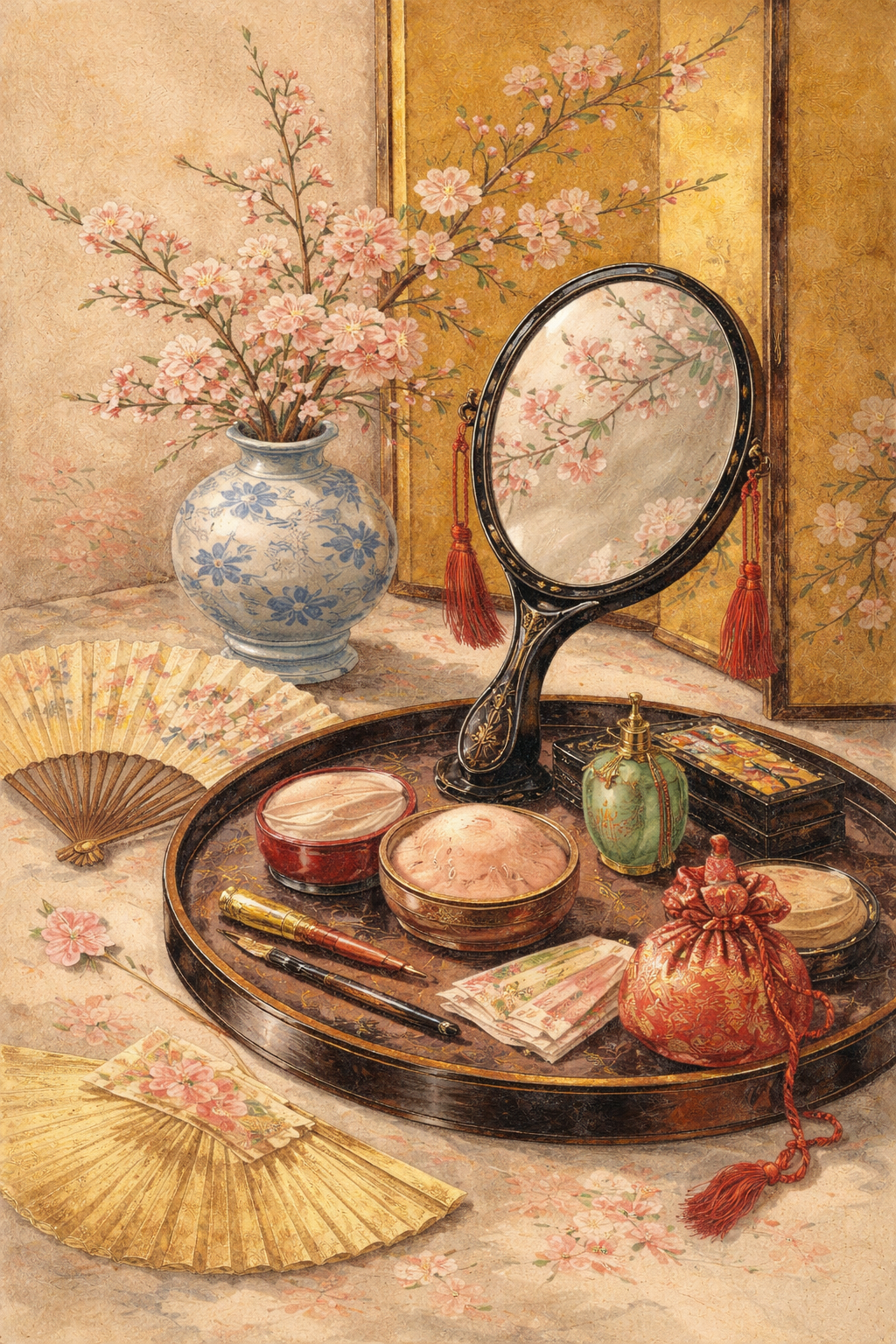
Spring's Eternal Reflection
Critique
1. Introduction This still life painting offers a meticulous and elegant portrayal of traditional Japanese vanity items, arranged as if for a morning ritual of preparation. The composition is a celebration of craftsmanship, featuring a variety of textures and materials that define a refined feminine space. Bathed in a soft, diffused light, the scene evokes a sense of quietude and aesthetic appreciation. The work serves as a window into a world of classical beauty, where everyday objects are elevated to the status of art through careful arrangement and detailed rendering. 2. Description At the center of the composition is a dark lacquer tray holding various cosmetic containers, including bowls of powder and cream, a green porcelain bottle, and a red silk drawstring pouch. A black-framed hand mirror stands behind the tray, reflecting the delicate cherry blossoms that sprout from a blue and white porcelain vase to the left. Two folded fans with floral patterns lie on the patterned surface, one partially opened. The background is anchored by a gold-leaf folding screen, which adds a warm, metallic luster to the overall scene. 3. Analysis The artist demonstrates exceptional skill in the rendering of diverse textures, from the glossy sheen of the lacquerware to the matte finish of the cosmetic powders. The delicate, linear quality of the cherry blossoms contrasts effectively with the solid, geometric forms of the screen and tray. Color is used with great sophistication; the vibrant reds and golds are balanced by the cool blues of the vase and the soft pinks of the flowers. The use of reflection in the mirror is a clever compositional device that expands the visual space and adds a layer of complexity to the narrative. 4. Interpretation and Evaluation The painting can be interpreted as a meditation on the concept of beauty, both natural and manufactured. The juxtaposition of the fleeting blossoms with the enduring craftsmanship of the vanity items suggests a harmony between the organic and the cultural. Technically, the work is highly accomplished, characterized by a precision that borders on botanical illustration. The attention to detail in the patterns of the silk and the fans is particularly noteworthy, reflecting a deep respect for the decorative arts. The composition is well-balanced, guiding the viewer窶冱 eye through a rich tapestry of cultural signifiers. 5. Conclusion Initially, the viewer is drawn to the sheer density of detail and the richness of the materials, but the lasting impression is one of profound serenity. The painting successfully captures the essence of a private, contemplative moment through its focus on objects of beauty. Ultimately, this still life stands as a testament to the artist窶冱 ability to find monumental significance in the small, intimate details of life. It leaves the viewer with an enhanced appreciation for the artistry inherent in traditional Japanese culture and the timeless rituals of self-care.
Same Subcategory
Similar Artworks
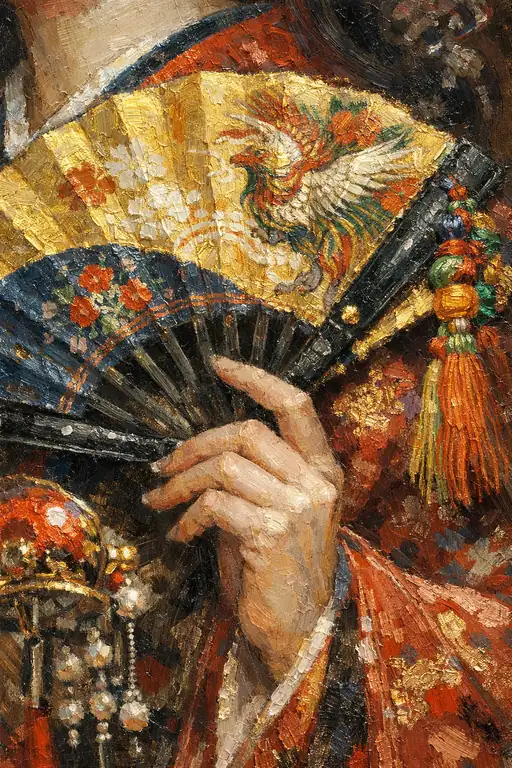 Dance of the Crimson Phoenix
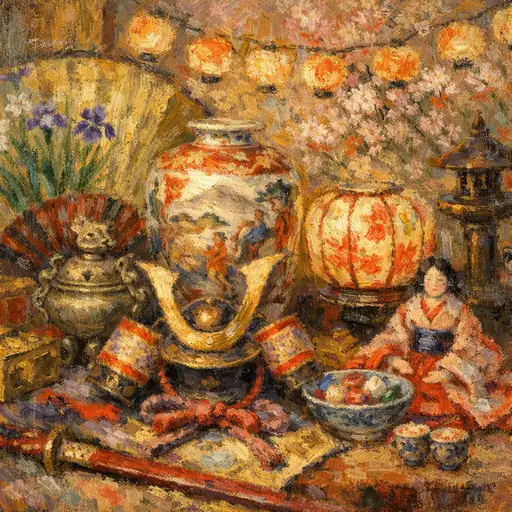 Memories in the Lantern Light
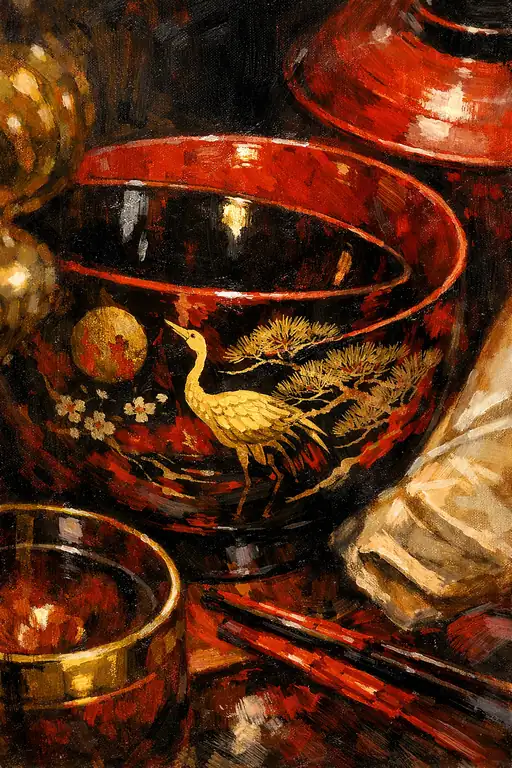 Golden Grace of the Crane's Flight
 Whispers of Antiquity
 Echoes of Playtime Past
 Warm Glowing Alley Paper Lantern
 Whispers of the Golden Sun
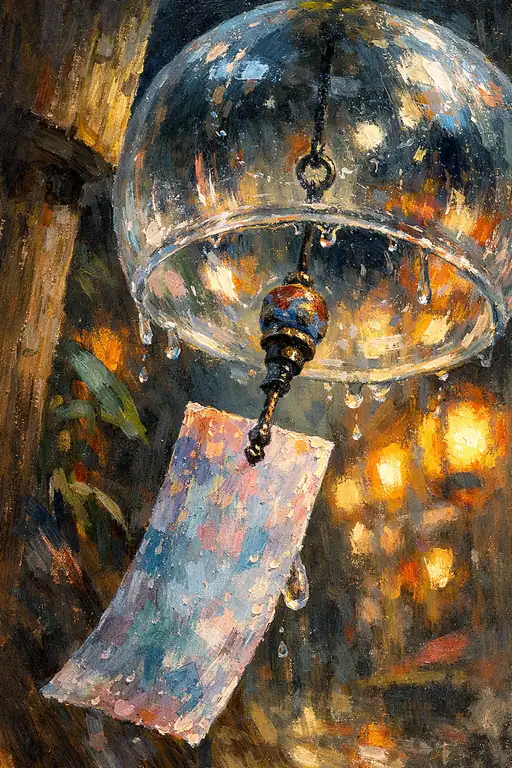 Raindrop on a Traditional Glass Wind Chime
 Dancing Ripples in the Sunlit Garden: A Koi's Peaceful Journey
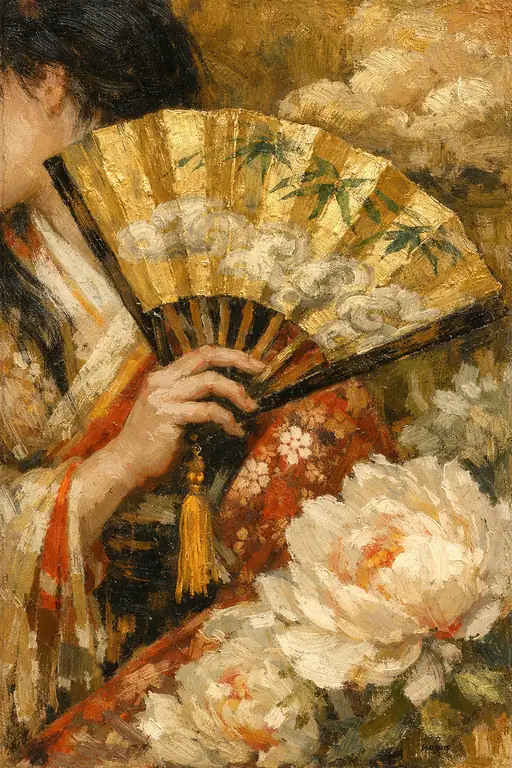 Elegance of the Peony and Golden Fan