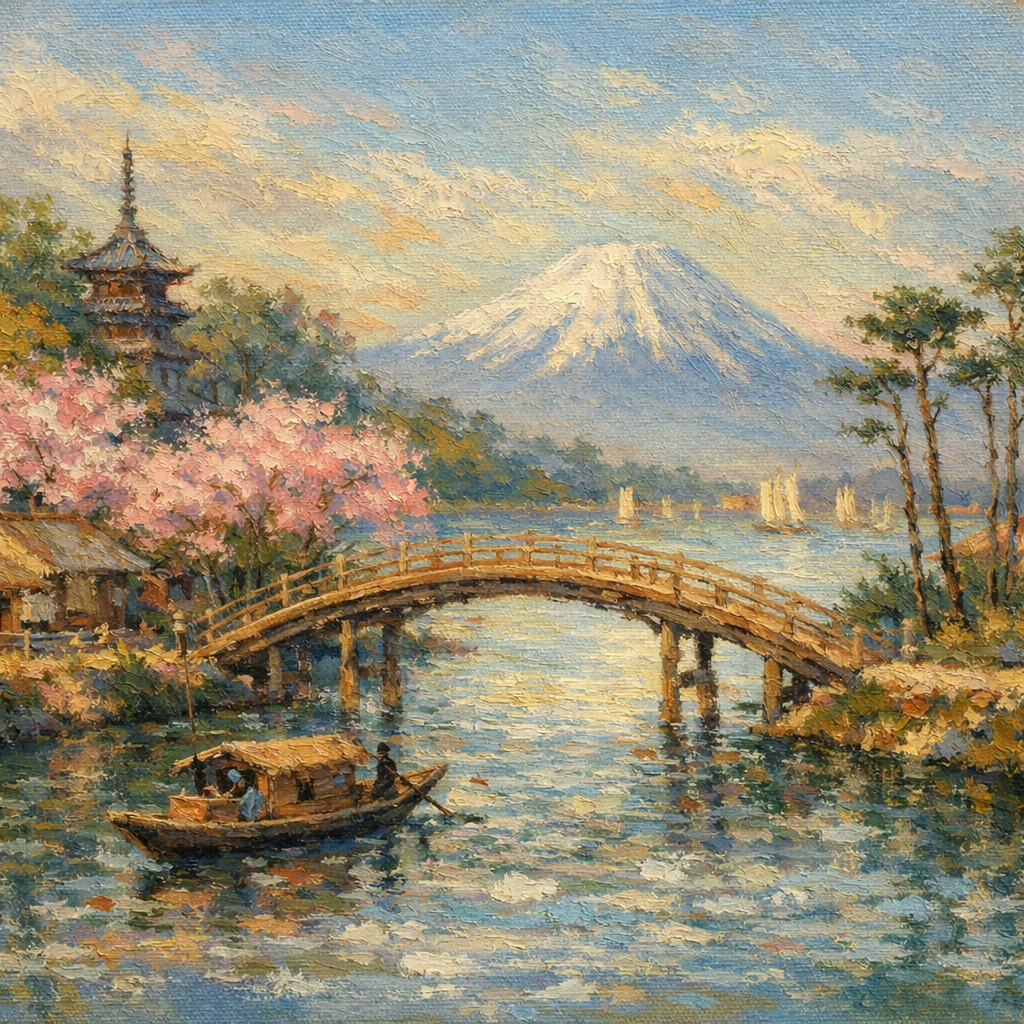
Bridge to Spring: Mount Fuji, Pagoda, and Cherry Blossoms over Tranquil Waters
Critique
1. Introduction This oil painting presents a romanticized vision of a traditional Japanese landscape, dominated by the majestic presence of Mount Fuji. The scene is bathed in a warm, golden light, suggesting either the early morning or late afternoon sun. Central to the composition is a graceful wooden arched bridge that spans a tranquil waterway, connecting various elements of cultural significance. The work captures a sense of timelessness and cultural heritage, rendered with a focus on atmospheric light and texture. 2. Description In the middle ground, a prominent wooden bridge curves over the water, its structural details highlighted by the low sun. A small, traditional boat with a thatched canopy glides through the foreground, steered by a lone figure. To the left, a five-story pagoda rises behind a cluster of blooming cherry trees, their pink petals adding a delicate touch to the scene. The distant lake is dotted with several white-sailed boats, leading the eye toward the snow-capped peak of Mount Fuji under a sky filled with soft, orange-tinted clouds. 3. Analysis The artist employs an impressionistic style, using bold, visible brushstrokes to build up the surface of the canvas. The application of warm yellows and oranges creates a pervasive glow that unifies the disparate elements of the landscape. Shadows are rendered in cool blues and purples, providing a necessary contrast that defines the forms of the bridge and the pagoda. The water is depicted with horizontal strokes that effectively capture the fractured reflections of the sky and the surrounding structures, adding to the overall luminosity of the piece. 4. Interpretation and Evaluation The painting serves as a synthesis of iconic Japanese motifs, creating a nostalgic and idealized representation of the country's natural and architectural beauty. The choice of a golden hour setting enhances the emotional warmth of the piece, inviting the viewer into a peaceful, almost dreamlike environment. Technically, the work excels in its handling of light and color, though some might find the concentration of so many landmarks in a single frame to be slightly staged. Nevertheless, the execution is confident and achieves a high degree of visual harmony. 5. Conclusion Initially, the viewer is struck by the intense color and familiar landmarks, but a more sustained look reveals the skillful way the artist has managed the complex play of light. The painting successfully evokes a profound appreciation for the serenity of the depicted scene. It concludes as a vibrant tribute to the enduring allure of the Japanese landscape, captured through a technique that emphasizes the transformative power of light. The work remains an evocative and technically proficient exploration of cultural identity through art.
Same Subcategory
Similar Artworks
 The Bridge of Spring's Awakening
 Golden Light on the Stone Bridge
 Spring's Fleeting Embrace
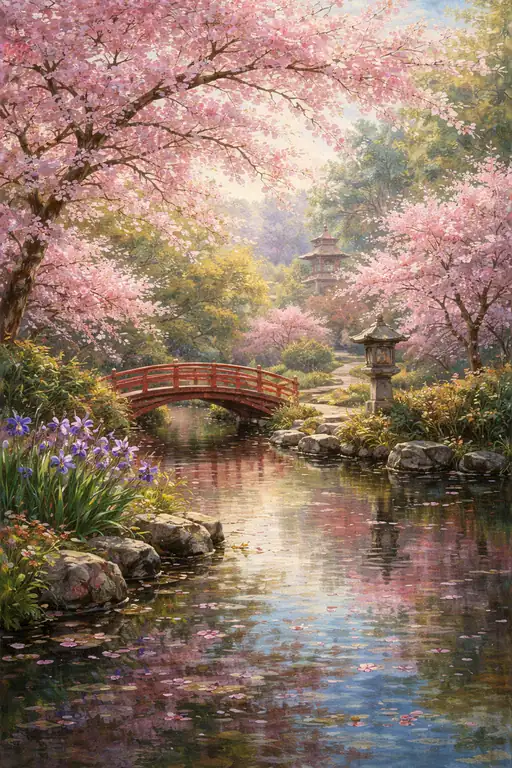 Tranquility in the Zen Garden
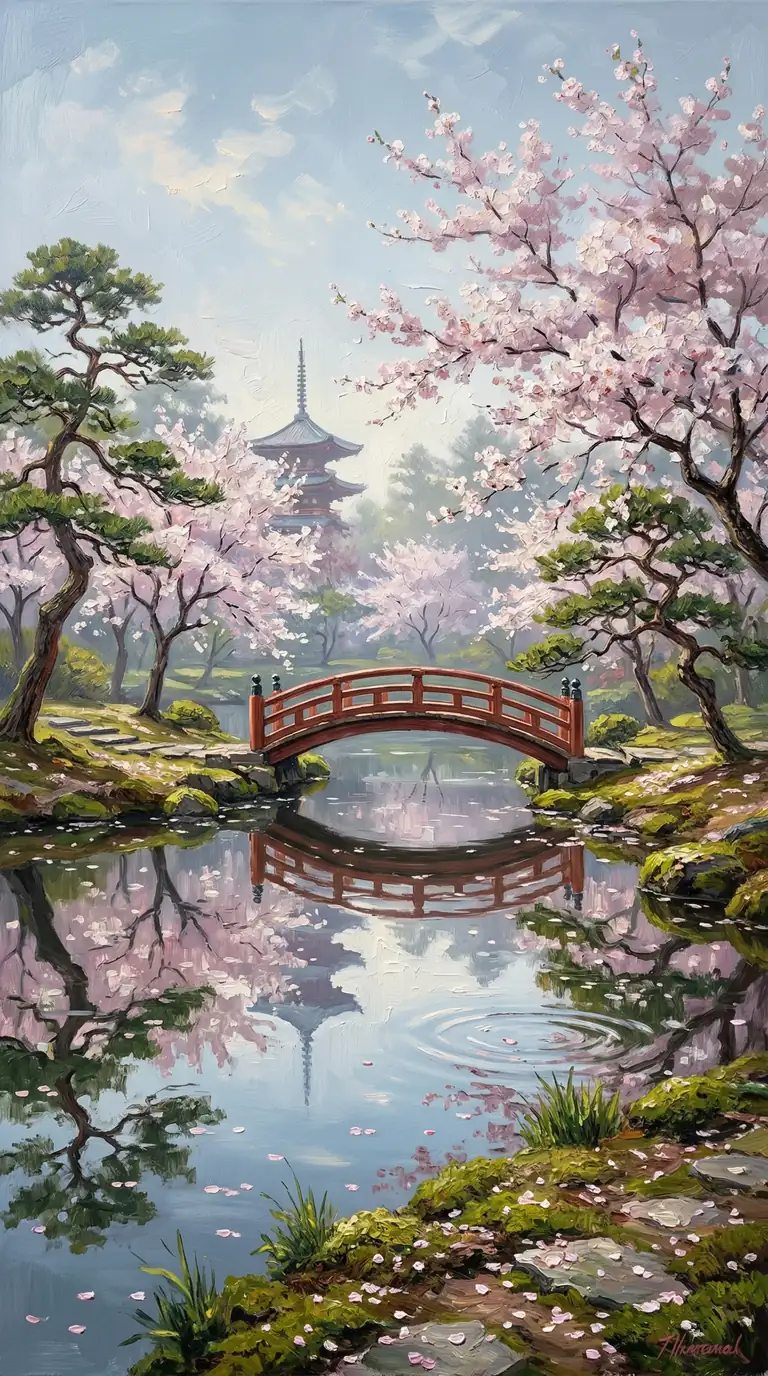 Harmony in Red and Pink: The Eternal Spring Garden
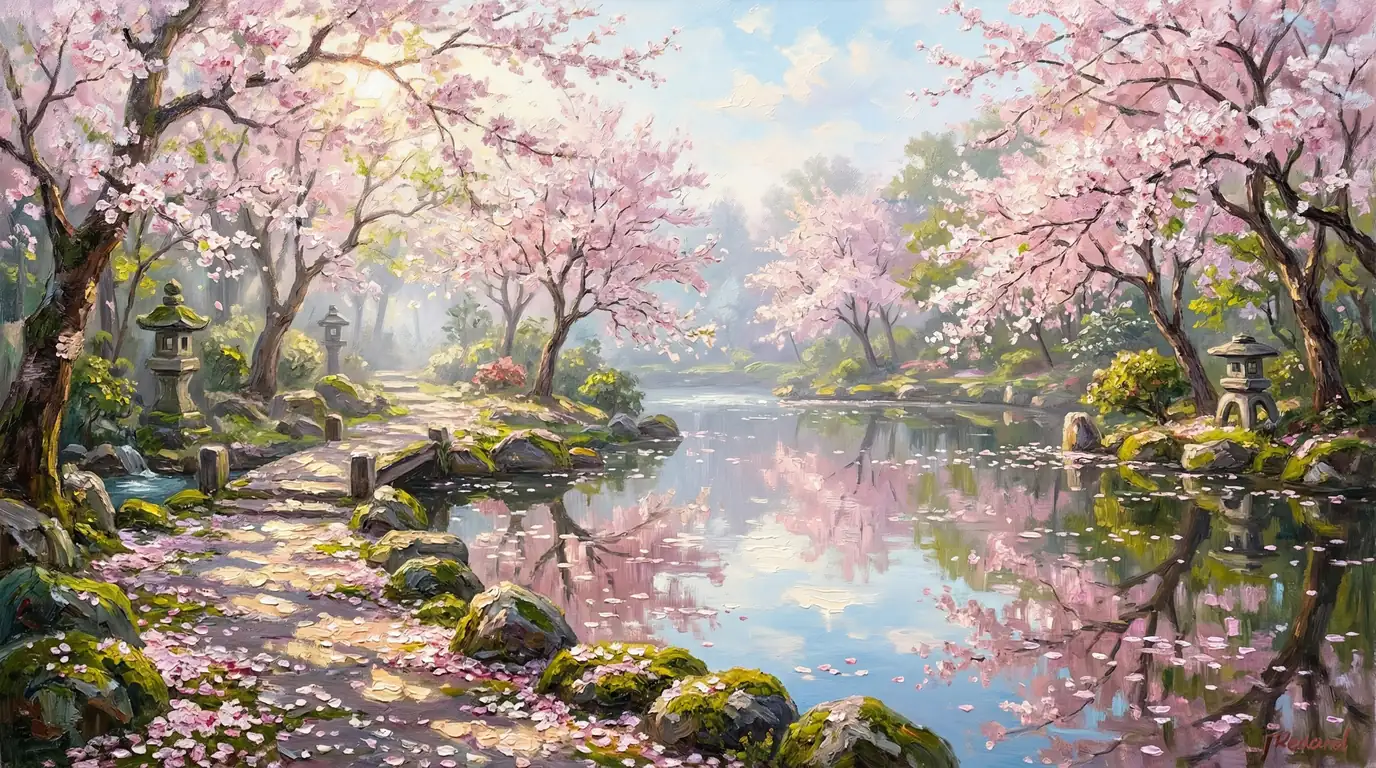 Serenity at the Spring Pond
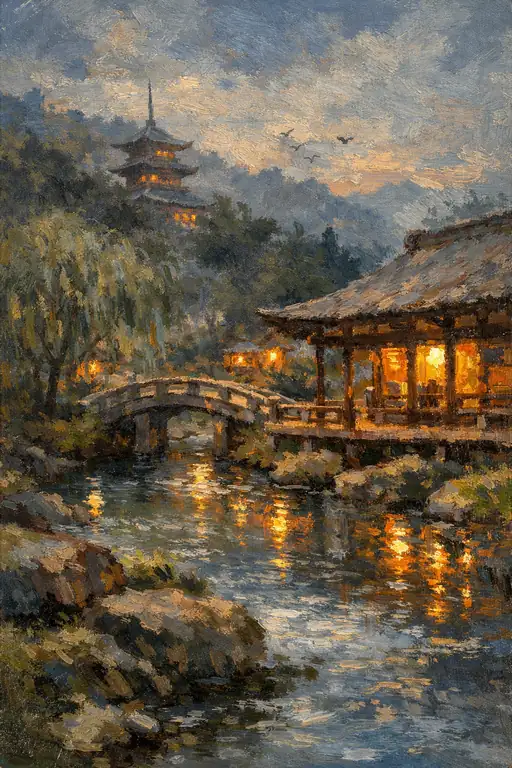 Echoes of the Gilded Twilight: A Serene Voyage Through Time's Painted River
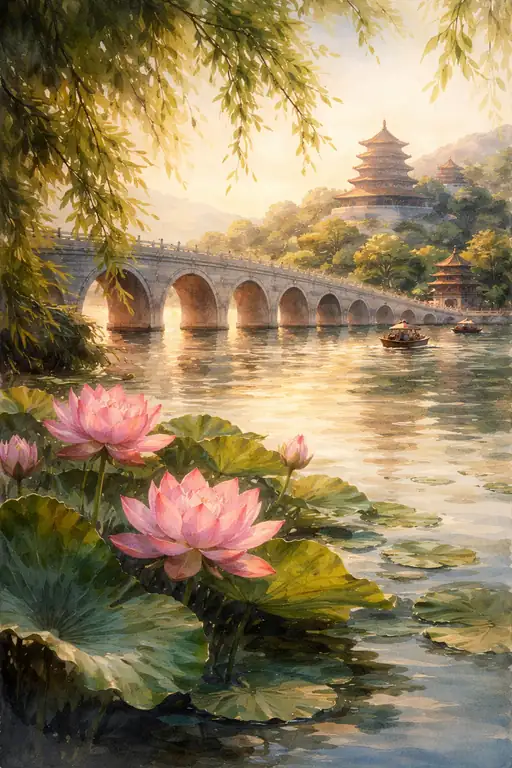 Golden Lotus in the Imperial Garden
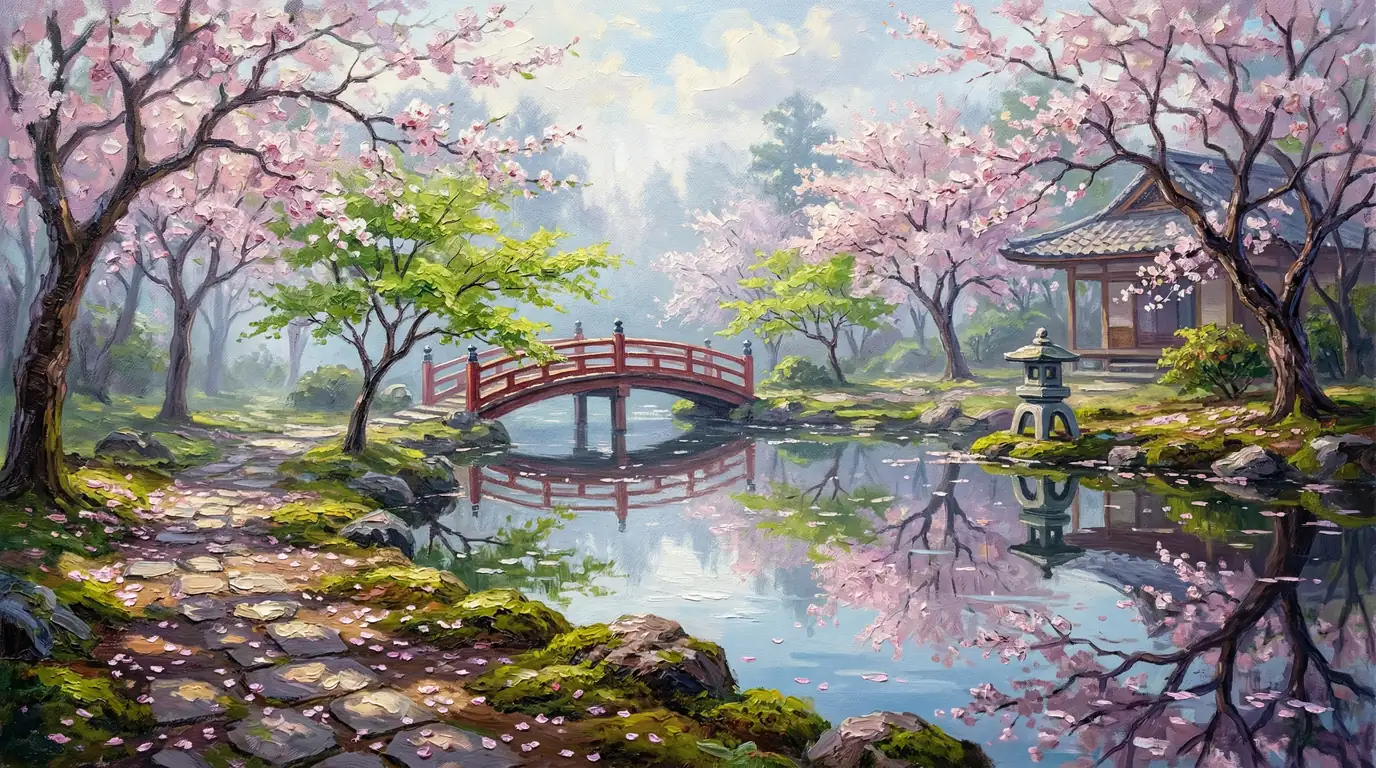 Spring Awakening at the Arched Bridge
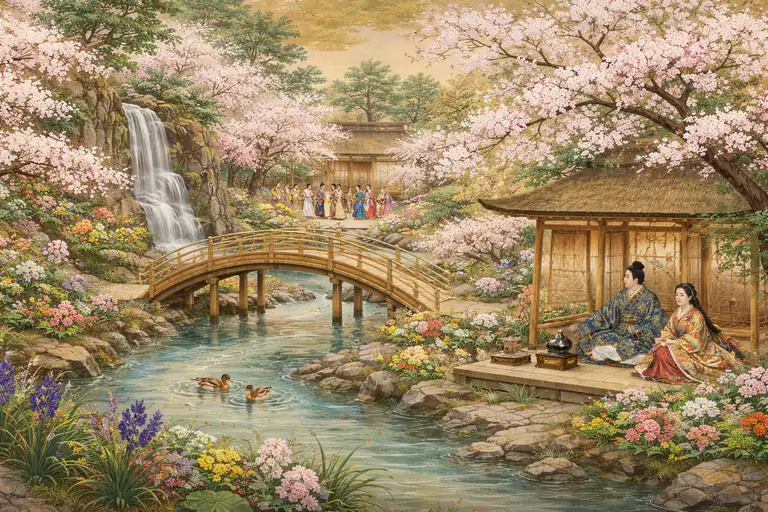 Spring's Gentle Embrace