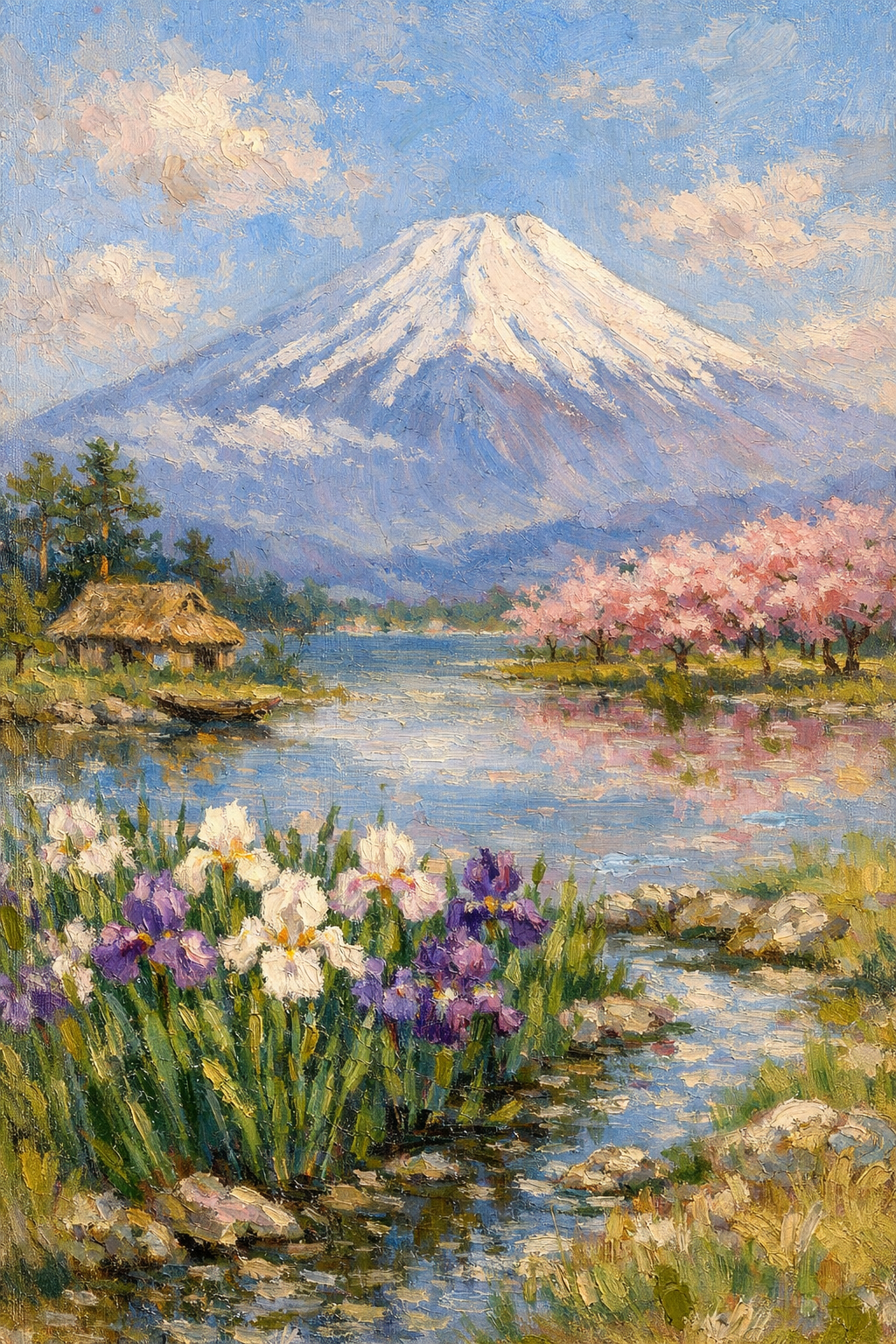
Spring Symphony at the Lakeside: Mount Fuji, Cherry Blossoms, and Blooming Irises
Critique
1. Introduction The oil painting presented here depicts a classic Japanese spring landscape, featuring the iconic silhouette of Mount Fuji. The composition integrates several symbolic elements of the region's natural beauty, including seasonal flora and traditional architecture. This work serves as a visual celebration of the transition into spring, capturing a serene moment where geology and botany converge. The artist employs a vibrant palette to convey the freshness and vitality associated with this time of year. 2. Description In the immediate foreground, a dense cluster of purple and white irises rises from the marshy edge of a body of water. To the left, a small thatched-roof cottage stands near the shoreline, accompanied by a modest wooden boat. Across the lake, a row of cherry trees in full pink bloom lines the bank, their reflections shimmering on the water窶冱 surface. The background is dominated by the majestic, snow-capped peak of Mount Fuji, which stands against a pale blue sky filled with soft, scudding clouds. 3. Analysis The artist utilizes an impressionistic technique characterized by short, thick brushstrokes and a heavy application of paint, known as impasto. This approach creates a rich, tactile surface that enhances the play of light across the landscape. The color choices are deliberate; the cool blues of the mountain and sky contrast sharply with the warm pinks of the cherry blossoms and the deep greens of the foreground foliage. This chromatic balance guides the viewer's eye through the receding planes of the composition, from the detailed flowers to the distant peak. 4. Interpretation and Evaluation This painting successfully captures the ephemeral beauty of the Japanese spring, balancing the permanence of the mountain with the fleeting nature of the blossoms. The inclusion of the thatched cottage suggests a harmonious relationship between human habitation and the natural world. Technically, the work demonstrates a strong command of light and texture, though the heavy impasto occasionally obscures finer details in the middle ground. Overall, the piece is a compelling example of how Western artistic styles can be adapted to represent Eastern cultural motifs with significant emotional resonance. 5. Conclusion Upon initial viewing, the painting appears as a traditional landscape, but closer inspection reveals a complex layering of color and texture that breathes life into the scene. The work effectively synthesizes form and atmosphere to create a cohesive vision of a seasonal peak. Ultimately, this landscape stands as a testament to the enduring appeal of its subjects, rendered through a vigorous and expressive technique. It leaves the viewer with a profound sense of peace and a renewed appreciation for the cyclic beauty of nature.
Same Subcategory
Similar Artworks
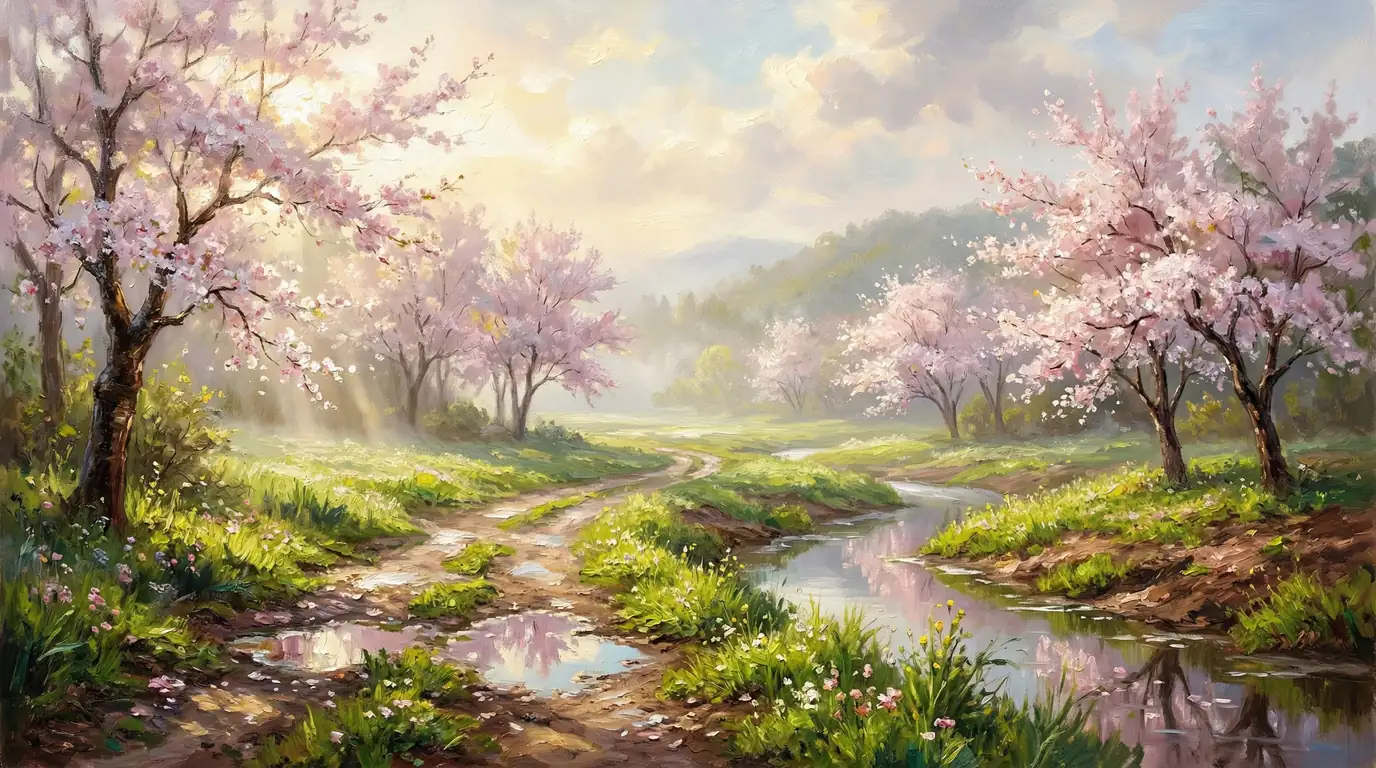 Awakening in the Cherry Blossom Mist
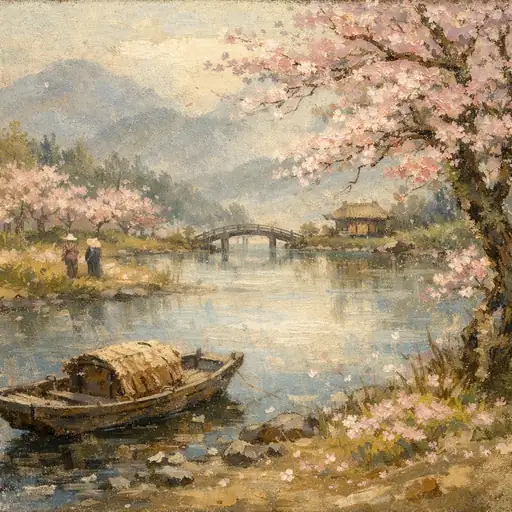 Fleeting Petals on the Spring Tide
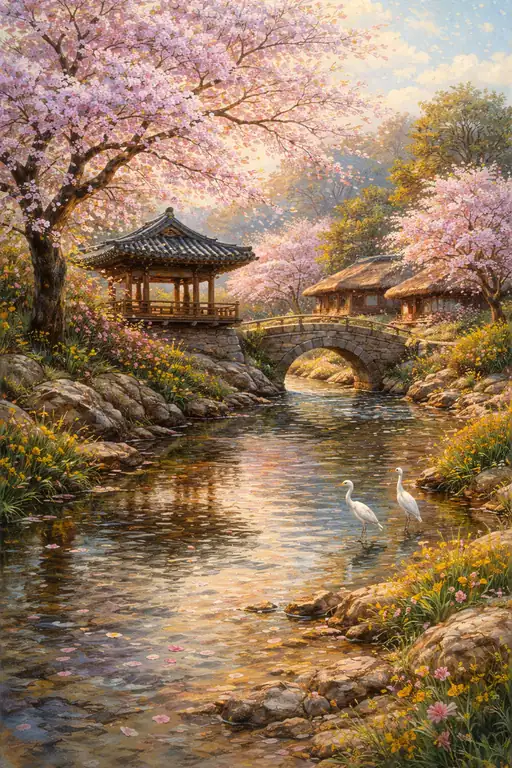 Serenity of the Spring Pavilion
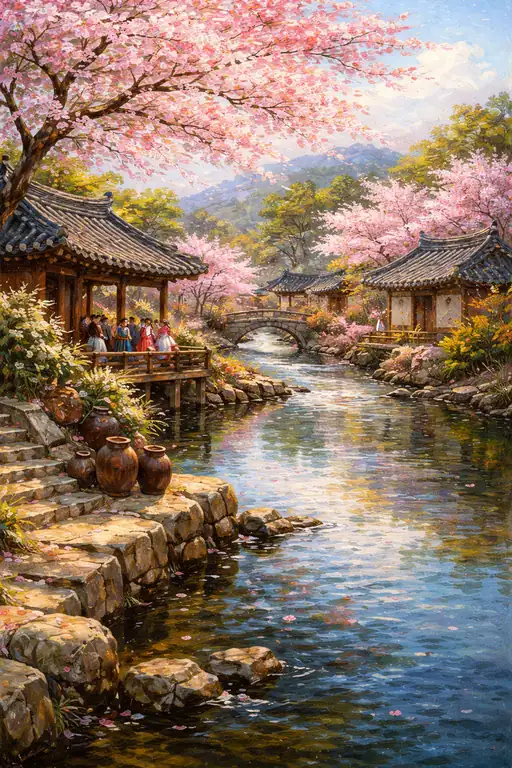 River of Pink Snow
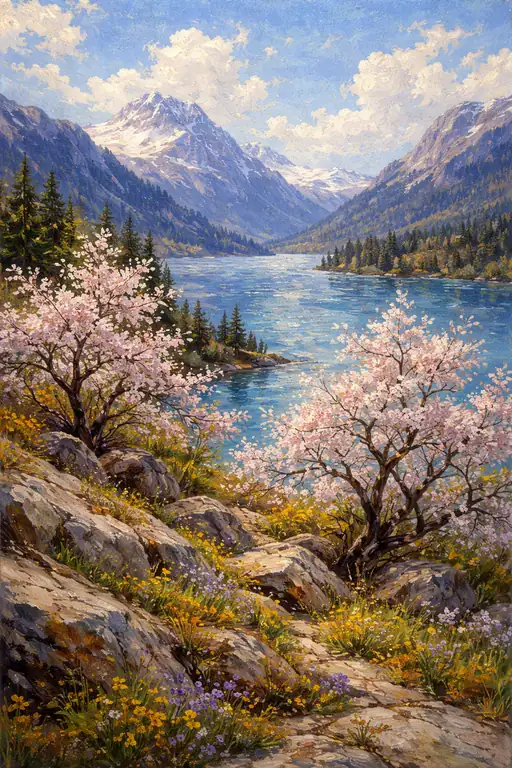 Awakening of the Pink Snows
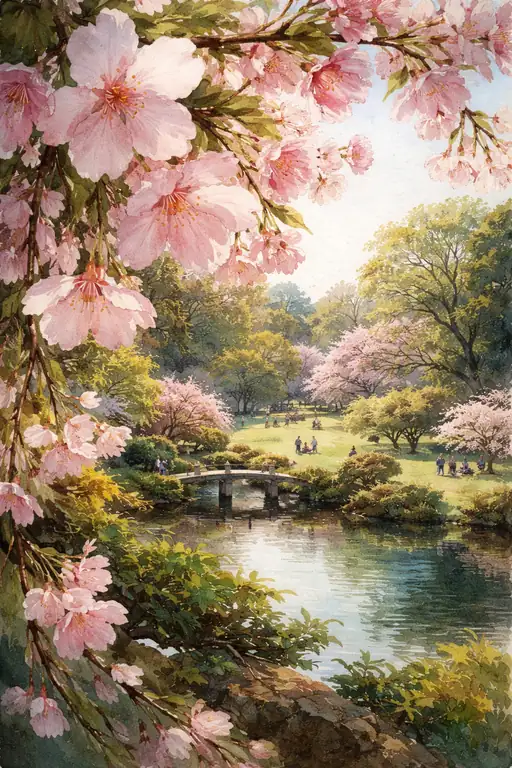 Spring Reverie by the Blossom Pond
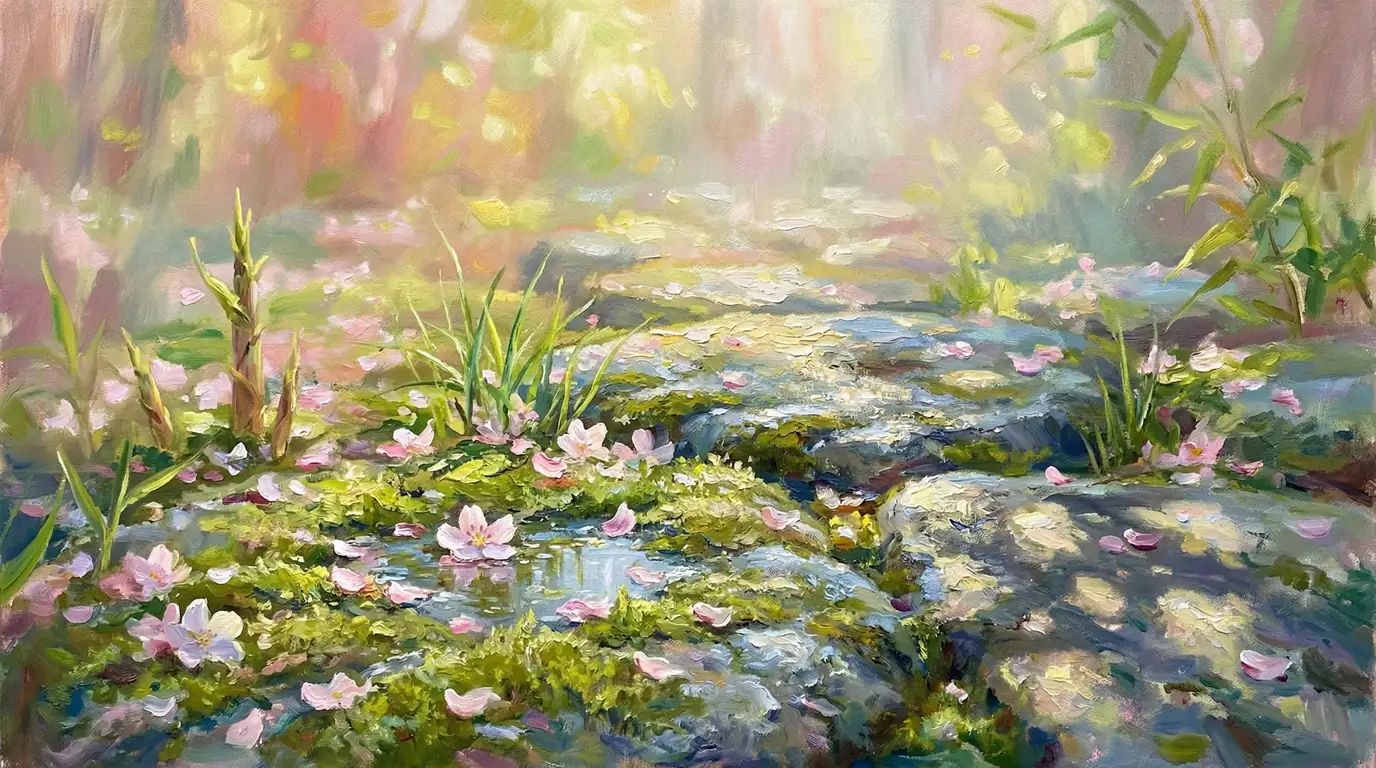 Echoes of a Fleeting Spring
 Sakura Framing the Turquoise Bay
 Whispers of the Mossy Stream
 Whispers of the Spring Breeze