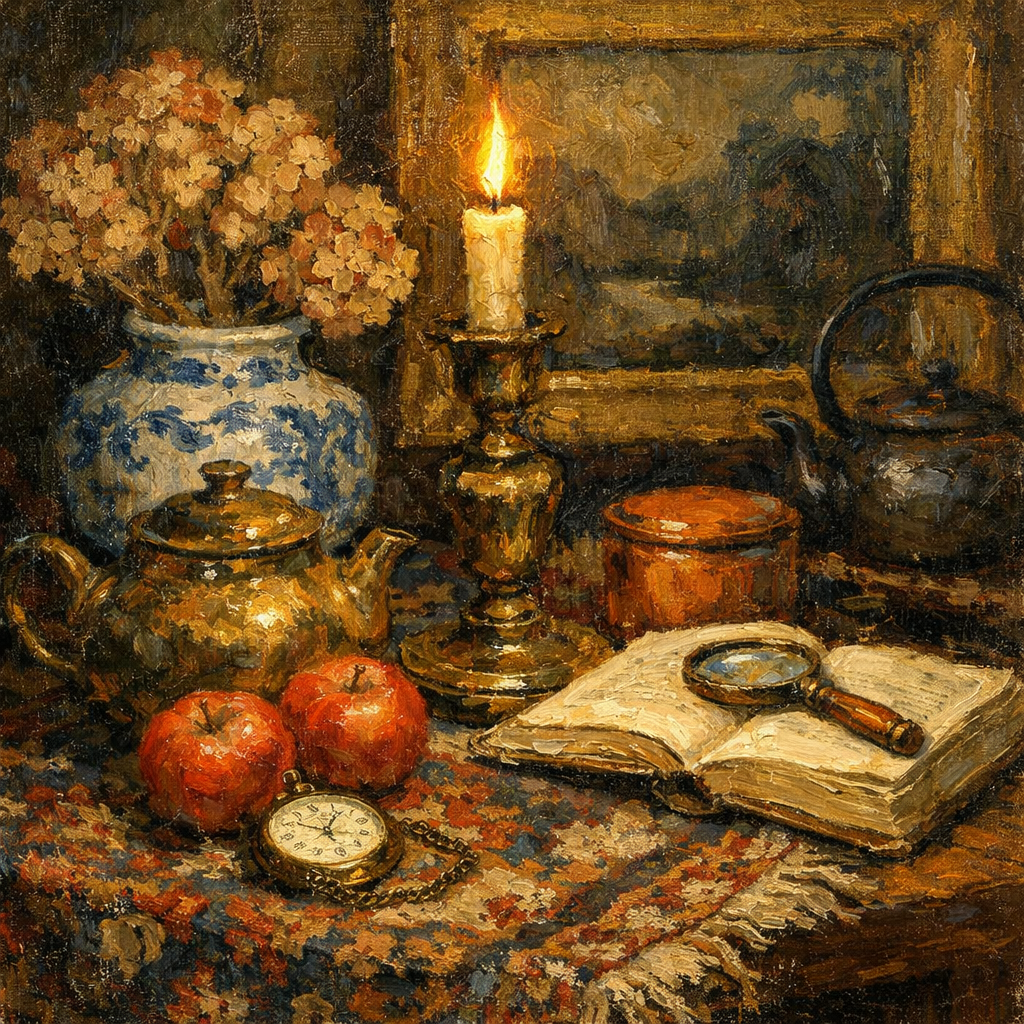
Whispers of Time by Candlelight
Critique
1. Introduction This oil painting presents a classically inspired still life, rich in symbolism and dramatic atmosphere. The composition is centered around the soft, flickering light of a single candle, which illuminates a collection of objects associated with knowledge, time, and domestic life. By employing a deep, warm color palette and a masterly play of light and shadow, the artist creates a scene of quiet contemplation and intellectual pursuit. The work draws the viewer into a timeless space, inviting a slow and methodical examination of each carefully rendered item. 2. Description The focal point is a lit candle in a brass holder, placed behind an open book with a magnifying glass resting on its pages. To the left, a golden teapot sits near two ripe red apples and a brass pocket watch with a chain. Behind these, a blue and white ceramic vase holds a dense bouquet of pale flowers. In the background, a dark iron kettle and a framed landscape painting are partially visible, obscured by the dim lighting. The entire arrangement rests upon a patterned woven textile, which adds a layer of intricate detail to the lower third of the canvas. 3. Analysis The artist uses a sophisticated chiaroscuro effect, where the candle serves as the primary light source, creating strong highlights and deep, velvety shadows. This technique emphasizes the three-dimensionality of the objects, such as the rounded forms of the apples and the reflective surface of the teapot. The brushwork is expressive and varied, ranging from the smooth application of paint on the ceramic vase to the textured, impasto-like strokes on the book's pages and the textile. The dominant warm tones are punctuated by the cool blue of the vase, creating a balanced and harmonious color scheme. 4. Interpretation and Evaluation This work can be interpreted as a modern take on the "Vanitas" tradition, where objects like the pocket watch and the fading candle symbolize the passage of time and the fleeting nature of life. The inclusion of the book and magnifying glass suggests a theme of scholarly inquiry and the search for truth. Evaluation of the painting reveals a high level of technical proficiency, particularly in the handling of light and the representation of diverse materials窶芭etal, paper, glass, and fruit. The composition is tightly knit yet allows for a sense of air and space around the central elements, contributing to the overall mood of focused stillness. 5. Conclusion In conclusion, the painting is a profound study of light as a medium of meaning and atmosphere. The initial perception of a traditional still life evolves into an appreciation for the artist's ability to imbue inanimate objects with a sense of narrative and gravitas. This piece successfully bridges the gap between classical tradition and a more contemporary, painterly approach to subject matter. It stands as an evocative reminder of the beauty to be found in silence and the enduring value of intellectual and domestic artifacts.
Same Subcategory
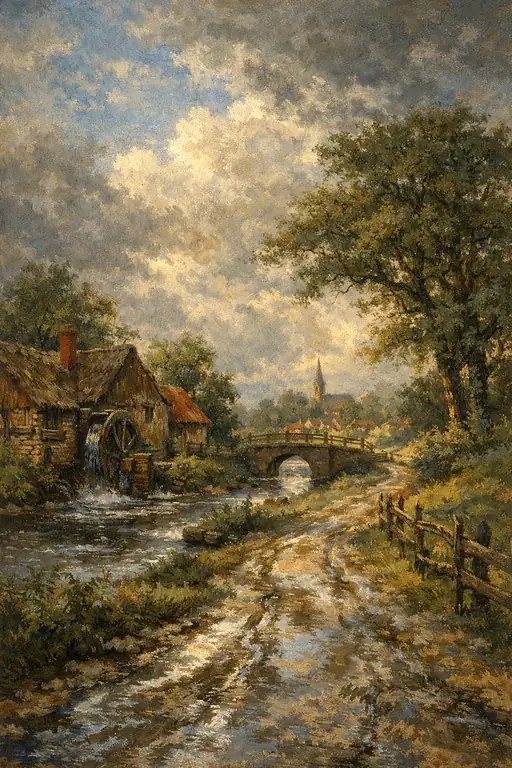 The Old Watermill and the Sunlit Path
Similar Artworks
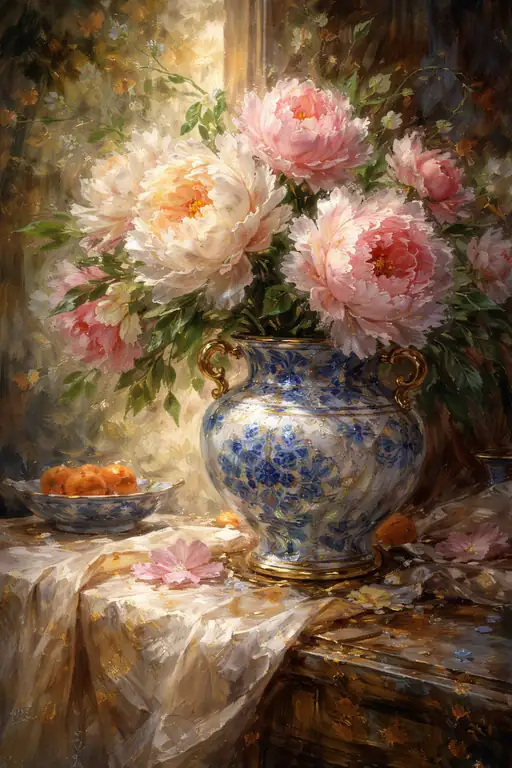 Serenade of the Soft Shadows
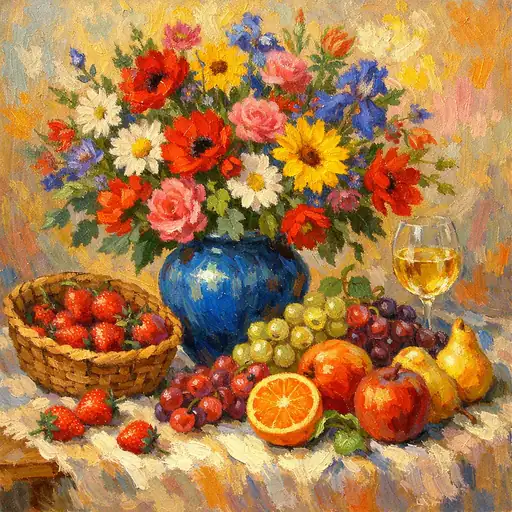 Echoes of Earth's Bounty
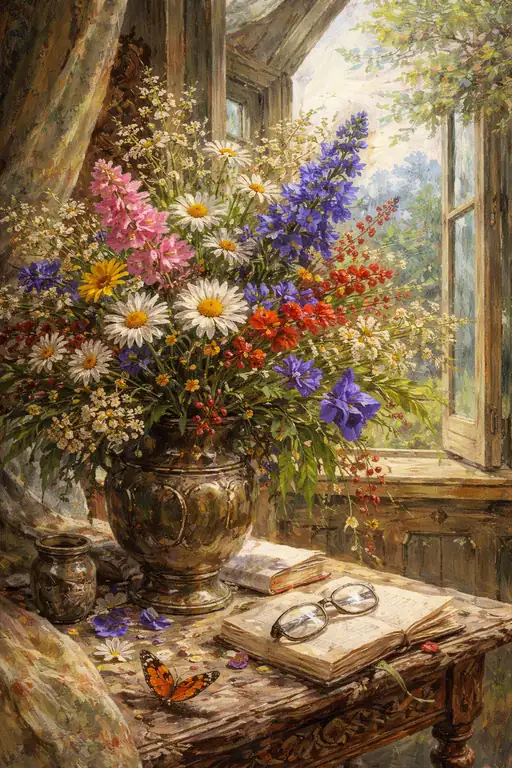 Morning Embrace of Wild Summer Blooms
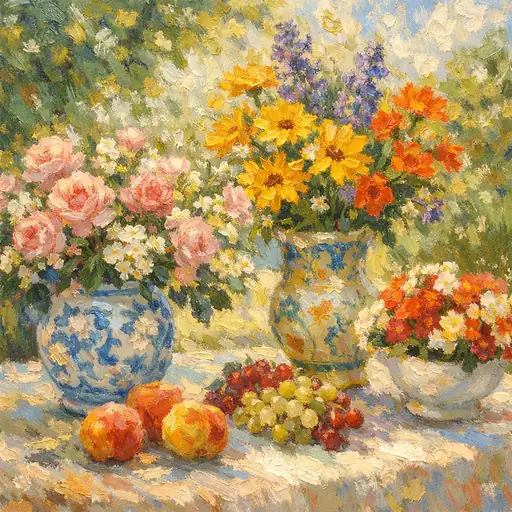 Symphony of Sun-Drenched Blossoms
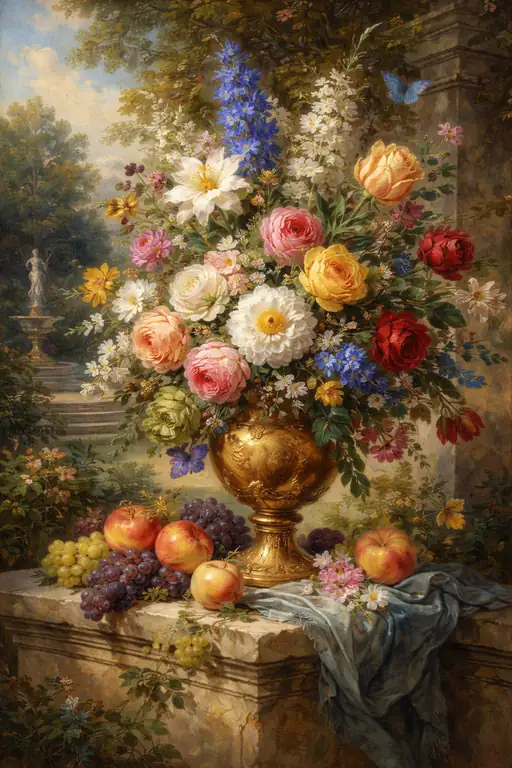 A Lavish Ode to the Summer Blooms
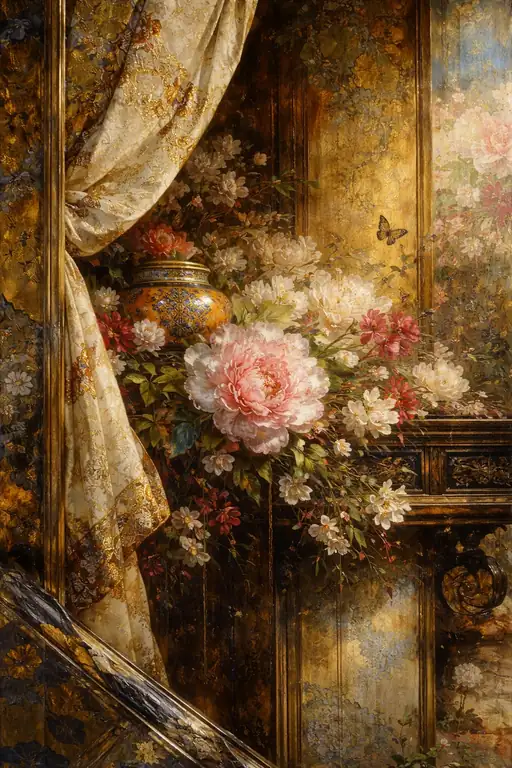 Golden Bloom in the Stillness
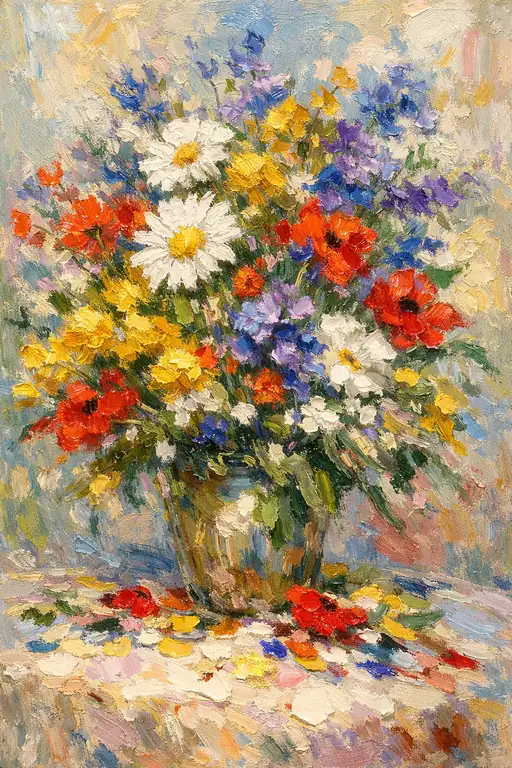 Eulogy in Wild Blooms
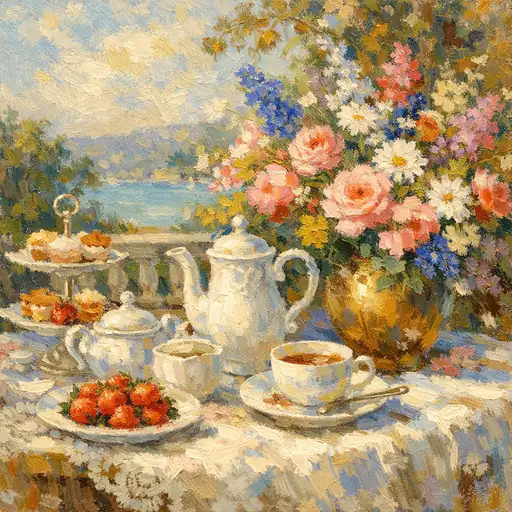 A Radiant Anthem Sung by Blooms and Tea
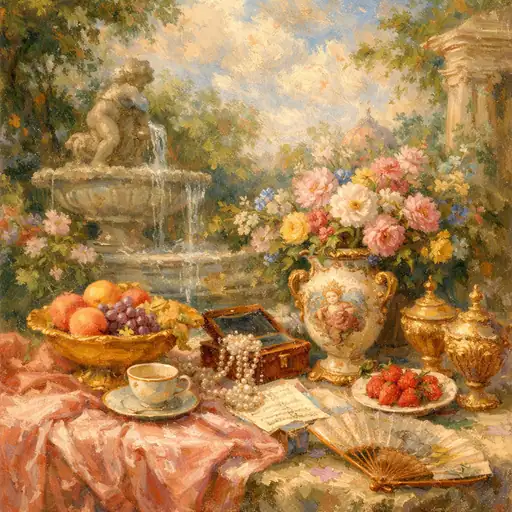 Rococo Dreams in the Sunlit Garden
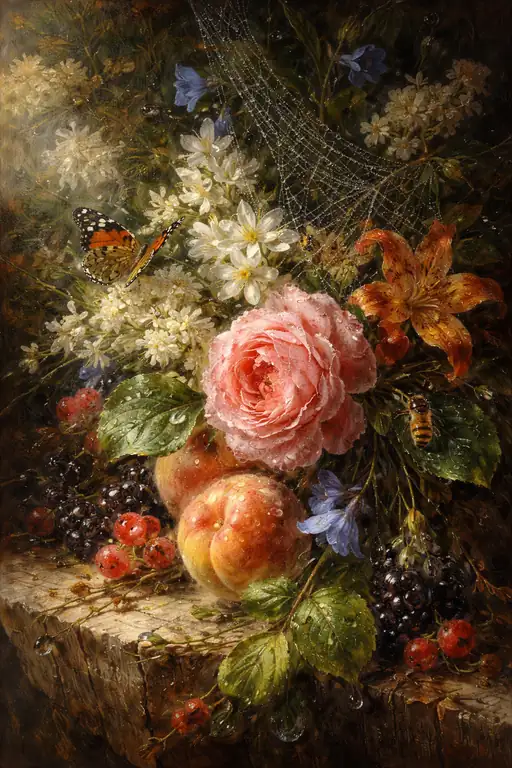 A Blooming Cosmos