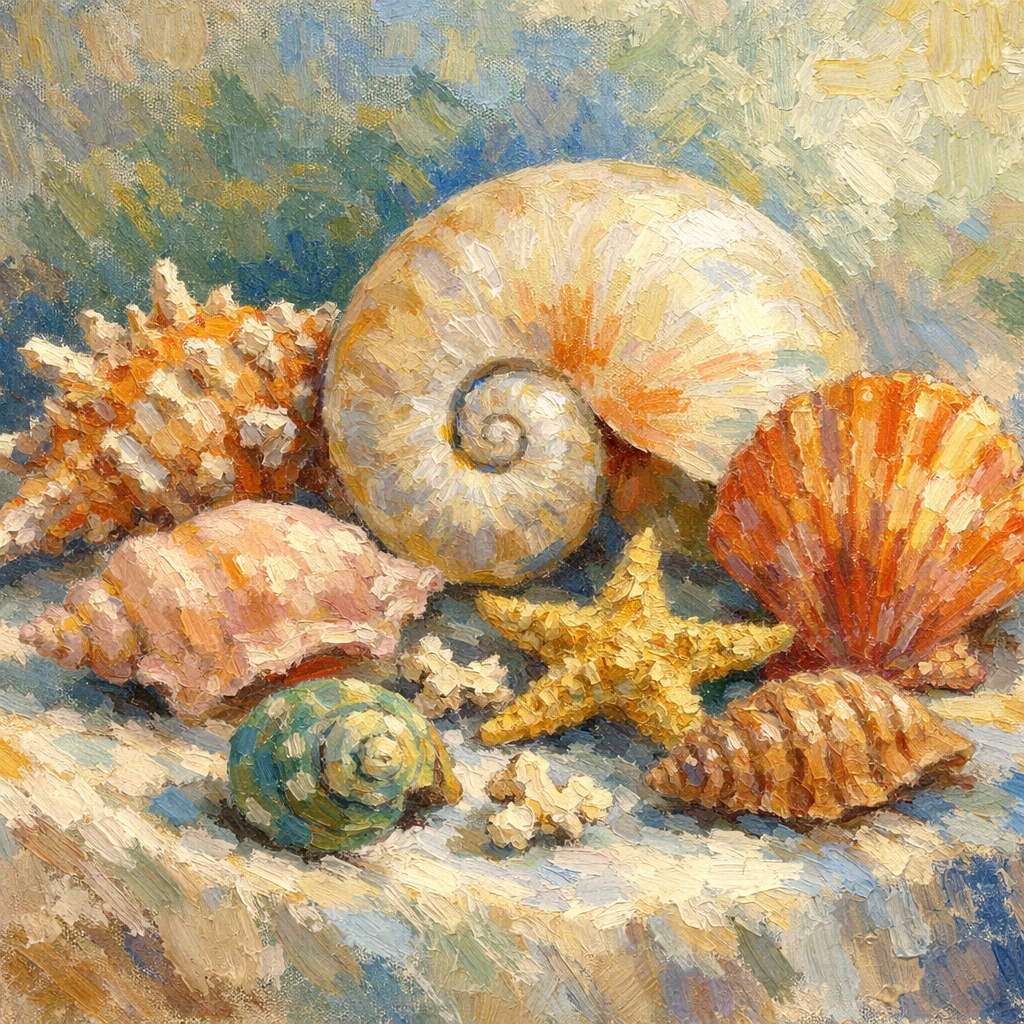
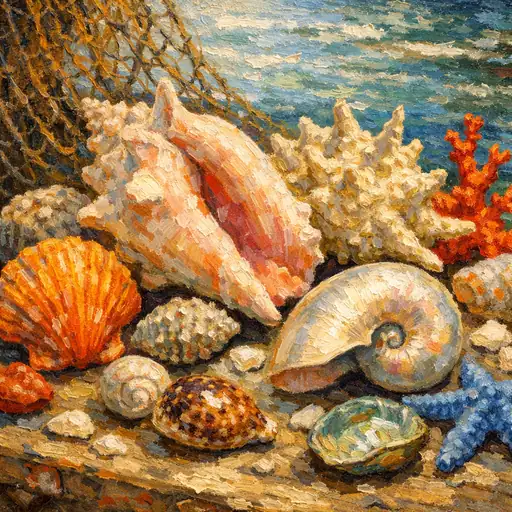
Treasures of the Coral Kingdom
Critique
1. Introduction This still life oil painting features an assortment of seashells and a starfish, celebrating the intricate beauty found within marine life. Through a robust application of the impasto technique, the work emphasizes the physical texture of the medium while capturing the structural elegance of natural forms. The luminous palette suggests the intense light of a coastal environment, imbuing the static subjects with a sense of hidden energy. This piece successfully bridges the gap between representational accuracy and expressive abstraction. 2. Description At the heart of the composition lies a large, spiraling nautilus shell, flanked by a spiny murex-like shell on the left and a vibrant orange scallop shell on the right. In the foreground, a pale pink shell and a small green spiral shell are accompanied by a golden-hued starfish and scattered fragments of coral. The background consists of short, overlapping strokes of blue, white, and beige, hinting at a sandy or atmospheric setting. Strong illumination comes from the upper right, casting deep shadows and highlighting the varied surfaces of each shell. 3. Analysis The arrangement follows a radial pattern centered on the large shell, providing a focal point and structural stability to the overall view. Technically, the thick layers of paint create physical relief, translating the hardness and roughness of the shells into a tactile experience for the viewer. Coloristically, the warm oranges and yellows of the shells stand out against the cool blues and greens of the background, enhancing the visual intensity. High-key highlights are placed strategically to give the objects a moist, reflective quality, adding to the realism of the scene. 4. Interpretation and Evaluation The painting succeeds in drawing out the dynamic power inherent in still objects through a mastery of color and materiality. Each shell represents a natural sculpture shaped over time, and the artist窶冱 vigorous brushwork amplifies the vitality of these forms. While rooted in traditional still life themes, the work feels modern in its bold use of color and texture. The harmony between precise draftsmanship and rhythmic composition results in a work of high artistic quality, offering a fresh perspective on a classic subject. 5. Conclusion Initially perceived as a simple collection of sea treasures, the piece reveals greater complexity and beauty upon closer inspection. This work demonstrates a profound insight into natural design and an effective exploration of the possibilities of oil paint. The synergy of light and color serves to vividly recall memories of the seaside, leaving a lasting impression on the observer.
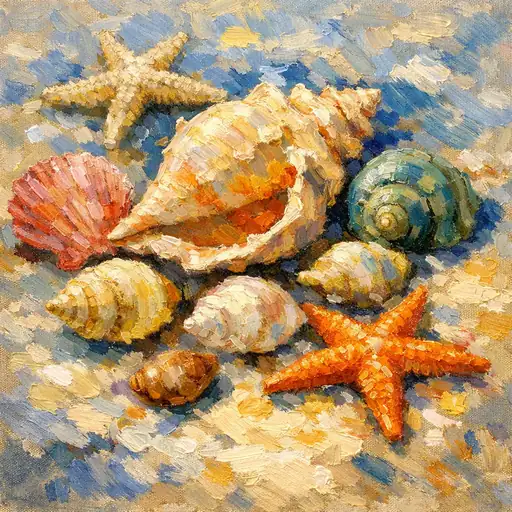 Sands of Radiant Remnants
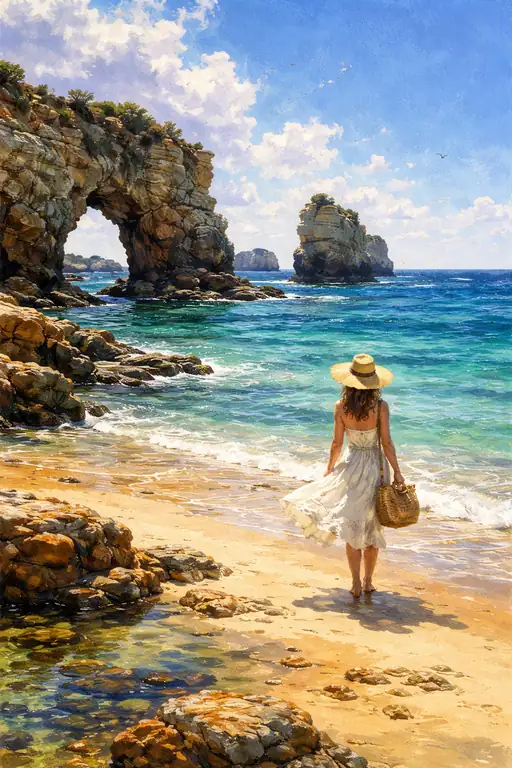 Solitary Steps on the Azure Edge
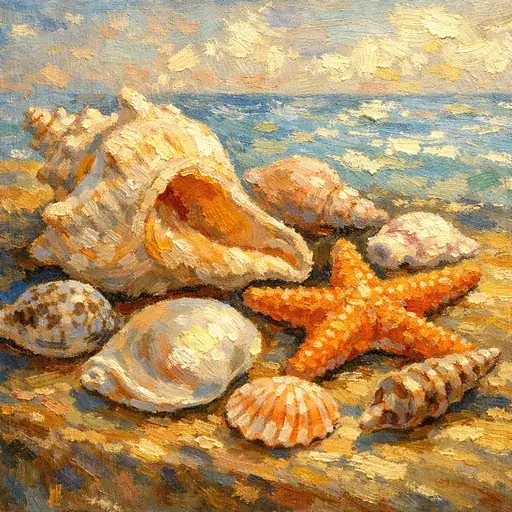 Echoes of the Gentle Tide
 Whispers from the Deep Azure
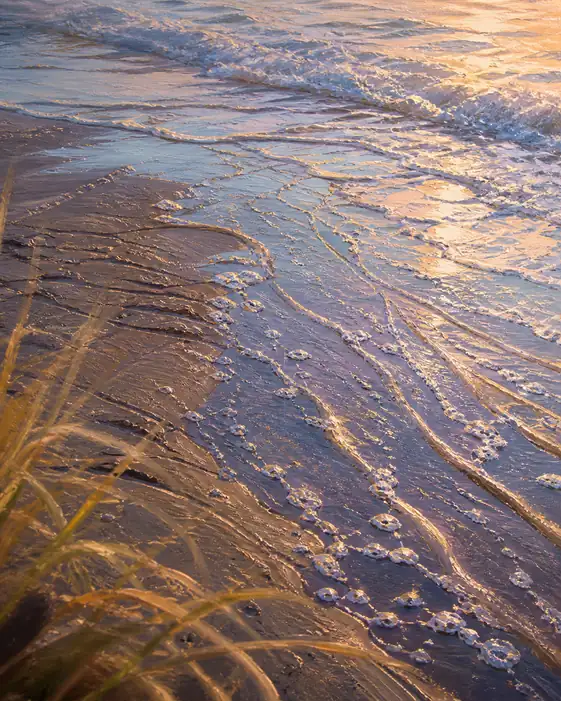 Golden Trace of the Receding Tide
 A Quiet Promise to the Setting Sun
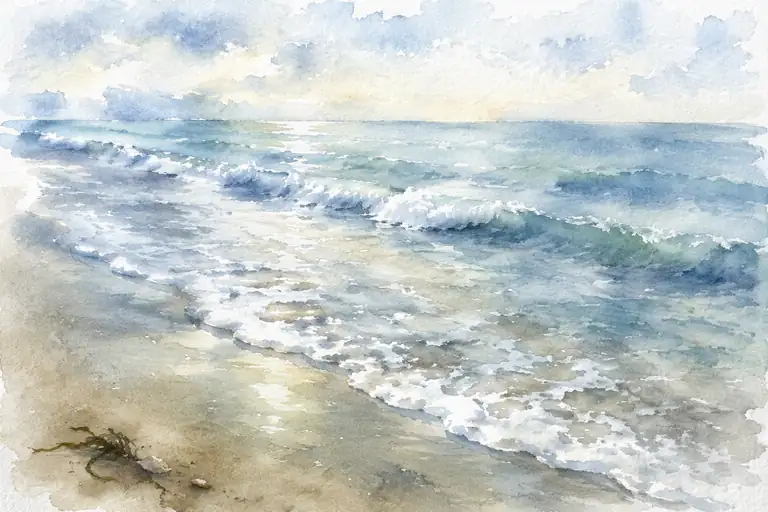 Rhythm of the Morning Tide
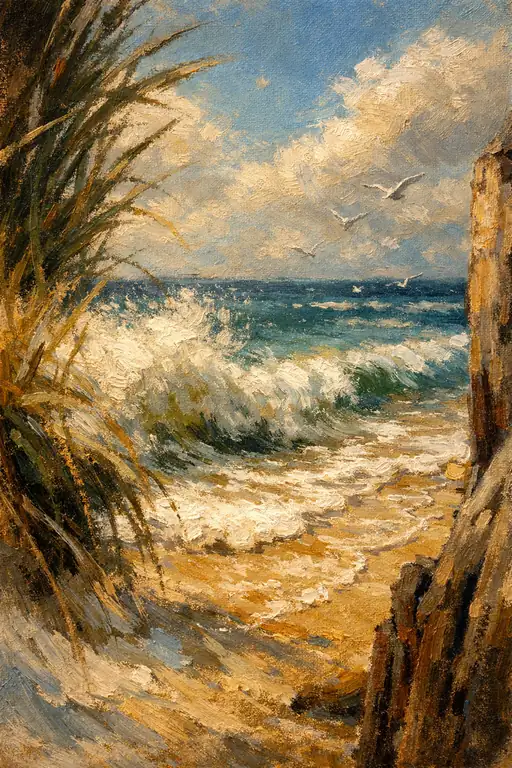 Song of the Unbound Wind and Sea
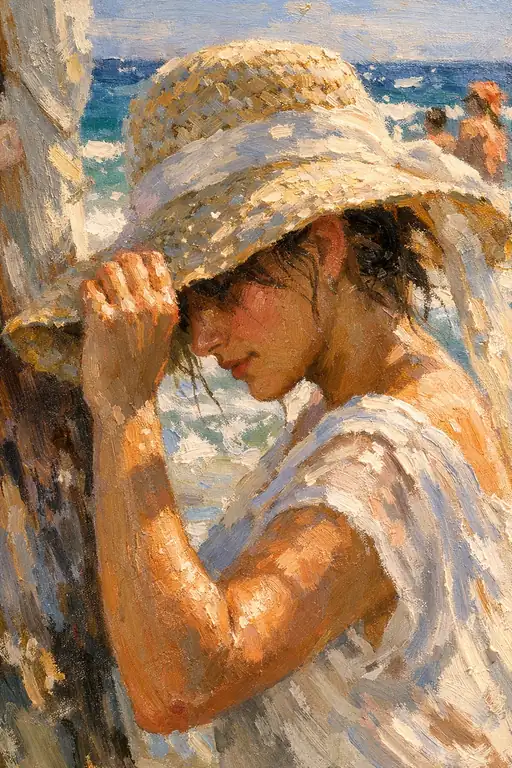 Whispers of the Azure Breeze
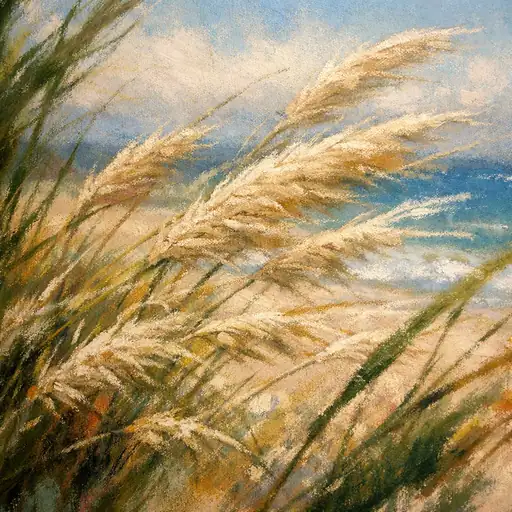 Dance of the Autumn Breeze