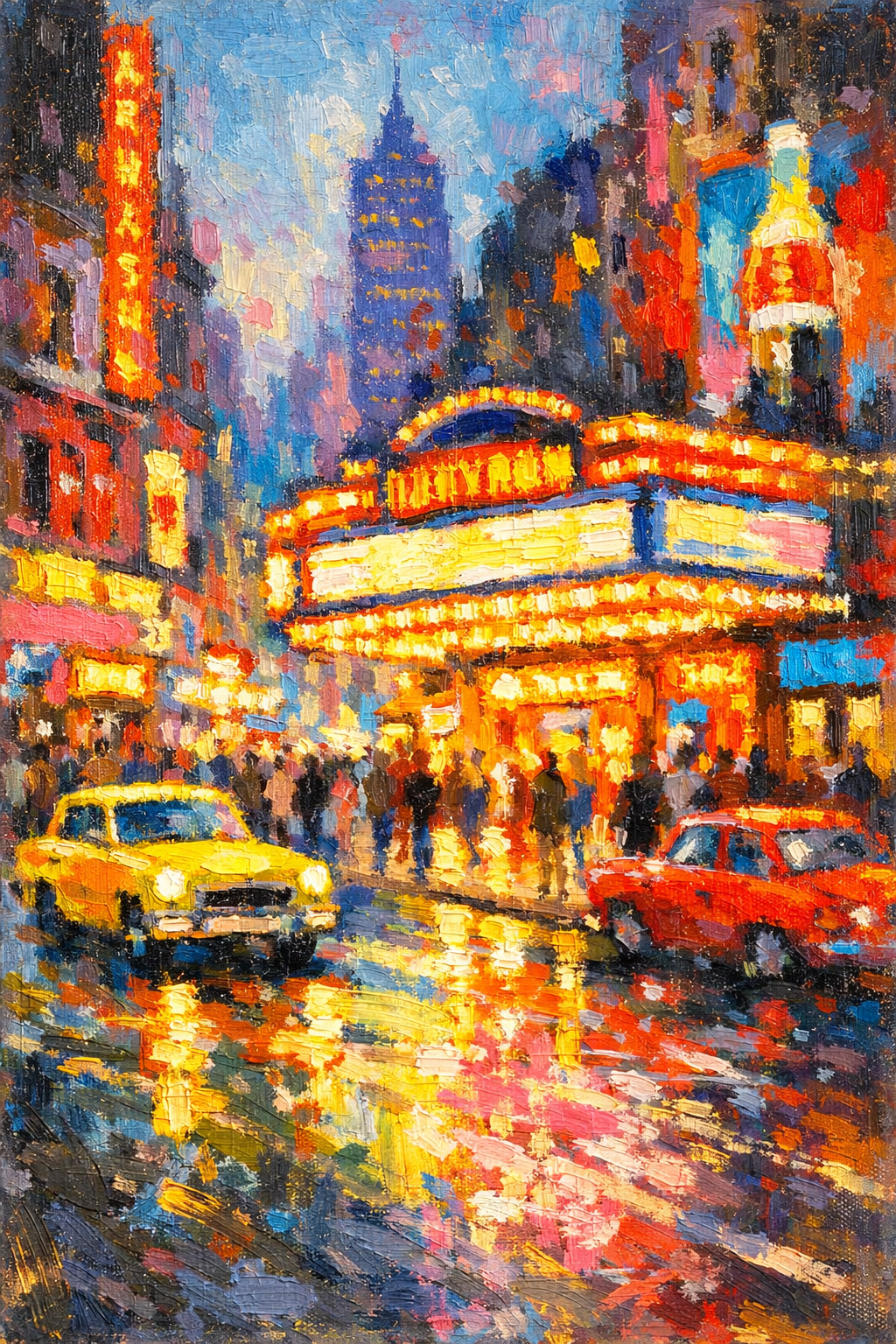
The Alchemist's Whispering Flame
Critique
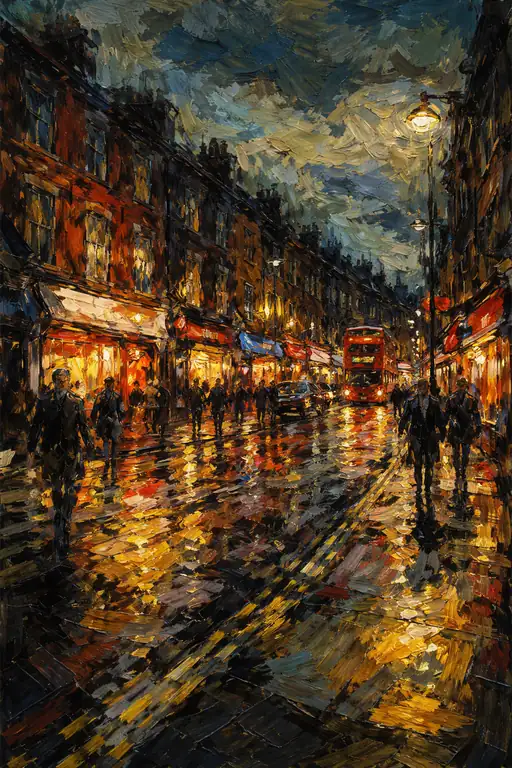
1. Introduction This oil painting presents a dynamic rainy night in a bustling metropolis, rendered with vivid colors and a bold, tactile technique. Glowing theater marquees and an iconic yellow taxi symbolize the unique energy of urban life. The artist employs powerful brushwork to capture the ephemeral moment where light and water merge into a shimmering display. This critique explores the structural composition and the modern aesthetic of this vibrant, light-filled cityscape. 2. Description Positioned to the right, a brilliantly lit theater entrance serves as the central focal point. In the foreground, a yellow taxi and a red car navigate wet asphalt, reflecting their lights in kaleidoscopic patterns. High blue-toned skyscrapers loom in the background, while a tall orange sign adds a vertical accent. Shadowy pedestrians populate the scene, and the damp, bustling atmosphere is vividly described through a primary color palette of red, yellow, and blue. 3. Analysis Structurally, the composition is anchored by the intersection of horizontal awnings and vertical skyscrapers. This framework allows for an expressive handling of paint to represent light scattering. To convey the texture of rain-slicked pavement, the artist uses layered paint partially scraped back, creating intricate tonal gradations. The contrast between the saturated colors of the vehicles and the muted blues of the buildings provides a rhythmic pulse and technical sophistication to the work through sophisticated color theory. 4. Interpretation and Evaluation The painting symbolizes the speed and underlying splendor of modern urban existence. The artist demonstrates a sophisticated sense of form by defining objects through light rather than sharp outlines. The rendering of reflections is original, capturing the moment where physical paint transforms into pure light. By infusing an artificial environment with painterly warmth, the work successfully humanizes the modern city with poetic sentiment. It is a masterful fusion of technical precision and emotional resonance. 5. Conclusion Initially appearing as a chaotic dance of color, closer analysis reveals a meticulous balance of hues and structural order. Through the filter of rain, the city窶冱 brilliance becomes deeper and more lyrical, gaining a unique emotional quality. Ultimately, through this drama of light and shadow, the masterpiece serves as a powerful testament to the artist窶冱 ability to capture the vital pulse of an ever-changing city, achieving a high degree of aesthetic success and profound technical brilliance.
Same Subcategory
Similar Artworks
 Midnight Carousel of Dreams
 Illuminated Promises at the Edge of the Sea
 Luminescence: The Girl with the Stained Glass Glow
 The Golden Swing of Stolen Glances
 Tears of the London Twilight
 Silent Hymn of Amber Glass
 Rowing Through the Amber Reflection
 Candlelight Reverie
 Contemplation Amidst the Blooms
 Letters from the Twilight Canal