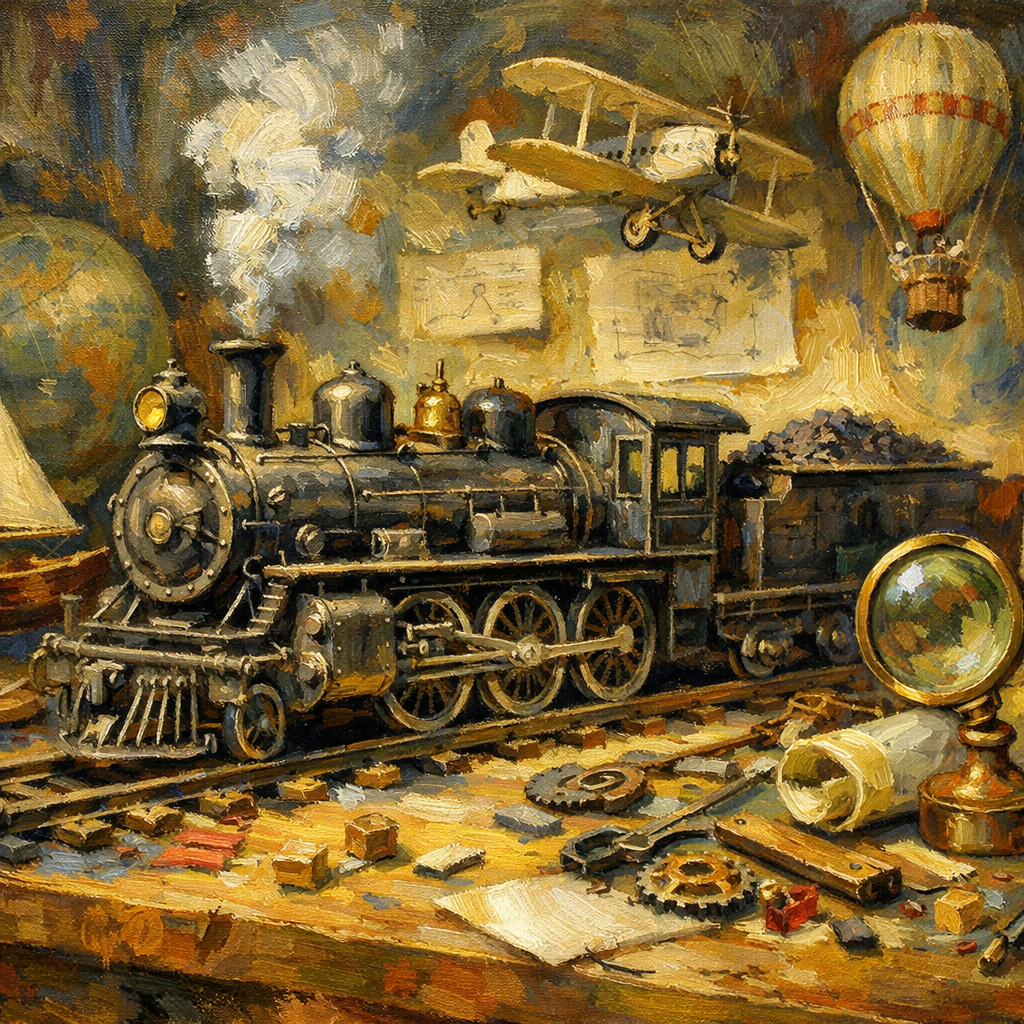
Echoes of the Golden Gear
Critique
1. Introduction This oil painting presents a detailed interior of an atelier filled with models that evoke the "Golden Age of Invention." Centered on a heavy steam locomotive, the scene features models of a biplane and a hot air balloon, brimming with nostalgia for technological discovery. The artist employs a robust technique with heavy impasto to capture the tangible textures of metal and wood. This critique examines the epic aesthetics and structural qualities of this intricate composition. 2. Description The primary focus is a black steam locomotive emitting white steam. Above it, models of a biplane and a hot air balloon fill the space, while a weathered globe is partially visible. In the foreground, a large magnifying glass sits on a workbench alongside gears and blueprint fragments. The color palette is grounded in earthy browns, golds, and blacks, which effectively describe the historical weight and specific details of these diverse objects. 3. Analysis Technically, the most striking feature is the thick, physical texture of the paint. Highlights on the locomotive窶冱 boiler and the magnifying glass are rendered with raised impasto, creating dramatic visual effects. The horizontal arrangement of the locomotive provides stability, while the floating models introduce dynamic movement. The warm lighting against the muted background enhances the nostalgic atmosphere and emphasizes the spatial depth of the workspace through sophisticated contrast. 4. Interpretation and Evaluation The work is a symbolic celebration of human progress. The artist demonstrates exceptional skill in contrasting hard metallic surfaces with soft, ethereal steam. Integrating dynamic transport motifs into a traditional still-life framework creates a unique, timeless world. The painting displays a balance of technical mastery and emotional resonance, making it an outstanding example of atmospheric storytelling. It successfully renders complex textures while maintaining a focused, contemplative mood. 5. Conclusion Initially appearing as a cluttered study, closer observation reveals a structured order that chronicles human ingenuity. By breathing warmth into mechanical forms through painterly brushstrokes, the artist transforms cold iron into a living symbol of dreams. Ultimately, this masterpiece goes beyond historical retrospection, reminding us of the enduring beauty of the human creative spirit. It serves as a profound testament to the artist窶冱 ability to merge engineering precision with artistic soul.
Same Subcategory
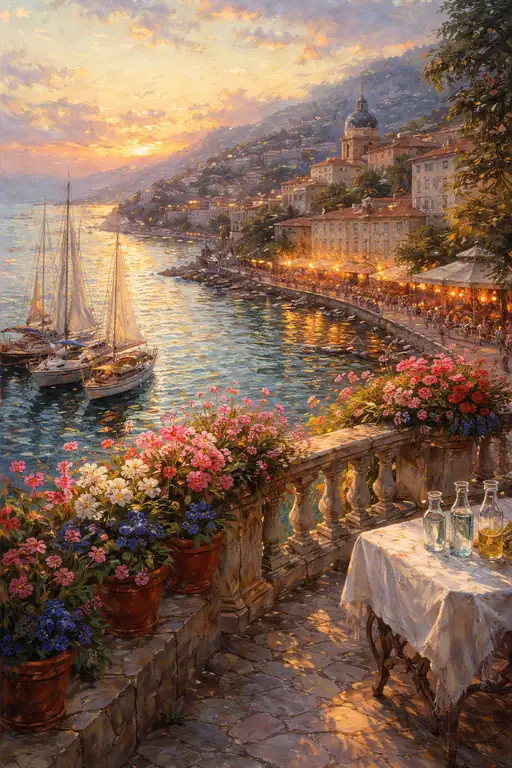 Terrace Memories in the Fading Light
Similar Artworks
 Memories Captured in Glass
 Sunset Serenade on the Golden Hill
 White Walls and Bougainvillea
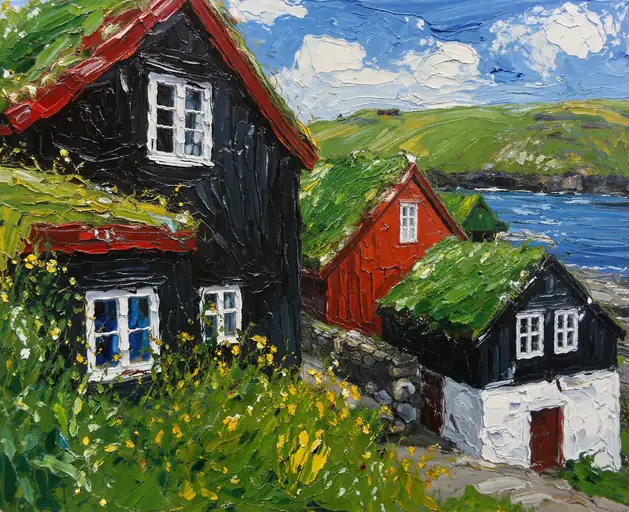 Sod Roofs by the Rhythmic Sea
 Warm Glow of the Seashore Nights
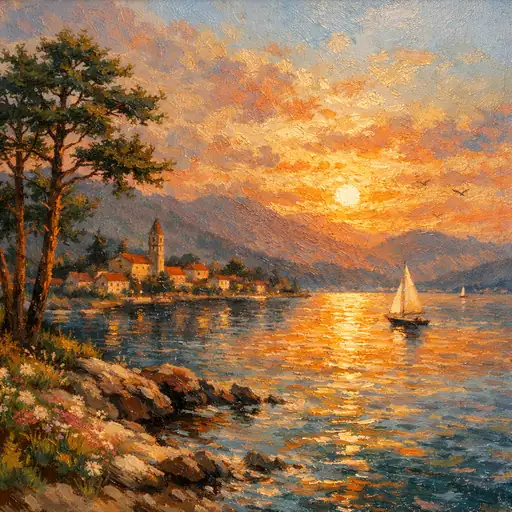 Farewell to the Golden Port
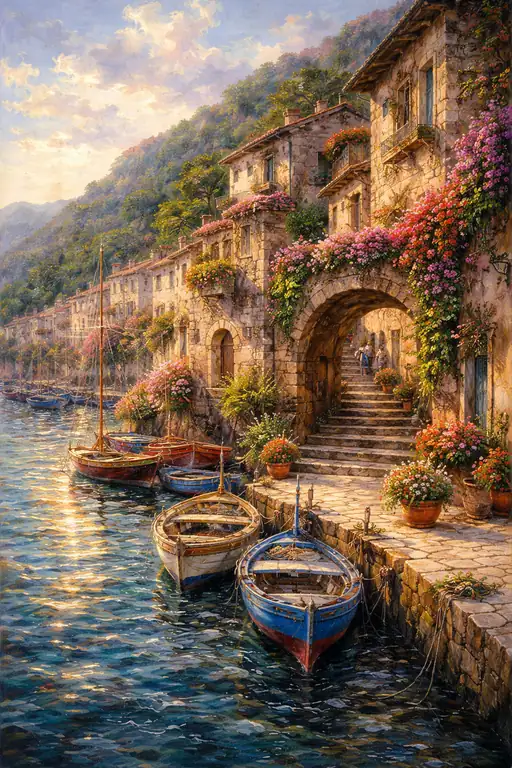 The Bright Pulse of a Mediterranean Village
 Colors of the Hillside at Dusk
 Stroll Beside the Ancient Stones
 Cottage Path to the Azure Sea