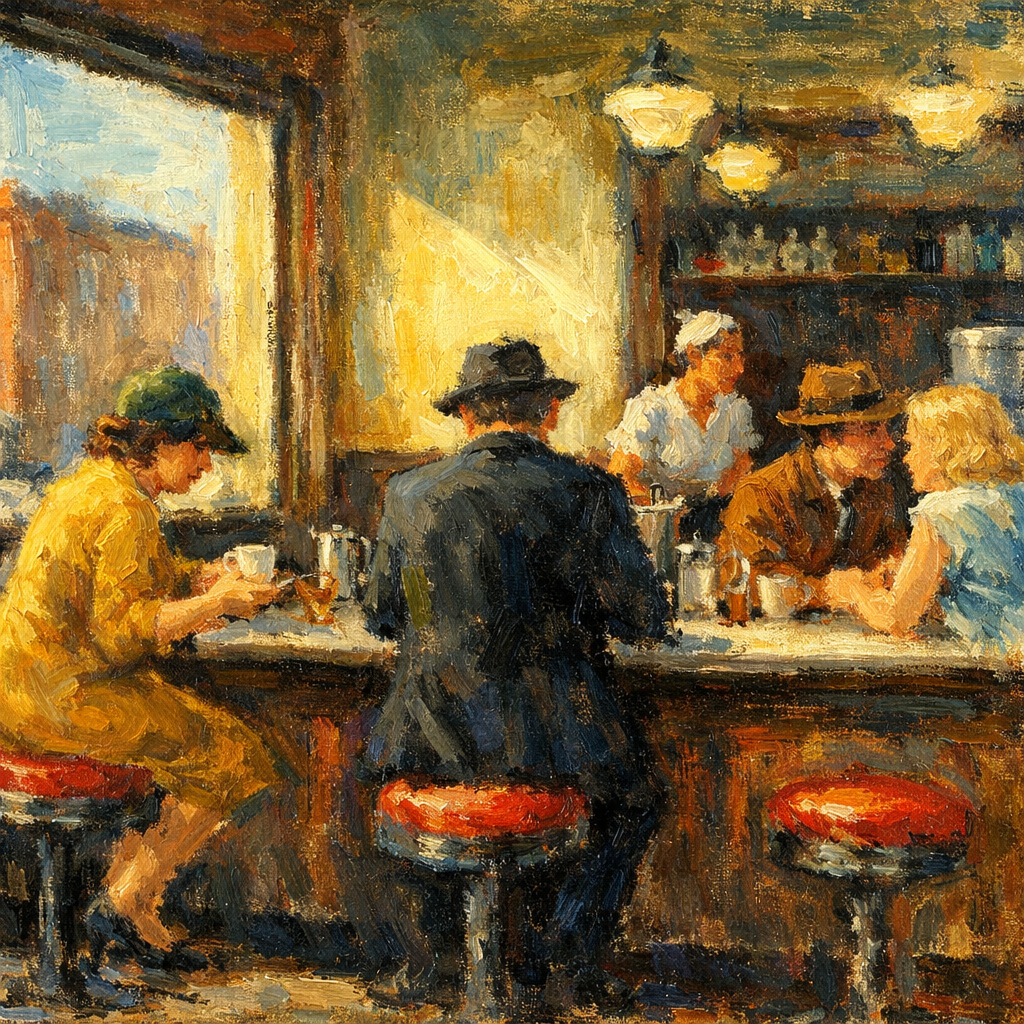
Symphony of Solitude in Amber
Critique
1. Introduction This genre painting captures a poignant scene within a diner, depicting patrons seated at a counter in an atmosphere of both solitude and social interaction. Executed with bold, expressive brushwork, the work utilizes strong tonal contrasts to imbue a mundane setting with a sense of cinematic drama. The artist focuses on capturing the intangible mood of the environment rather than providing a literal narrative, resulting in a deeply evocative composition. 2. Description The scene features three primary customers seated on red-topped stools along a wooden counter. On the far left, a woman in a bright yellow coat sits alone, while in the center, a man in a dark hat and coat is positioned with his back to the viewer. To the right, a couple engages in conversation near a waitress dressed in white who works behind the bar. Bright light streams in from a window on the left, contrasting with the warm, amber glow of the indoor lamps. 3. Analysis Structurally, the painting relies on a dramatic use of chiaroscuro to define the forms of the figures and the spatial layout of the diner. The thick, rhythmic application of oil paint creates a rich texture that suggests the palpable presence of the indoor air and the clatter of the environment. Color is used strategically, with the vibrant reds and yellows acting as focal points against the dominant earthy browns and shadowed areas, creating a dynamic visual rhythm. 4. Interpretation and Evaluation The work can be interpreted as a meditation on the dual nature of urban life: the juxtaposition of individual isolation and human connection. The figures, particularly the man with his back turned, evoke a sense of quiet introspection that is balanced by the warmth of the light and the couple窶冱 interaction. The artist窶冱 ability to suggest complex emotional states through posture and lighting is highly commendable, demonstrating a sophisticated mastery of both composition and psychological depth. 5. Conclusion Ultimately, this painting is a successful fusion of traditional realism and expressive materiality, capturing a timeless slice of human experience. As the viewer lingers on the scene, the initial visual impact gives way to a deeper engagement with the untold stories of the patrons. It stands as a powerful artistic statement that elevates a simple daily moment into a universal reflection on the human condition.
Same Subcategory
 Solitude by the Stream
Similar Artworks
 The Warmth of Midnight Solitude
 Amber Evenings: The Café's Golden Hour
 Spinning Memories in the Wind
 An Elegant Respite in the Shadows of the Cafe
 Twilight at the Grand Harbor
 Evening Wine and the Ocean's Sigh
 Golden Embers of the Midnight Market
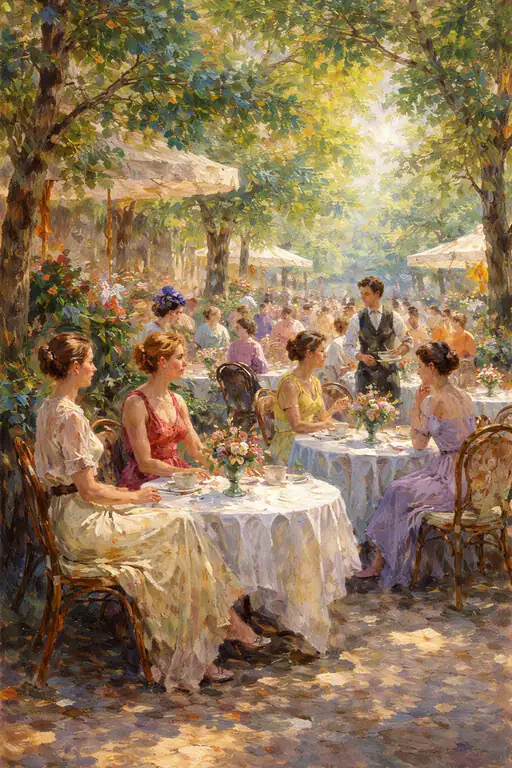 Ripples of Joy Melting into the Dappled Light
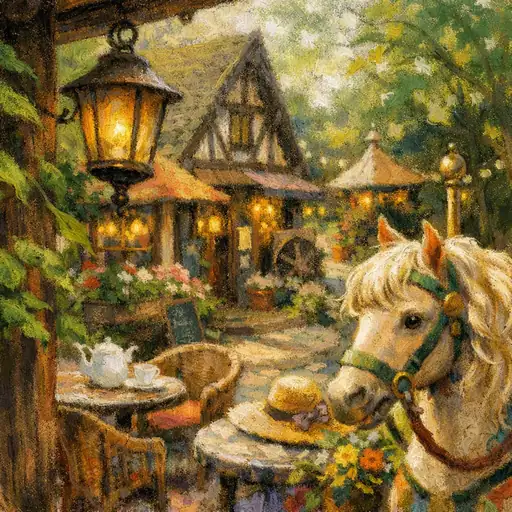 A Warm Afternoon's Reverie
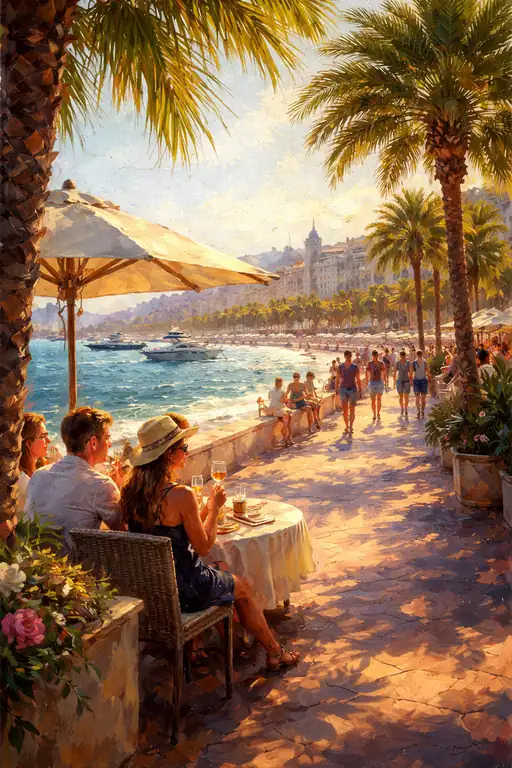 Olive Shadows and Sunlit Secrets