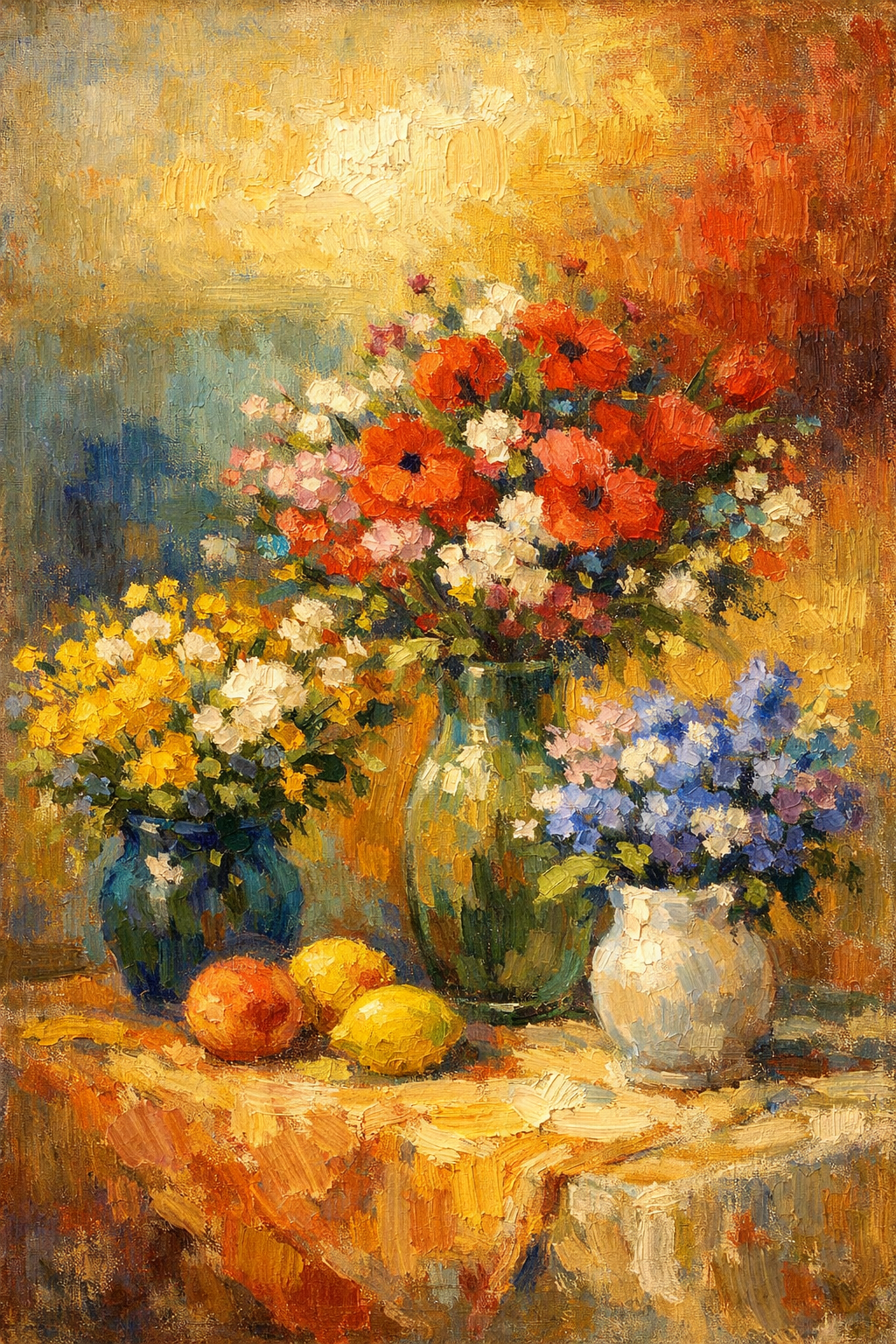
Symphony of the Sunlit Stillness
Critique
1. Introduction This still life oil painting presents a rich arrangement of floral bouquets and citrus fruits, captured in a warm, enveloping light. The work elevates a traditional domestic scene through its expressive use of color and a remarkably tactile application of paint. By blending classical composition with a modern, gestural approach, the artist creates a sense of presence and vitality that transcends the stillness typically associated with the genre. 2. Description The composition features three distinct vases: a central translucent green vessel filled with bright red poppies, a blue vase to the left with yellow wildflowers, and a white ceramic pitcher on the right containing blue blooms. In the foreground, two lemons and an orange are scattered across a textured tablecloth. The surface of the painting is characterized by a heavy impasto technique, where thick ridges of oil paint define the volume of the fruit and the layered petals of the flowers. The background is a harmonious blend of warm yellows and earthy ambers. 3. Analysis Structurally, the three vases form a stable triangular arrangement that anchors the composition. The color palette is thoughtfully organized around the primary colors窶排ed, yellow, and blue窶播istributed across the different floral groups to create a vibrant yet balanced visual rhythm. The impasto technique serves as a crucial analytical tool, allowing the artist to differentiate between the varied textures of glass, ceramic, and organic matter through the sheer materiality of the paint. The lighting, appearing to emanate from above, provides a strong directional sense that enhances the three-dimensionality of the objects. 4. Interpretation and Evaluation This work can be interpreted as a celebration of the inherent beauty and abundance found in everyday surroundings. By prioritizing the physical gesture of the brush over meticulous detail, the painting communicates the essential energy and weight of the subject matter. The technical execution is particularly impressive in its ability to maintain a cohesive atmospheric warmth while allowing individual colors to vibrate with intensity. The choice to utilize a heavy texture gives the objects a sculptural quality, making the scene feel immediate and sensory. 5. Conclusion The painting is a successful synthesis of structural balance and expressive materiality, offering a contemporary perspective on a timeless theme. While the initial impression is one of exuberant color, further engagement reveals a disciplined command of composition and light. The initial visual appeal matures into a deeper appreciation for the tactile complexity of the surface. Ultimately, this still life stands as a testament to the artist's ability to translate sensory experience into a powerful and enduring artistic statement.
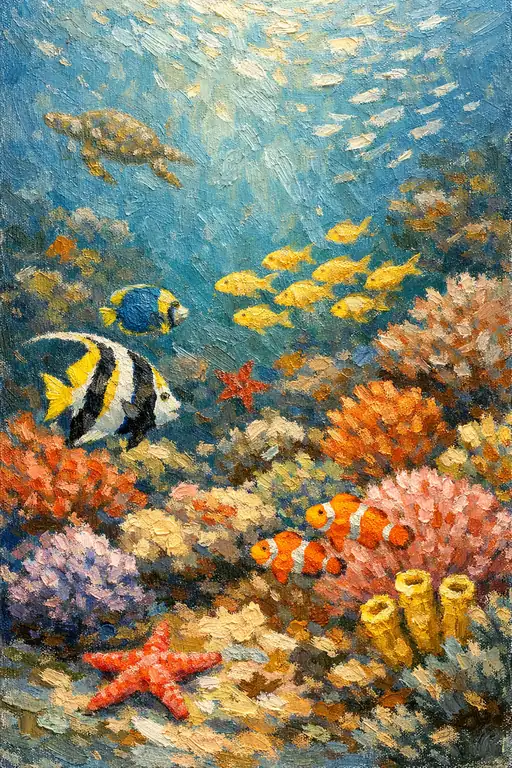 Whispers of the Cobalt Abyss
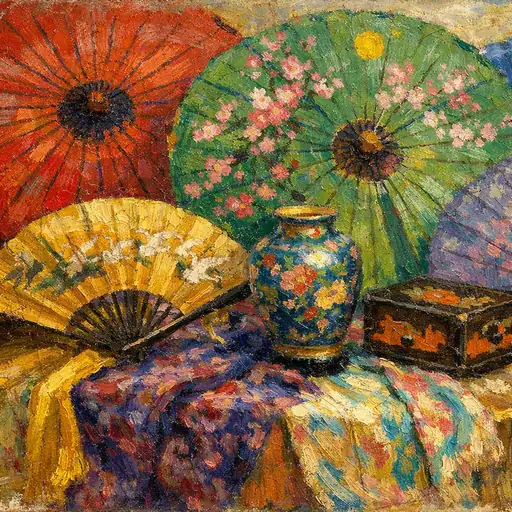 A Rhapsody in Sakura and Gold
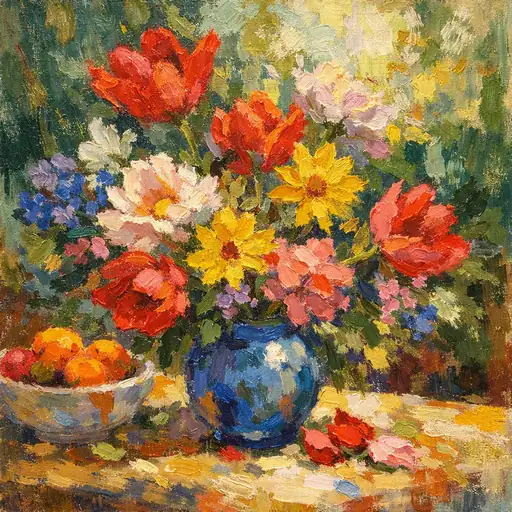 Vitality in Blue and Bloom
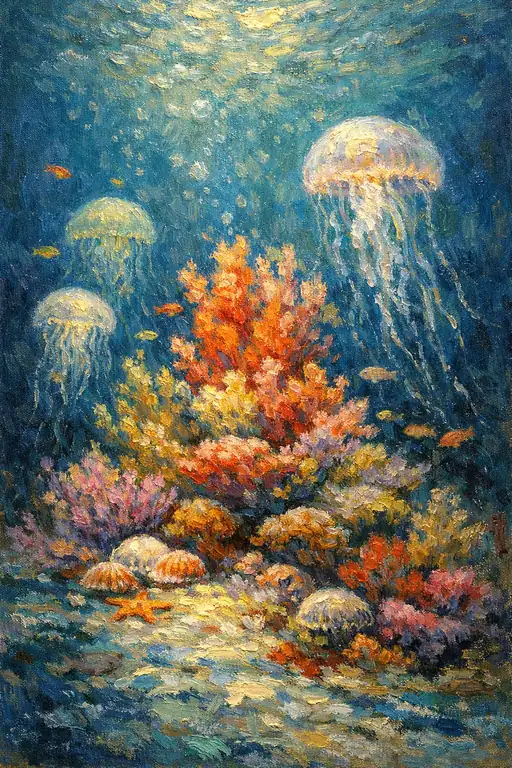 Dance of the Luminous Abyss
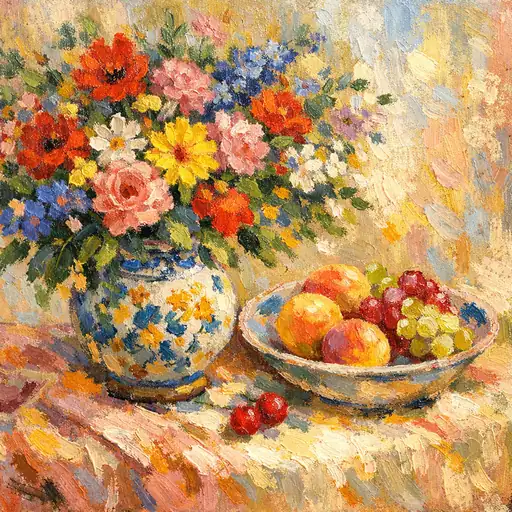 Sunlit Symphony of the Hearth
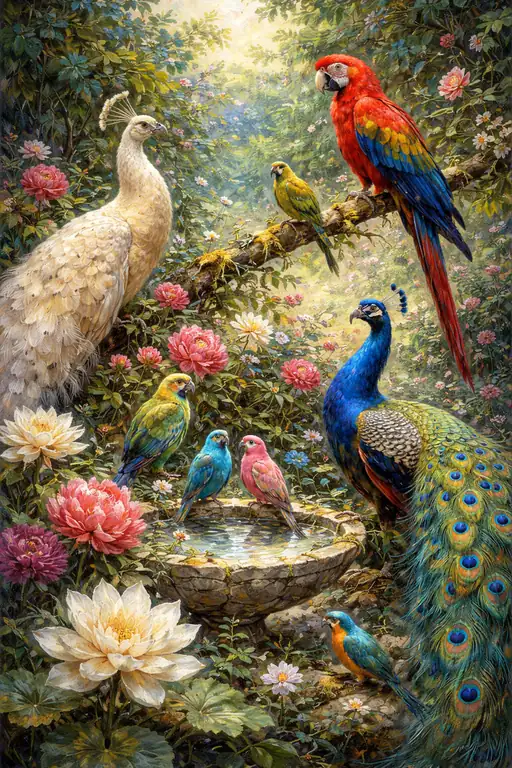 Symphony of the Sapphire Plumage
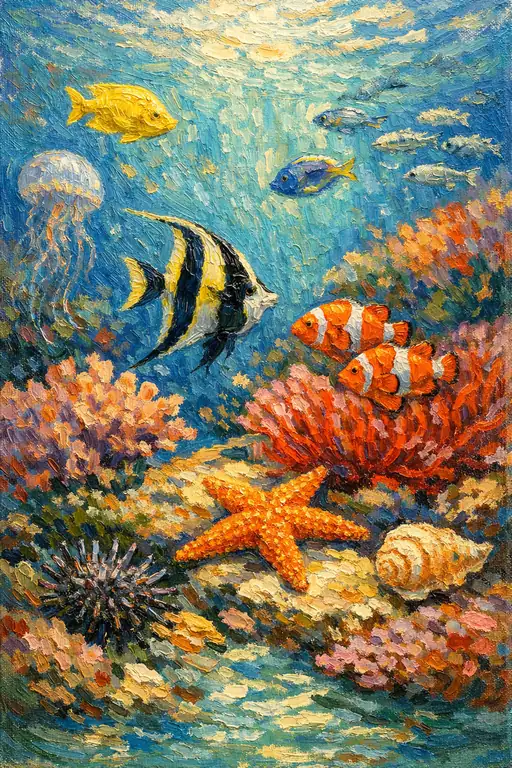 Coral Kingdom's Gentle Breath
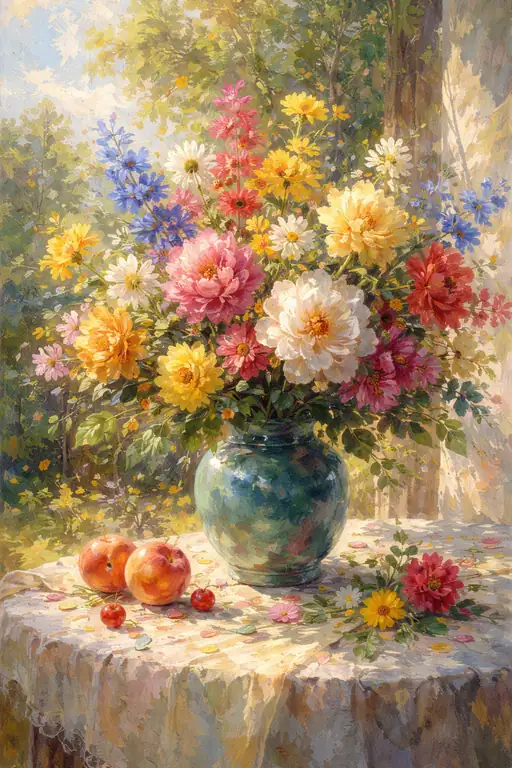 Sunlit Overture of the Garden
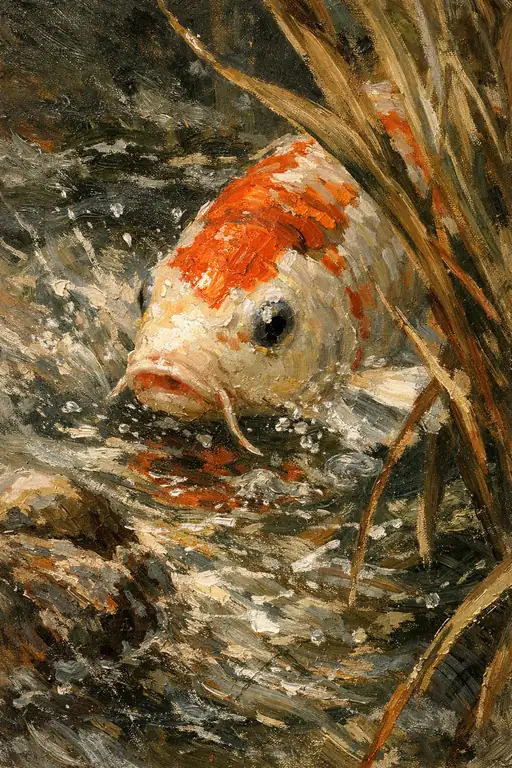 The Splashing Dance of the Golden Koi
 Swans on a Sunlit Lake