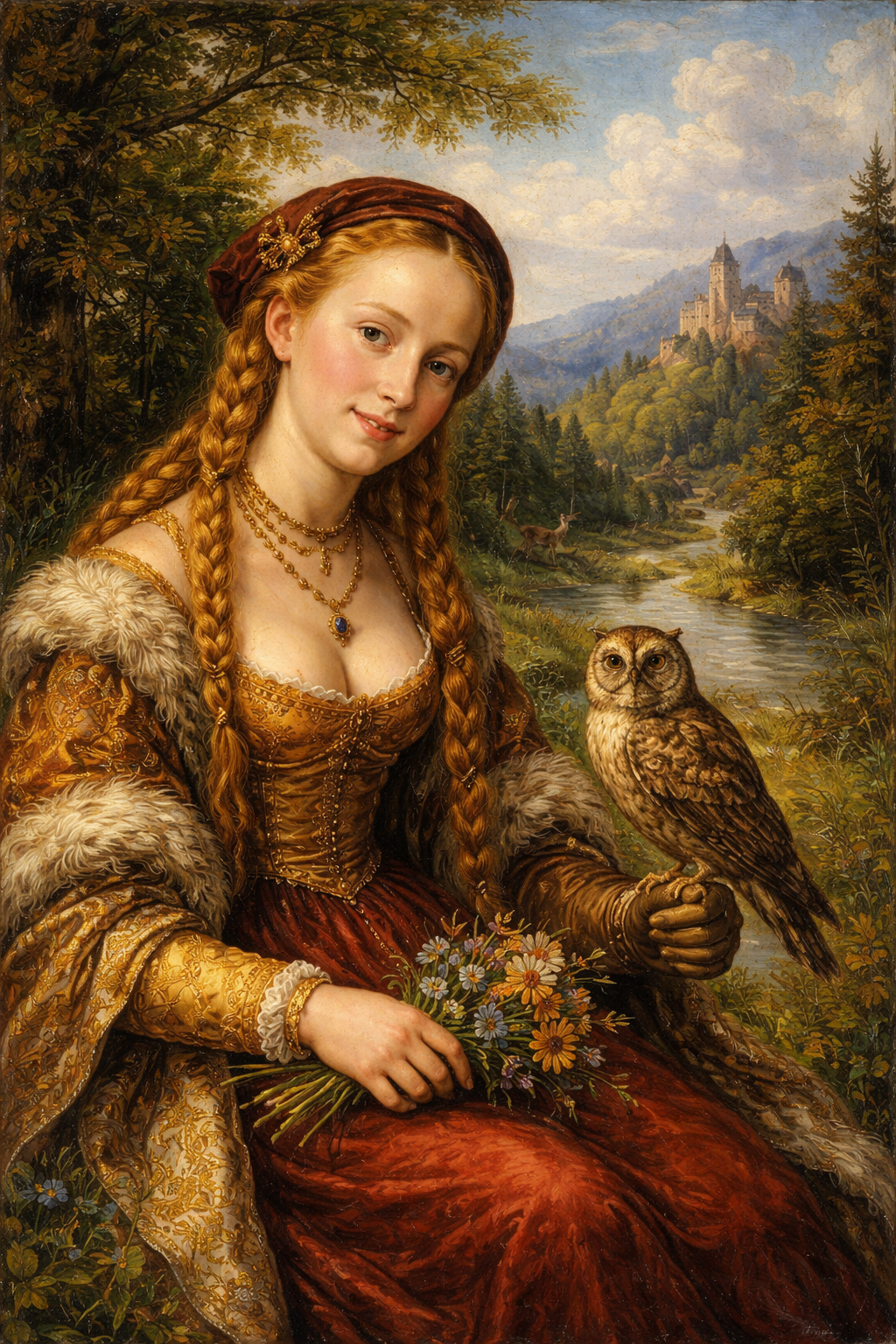
The Owl's Guardian
Critique
1. Introduction This evocative portrait features a young woman in Renaissance-style attire, accompanied by a perched owl in a lush landscape. The painting masterfully combines the precision of classical portraiture with a romanticized natural background. Through its rich symbolism and detailed execution, the work presents a harmonious vision of feminine grace intertwined with the wisdom of the natural world. 2. Description The subject is depicted with long, intricately braided red hair, wearing a sumptuous gown of gold and crimson adorned with fur trim. She holds a delicate bouquet of wildflowers in her right hand, while a majestic owl rests on her gloved left hand. The background reveals a serene river winding through a dense forest, leading toward a prominent stone castle situated on a distant mountain peak. 3. Analysis The artist demonstrates exceptional skill in rendering varied textures, from the softness of the fur and feathers to the metallic sheen of the golden jewelry. The lighting is warm and ethereal, highlighting the woman's porcelain skin and creating a gentle glow across the entire composition. A balanced color palette of warm golds, deep reds, and natural greens establishes a sense of timeless elegance and atmospheric depth. 4. Interpretation and Evaluation The inclusion of the owl strongly suggests a theme of wisdom and a deep connection to nature, elevating the portrait beyond a simple likeness. The woman's calm expression and the peaceful landscape evoke a sense of noble tranquility and intellectual depth. The execution is remarkable for its clarity and meticulous detail, successfully capturing both the physical beauty and the symbolic weight of each element. 5. Conclusion This painting is a superb example of modern portraiture that draws inspiration from classical traditions to create a unique narrative. Initially seen as a decorative scene, it reveals itself as a sophisticated exploration of the relationship between humanity, knowledge, and the environment. Ultimately, the work stands as a beautiful and technically proficient tribute to the enduring allure of historical aesthetic ideals.
Same Subcategory
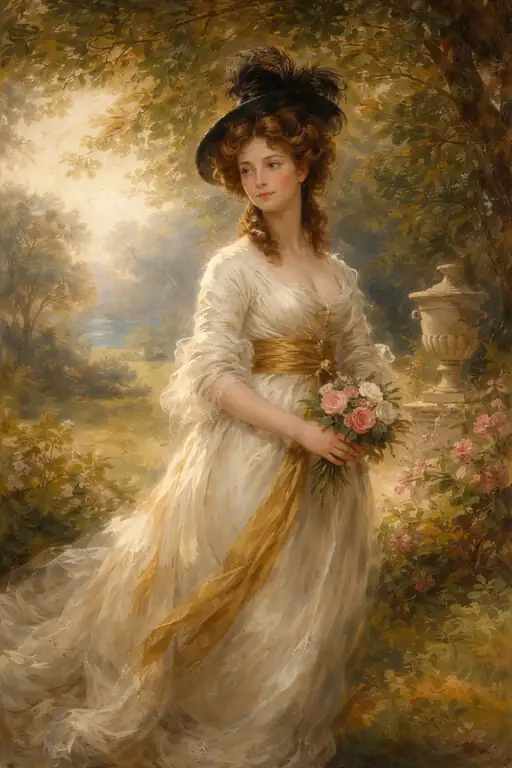 A Timeless Bloom in the Quiet Garden
Similar Artworks
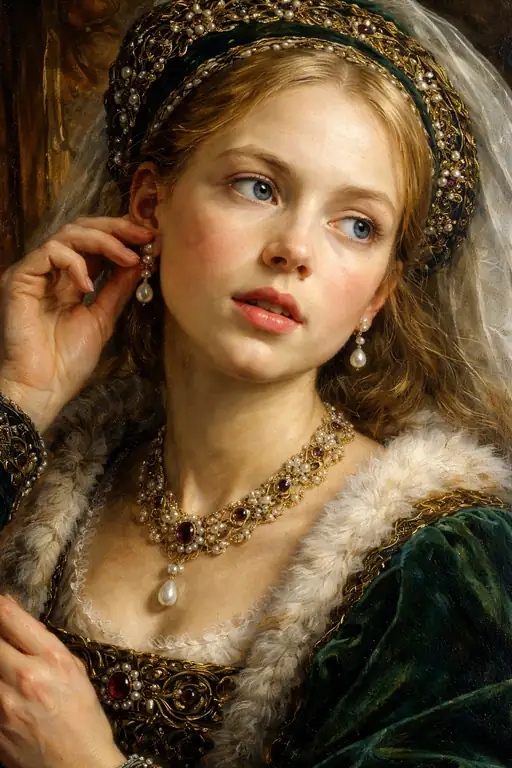 The Silent Grace in Deep Green Velvet
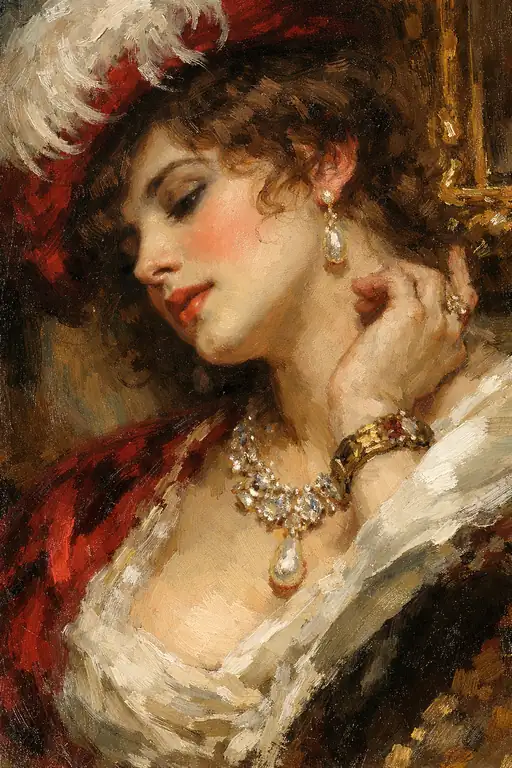 Beneath the Crimson Feathers
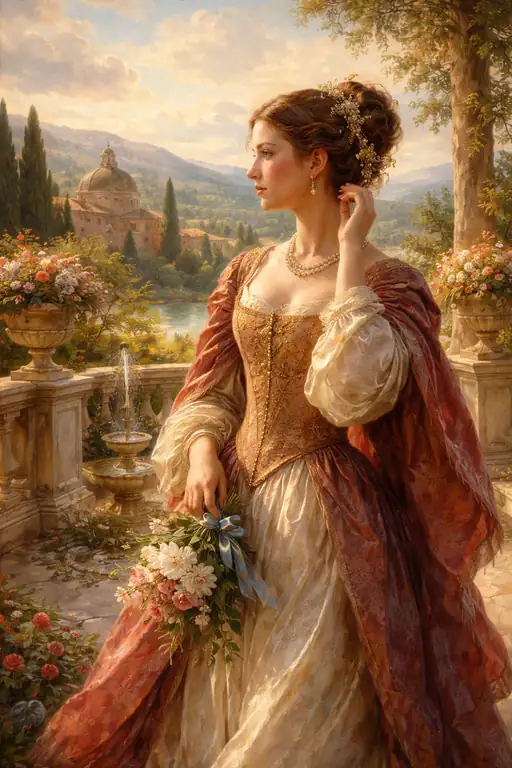 Embrace of the Distant Dome
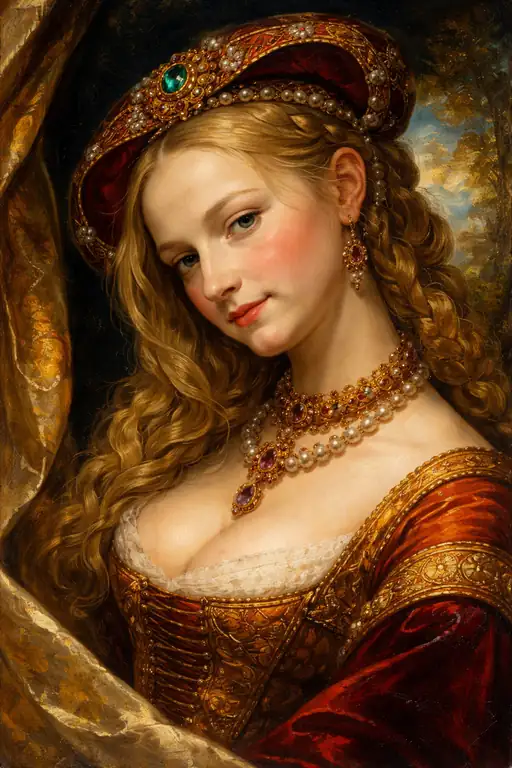 Gaze of Nobility: The Crimson Elegance
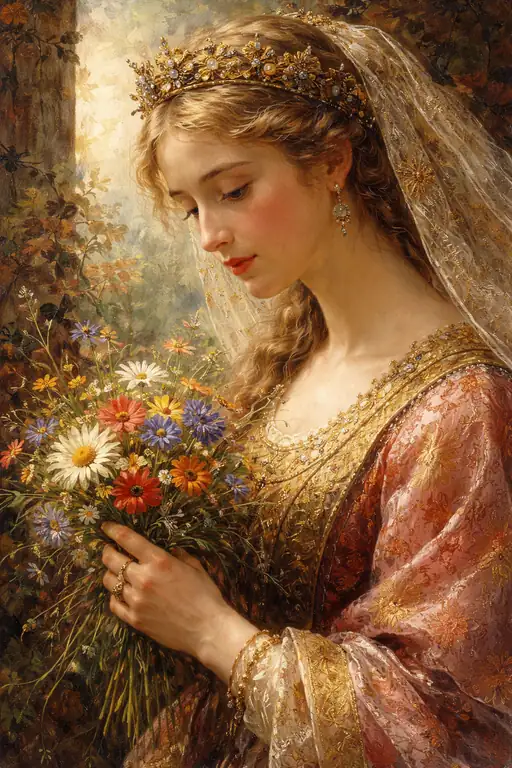 A Crown of Golden Promises
 Silent Presence in Shadows
 Gleaming Contemplation in the Night
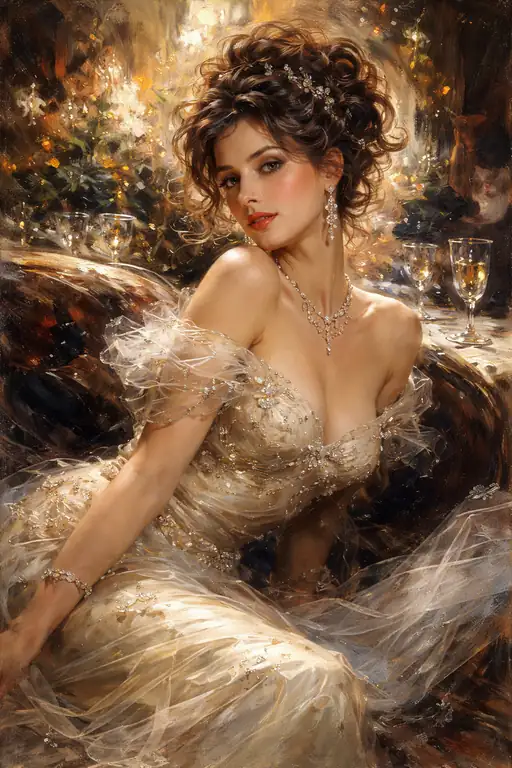 Radiance in the Grand Hall
 The Ethereal Bride
 A Noble Smile Veiled in History