The Weight of Stolen Time
Critique
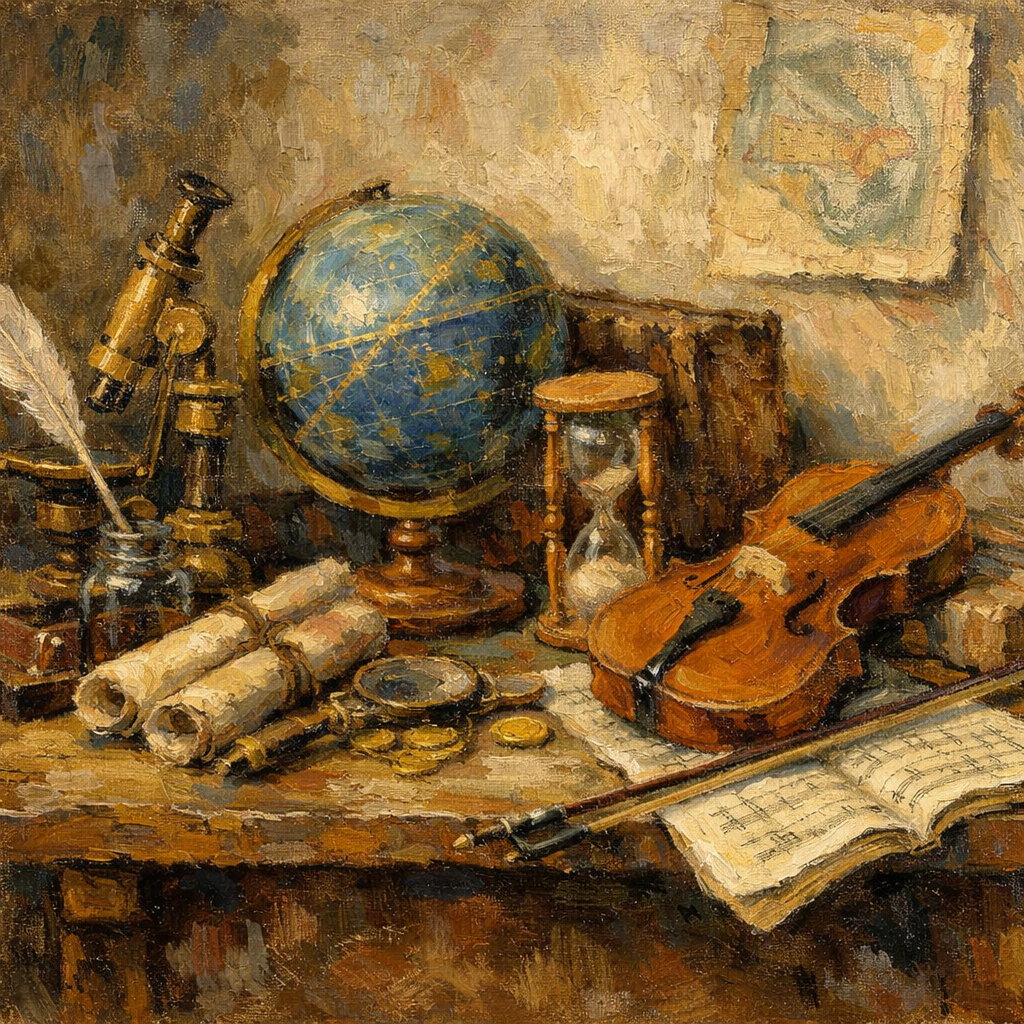
1. Introduction This solemn oil painting presents a dense still life featuring a collection of objects symbolizing human intellect, artistic sensibility, and the inexorable passage of time. Reinterpreting the 17th-century Dutch tradition of the "Vanitas," the work radiates a quiet yet powerful presence through its contemporary brushwork. It gathers diverse artifacts representing science, music, and history into a meticulous composition. While rooted in classical themes, the artist窶冱 passionate touch breathes modern life into this allegory of human endeavor and transience. 2. Description A blue celestial globe sits at the center, flanked by an hourglass and a worn violin. To the left are early scientific instruments, including a microscope or telescope, alongside a quill in an inkwell and bundles of rolled parchment. The foreground is scattered with a magnifying glass and several coins, while an open music score and a bow are positioned to the lower right. A weathered map pinned to the background wall completes the setting of a scholarly study. 3. Analysis Formally, the work excels in rendering diverse material textures with high technical skill. The metallic luster, the warmth of the wood, the fragility of the paper, and the smooth surface of the globe are expressed with tactile reality through thick impasto. A palette dominated by earthy browns and golden ambers creates a sense of both intellectual passion and the patina of time. The dense, multi-layered composition is balanced by diagonal elements like the violin bow, providing a sense of rhythm and equilibrium. 4. Interpretation and Evaluation The painting explores universal themes: the accumulation of knowledge (globe, microscope), the joy of art (violin), and their confrontation with finite time (hourglass). The coins and magnifying glass suggest worldly value and attention to detail, making the entire scene a metaphor for the love of wisdom and the awareness of mortality. Technically, the artist窶冱 choice to depict these classical motifs with energetic, almost raw brushstrokes adds surprising dynamism to the traditionally quiet genre of still life. 5. Conclusion Initially appearing as a collection of antique curiosities, the painting gradually unfolds as a grand narrative about the human quest for understanding and its inherent limits. The artist窶冱 persistent, vigorous brushstrokes on each object communicate an intellectual heat directly to the viewer. By portraying the dignity of human effort through stationary items, the work leaves a lasting impression of profound contemplation and intellectual fulfillment long after the viewer has turned away.
 Whispers of the Golden Hour
 Spark of Creation
 A Journey Guided by the Compass of Memories
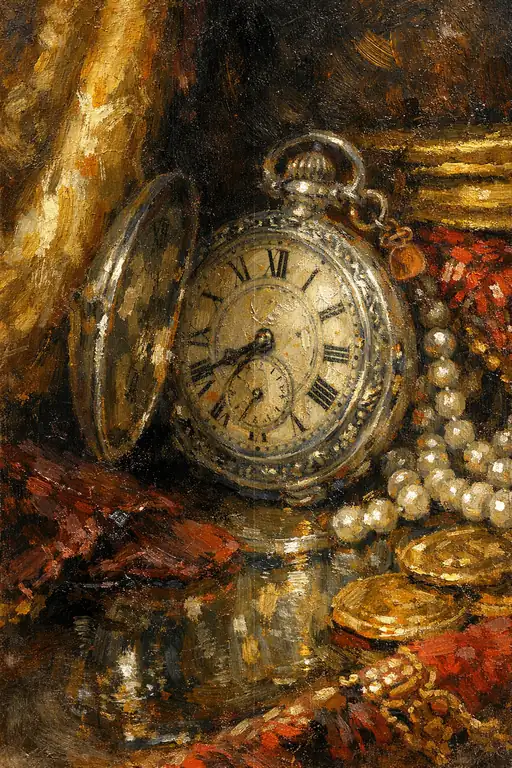 Echoes of Forgotten Time
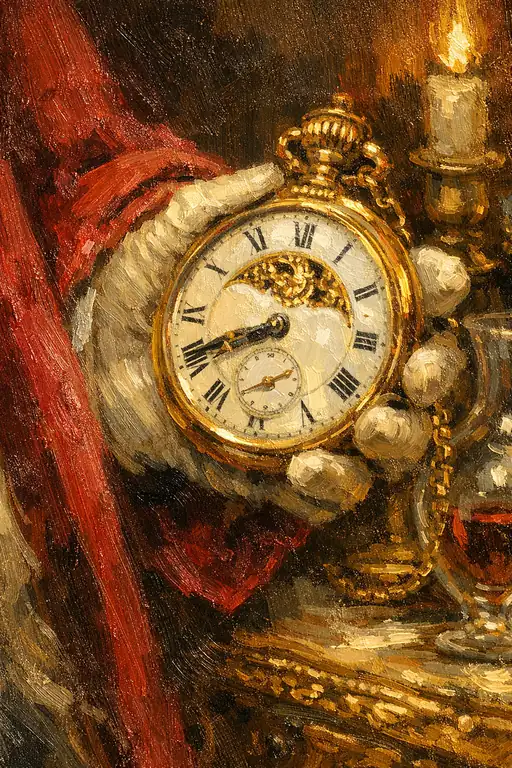 The Elegant Weight of Time
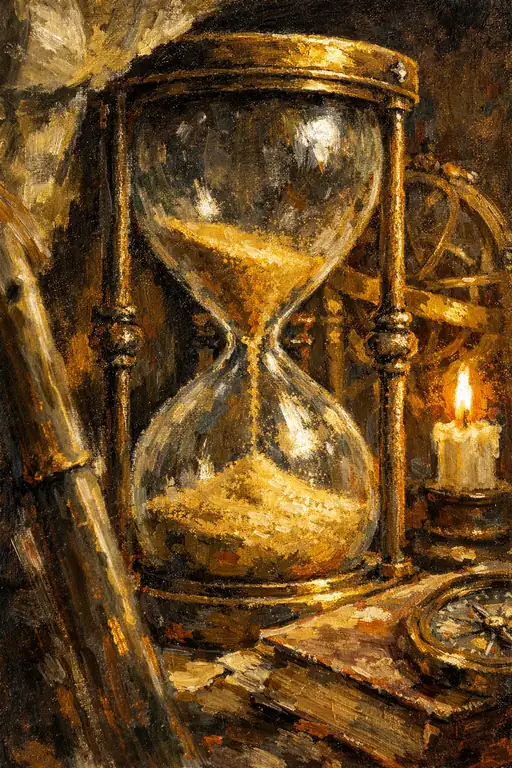 Echoes in the Falling Sand
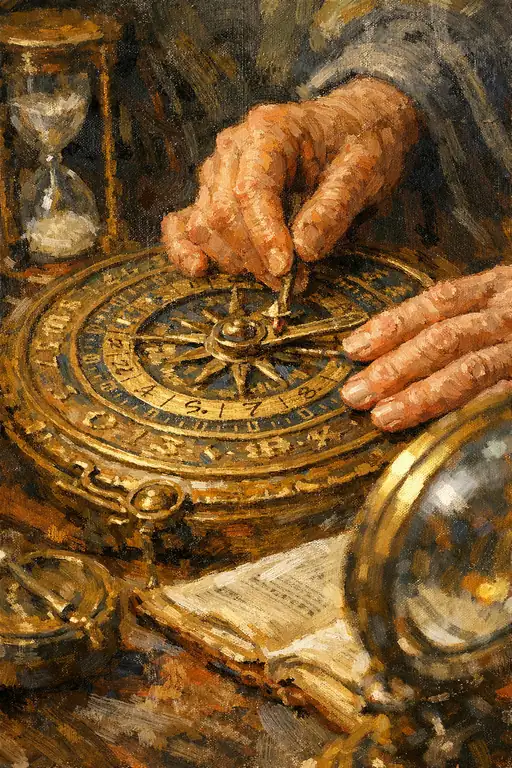 Eternity in a Single Drop
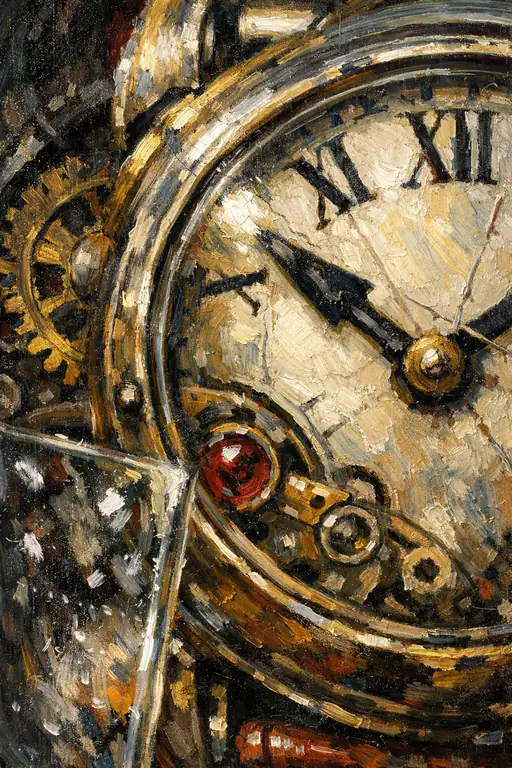 The Relentless Gears of Time
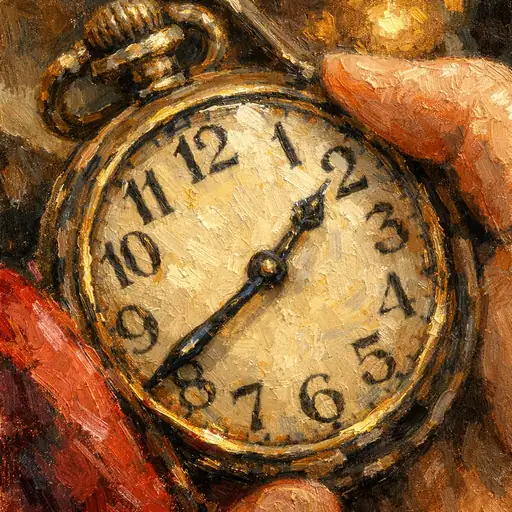 Holding Time Hostage
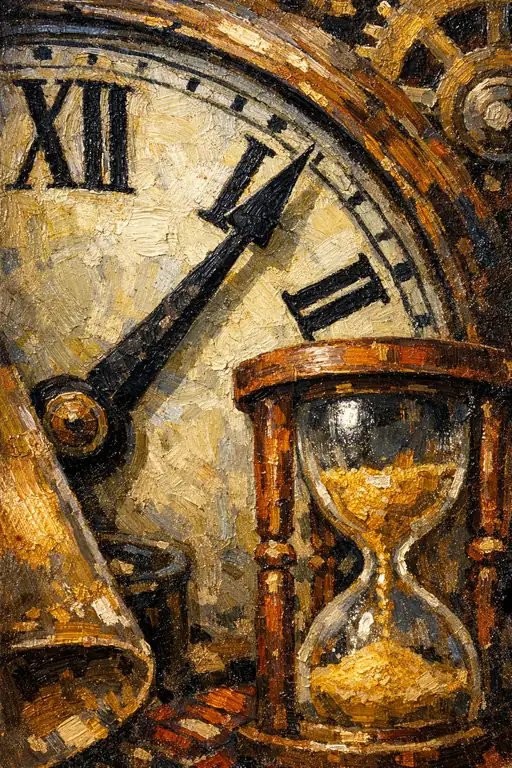 The Golden Weight of Eternity
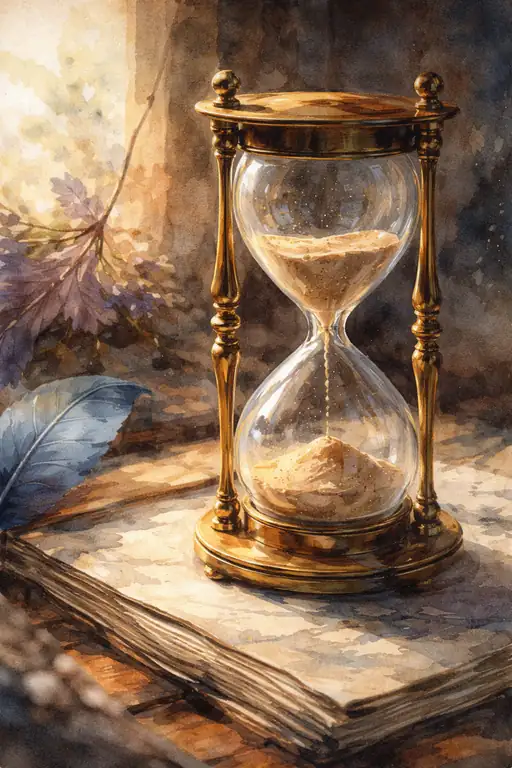 Sands of Serene Passage