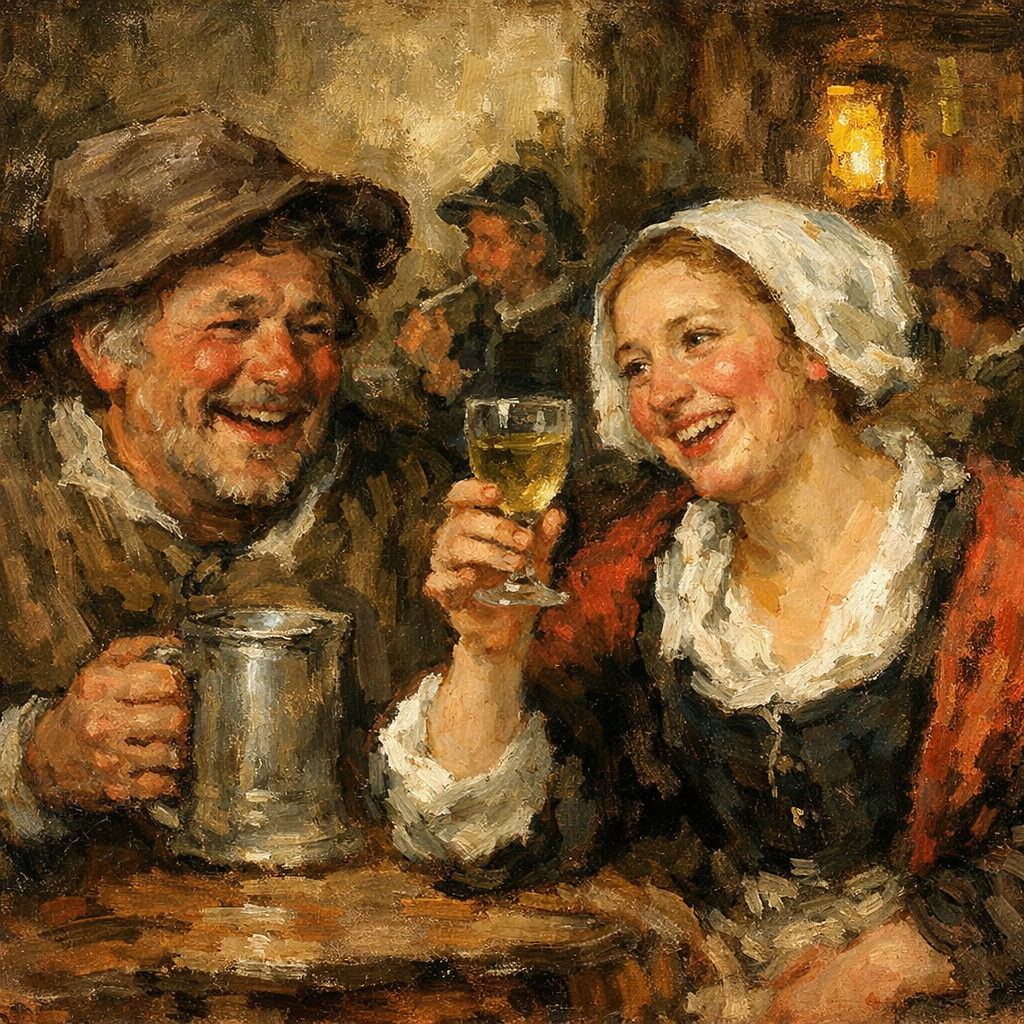
Echoes of a Merry Heart
Critique
1. Introduction This vibrant oil painting captures a man and a woman sharing a lively conversation and drinks in a bustling tavern. Drawing on the traditional theme of the "merry company" found in 17th-century Dutch genre painting, the work is executed with remarkably dynamic and powerful brushwork. The scene resonates with the implied sounds of laughter, vividly freezing a moment of everyday joy. While rooted in classical composition, the artist窶冱 passionate energy permeates the canvas, drawing the viewer into the festive atmosphere. 2. Description At the center, a man in a worn hat and a woman in a white cap and red shawl exchange hearty smiles. The man rests a large metal tankard on the table, while the woman raises a glass of amber wine. In the background, other patrons, including a figure smoking a pipe, are dimly rendered, contributing to the tavern's cluttered ambiance. Low interior lighting dramatically accentuates the figures窶・flushed cheeks, the textures of their clothing, and the transparency of the drinks. 3. Analysis The most striking formal quality is the bold, confident brushwork. Thick layers of paint on the highlights of skin and clothing reflect light, imbuing the figures with life. The color palette is grounded in earthy browns, with the red shawl, metallic tankard, and yellow wine serving as effective focal points. The composition emphasizes intimacy by framing the two main figures closely, while the blurred background ensures their spirited expressions remain the primary focus of the viewer's attention. 4. Interpretation and Evaluation The painting celebrates pure human joy and camaraderie found in moments of respite from daily routine. The expressions transcend simple portraiture, vibrating with a life-affirming energy that elicits empathy. Originality is found in the modern, fast-paced reinterpretation of a classical tavern scene, granting the image a cinematic sense of movement. The balance between observation and overall harmony demonstrates technical maturity and profound insight into the subjects, resulting in a masterful work of art. 5. Conclusion Upon initial observation, the painting might seem like a mere rowdy celebration, but closer engagement reveals the rich warmth within each face. The rough brushwork is a necessary means to express the pulse of life. By capturing a fleeting laugh permanently on canvas, this work presents a universal form of happiness that transcends time. It leaves the viewer with a pleasant sense of elevation and a renewed appreciation for the simple beauty of human connection.
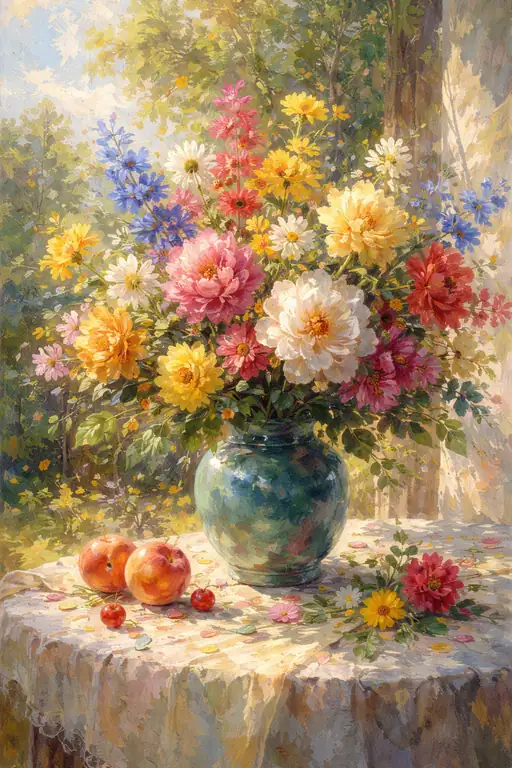 Sunlit Overture of the Garden
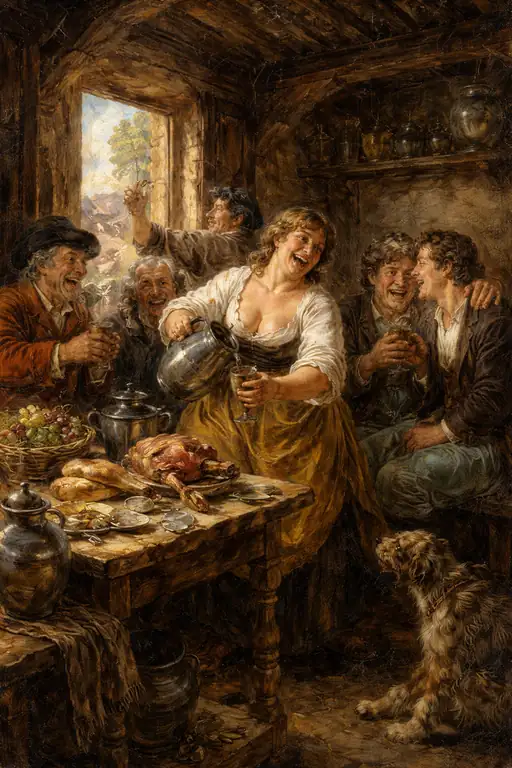 Echoes of Mirth and Plenty
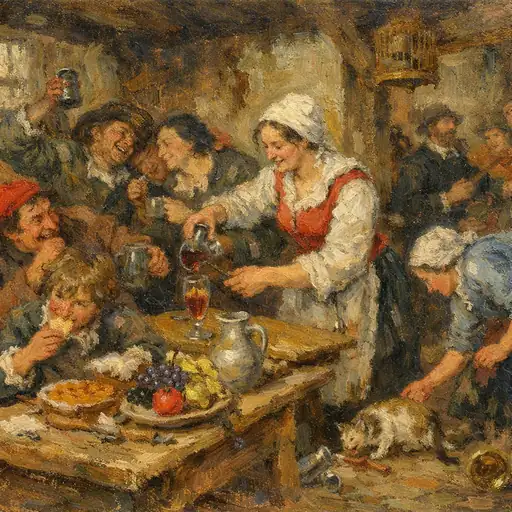 A Symphony of the Everyday
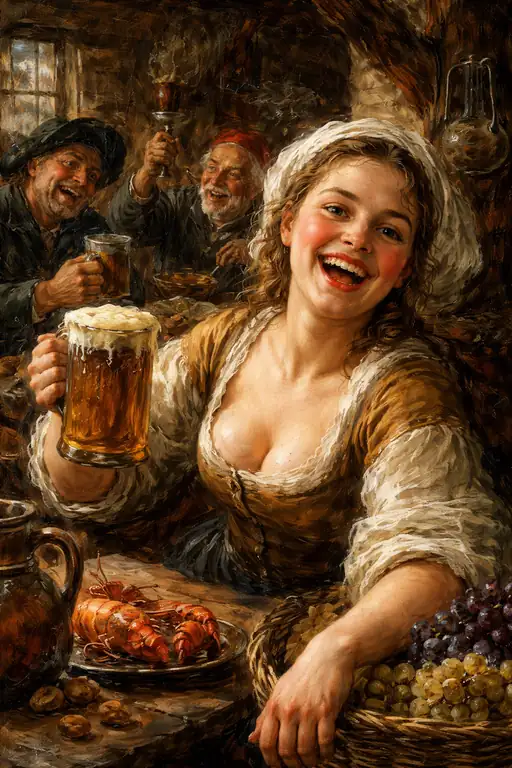 Laughter Echoes in the Amber Light
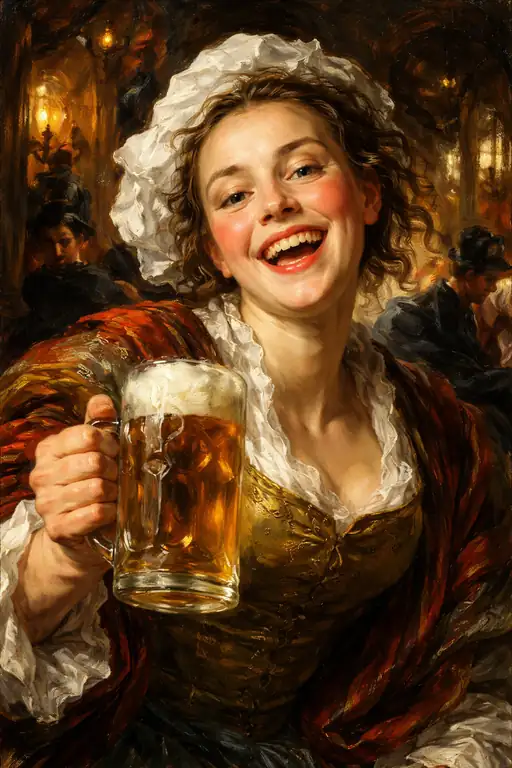 Laughter Filling the Tavern
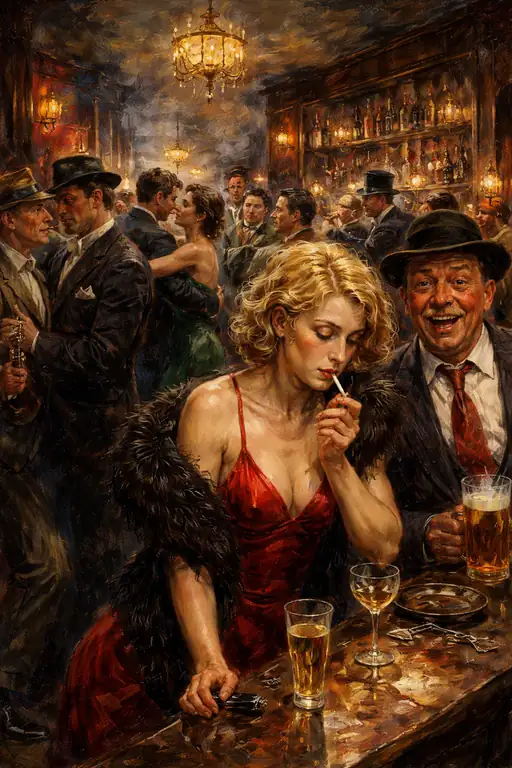 Echoes of a Glamorous Night
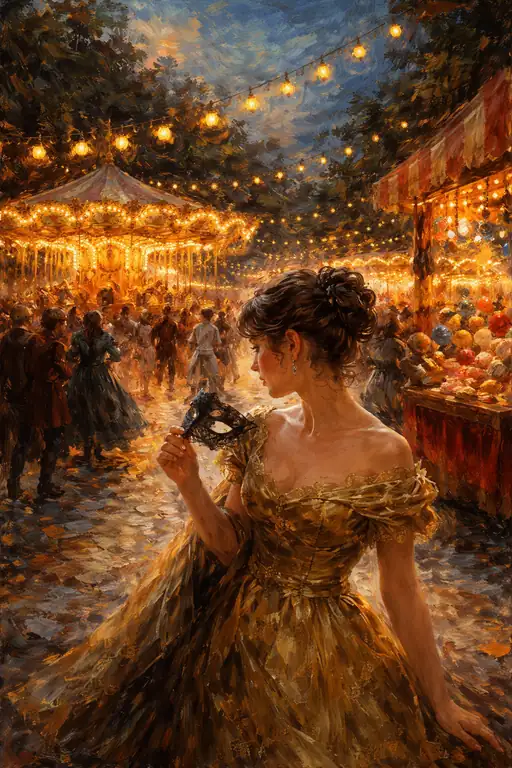 Midnight Masquerade's Echo
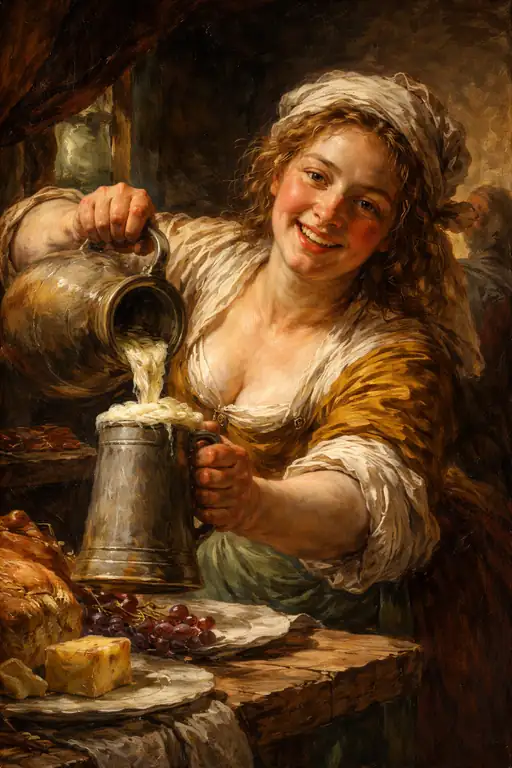 A Cheerful Pour
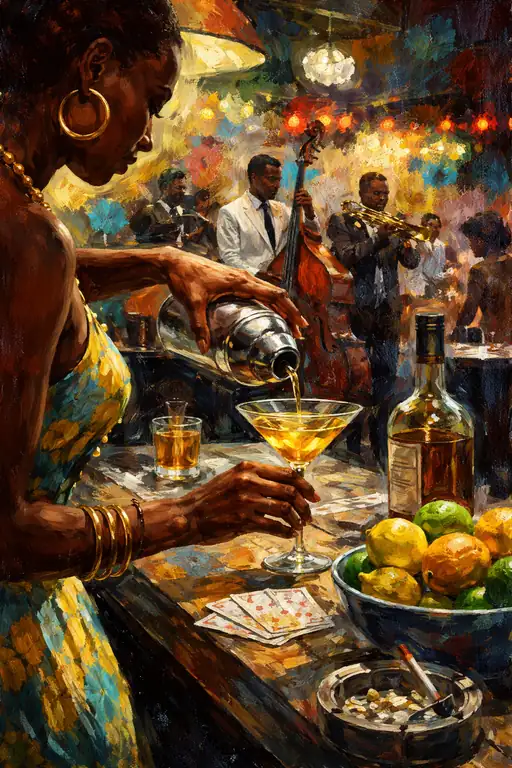 Midnight Melody: The Golden Pour
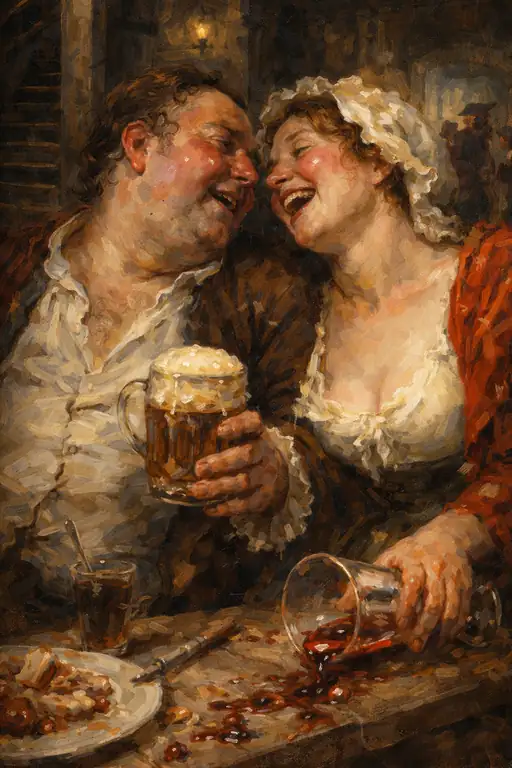 Laughter Resounding in the Rustic Tavern
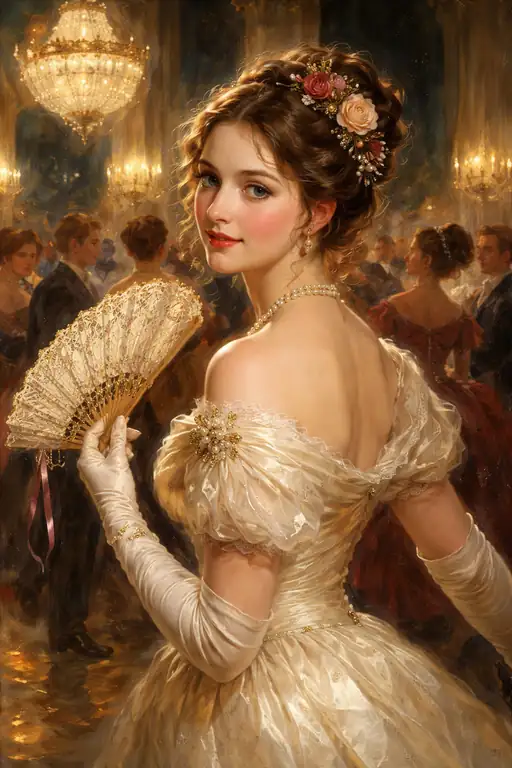 A Fleeting Waltz in the Golden Hall