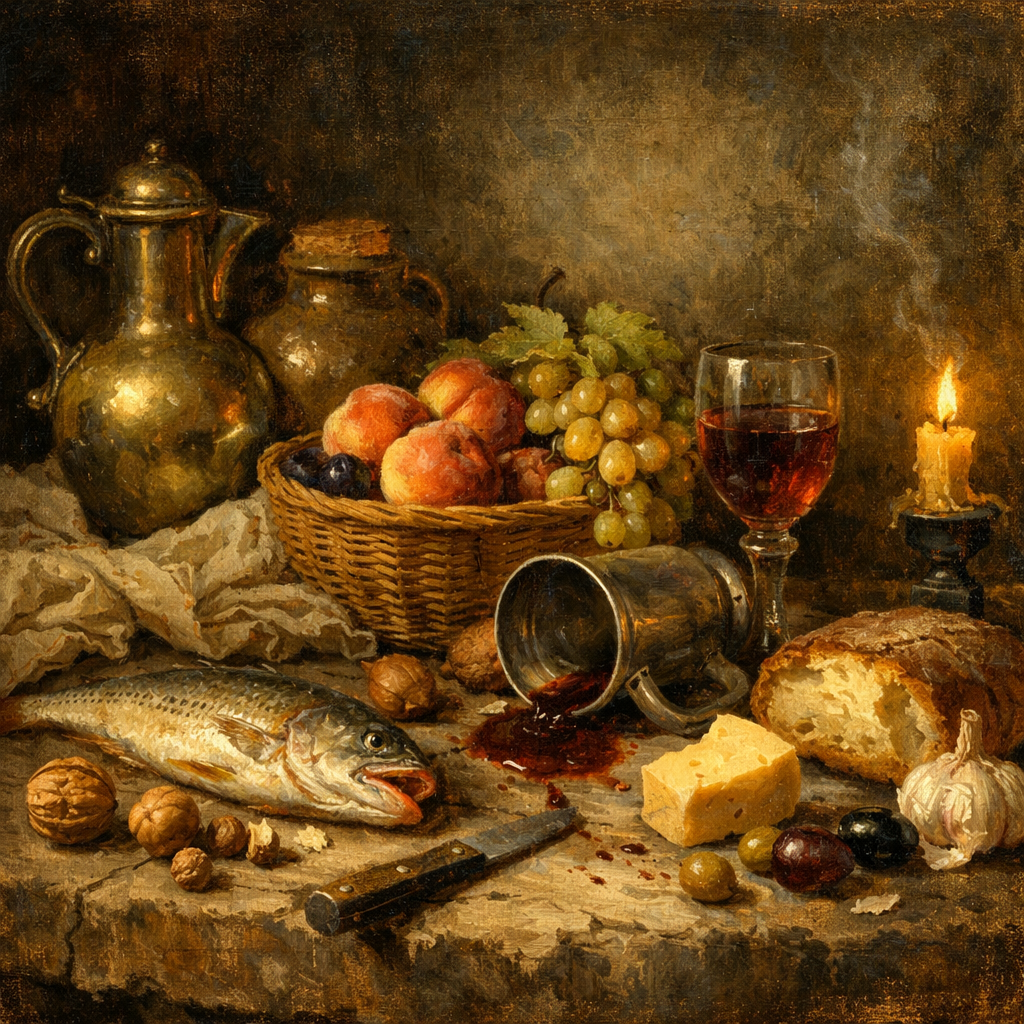
Fish, Fruit, and Spilled Wine
Critique
1. Introduction This still life painting exhibits the hallmarks of the Dutch Golden Age tradition, focusing on the meticulous representation of various textures and objects. The composition is a dense arrangement of food, drink, and vessels that suggests a narrative of a meal interrupted or abandoned. Through its dramatic use of light and shadow, the work elevates mundane items into subjects of deep contemplation and visual richness. 2. Description The scene is set on a rough stone table featuring a wide array of items. In the lower left, a whole fish lies near scattered walnuts and a wooden-handled knife. A metal tankard has tipped over, spilling a dark, rich liquid across the surface. Toward the center, a wicker basket holds ripe peaches and a bunch of green grapes. To the right, a block of yellow cheese sits near olives, garlic, and a torn loaf of bread. A glass of red wine and a flickering candle in a simple holder occupy the right side, while a metallic pitcher and ceramic jar are visible in the shadowy background. 3. Analysis The artist utilizes a strong chiaroscuro effect, with light primarily originating from the lit candle and an external source from the left. This technique creates high contrast, emphasizing the reflective surfaces of the metal pitcher and the spilled liquid, as well as the matte textures of the bread and stone. The arrangement follows a slightly diagonal movement from the lower left to the upper right, providing a sense of dynamic instability. The color palette is dominated by warm browns, deep reds, and ochres, which are punctuated by the bright highlights on the grapes and cheese. 4. Interpretation and Evaluation The painting serves as a classic vanitas, where the spilled wine and the guttering candle symbolize the transience of life and the fleeting nature of sensory pleasures. The contrast between the fresh fruit and the dead fish highlights the cycle of life and decay. Technically, the work is masterful in its handling of diverse materials, from the translucency of the wine glass to the porous crust of the bread. The composition is complex yet coherent, successfully maintaining a sense of balance despite the numerous and varied elements presented. 5. Conclusion This still life is a compelling study of materialism and mortality, rendered with exceptional painterly skill. The initial impression of a bountiful feast is quickly tempered by the signs of disorder and the symbolic weight of the objects. Through careful analysis, one discovers a sophisticated exploration of light and texture that transcends mere documentation. The work remains a powerful testament to the ability of still life to convey profound existential themes through the careful observation of the physical world.
Same Subcategory
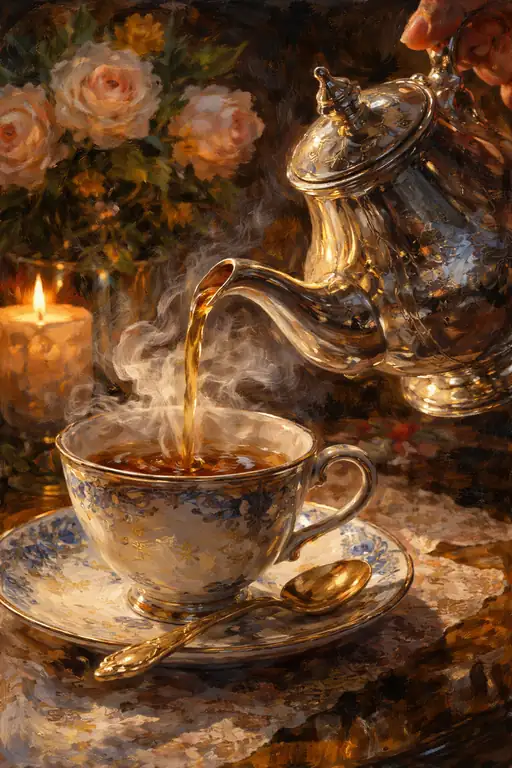 Warmth in the Silver Silence
Similar Artworks
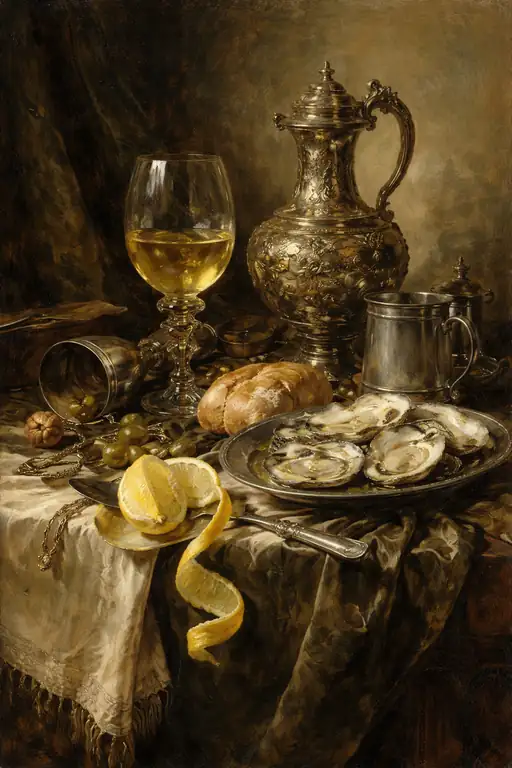 The Fleeting Feast
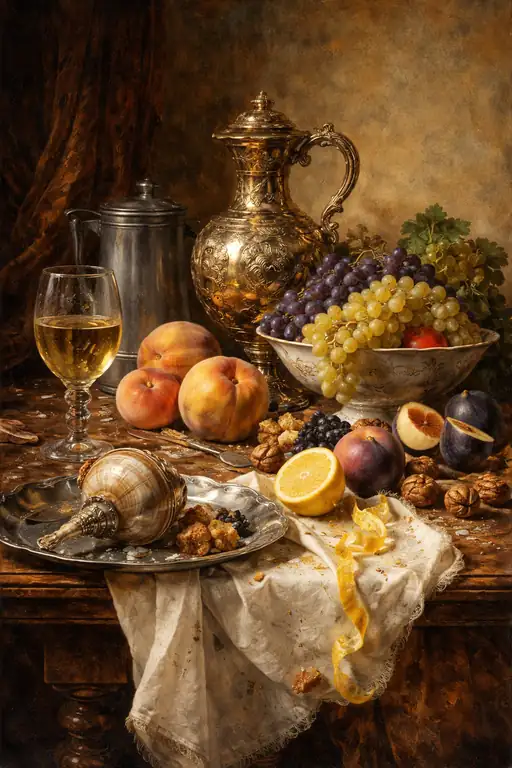 Classical Still Life with a Golden Ewer, Fruit, and Wine
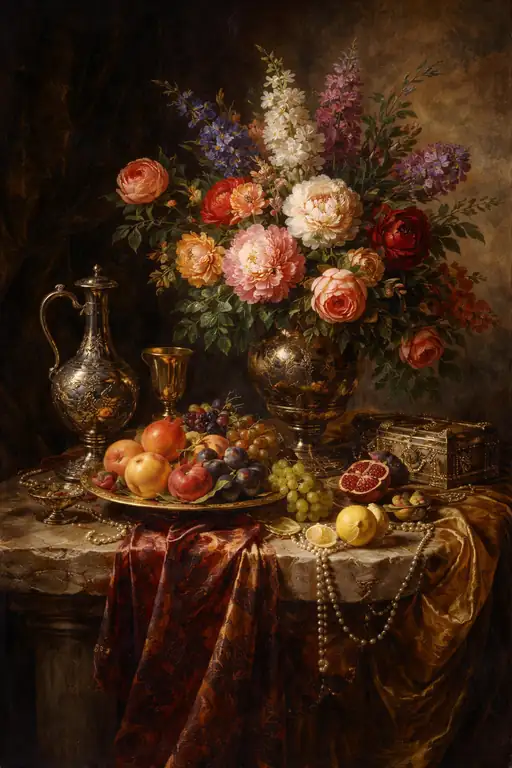 Flowers, Fruits, and Precious Objects
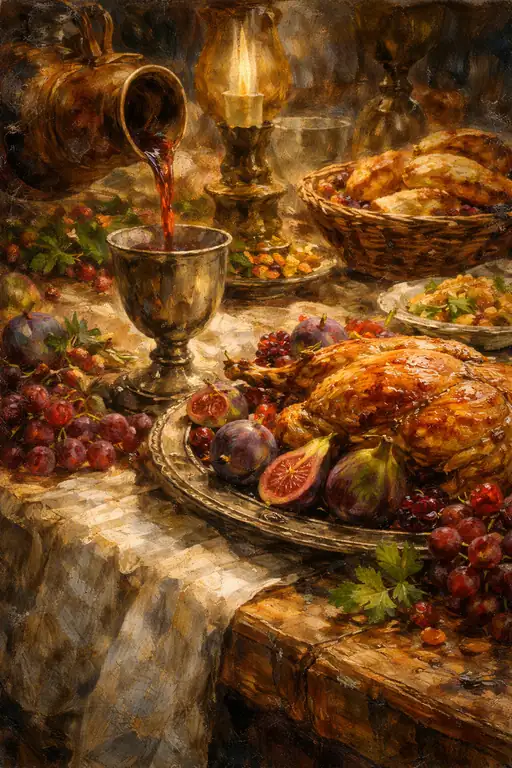 Vesper of Bounty: The Glow of a Sacred Feast
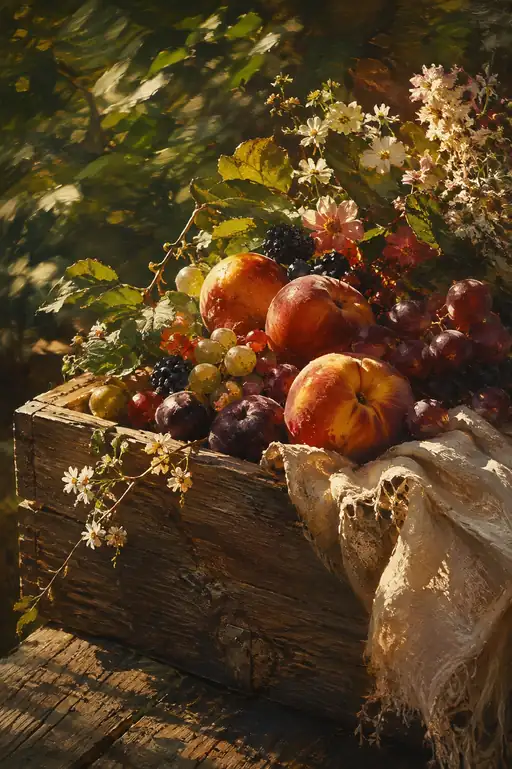 Rustic Wooden Box of Autumn Blessings
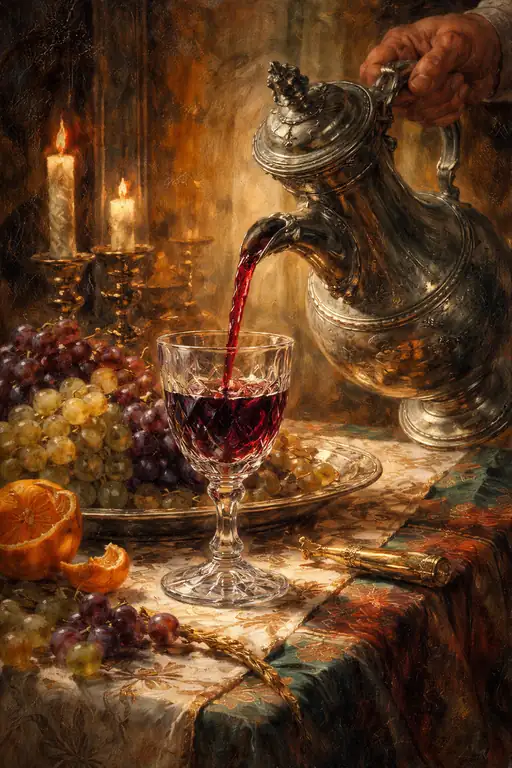 Elegance Flowing: A Quiet Luxury of Wine and Silver
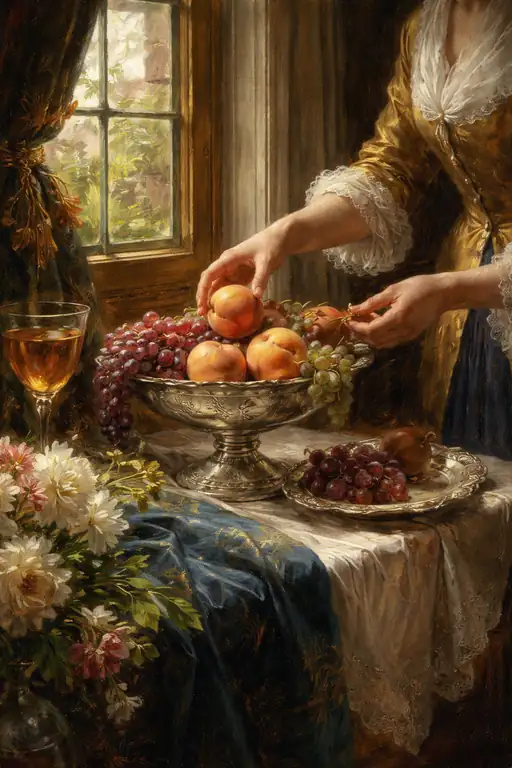 Golden Afternoon Preparations
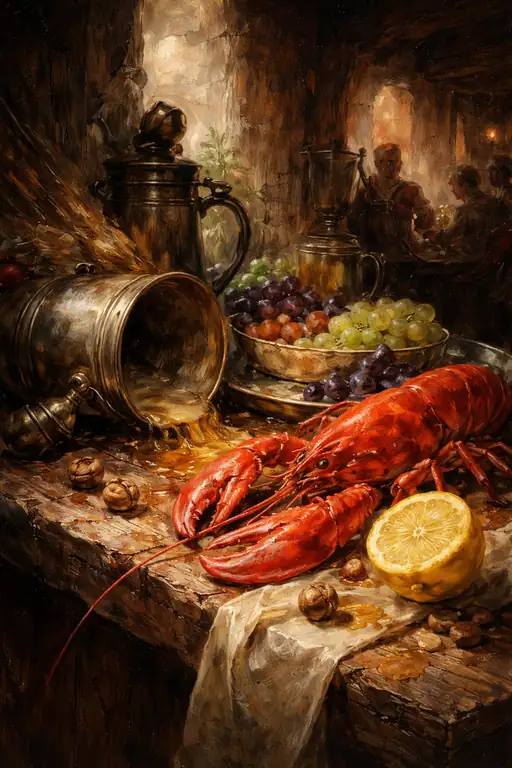 Feast of the Golden Nectar
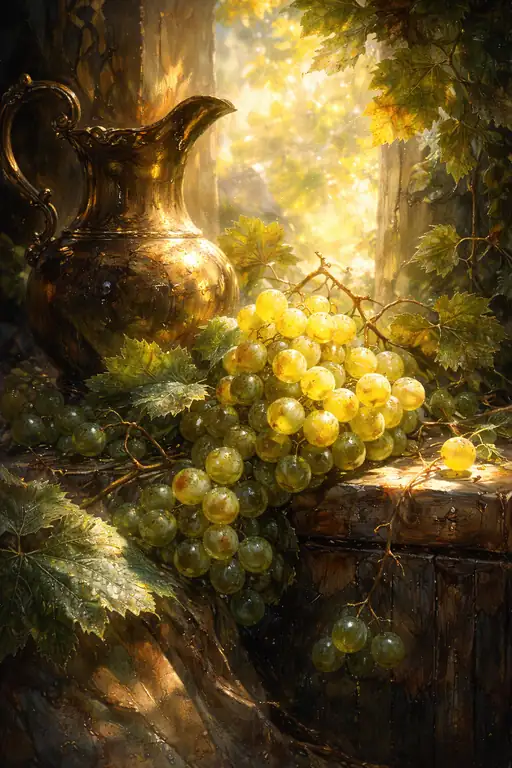 Whispers of the Sunlit Vine
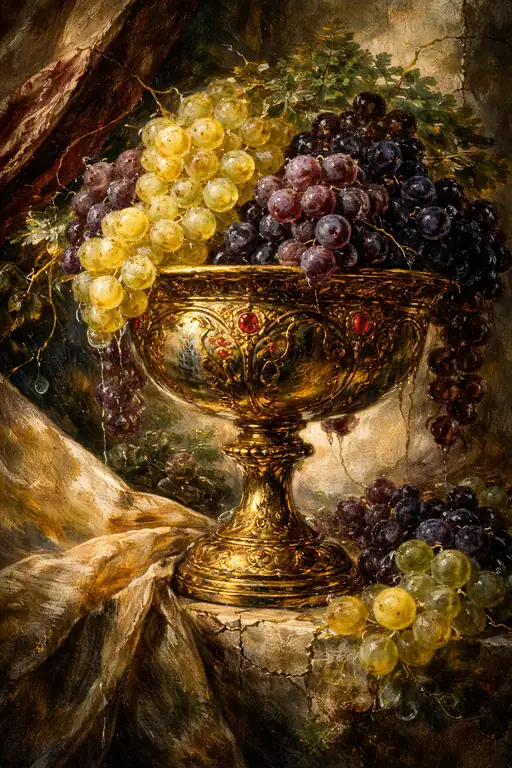 The Golden Tears of Bacchus