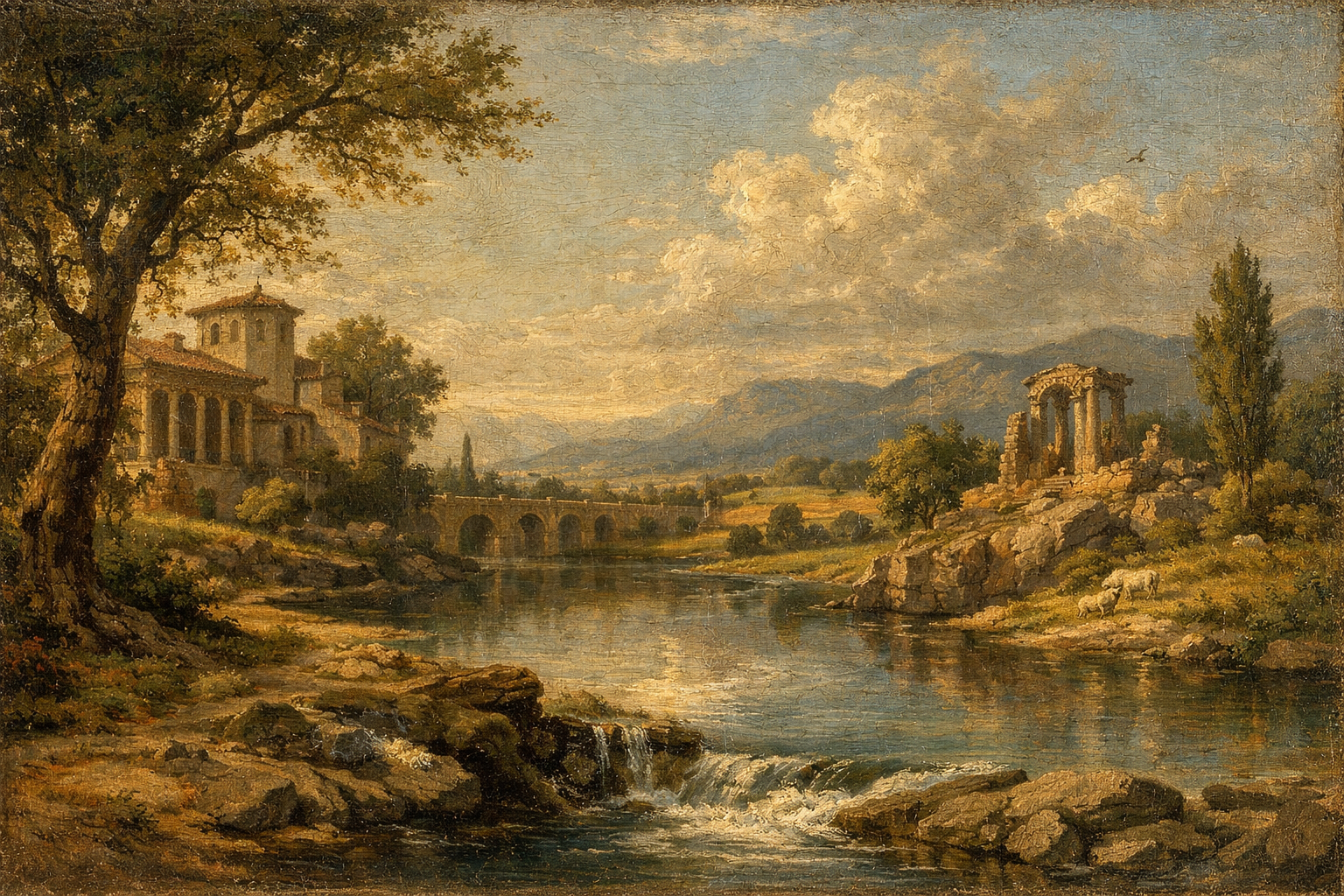
Villa, Bridge, and Ruins
Critique
1. Introduction This oil painting presents a classical landscape that evokes the tradition of idealized nature common in European art of the seventeenth and eighteenth centuries. The composition is carefully structured to lead the eye through a harmonious arrangement of water, architecture, and distant terrain. It captures a moment of tranquil afternoon light that bathes the scene in a golden, nostalgic glow. 2. Description The foreground is dominated by a clear river flowing over a rocky bed, forming a gentle waterfall that creates a sense of movement. On the left, a large, detailed tree frames the view, adjacent to a grand classical villa with a prominent tower and colonnades. In the middle ground, a stone bridge with three arches spans the water, connecting the banks. To the right, ancient ruins of a small temple stand atop a rocky outcrop, while a few sheep graze quietly in the shadows. The background features rolling hills and blue mountains receding into a soft, hazy atmosphere under a sky filled with cumulonimbus clouds. 3. Analysis The artist employs a balanced composition, using the large tree on the left as a repoussoir element to provide depth. A rhythmic progression of forms is established by the horizontal lines of the bridge and the verticality of the architecture and ruins. The color palette is characterized by earthy ochres, deep greens, and soft blues, creating a cohesive and serene environment. Light is used effectively to highlight textures on the stone surfaces and the surface of the water, enhancing the three-dimensional quality of the landscape. 4. Interpretation and Evaluation This work reflects a deep appreciation for the classical past, where human civilization and nature coexist in perfect equilibrium. The inclusion of ruins serves as a memento mori, reminding the viewer of the passage of time and the enduring presence of nature over human endeavors. Technically, the execution shows a high degree of skill in the rendering of light and atmospheric perspective. The composition is exceptionally stable, providing a sense of order and timelessness that is both comforting and intellectually engaging. 5. Conclusion The painting successfully transports the viewer into a pastoral vision of the world that values harmony and historical continuity. Initial observations of a simple landscape give way to an appreciation for the complex interplay between the built environment and the natural world. This piece stands as an excellent example of the enduring power of the classical landscape tradition to evoke profound peace and reflection.
Same Subcategory
 The Emerald Oasis: Whispers of the Sea Breeze
Similar Artworks
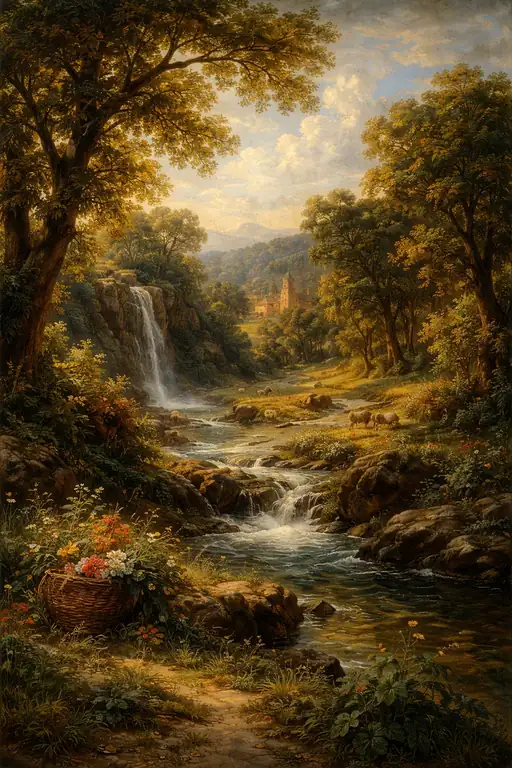 Pastoral Landscape with a Flower Basket
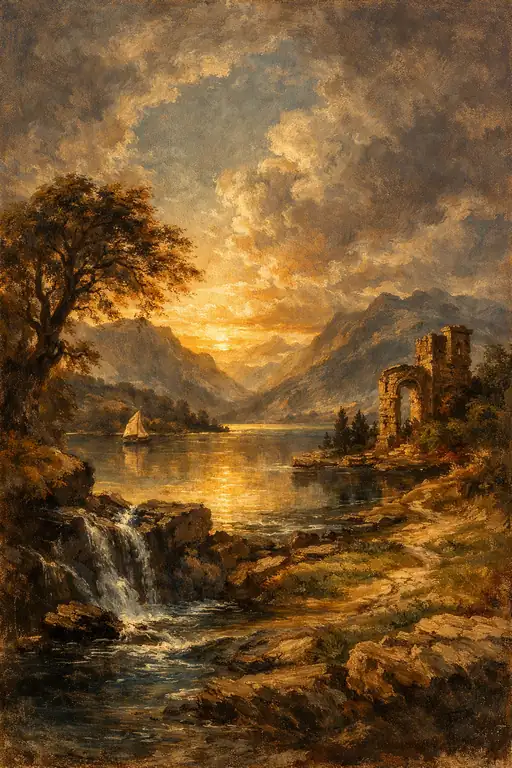 Dramatic Sunset over a Mountain Lake with Sailboat and Ruins
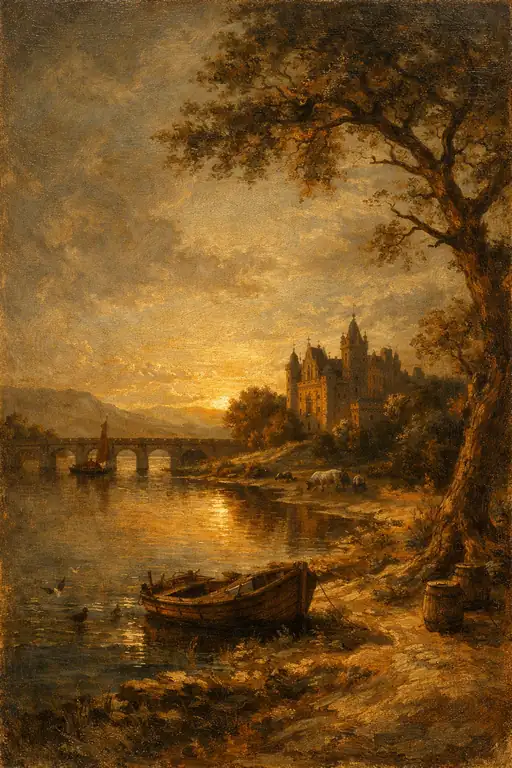 The Golden Sunset Over the Castle
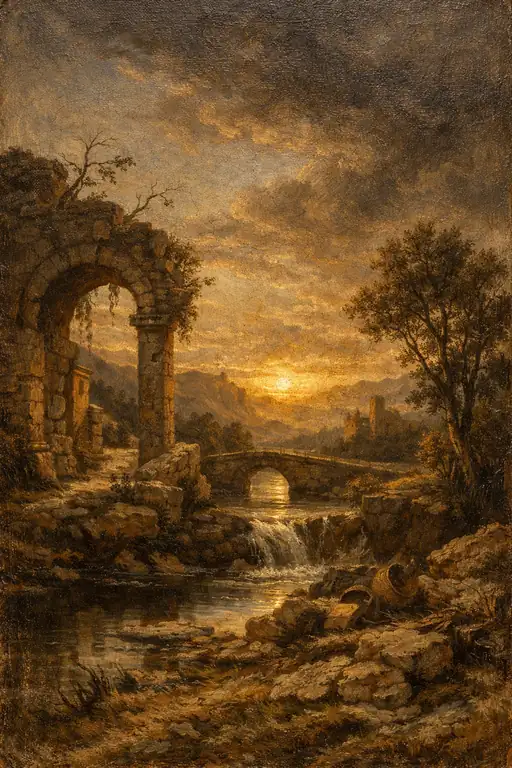 A Ruined Arch at Sunset
 Journey to the Golden Castle
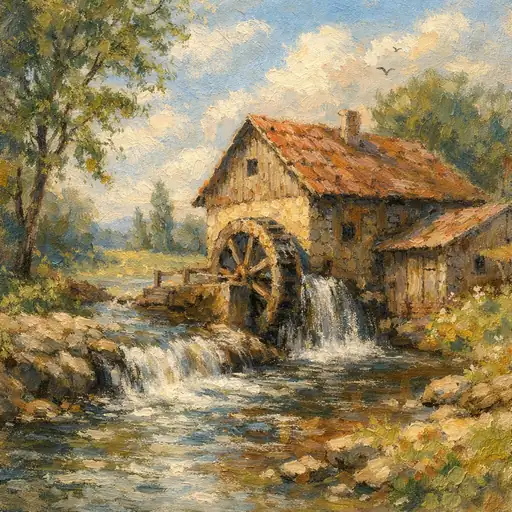 Rustic Watermill and Stream on a Sunny Day
 Solitude by the Fog-Bound Pond
 The Silence of Sapphire Depths
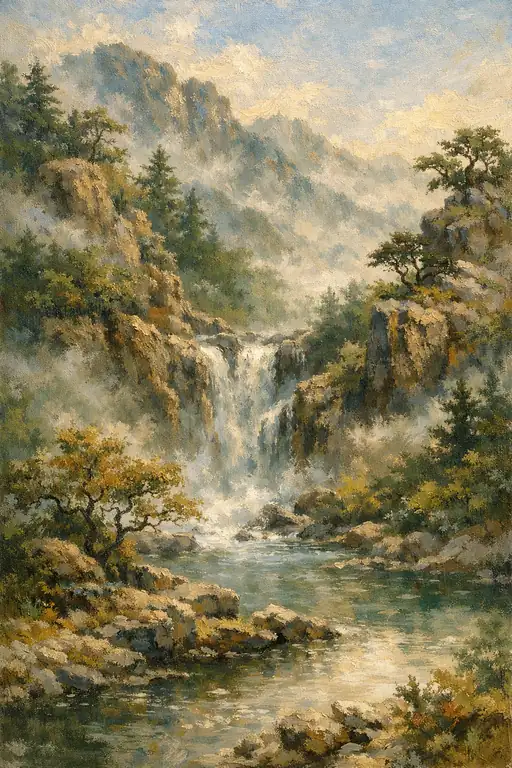 Bathed in the Light of the Crystal Pool
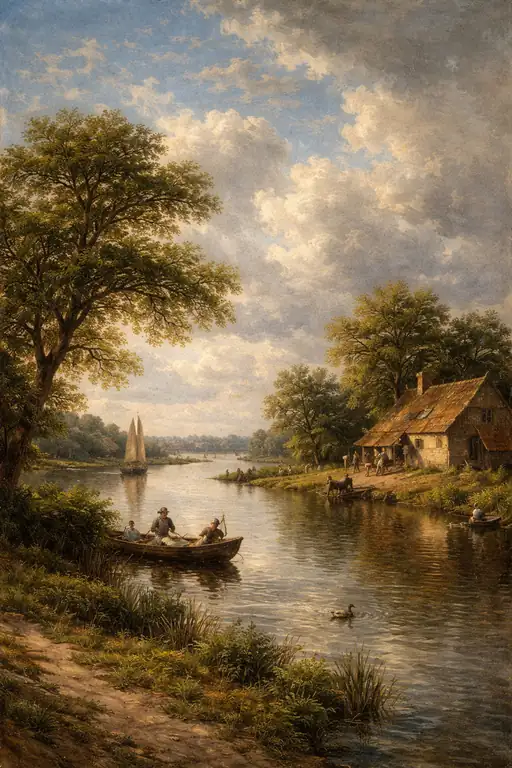 The River's Gentle Song