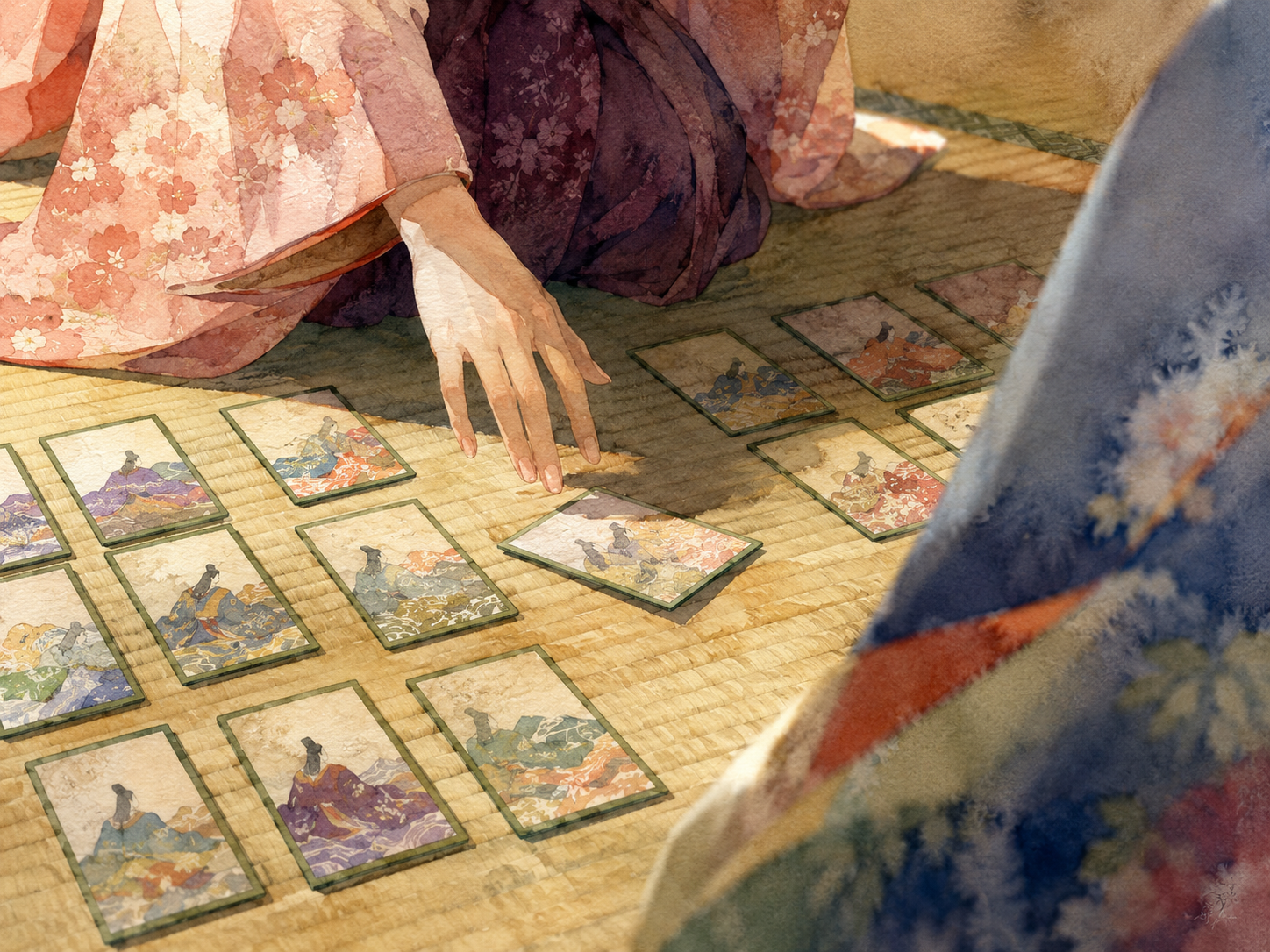
Fingertips Piercing the Silence
Critique
1. Introduction This watercolor painting captures an intense moment in a traditional Japanese card game, Karuta. The transparent paint and soft natural light across tatami mats create a serene, elegant atmosphere. It successfully blends traditional Japanese aesthetics with a dynamic, fleeting human drama. This scene reinterprets the spiritual tension of the game with a refined modern approach. 2. Description A woman in a cherry-blossom pink kimono reaches toward cards on the tatami mat. Behind her, an opponent in deep purple sits, with cards arranged in two rows. In the close foreground, a sleeve of another vibrant blue kimono is framed. Each card depicts an elegant historical portrait, carefully representing its delicate paper texture. 3. Analysis Placing the blue sleeve in the foreground while capturing the figure diagonally generates powerful depth. Exquisite contrasts of light and shadow represent a three-dimensional feel and passage of time. Watercolor bleeding and blurring techniques beautifully depict the textures of kimono and soft tatami. The harmony between the pinks, purples, and blues of the kimonos comforts the eyes. 4. Interpretation and Evaluation Inside a quiet room, the dynamic action of claiming a card is sophisticatedly expressed. The masterful composition and delicate brushwork visually capture the mental focus of the game. Traditional motifs like the kimono are elevated into living elements filled with vital energy. It possesses high value, combining respect for tradition with highly skilled watercolor expression. 5. Conclusion Initially, the artwork seems to be a simple illustration of a traditional custom. On closer inspection, the viewer is drawn into a world where light intersects with action. It is a masterpiece connecting static traditional essence with painterly dynamism, opening a new path.
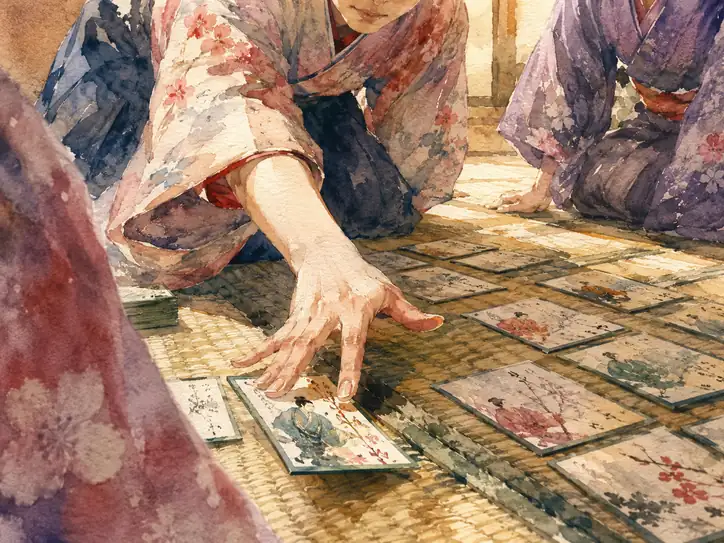 Between Silk and Silence
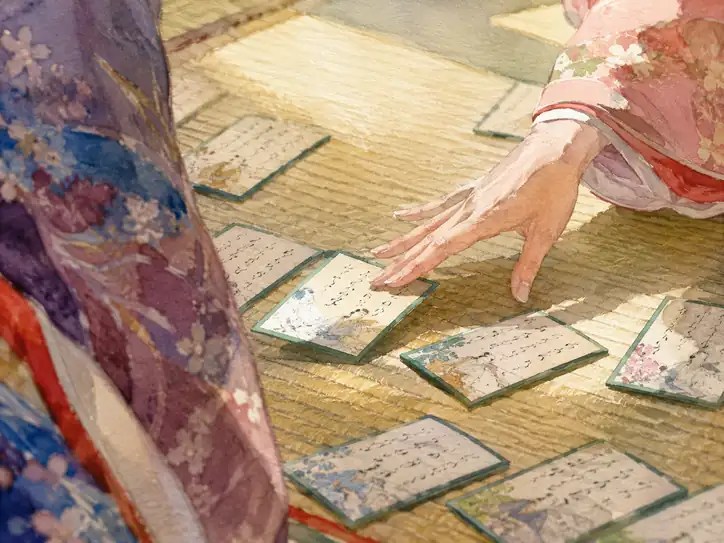 Sunlight in the Palace of Words
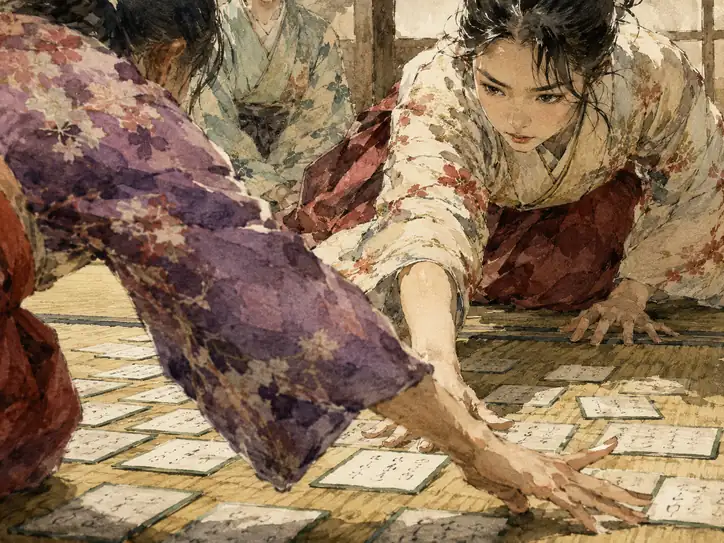 The Moment a Thousand Years Dissolve
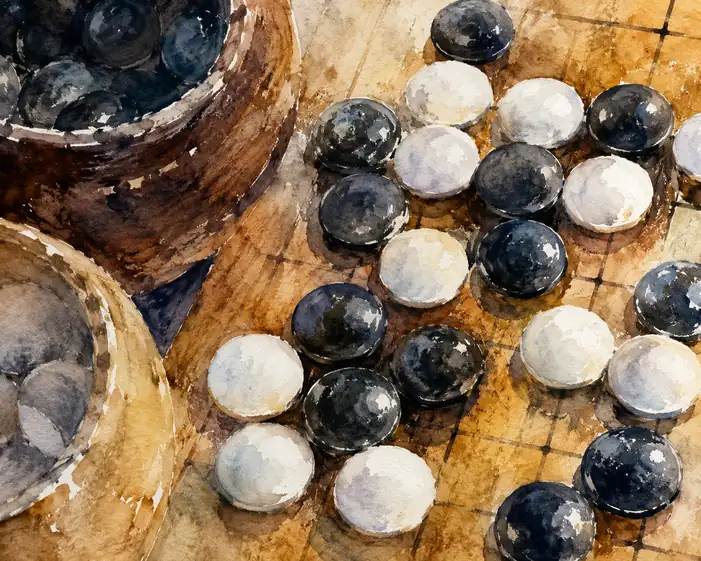 A Dialogue in Black and White
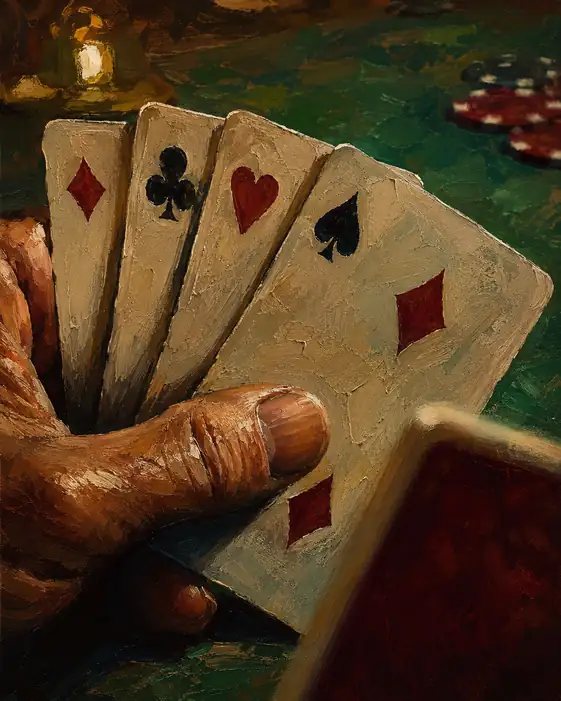 A Silent Bet Against the Dark
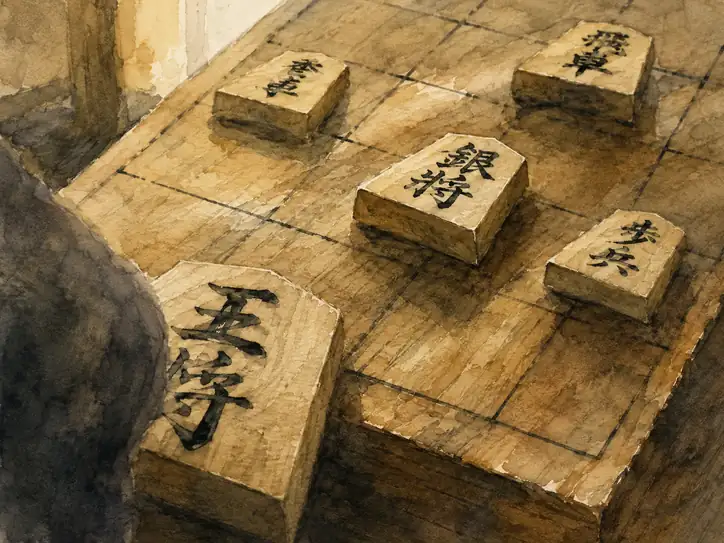 The Quiet Weight of the Next Move
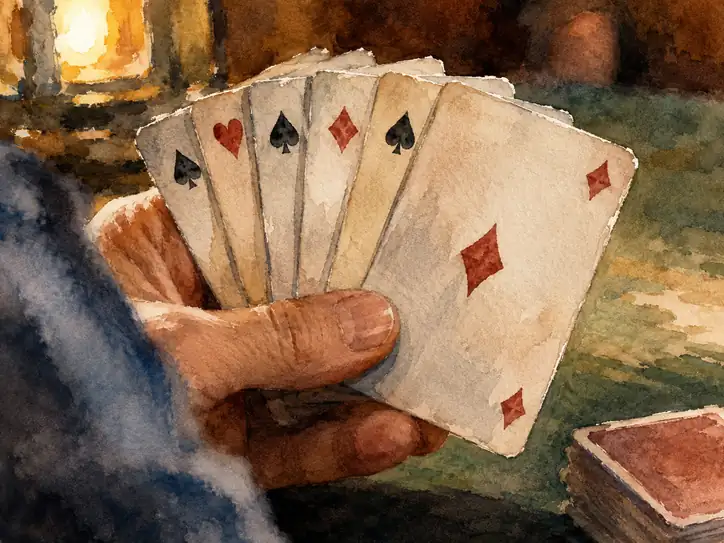 Fate Held Within the Grasp
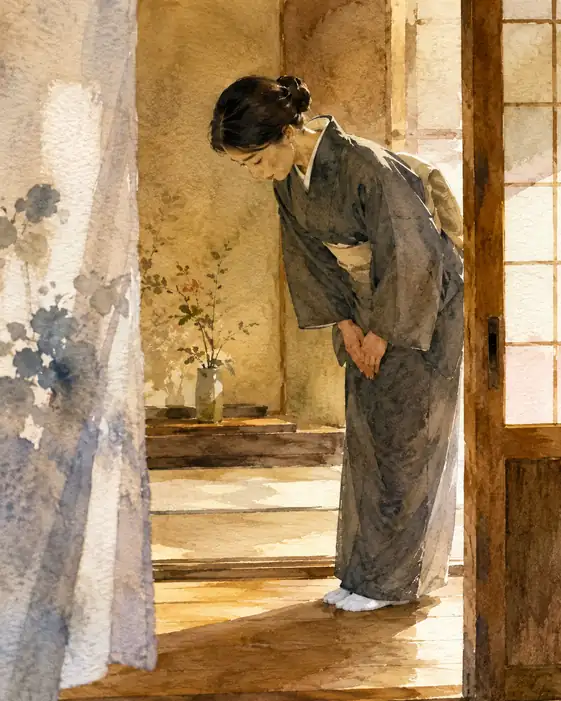 The Grace of Silence
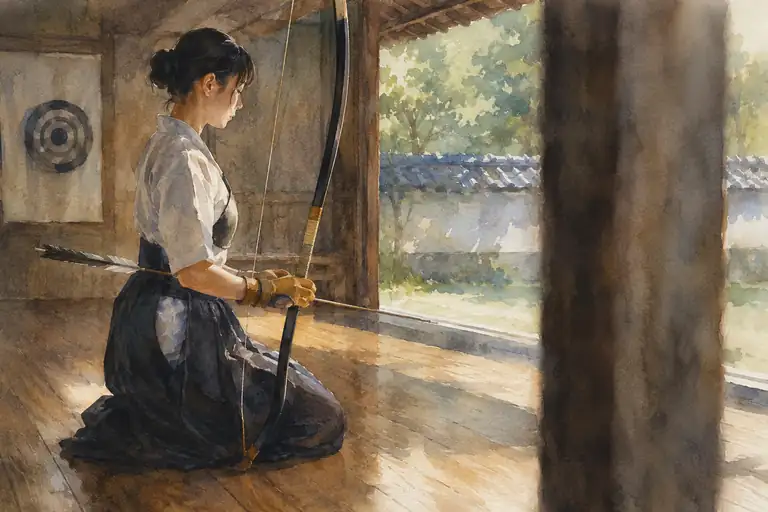 Before the String Whispers
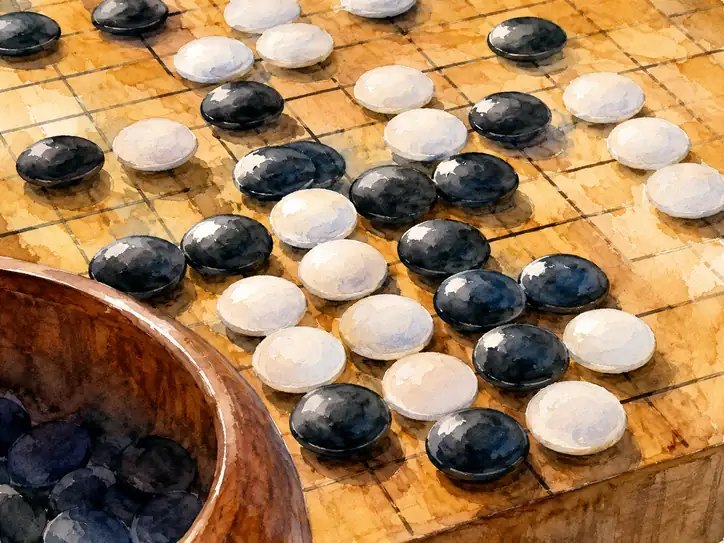 A Dialogue of Silent Stones