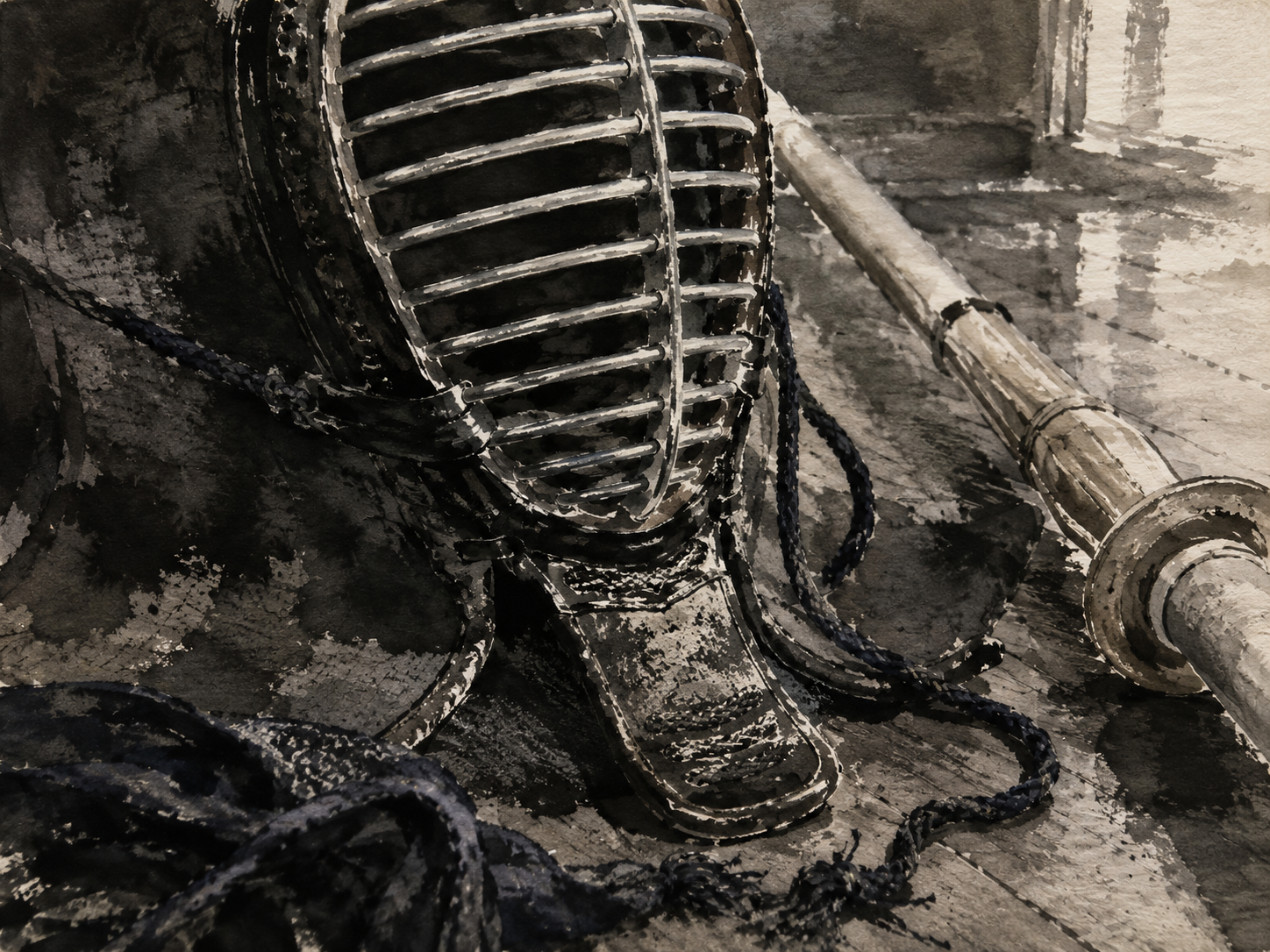
Echoes of the Unbowed Soul
Critique
1. Introduction This watercolor painting depicts a traditional Japanese kendo mask and a bamboo sword placed on a wooden floor. The restricted sepia palette and aged textures distinguish this evocative composition. Initially, the well-used gear conveys a strong sense of dignity. This critique examines the formal elements and expressive impact of this traditional still life. 2. Description A dark kendo mask with a metallic grill lies at a diagonal angle in the center. To the right, a thick bamboo sword lies on the floor. Tangled blue strings occupy the foreground, while the wooden floorboards show fine grains. A dark background is illuminated by natural light from a distant window. 3. Analysis The defining quality is the monochromatic color scheme using shades of sepia and indigo. Sharp highlights on the metal contrast with soft shadows on the worn fabric. The diagonal arrangement of objects creates dynamic vision and spatial depth. Rhythmic washes and dry-brush techniques capture the tactile qualities of wood. 4. Interpretation and Evaluation The painting transcends representation, symbolizing the discipline, self-reflection, and tradition of martial arts. The scratches on the equipment serve as traces of intense training, narrating perseverance. Achieving such resonance through a limited palette demonstrates exceptional technical control. The contrast of darkness and window light suggests spiritual awakening. 5. Conclusion A close study reveals that what initially looks like simple equipment is a deep meditation on kendo philosophy. Rhythmic washes and dynamic lighting transform these objects into a monument of dedication. Ultimately, this work stands as a beautiful celebration of martial spirit and aesthetic mastery.
Same Subcategory
 Solitude Beneath the Armor
Similar Artworks
 Stillness of the Dojo
 Before the Storm: A Silent Promise
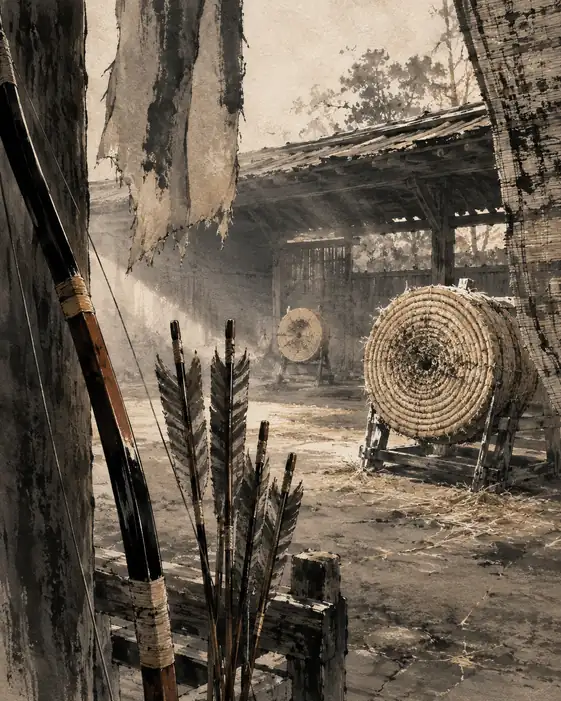 The Silent Dojo: Where the Soul Aims
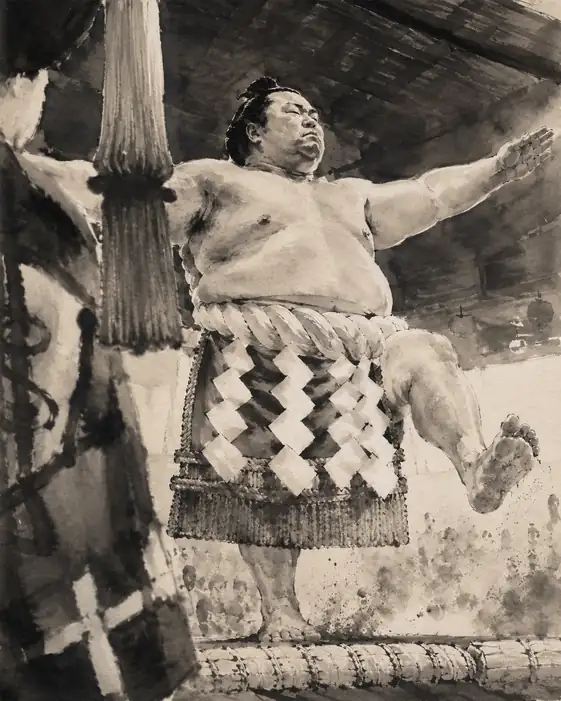 Resonance of the Sacred Earth
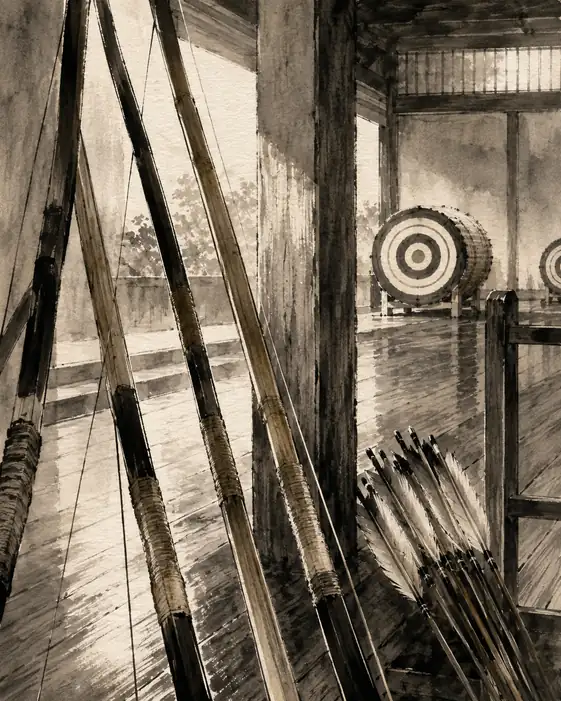 The Breath of Zen: Where the Arrow Finds Its Heart
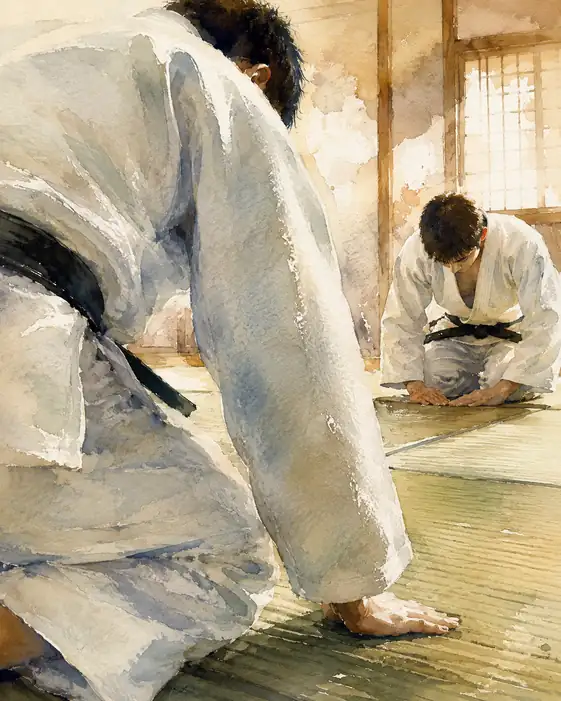 The Path of Respect
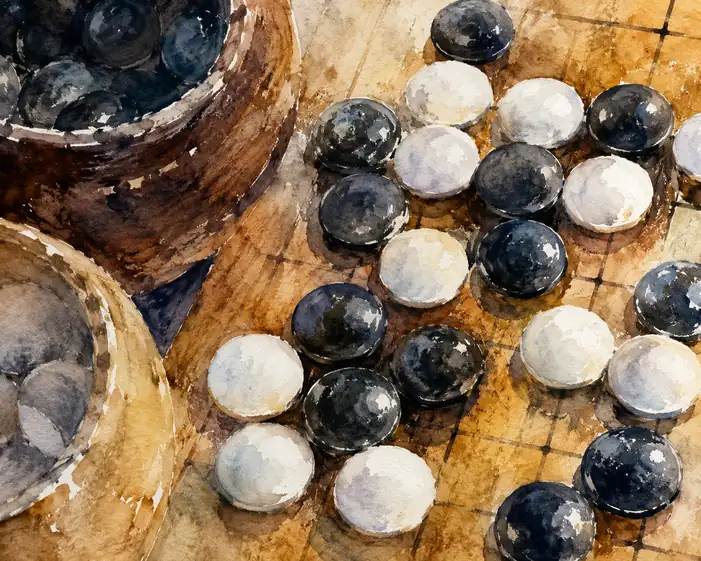 A Dialogue in Black and White
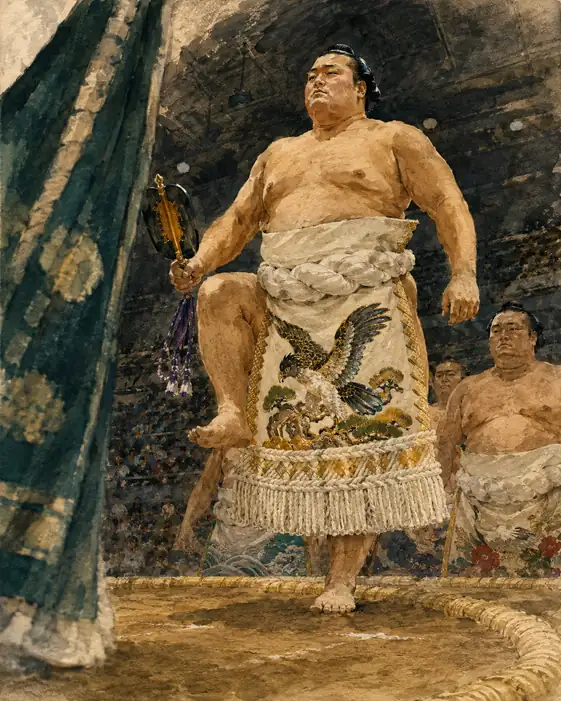 The Silent Thunder
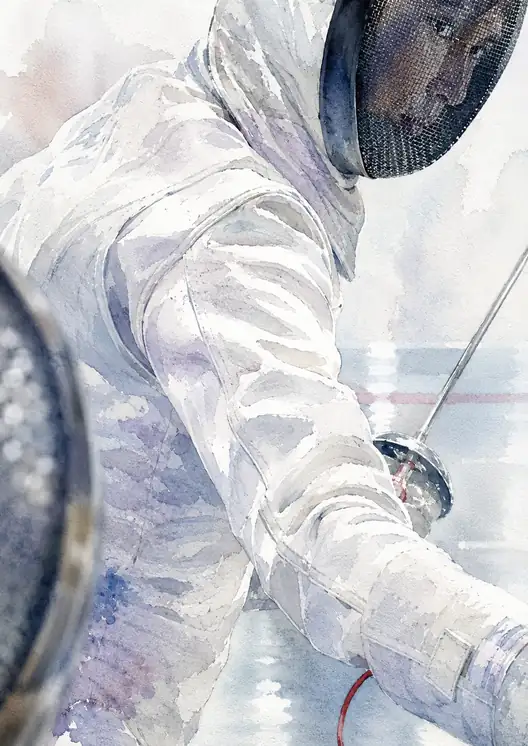 Focused Will behind the Mesh
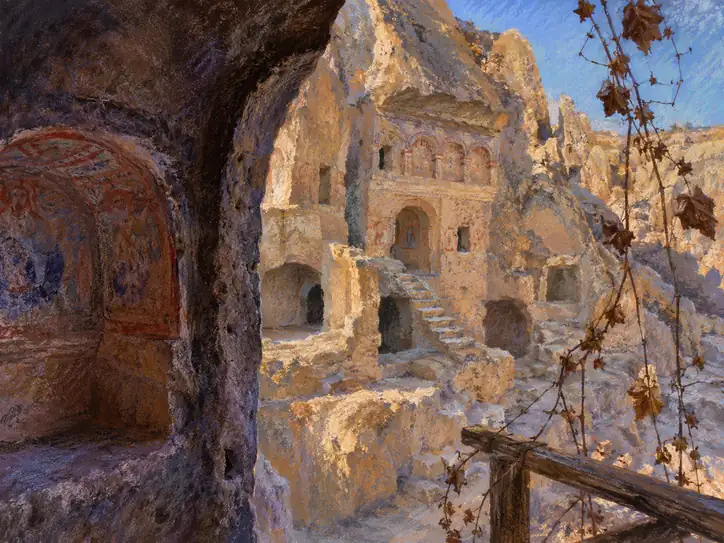 The Silent Blade: Soul of the Dojo