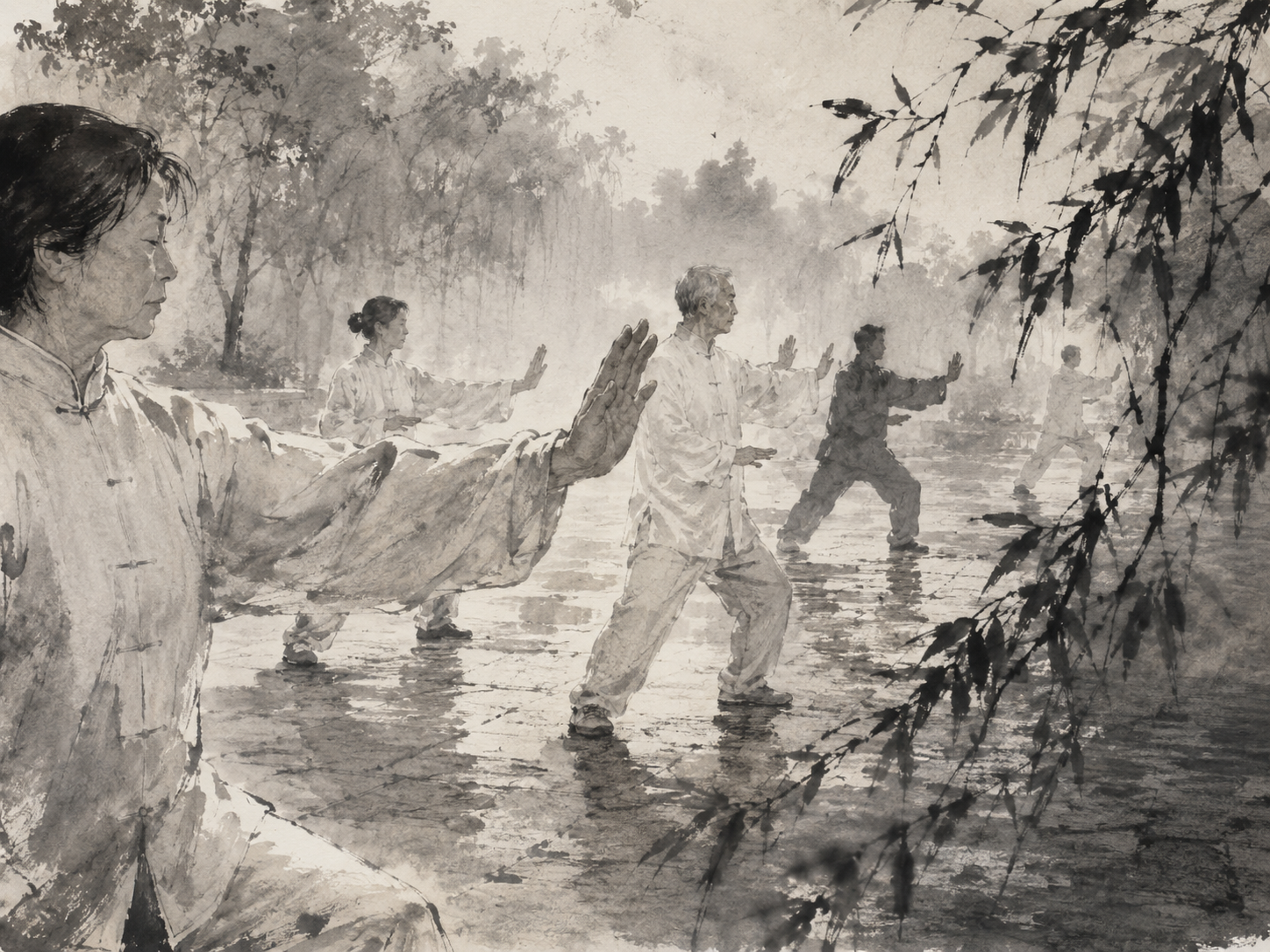
The Flow of Invisible Wind
Critique
1. Introduction This monochrome ink painting depicts people practicing Tai Chi in a quiet courtyard at dawn. Although the creation date and location are unknown, its delicate tones are highly captivating. This critique analyzes the dynamic stillness, ink gradations, and compositional elements to clarify its spiritual and aesthetic value. 2. Description On the left foreground, a woman's profile and extended arm are depicted in close-up. In the middle ground, several practitioners in traditional clothing perform synchronized movements on wet stone pavement, which softly reflects light. The background features misty trees, while delicate bamboo leaves hang from the right foreground. 3. Analysis The monochrome palette uses subtle ink gradations to create remarkable depth. Strong lines on the foreground figures contrast with soft washes in the misty background. The hanging bamboo leaves frame the scene, guiding the viewer's eye inward. The composition effectively translates slow, rhythmic physical movement into a static image. 4. Interpretation and Evaluation This piece beautifully illustrates the harmony between personal inner discipline and collective spiritual unity. The precise brushwork captures the fluid movement of bodies and the soft texture of clothing. By employing traditional East Asian ink techniques, the artist successfully evokes a sense of humidity and serene atmosphere with high originality. 5. Conclusion Initially a quiet monochrome scene, closer study reveals a vibrant life force and rigorous composition. The artwork acts as a bridge connecting human consciousness with natural elements. Utilizing the unique properties of ink wash, it provides a deeply meditative experience. Ultimately, this is an outstanding artwork merging tradition with modern sensibility.
Same Subcategory
Similar Artworks
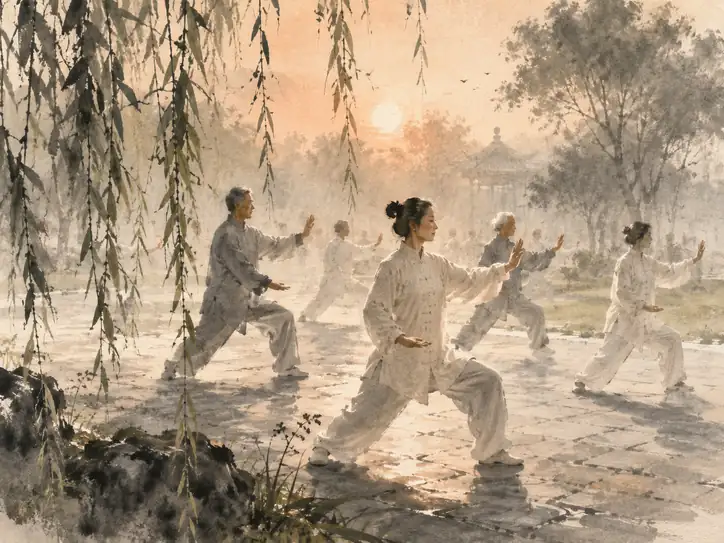 Breathing with the Morning Mist
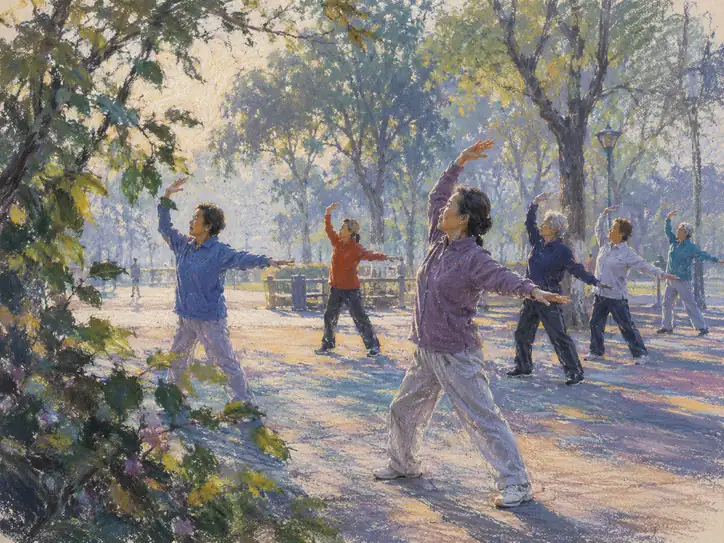 Slowing Time in the Dappled Light
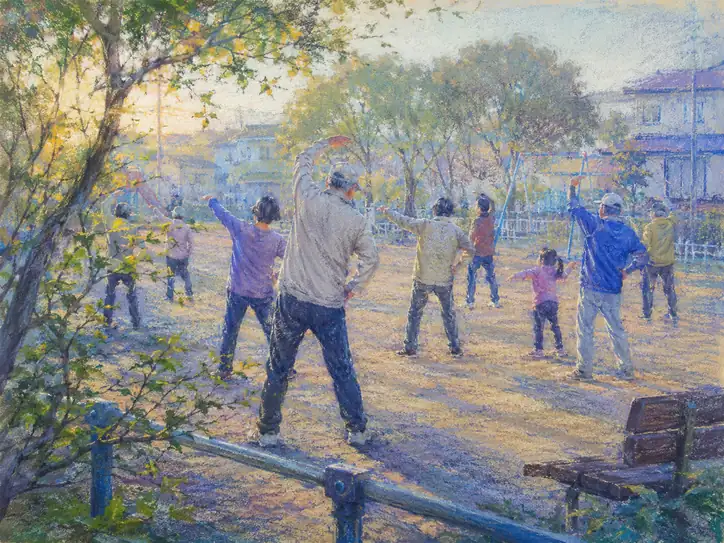 The Golden Morning We Share
 Soul's Morning Reflection
 Rooted in the Misty Silence
 Before the String Whispers
 The Breath of Zen: Where the Arrow Finds Its Heart
 Tears of the Bamboo Grove
 Beyond the Sea of Clouds, the Waterfall's Millennium Solitude — The Ultimate Retreat Dreamt by Sages
 Echoes of the Unbowed Soul