Whispers of a Thousand Miles
Critique
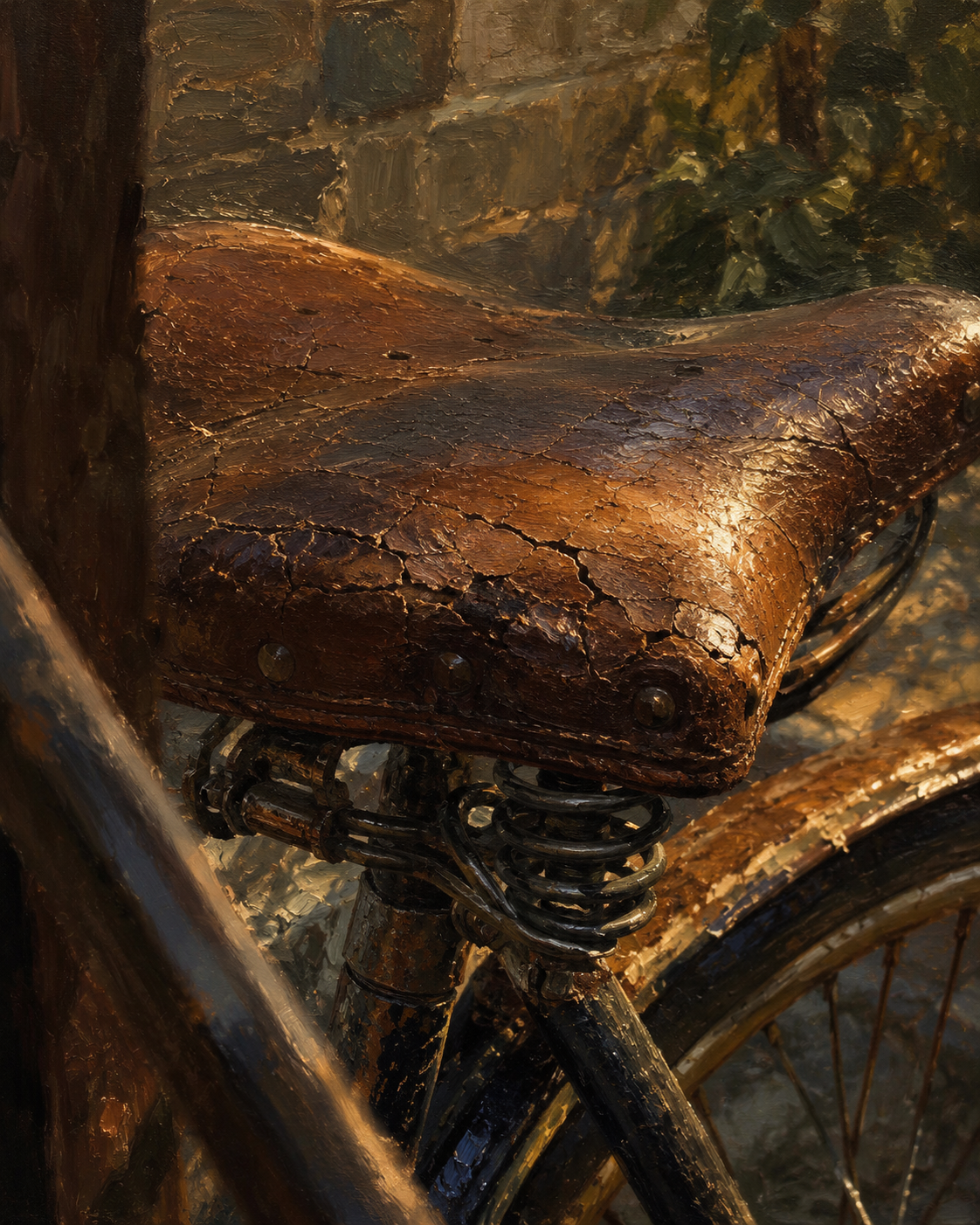
1. Introduction This oil painting presents a captivating close-up of a weathered bicycle saddle. By focusing on a mundane fragment of daily life, the artwork emphasizes the physical presence of objects. Detailed historical records like its creation date remain unverified. Nonetheless, a deep respect for aged tools and their rich textures shines clearly through the paint. 2. Description At the center, a brown leather saddle dominates, its surface finely cracked from long use. Below the seat, a coiled metal spring reflects a soft sheen, connecting to the dark frame. The background features a blurred stone wall and sun-drenched green leaves. In the left foreground, a thick wooden post adds significant depth to the scene. 3. Analysis Formally, the texture of the cracked leather is rendered using precise layers of paint. This impasto technique dramatically enhances the tactile reality of the worn surface. Warm light from the right highlights the leather's curves and the hard edges of the metal. This high contrast of light and shadow reinforces the saddle's three-dimensional weight. 4. Interpretation and Evaluation The artwork addresses the theme of passing time by showcasing the aesthetic value in worn objects. The old saddle transcends its practical function, silently narrating a history of human activity. The outstanding technique in depicting texture and the cropped composition display remarkable originality. The warm, quiet palette evokes a deep sense of nostalgia. 5. Conclusion What initially seems like a simple study of a bicycle part reveals a profound beauty upon closer inspection. Through meticulous observation and expressive brushwork, an ordinary subject is elevated into a unique sensory experience. Ultimately, this painting stands as a highly accomplished celebration of texture and light.
 Pulse of the Frozen Peaks
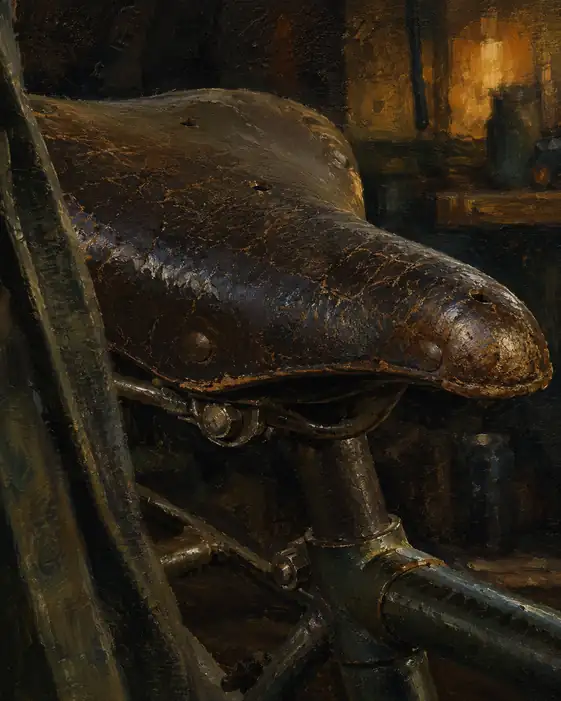 Resting After a Thousand Miles
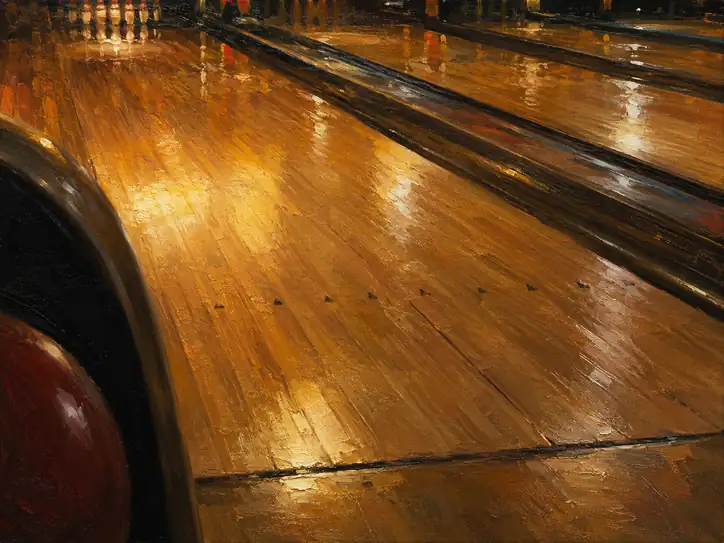 The Gloss of Anticipation
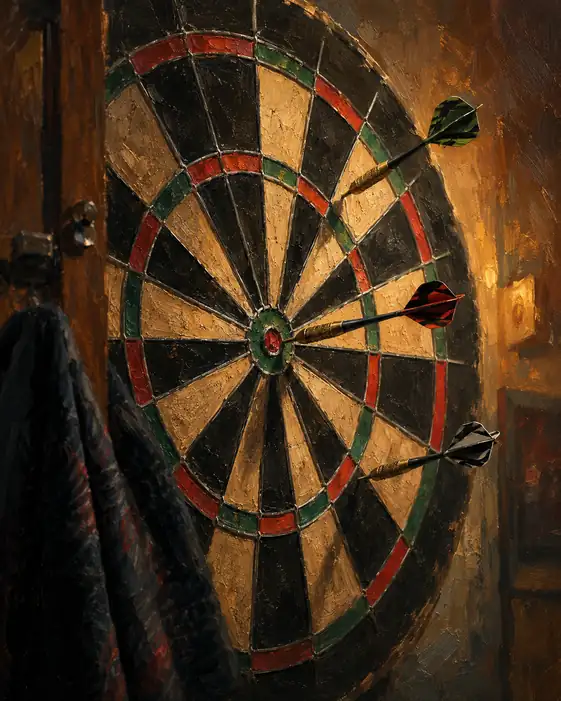 The Breath Before the Bullseye
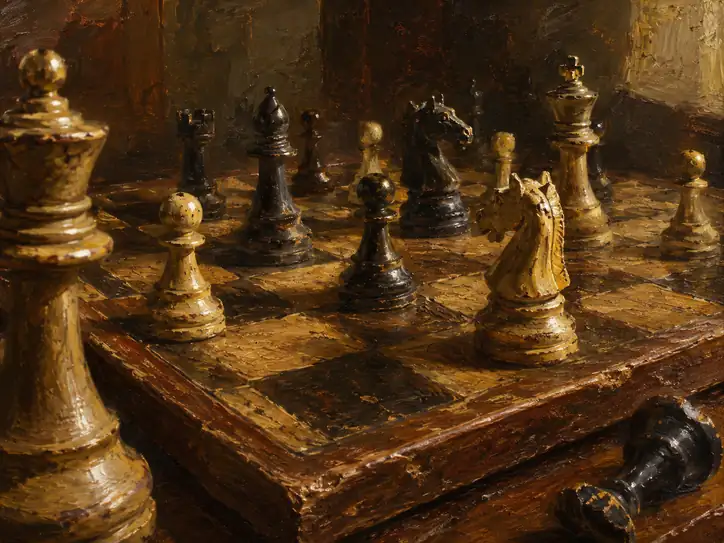 The Silent Duel of Fate
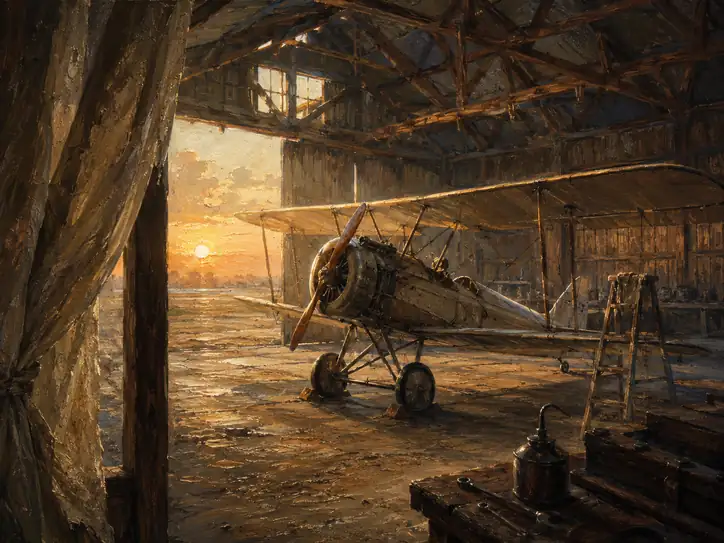 Wings Resting in the Twilight
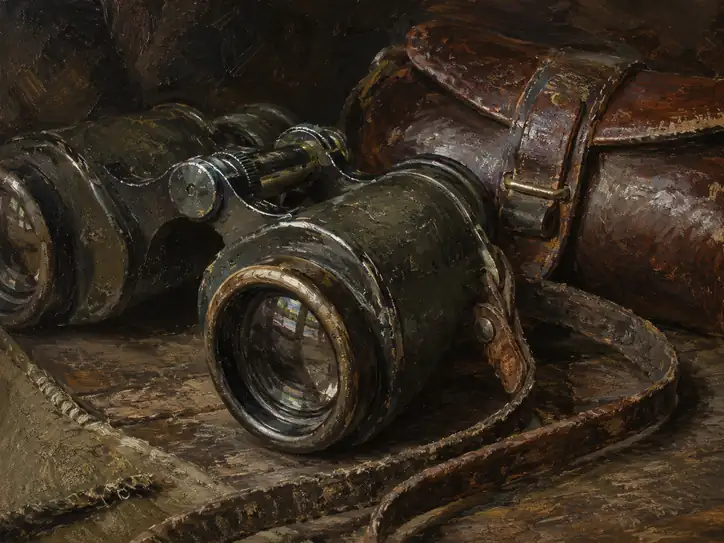 Echoes of Ancient Journeys
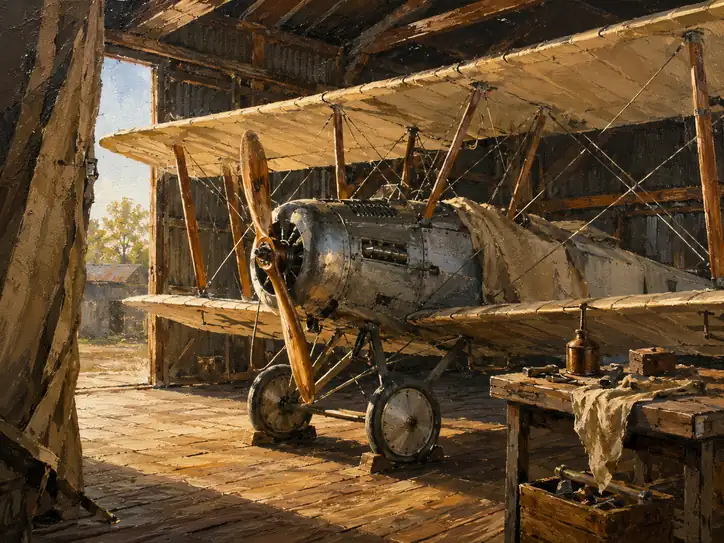 The Cradle of Flight
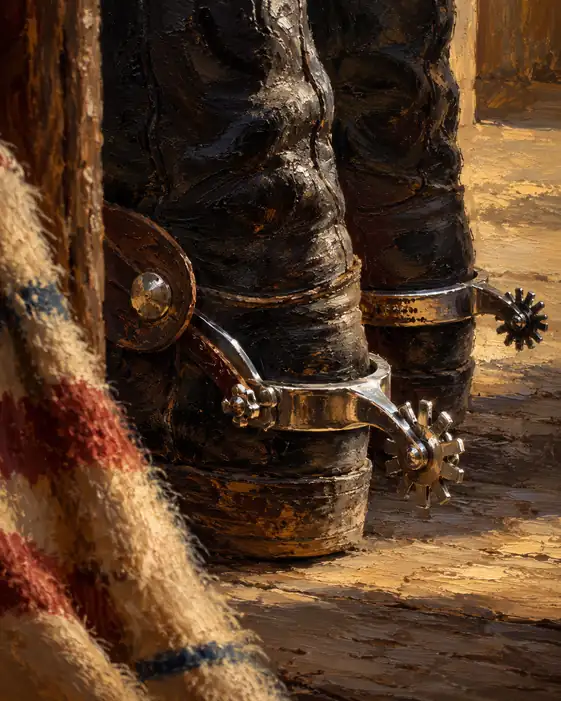 Dust on the Leather
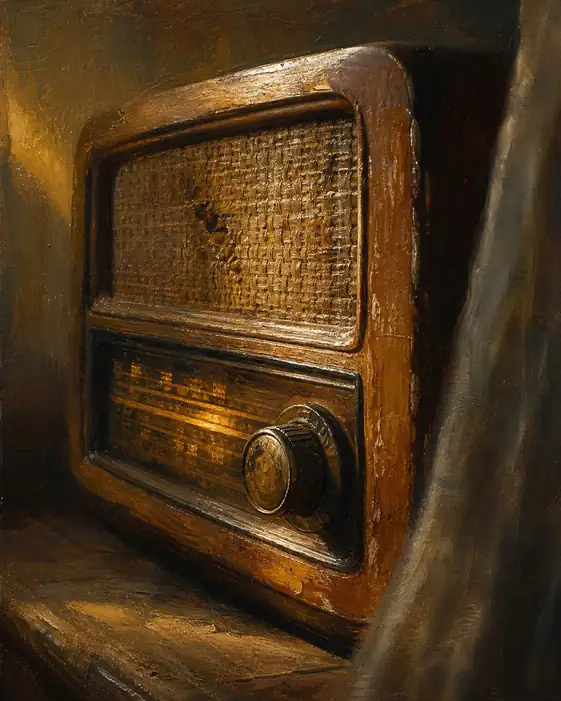 The Resonance of Amber Echoes
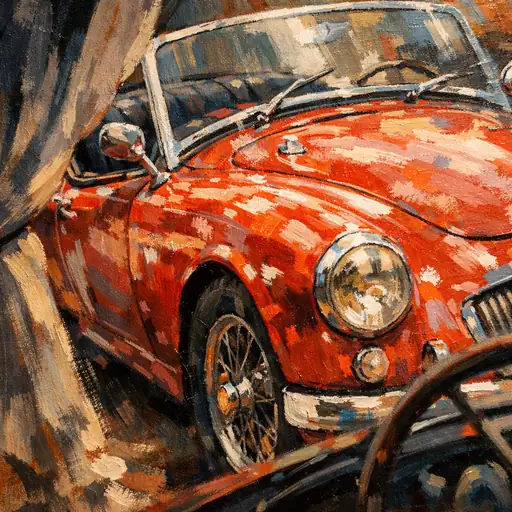 Scarlet Secrets: The Classic Reveal