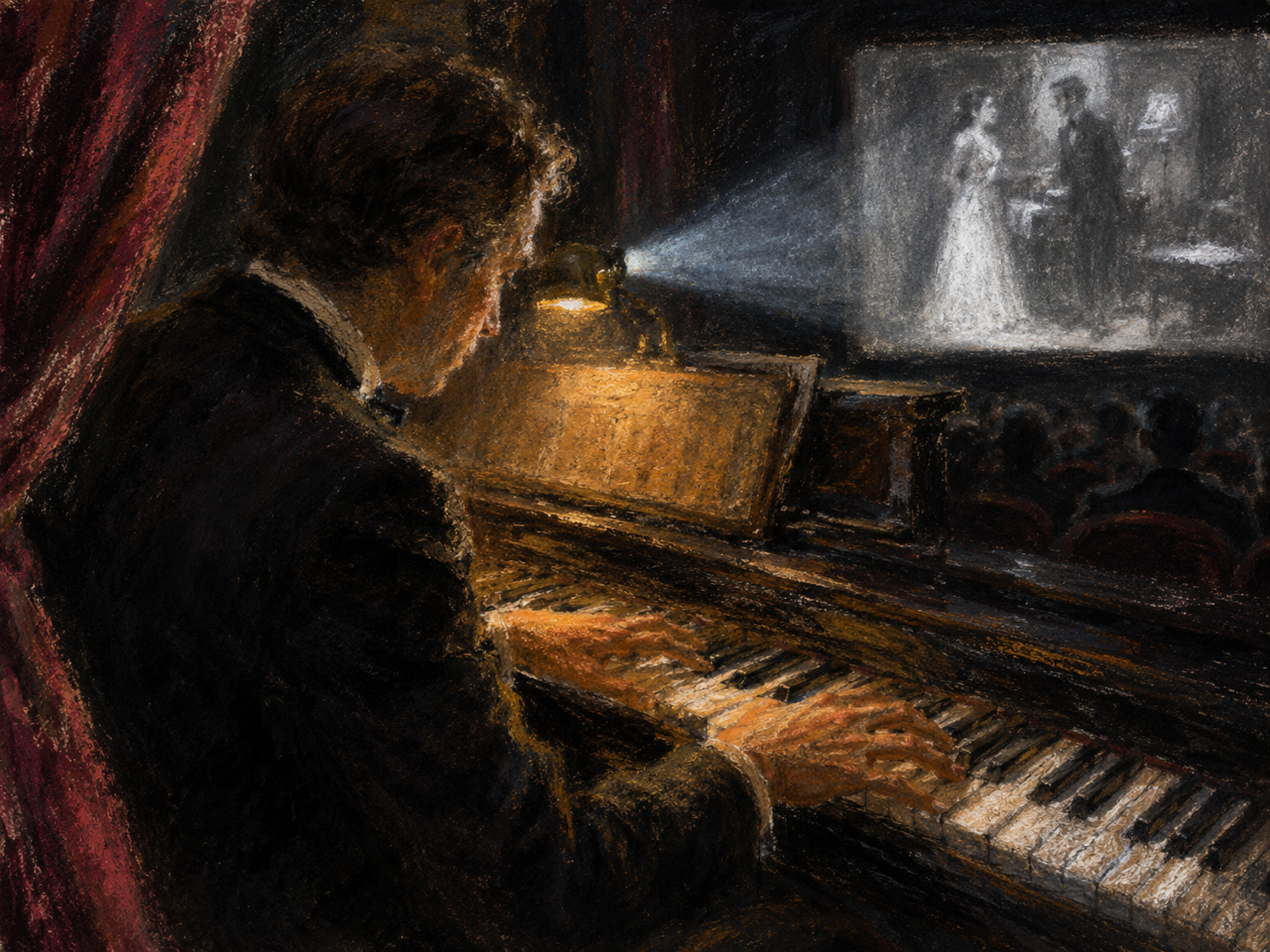
The Silent Screen's Companion
Critique
1. Introduction This painting depicts a pianist performing in a dark interior alongside a film screening. While the official title, creation year, and specific techniques are unconfirmed, the artwork beautifully captures a nostalgic early theater experience. This analysis explores the visual narrative and formal elements defining this evocative scene. 2. Description In the left foreground, a male pianist is shown from behind, engrossed in his performance. A small lamp on the music stand illuminates his profile and the keyboard with a warm orange glow. Behind him hangs a red curtain. In the upper right, a light beam from a projector hits the screen, displaying a monochrome couple, while silhouettes of spectators appear below. 3. Analysis The color palette relies on dark browns and blacks, contrasted by two light sources: the warm amber lamp and the cool blue-white projection beam. This dual lighting emphasizes the boundary between the musician's space and the cinematic illusion. Heavy, impasto texture across the canvas conveys a tangible vibration of the music and the ambient air. 4. Interpretation and Evaluation The work visualizes the solitary passion of a silent film accompanist and the shared theatrical space. Through precise composition and strong chiaroscuro, it successfully recreates a bygone era's atmosphere. The juxtaposition of the intimate keyboard performance and the distant screen effectively symbolizes the intersection of personal expression and public entertainment. 5. Conclusion This painting captures a magical intersection of sound and image from a lost era. Initially appearing as a simple musical performance, closer inspection reveals a poetic chronicle of early cinema. The lingering echoes of the piano in the theater's dark space leave a profound, enduring impression on the viewer.
Same Subcategory
 Chords of Quietude
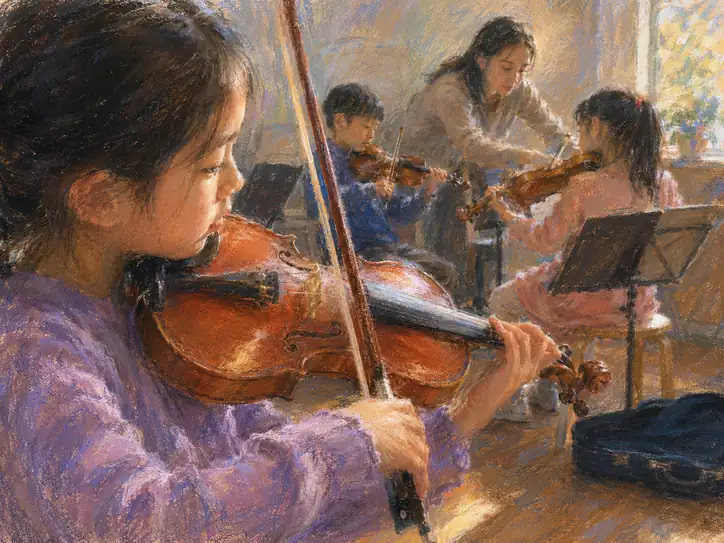 Sowing the Seeds of Sound
Similar Artworks
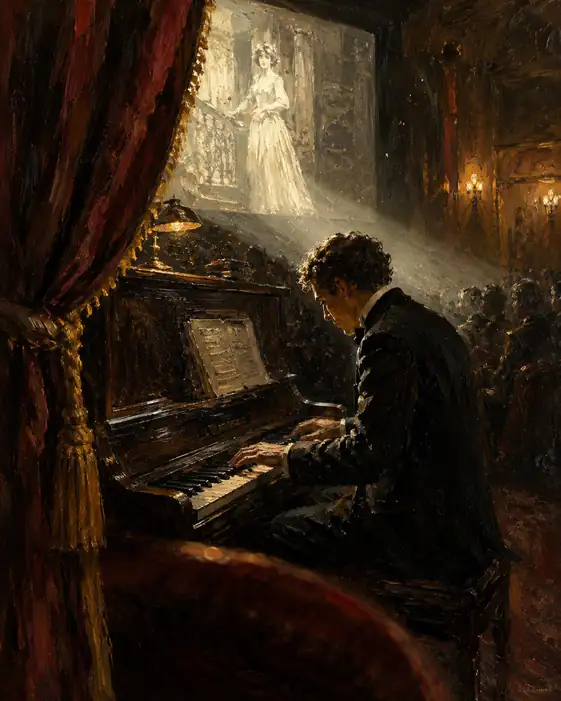 The Silent Melody of Memory
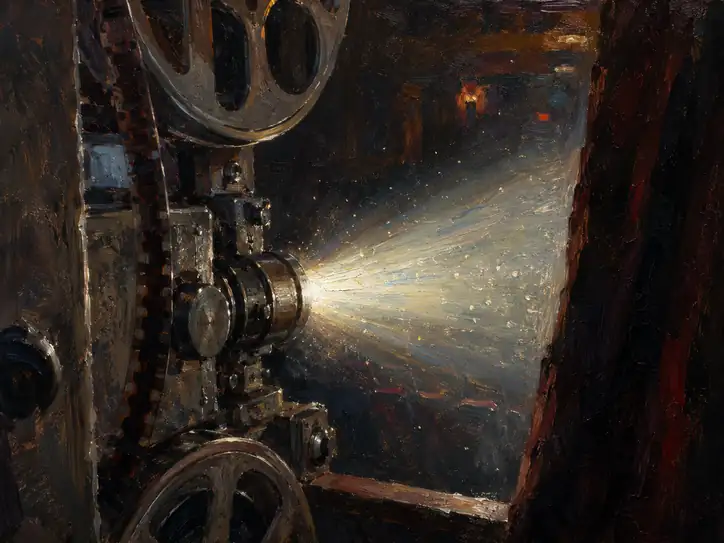 Sculpting the Darkness with Light
 Amber Rhythms: The Night's Solace
 Strumming the Sunlight: A Golden Afternoon
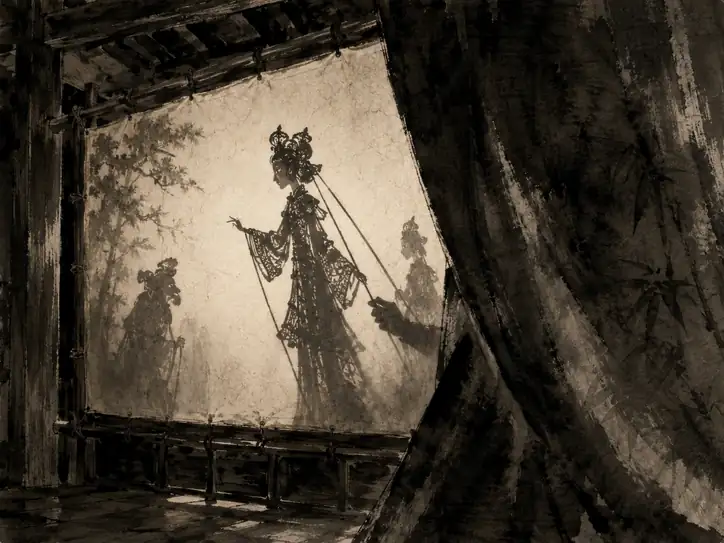 The Golden Screen: Shadows from a Forgotten Era
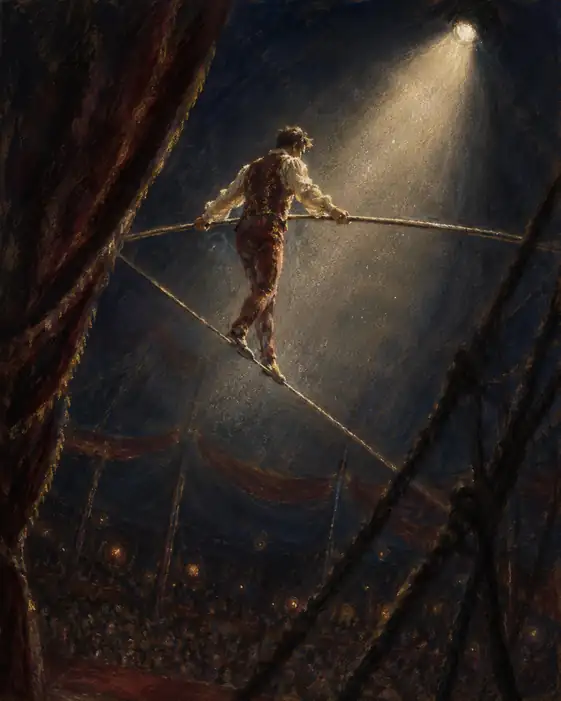 The Gilded Line
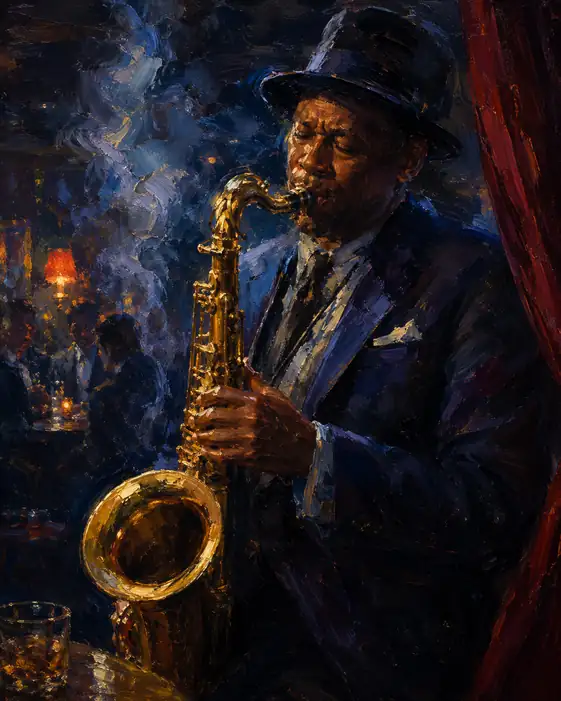 Melody in the Midnight Blue
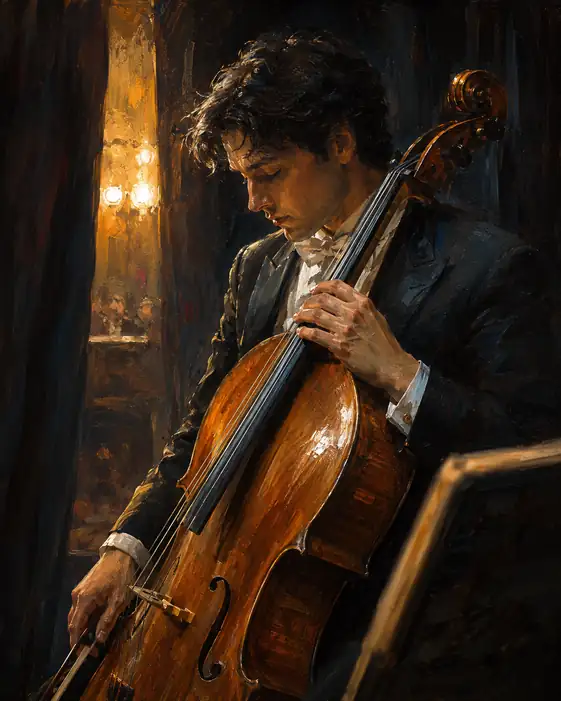 Resonance of the Silent Soul
 Melody in the Amber Shadows
 The Midnight Sanctuary: Where Jazz Whispers