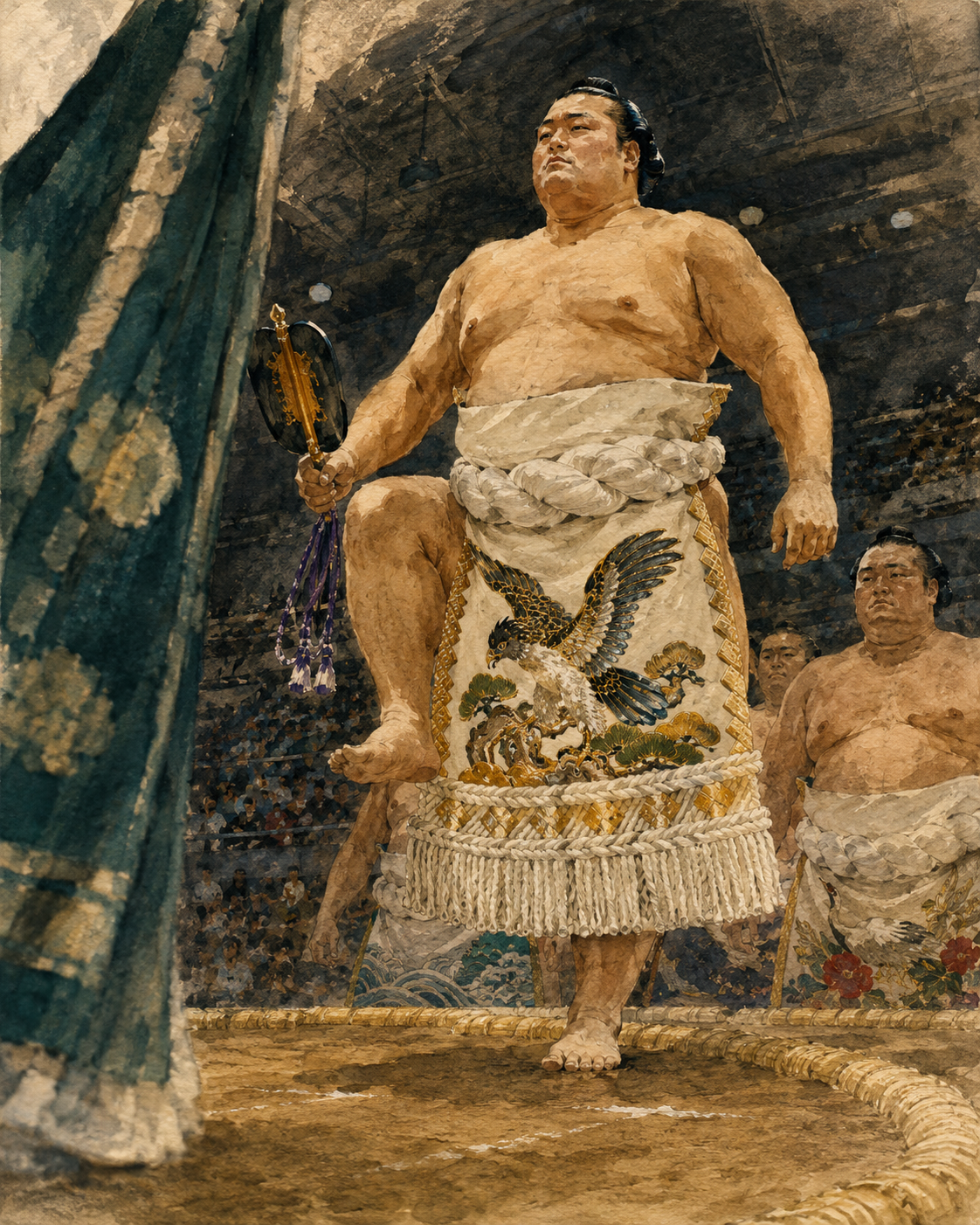
The Silent Thunder
Critique
1. Introduction This artwork is a figurative painting depicting a traditional sumo ritual. The imposing wrestler in the center is rendered with exquisite detail amidst a tense atmosphere. Viewers are confronted with the sacred dignity and quiet intensity of this Japanese tradition. This analysis examines the formal elements and expressive qualities of this powerful portrait. 2. Description The central sumo wrestler, clad in a white ceremonial apron showing an eagle, raises one leg high. His right hand holds an ornate fan, and his expression is grave and proud. In the background, a packed stadium extends under a dome, while another wrestler stands right. A green curtain hangs on the left. 3. Analysis The most notable feature is the fusion of traditional style with delicate watercolor techniques. The intricate embroidery of the apron and the wrestler's skin are expressed with subtle gradations. A low-angle composition emphasizes the stature of the subject. Additionally, the foreground curtain creates three-dimensional depth within the pictorial space. 4. Interpretation and Evaluation This piece transcends sports illustration, symbolizing sumo as a spiritual ritual. The weight of tradition is materialized through calm coloration and precise draftsmanship. The meticulous detail, harmonious composition, and dramatic lighting demonstrate high originality. The work holds great value in modernizing traditional Japanese aesthetics. 5. Conclusion Initially viewed as a portrait, closer study reveals the sacred silence and tension. The heavy stomp of the wrestler and the dignified air deeply stimulate the viewer's senses. This masterpiece evokes the sound and atmosphere of the ritual. The enduring value of traditional culture is powerfully engraved in this artwork.
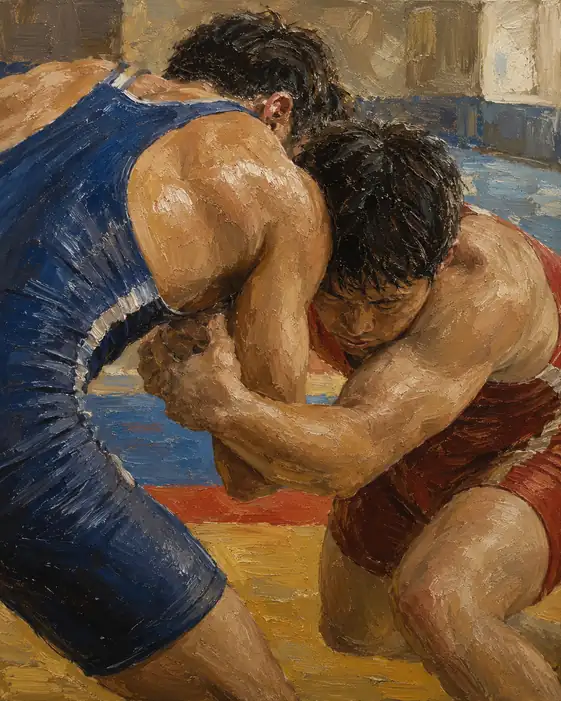 The Friction of Being
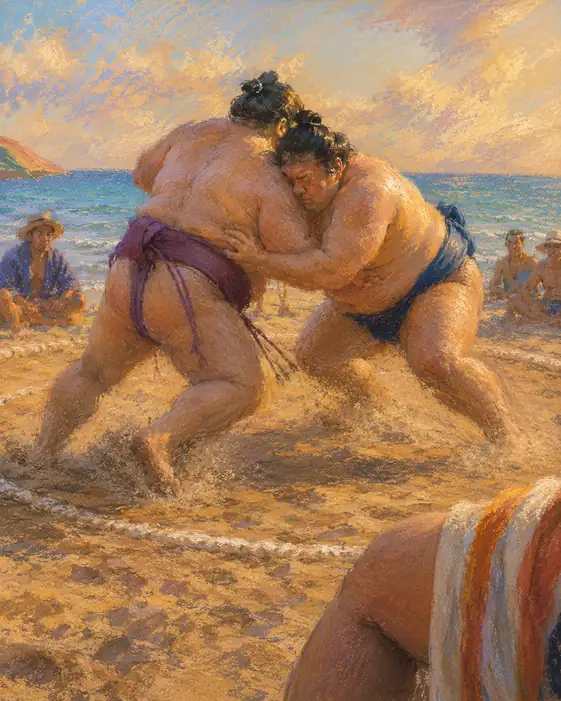 Heartbeats Echoing on the Shore
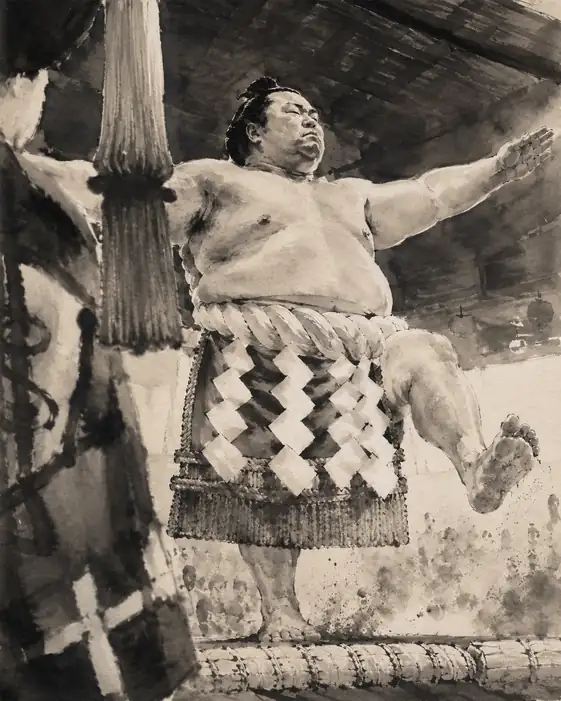 Resonance of the Sacred Earth
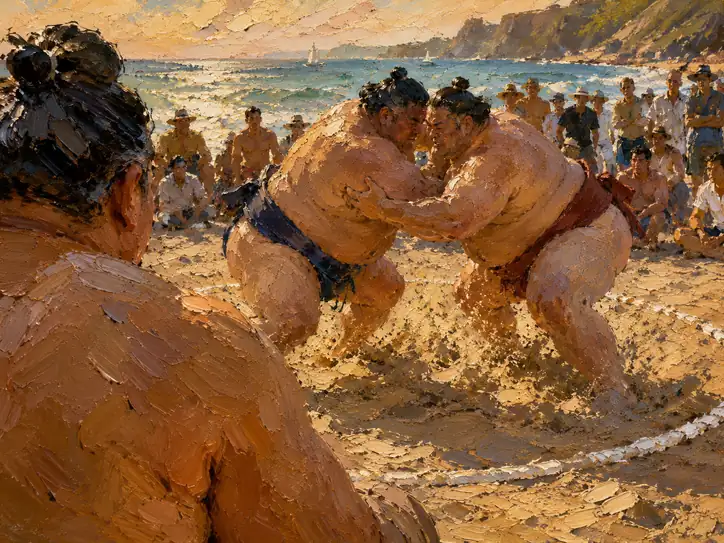 Sacred Combat on the Golden Shore
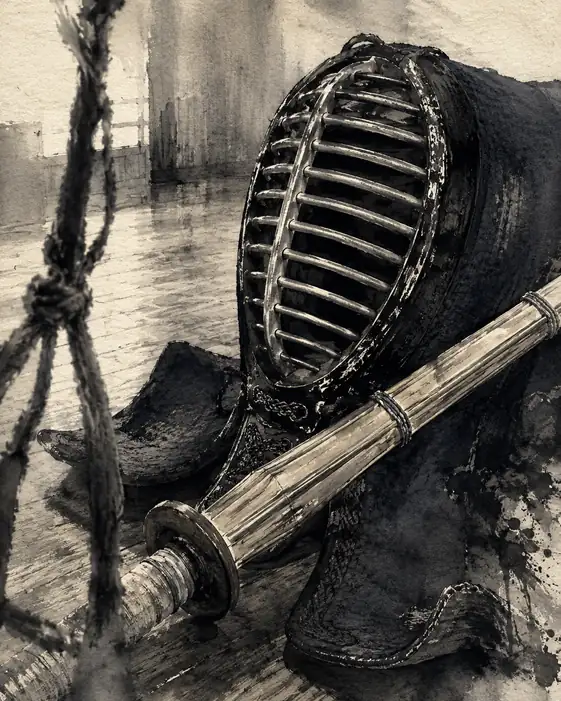 Stillness of the Dojo
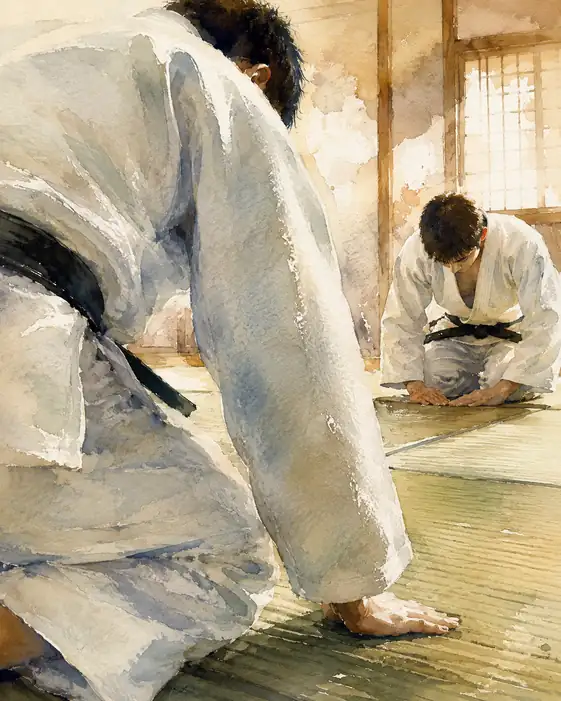 The Path of Respect
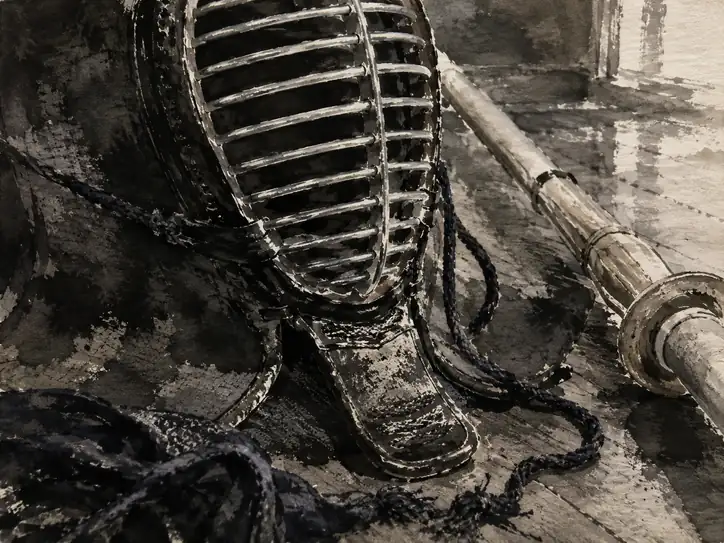 Echoes of the Unbowed Soul
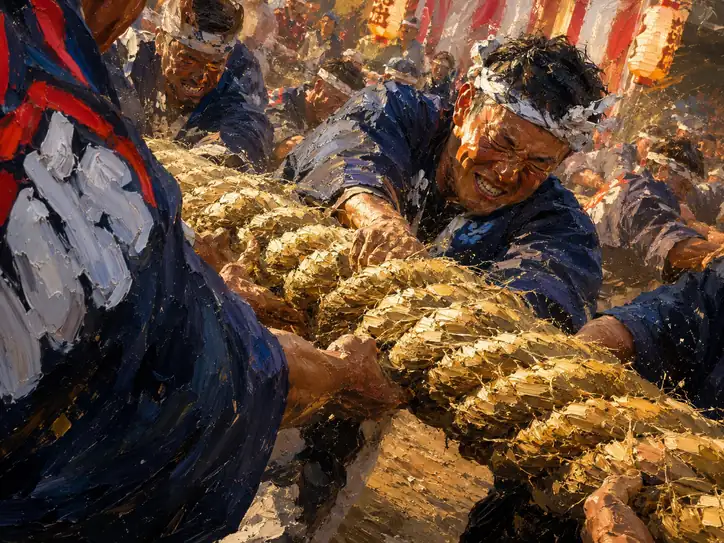 Dust, Sweat, and the Sacred Rope
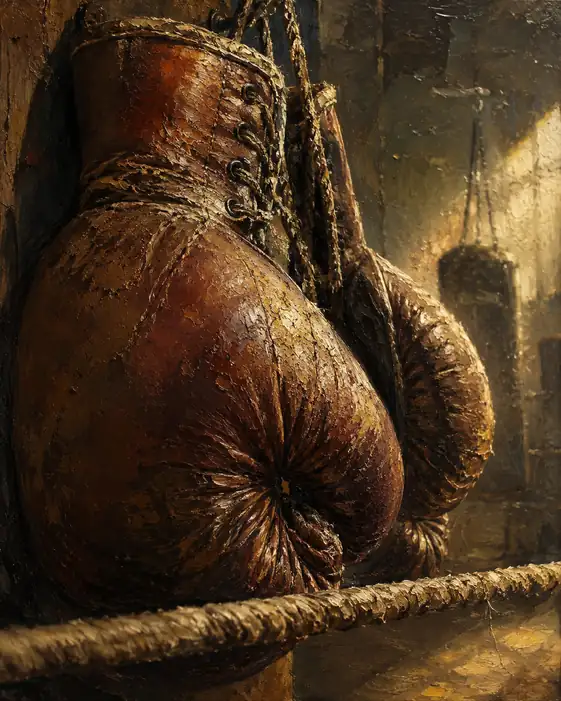 Echoes of the Ring
 The Crimson Resolution Before the Bell
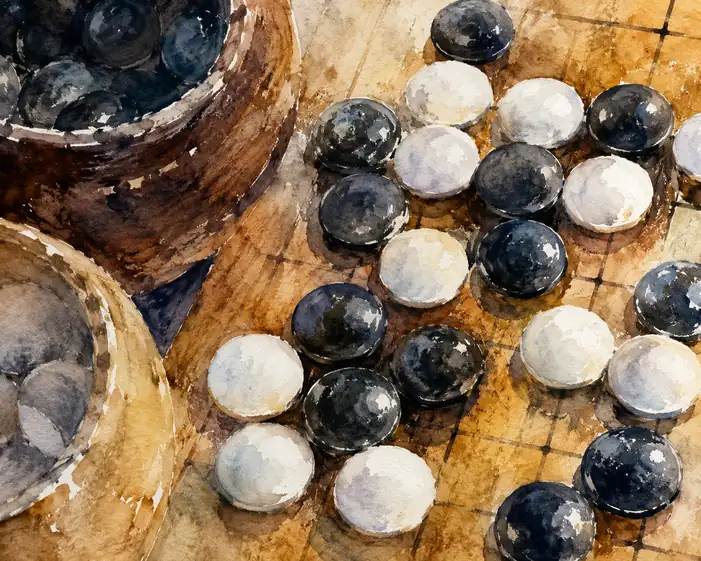 A Dialogue in Black and White