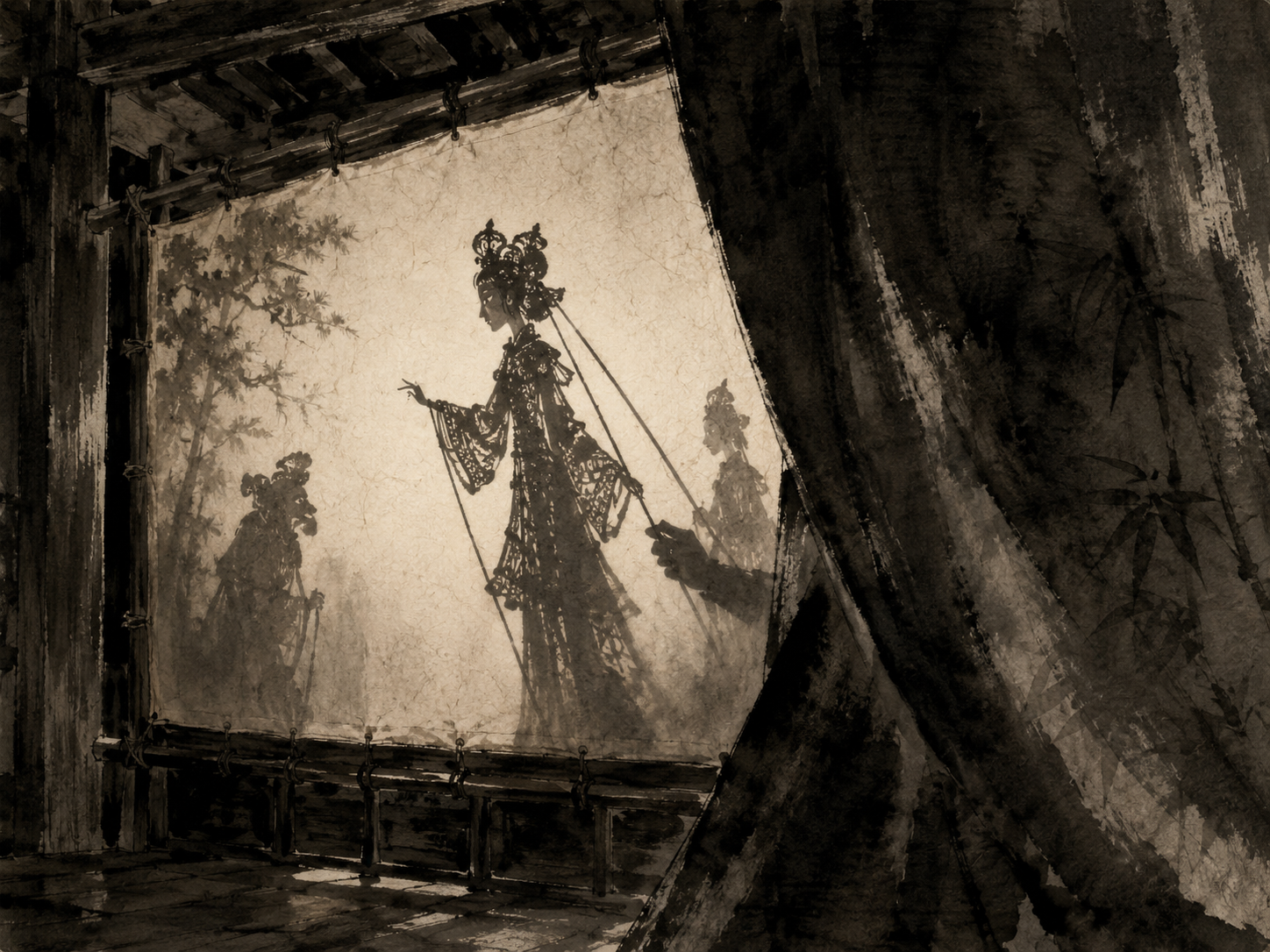
The Golden Screen: Shadows from a Forgotten Era
Critique
1. Introduction This painting depicts a traditional shadow play, capturing a dramatic boundary between the stage and the audience. At the center, a luminous screen reveals delicate silhouettes performing an ancient story. Although details regarding its creation are unknown, the sepia tones and ink-wash style remain prominent. This work effectively conveys a quiet atmosphere. 2. Description On the central screen, a silhouette of a noble woman in intricate attire is displayed. Behind her, a puppeteer’s hand is visible, while another figure stands on the left. A dark curtain with subtle bamboo patterns hangs in the foreground. Sturdy wooden pillars and beams frame the stage. 3. Analysis The defining feature of this artwork is the strong contrast of light and shadow. The limited color palette of sepia and black establishes visual unity and classical elegance. Additionally, the curved curtain contrasts with the straight wooden frame, creating a dynamic rhythm. The textured screen enhances visual depth. 4. Interpretation and Evaluation Through the interplay of light and dark, this painting explores the boundary between performance and reality. The exquisite draftsmanship and beautiful sepia gradations demonstrate an exceptionally high level of technical mastery. The rendering of the puppet's clothing highlights unique creativity. It is a highly valuable masterpiece. 5. Conclusion In conclusion, this work is an artistic embodiment of Eastern spirituality. Although viewers may initially perceive it as a simple monochrome piece, they are gradually captivated by the deep expression of light. The quiet first impression shifts to a rich sense of narrative. It possesses a universal beauty.
Same Subcategory
Similar Artworks
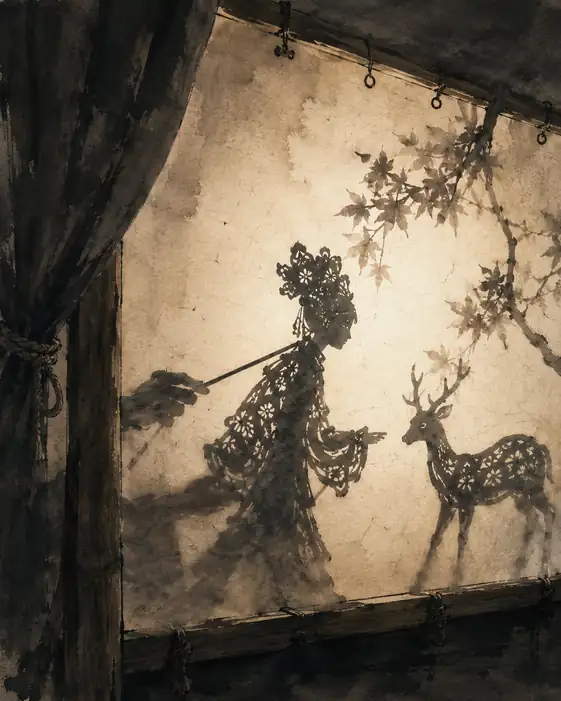 Shadows of Antiquity
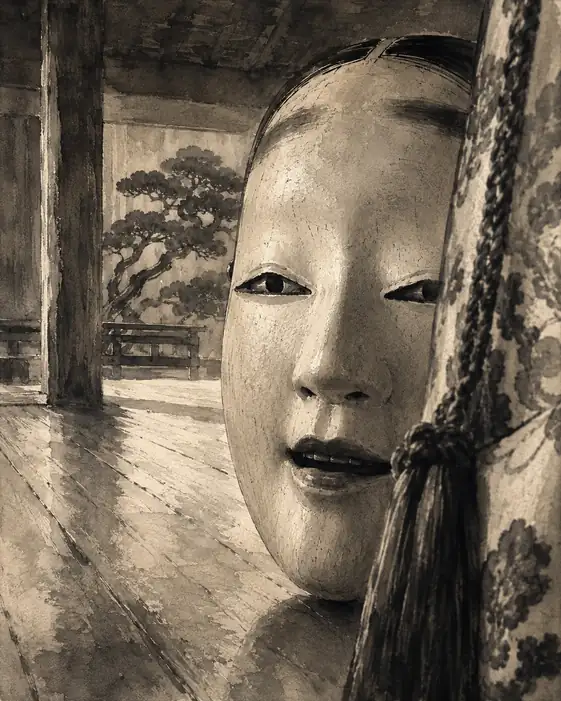 Beyond the Veil of Silence
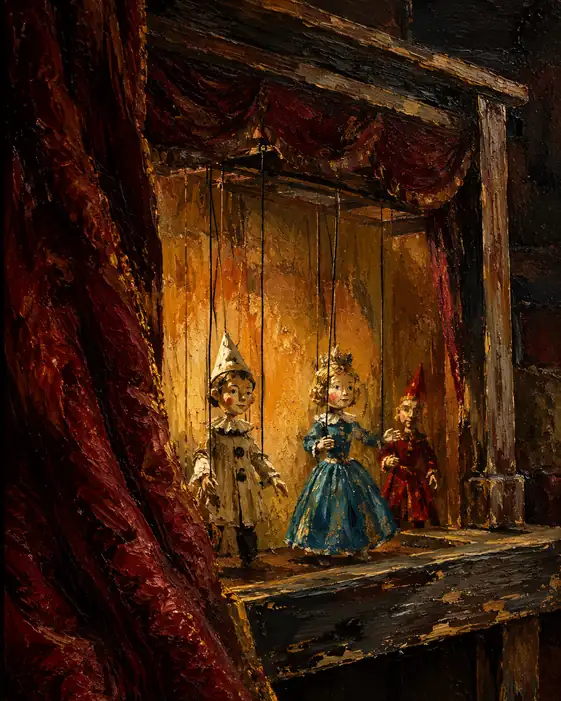 Silent Stage, Whispering Strings
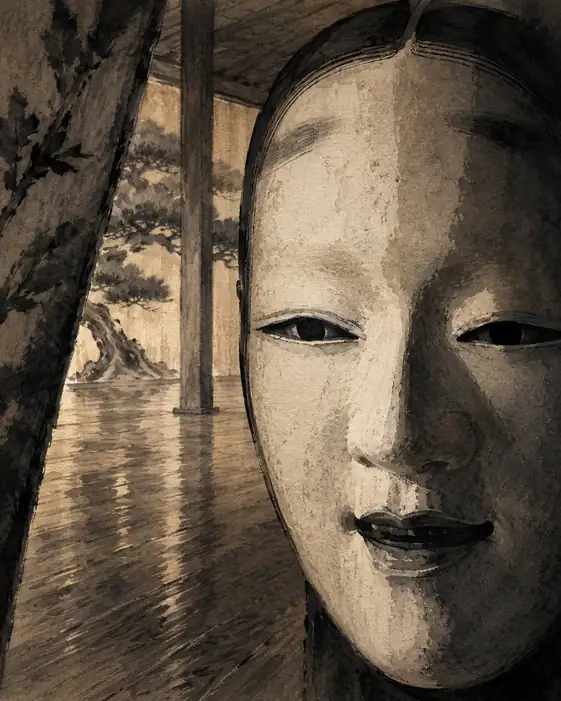 Eternity in a Fixed Smile
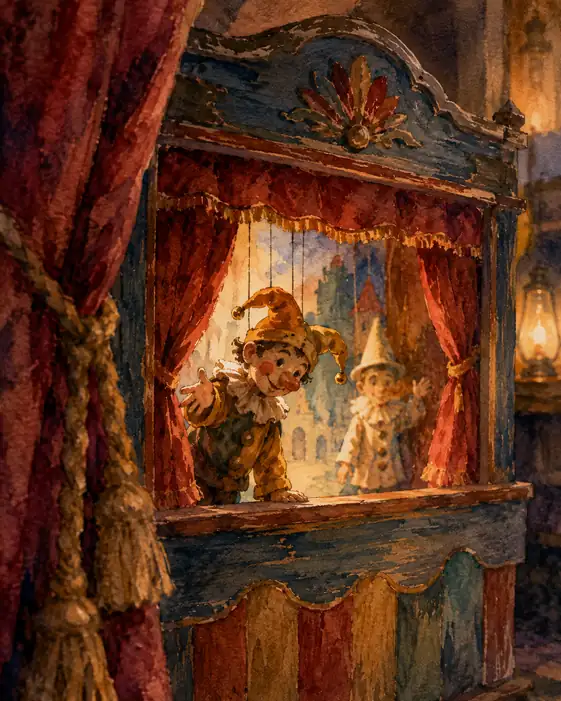 Whispers of the Antique Stage: The Joyful Jester
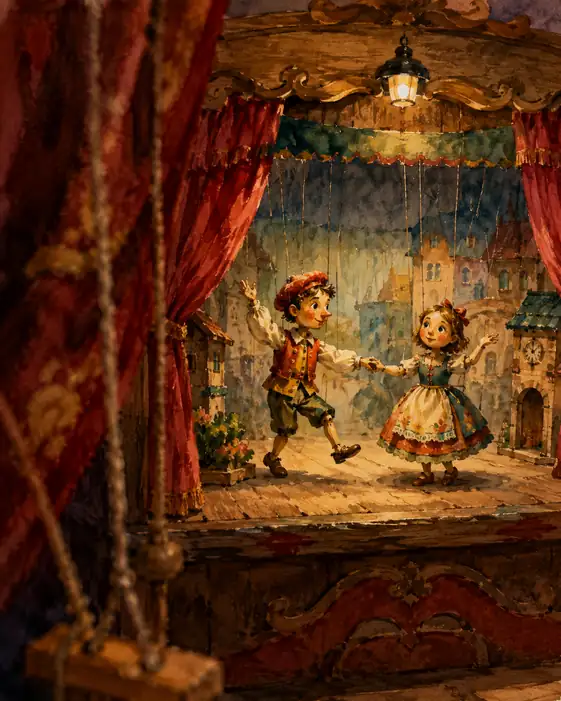 Our Secret Waltz Beneath the Attic Lamp
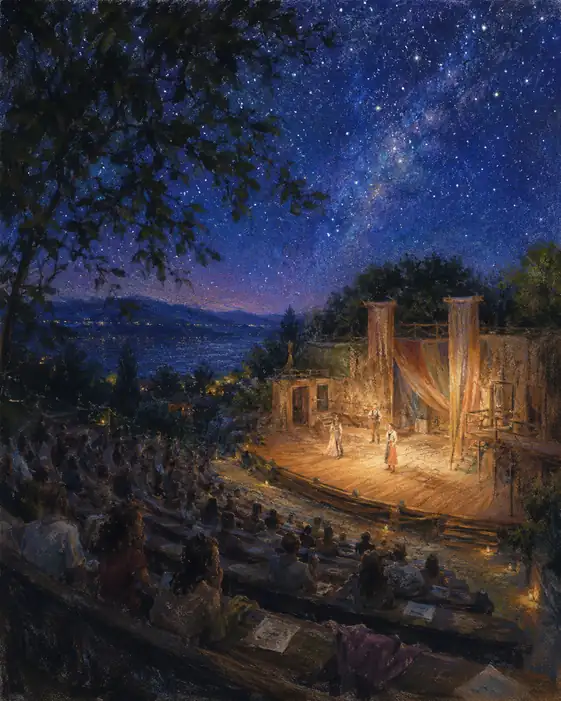 Under the Infinite Spotlight
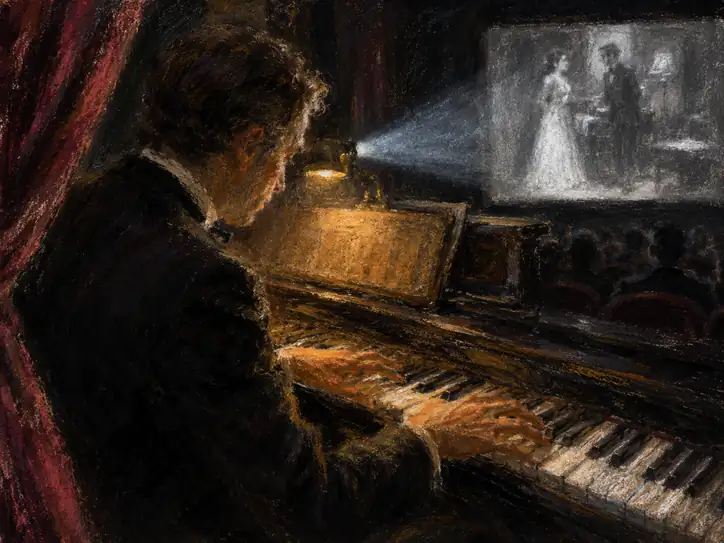 The Silent Screen's Companion
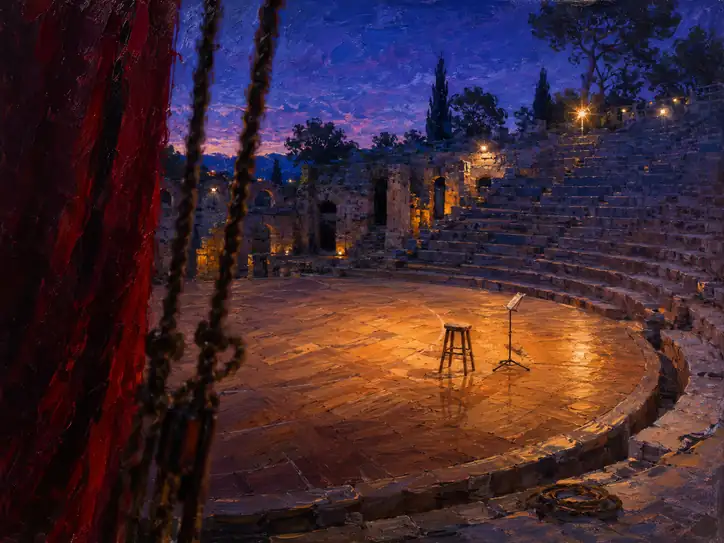 Resonance of Silence
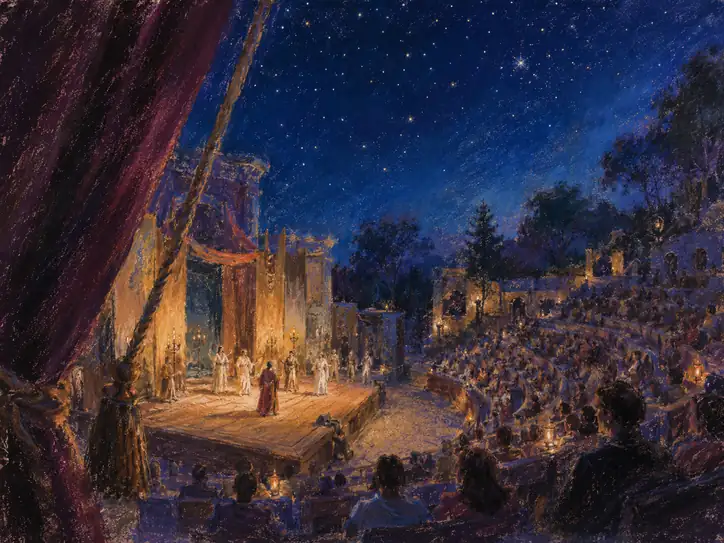 Infinite Sky, Finite Stage