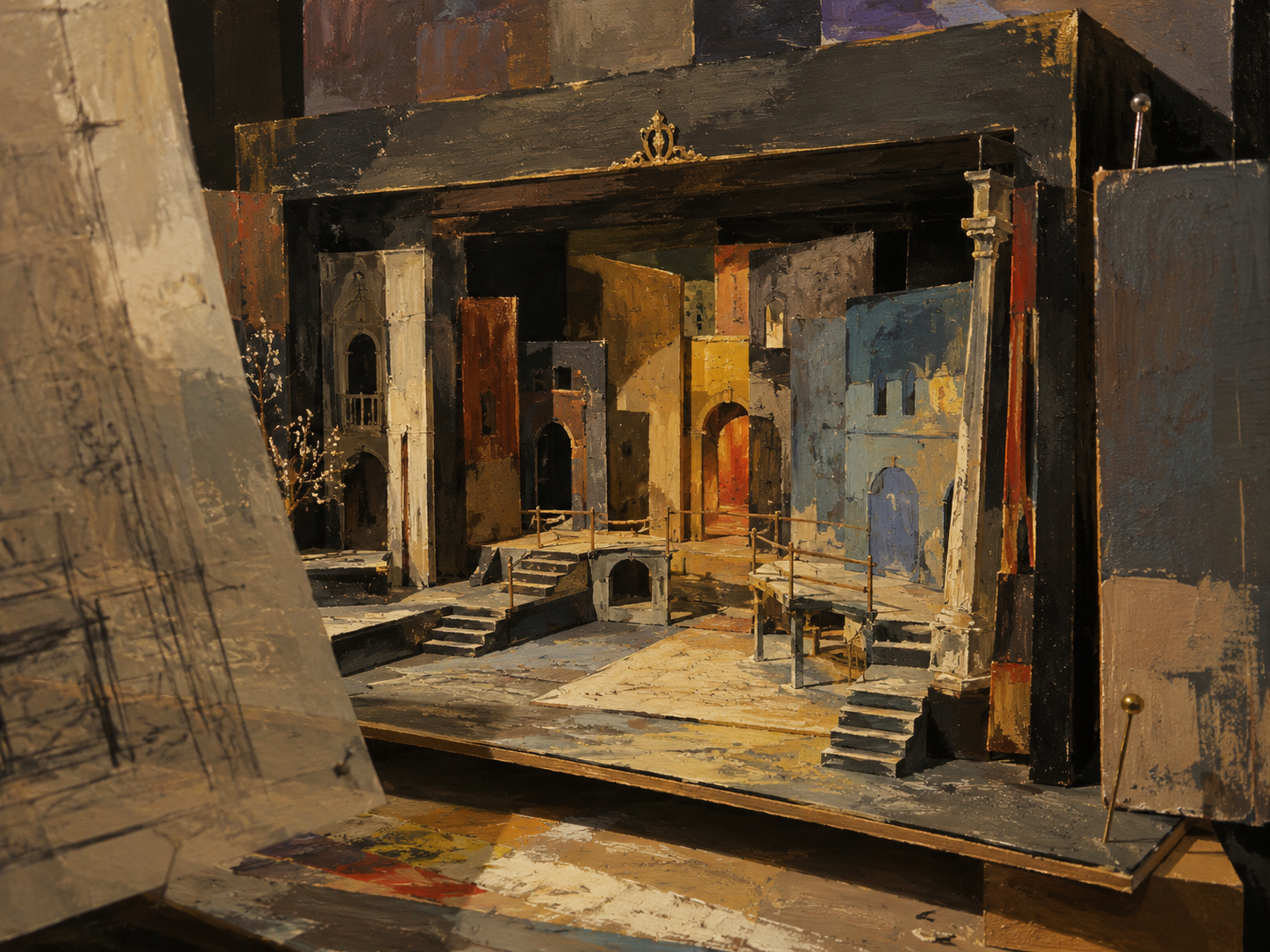
The Architect of Dreams: A Stage in Genesis
Critique
1. Introduction This intriguing oil painting presents a captivating, meta-artistic study of a theatrical set design model. By showcasing both the physical model and its preparatory drawing, the work beautifully reveals the creative process itself. This essay will examine the formal characteristics and expressive qualities of this unique, layered composition. 2. Description The painting depicts a highly detailed miniature stage set framed by a black proscenium arch. The set features stone-like stairs, arched doorways, a small bridge, and colorful walls in blue, yellow, and orange. In the foreground on the left, a translucent sheet of tracing paper with rough sketches leans diagonally. The surface of the painting is rendered in a thick, tactile oil impasto. 3. Analysis Color contrast is central, as the vivid tones of the buildings are contained by the dark frame. The lighting within the stage model creates a warm, dramatic inner space. Structurally, the diagonal placement of the paper balances the stable, geometric lines of the model, establishing a dynamic depth and visual tension. 4. Interpretation and Evaluation This artwork represents a poetic exploration of the creative journey from idea to physical form. The juxtaposition of the blueprint and the model symbolizes the transition from two-dimensional concepts to three-dimensional reality. Technically, the artist demonstrates superb control of tactile textures. This intellectual focus on artistic process gives the piece high originality. 5. Conclusion In conclusion, the painting successfully elevates a designer's workspace into a romantic tribute to theater. A deeper viewing reveals a quiet magic within the miniature architecture. Ultimately, the work stands as a refined testament to the beauty of creation, blending physical texture with multi-layered spaces.
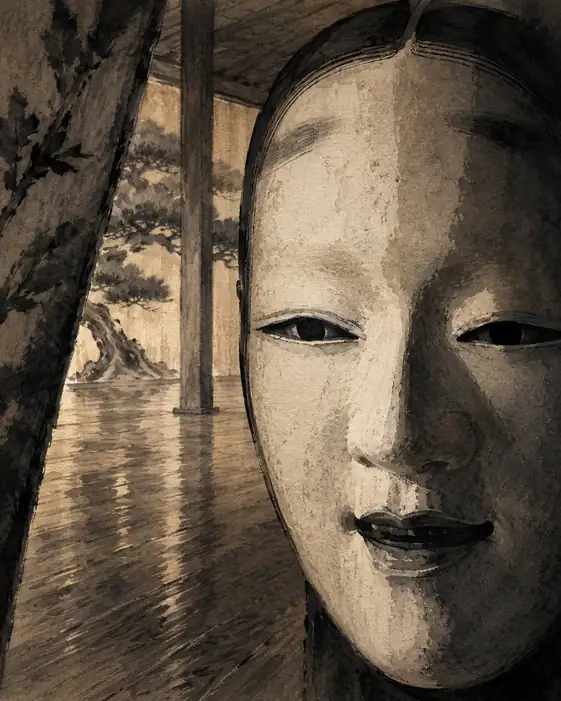 Eternity in a Fixed Smile
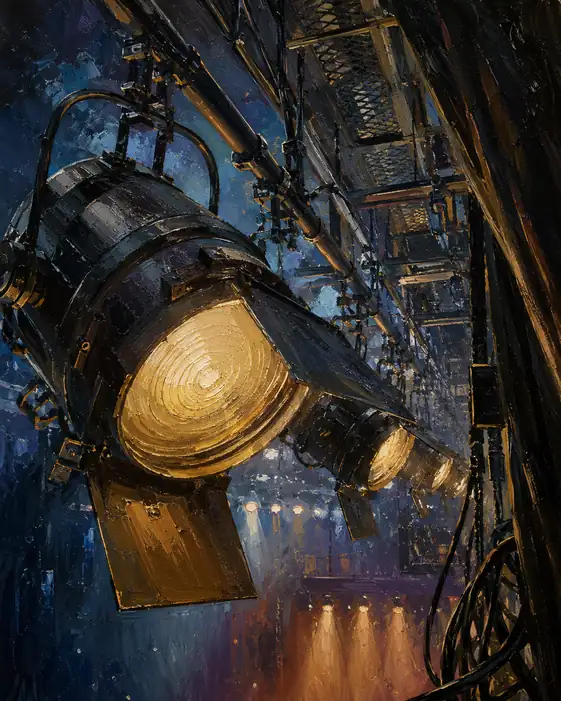 Awakening the Dark: Eyes of the Theatre
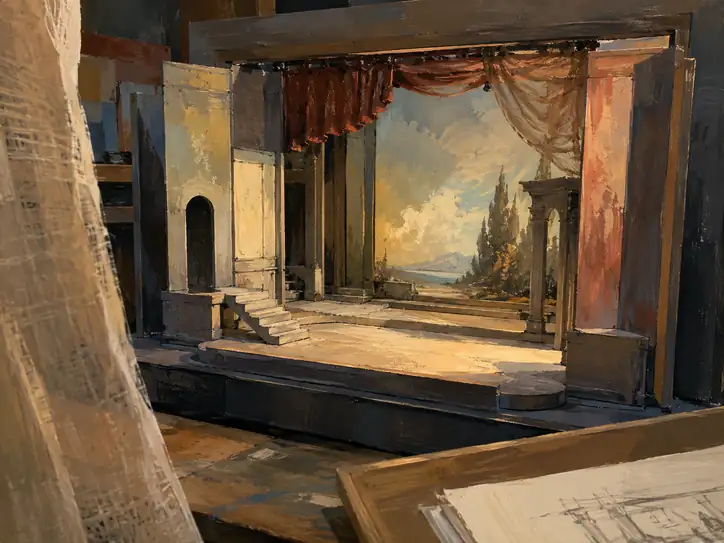 Blueprint of a Silent Stage
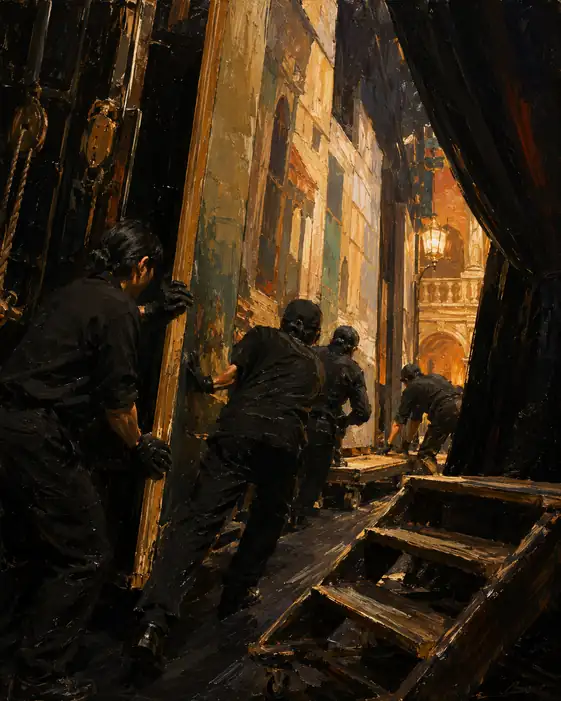 The Hands Behind the Illusion
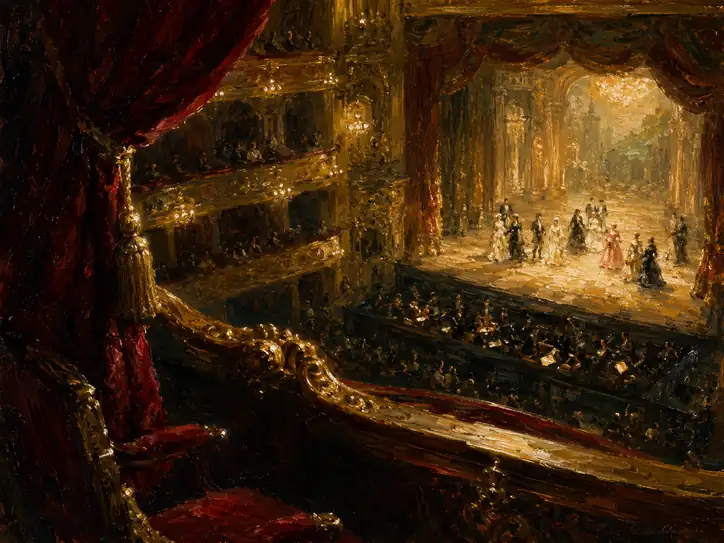 From the Velvet Shadows
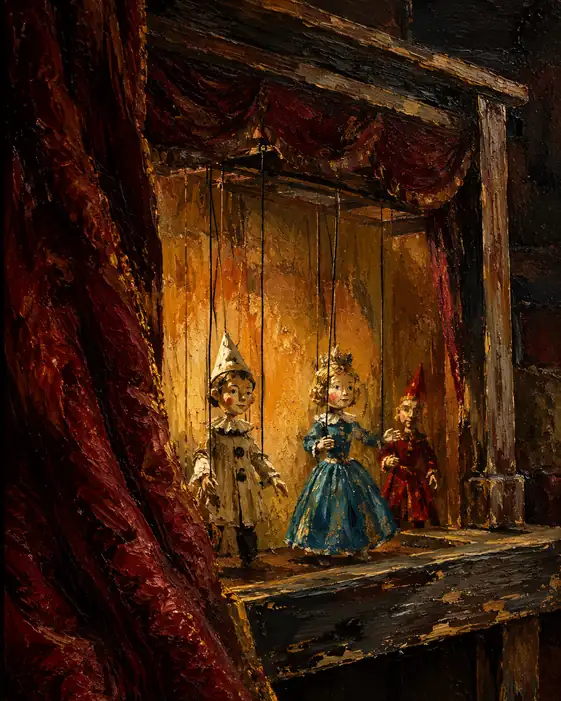 Silent Stage, Whispering Strings
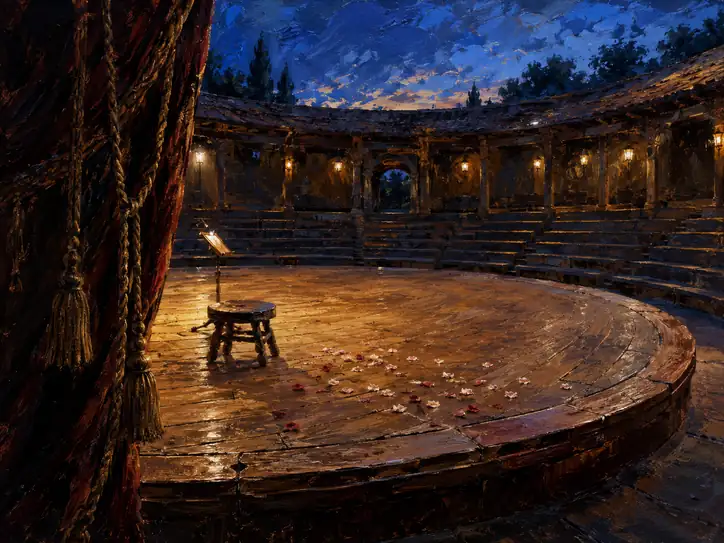 The Last Echo of the Stage
 Wandering Through Yesterday's Sunlight
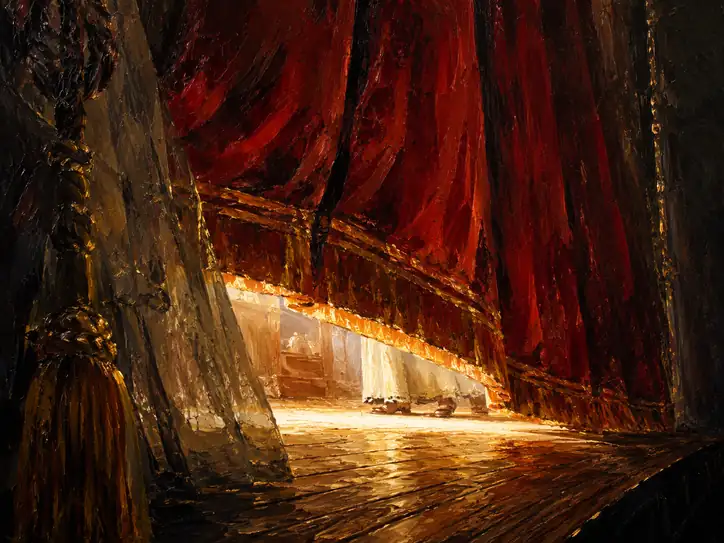 Beyond the Crimson Veil
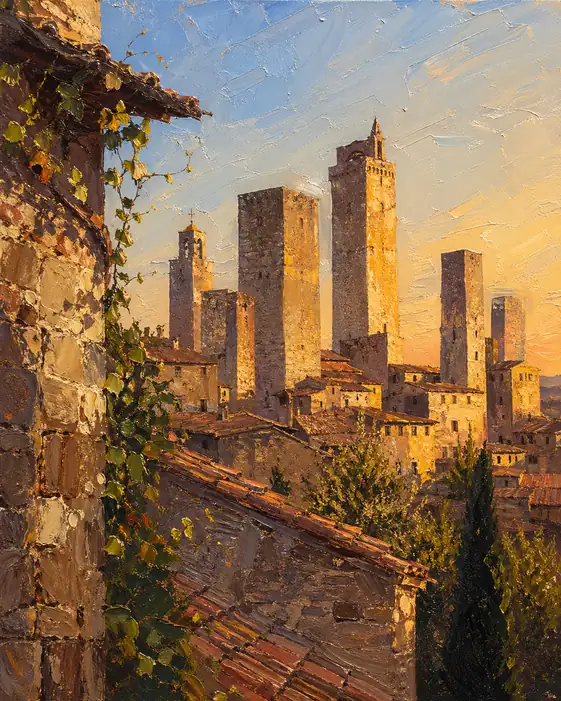 Golden Spires of the Eternal Town
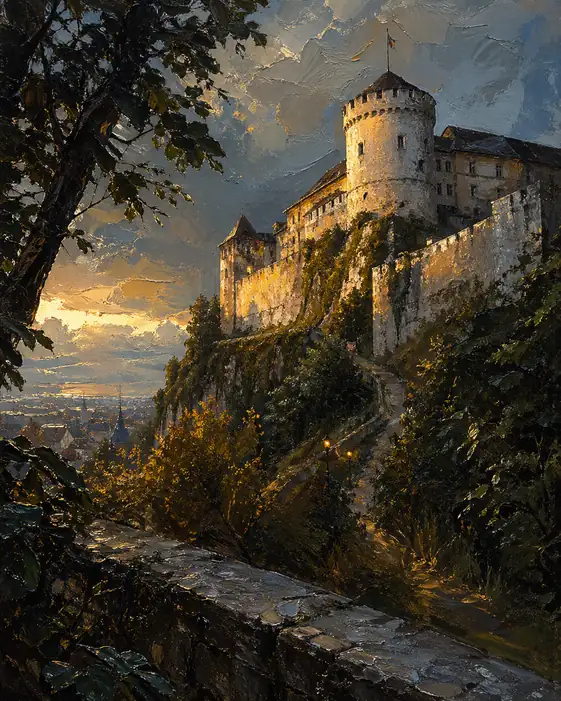 Sunset Fortress