Moonlit Strings
Critique
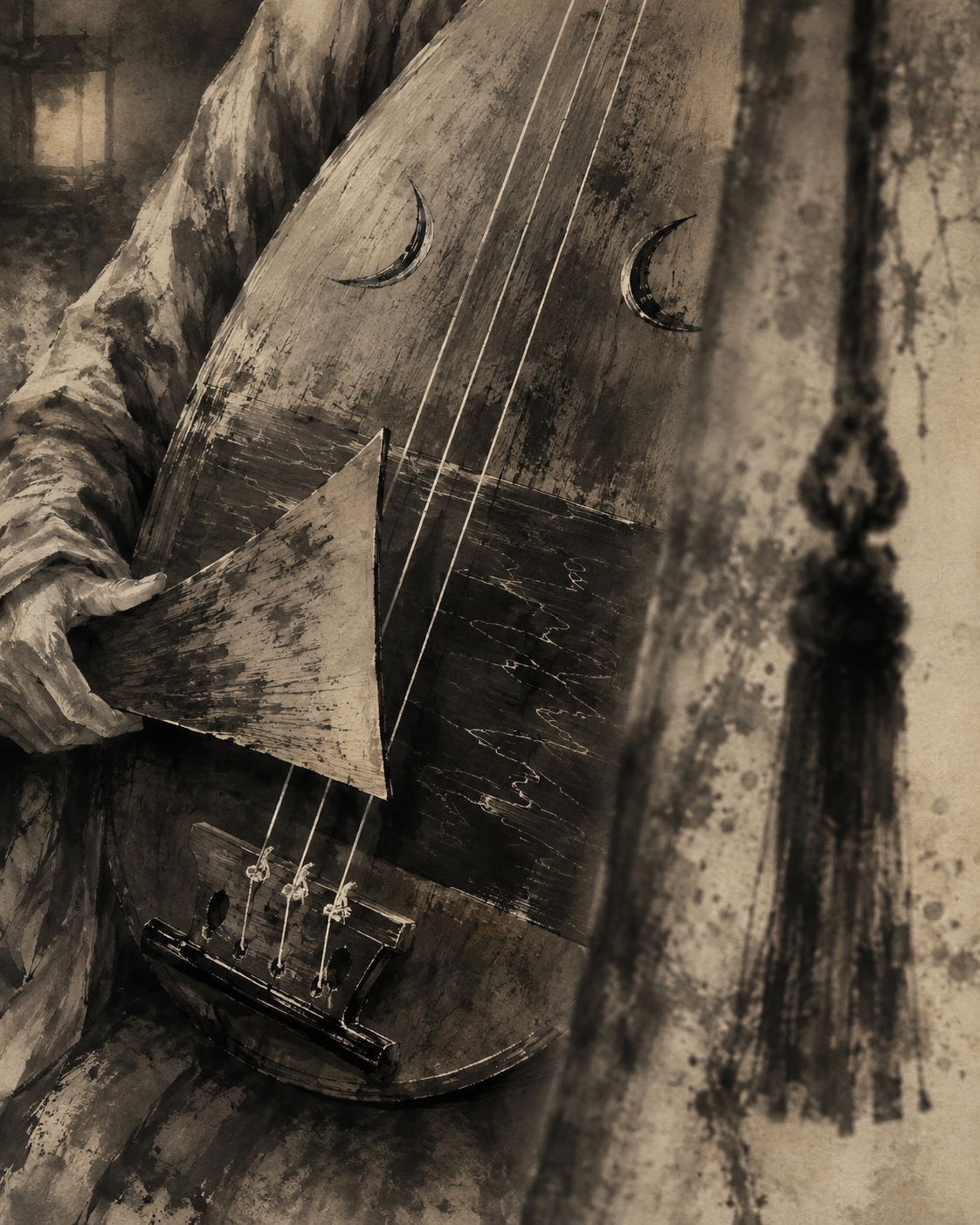
1. Introduction This sepia-toned oil painting, of unknown date and technique, focuses on the elegant details of a traditional Eastern instrument. The canvas features a close-up of a hand holding a large plectrum, poised to play a lute-like stringed instrument. Combining Eastern aesthetics and silent emotion, the artwork invites viewers into a mysterious, poetic world. 2. Description On the instrument's body, two crescent-shaped soundholes are carved symmetrically in a delicate fashion. A hand clothed in a detailed, draped sleeve firmly grasps a triangular plectrum near four tight strings. In the foreground, a dark cloth with ink-like washes and a large, intricate tassel hangs prominently, framing the composition. 3. Analysis The defining element of this work is the delicate sepia monochrome wash and its layered spatial organization. The artist creates a deep sense of silence and historical depth by using rich tonal gradations of a single color. Placing the tassel in the foreground and the faint lantern in the far distance generates a rich, deep perspective. 4. Interpretation and Evaluation This piece beautifully reinterprets classic Eastern spirituality through a modern close-up painting technique. The crescent moons and the faint light symbolize traditional literary themes such as night serenity and longing. The masterful integration of ink-wash textures and precise structural draftsmanship successfully builds a bridge between classical tradition and contemporary art. 5. Conclusion While the work initially leaves a retrospective impression like an old scroll, closer observation reveals the intense tension just before a sound is struck. This shift in understanding shows that the painting captures the timeless vibration of music rather than a static past. It is a highly accomplished creation where delicate light and structural harmony merge.
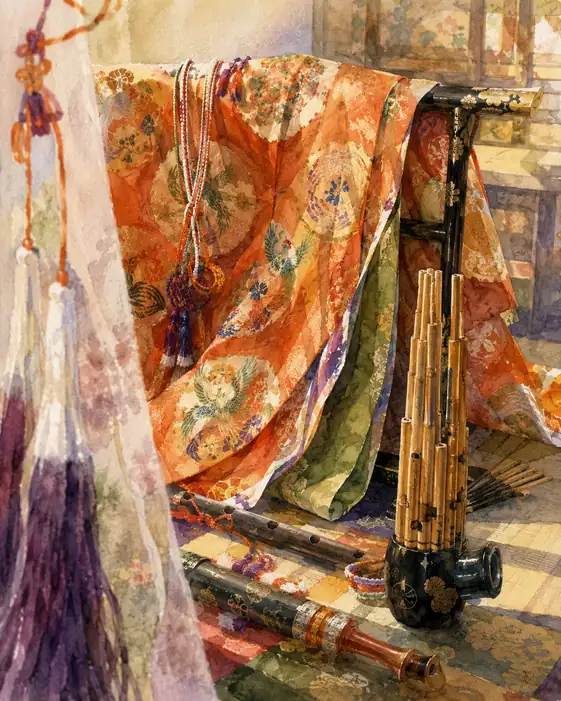 After the Melodies: The Royal Vestige
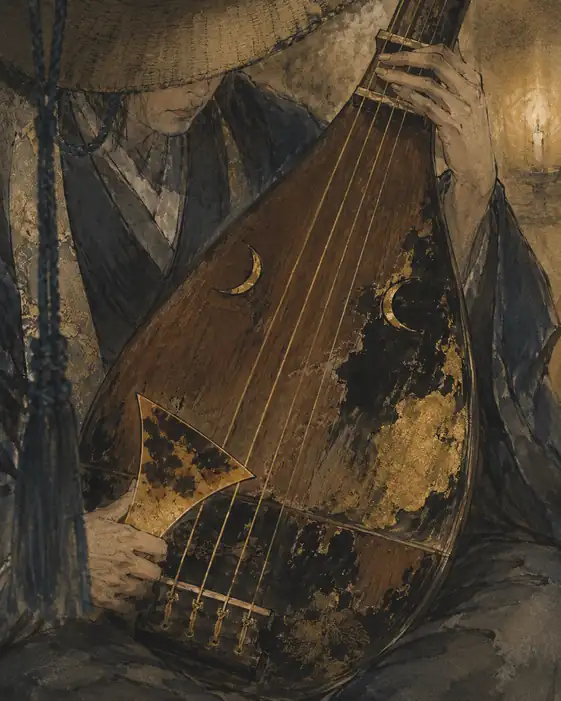 Resonance of the Golden Moon
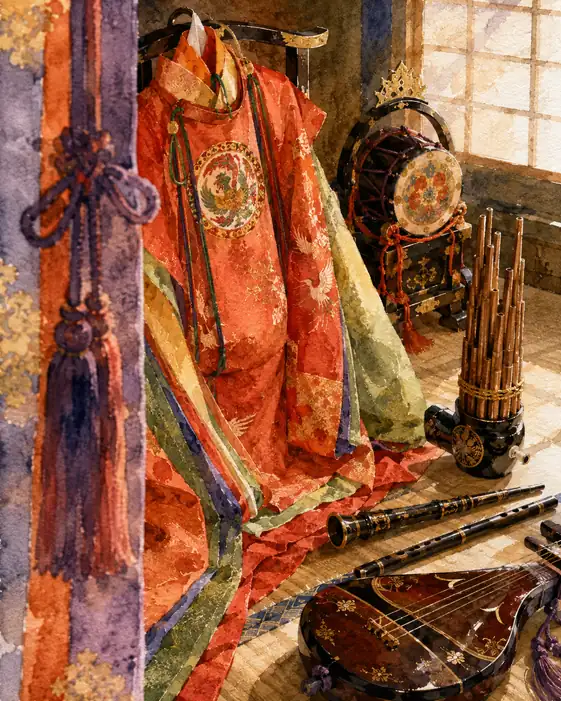 Echoes of Eternal Elegance
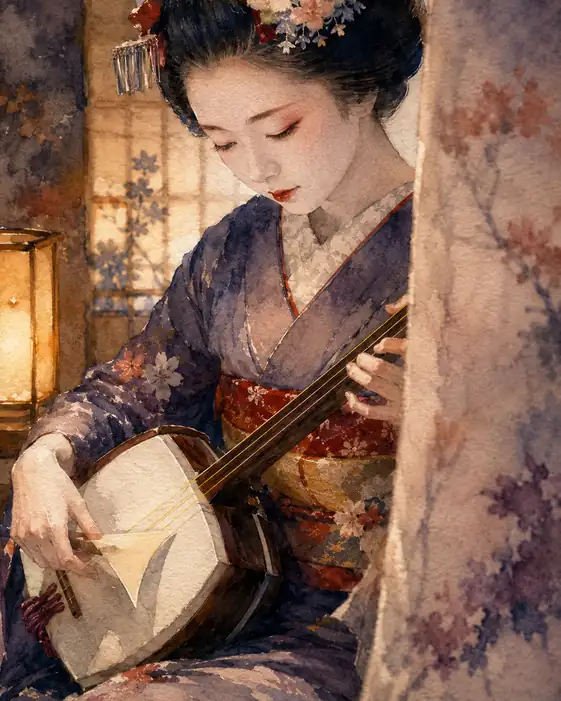 Melody in the Indigo Night
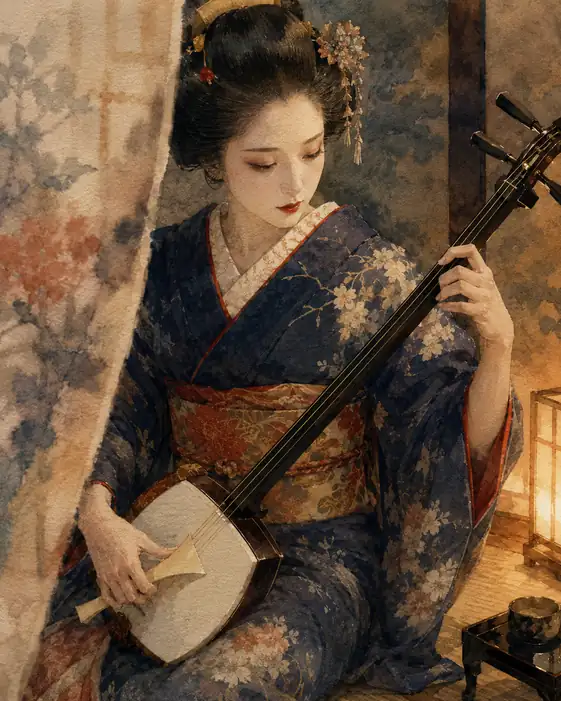 The Echoes of Indigo
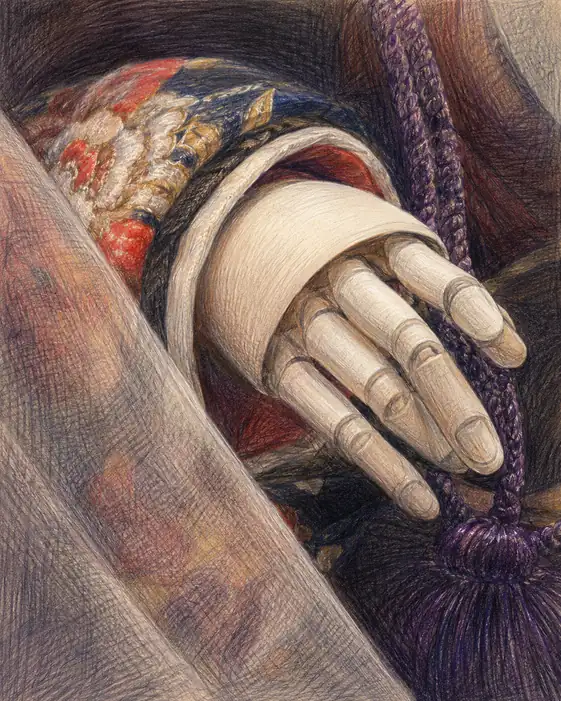 Soul in the Painted Wood
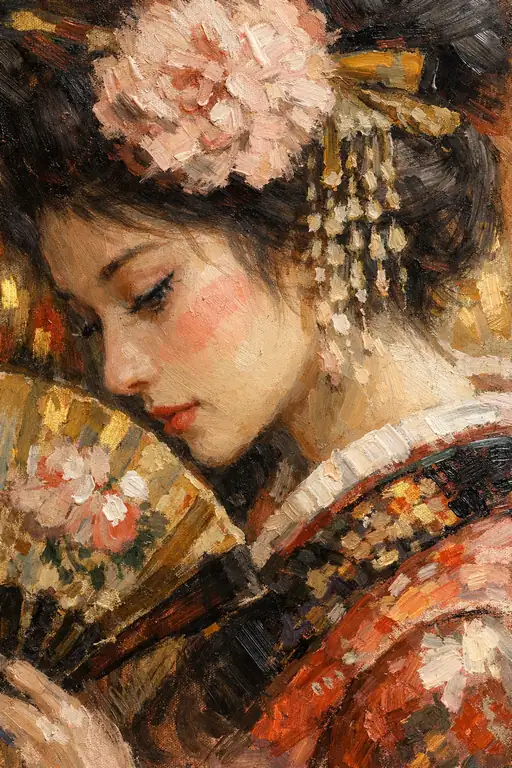 Grace Hidden Behind the Folding Fan
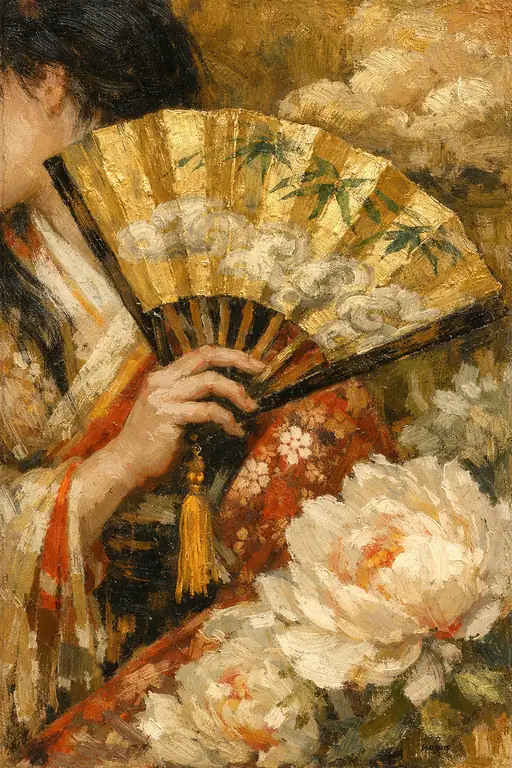 Elegance of the Peony and Golden Fan
 Strings of a Golden Memory
 Echoes of the Crimson Strings