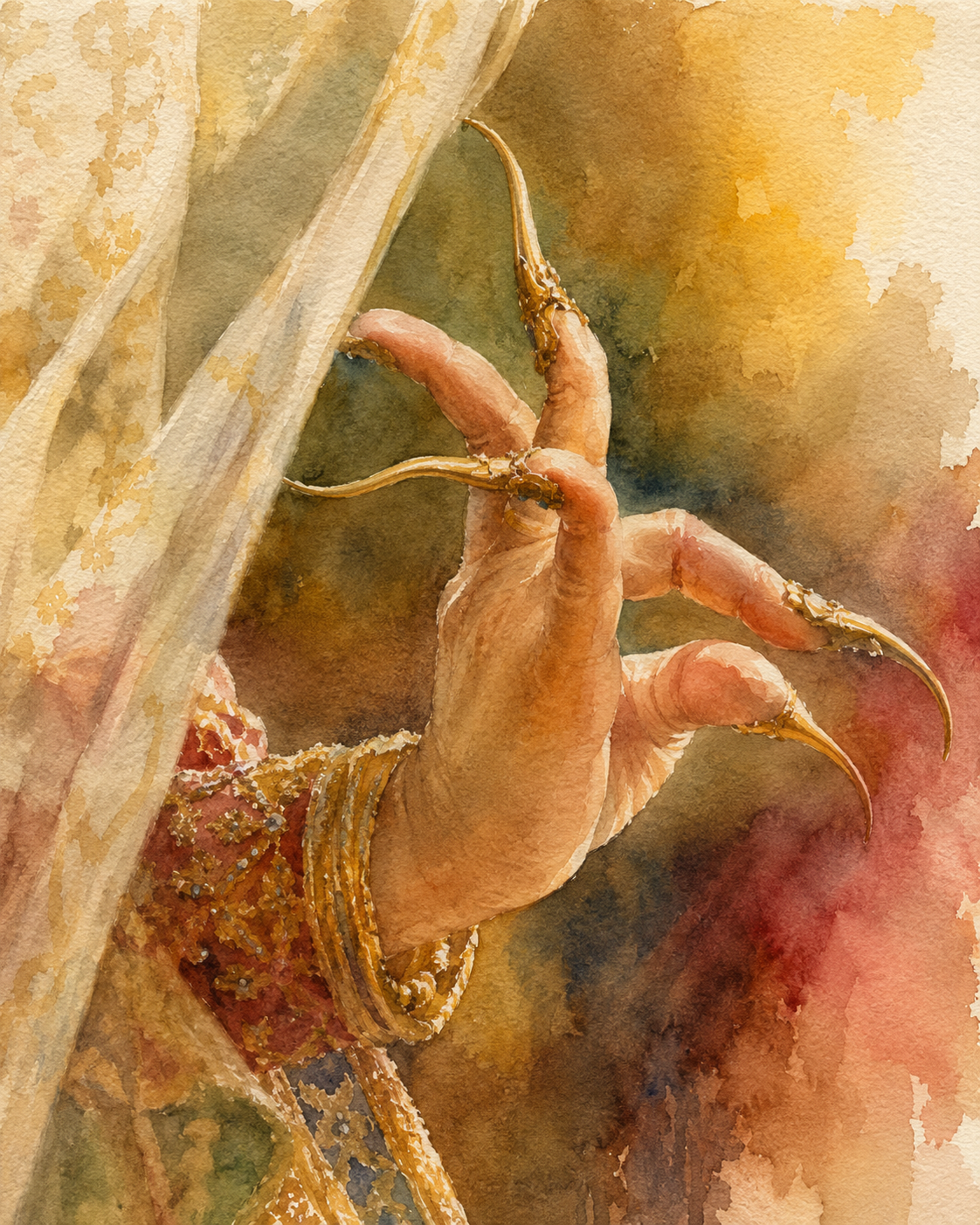
Golden Grace: The Silent Echo of Tradition
Critique
1. Introduction This delicate watercolor painting focuses on the graceful hand gestures of a traditional dancer. The official title and the date of creation for this piece are unknown. The golden claw-like extensions on the fingertips evoke a sense of cultural ritual. The work condenses Eastern aesthetics into a single, quiet moment. 2. Description A right hand adorned with long, curved golden finger ornaments occupies the center of the paper. Around the wrist, multiple golden bangles and a red sleeve decorated with embroidery are visible. A semi-transparent white fabric hangs on the left, creating a soft screen. Warm washes of yellow, brown, and red paint fill the background. 3. Analysis The composition establishes a balance between the verticality of the white cloth and the diagonal movement of the fingers. Soft watercolor washes create atmospheric depth across the background. The gold of the ornaments contrasts harmoniously with the deep reds of the sleeve. The visible texture of the paper adds a tactile quality. 4. Interpretation and Evaluation Beyond depicting a hand, this artwork symbolizes the spiritual communication and discipline of traditional dance. Meticulous execution of the decorative claws demonstrates a highly skilled watercolor technique. Combining the weight of traditional attire with the fluidity of watercolor shows remarkable originality. Capturing a fleeting gesture as an enduring form is commendable. 5. Conclusion A viewer’s response shifts from curiosity about the golden claws to appreciation for the elegant pose. This elegant piece showcases how minimalist elements can effectively convey profound cultural narratives. By celebrating a momentary gesture, the painting retains a lasting aesthetic value. The exquisite quality of the work ensures its timeless appeal.
Same Subcategory
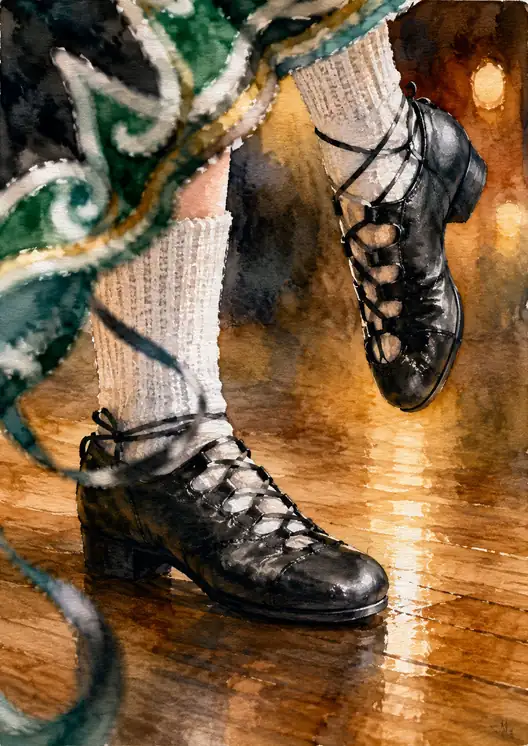 Heartbeat of the Emerald Step
Similar Artworks
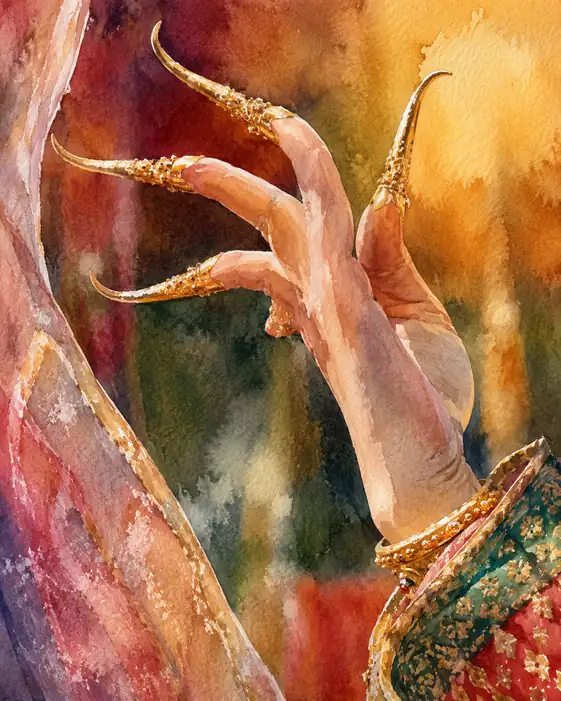 Golden Echoes of the Sacred Dance
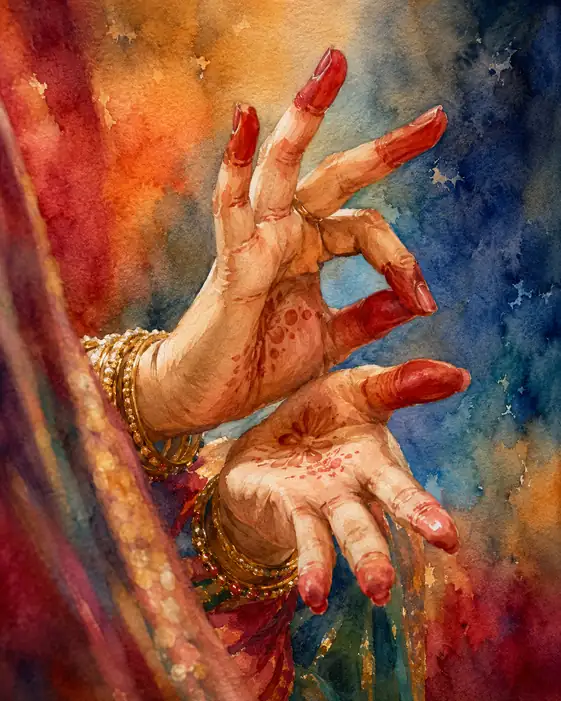 The Silent Prayer of Crimson Fingers
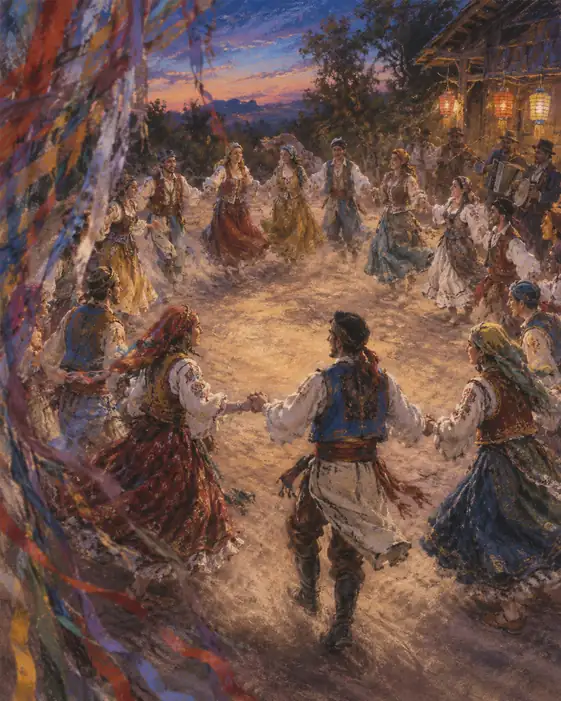 The Golden Echo of Dusk
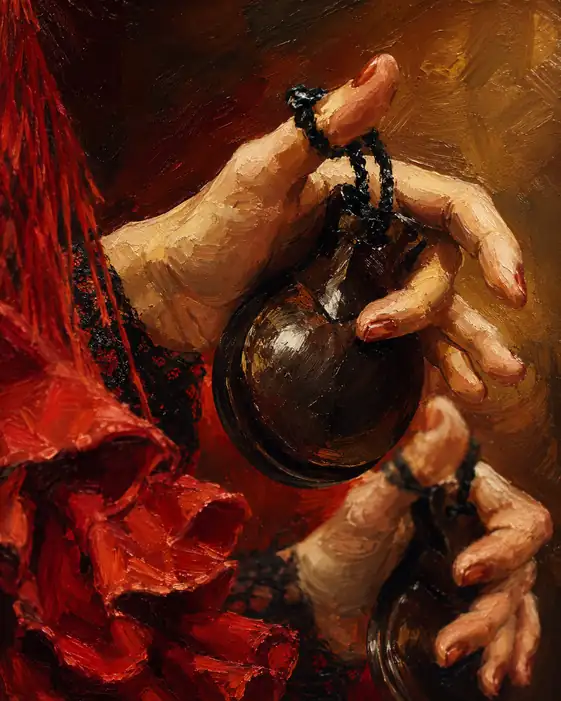 The Pulse of Crimson Pride
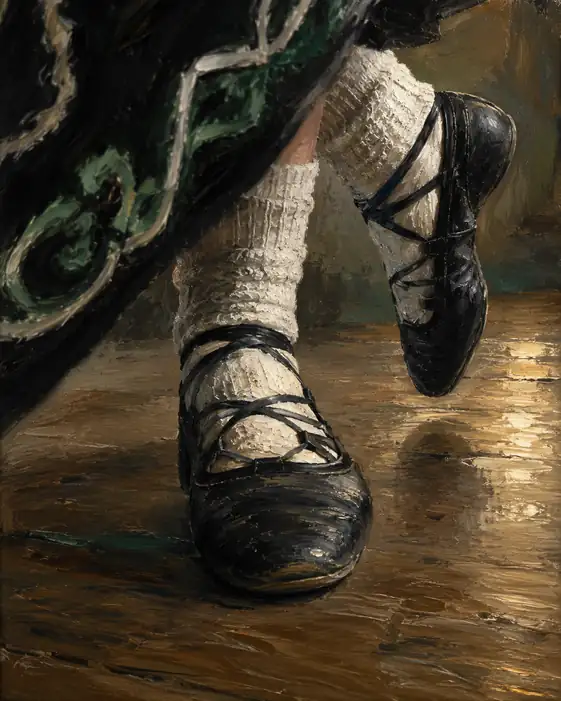 Heartbeat of the Soil: The Silent Jig
 The Elegance of Tradition
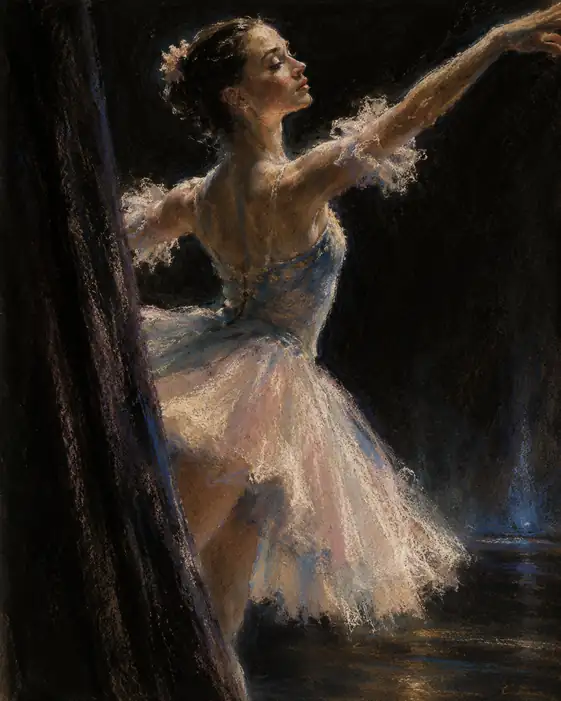 Into the Realm of Light
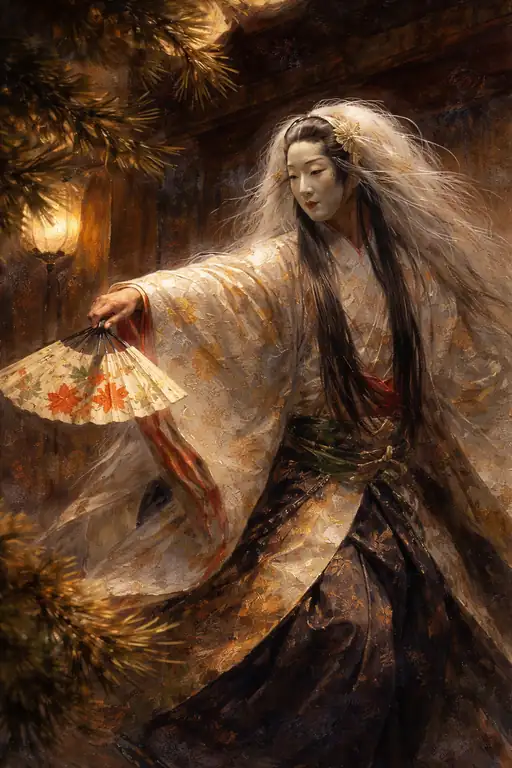 The Mystical Gaze of the Ghostly Figure
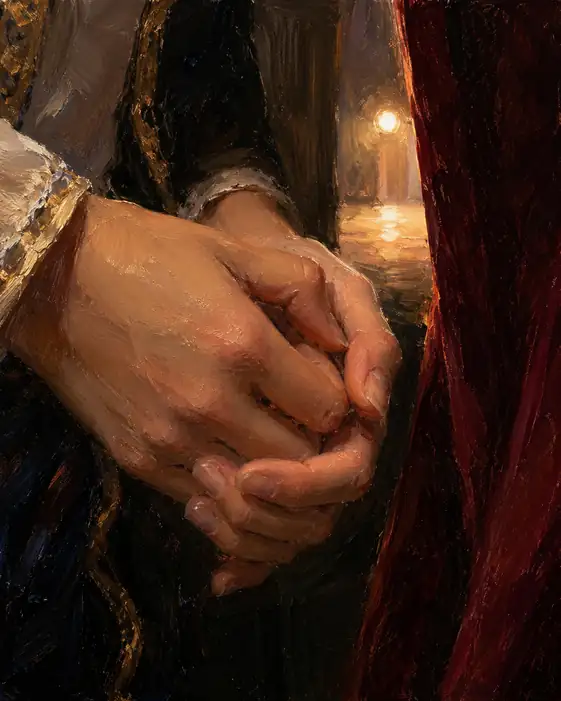 Fragile Vows Beneath the Gold
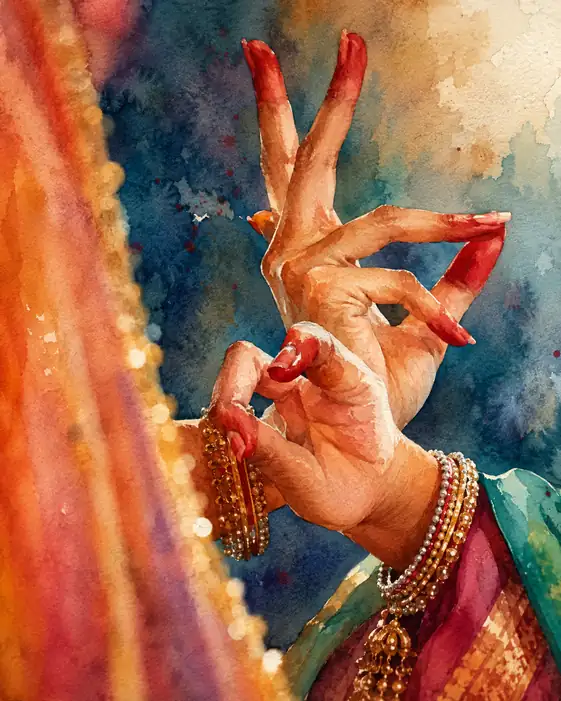 Silent Soul Language