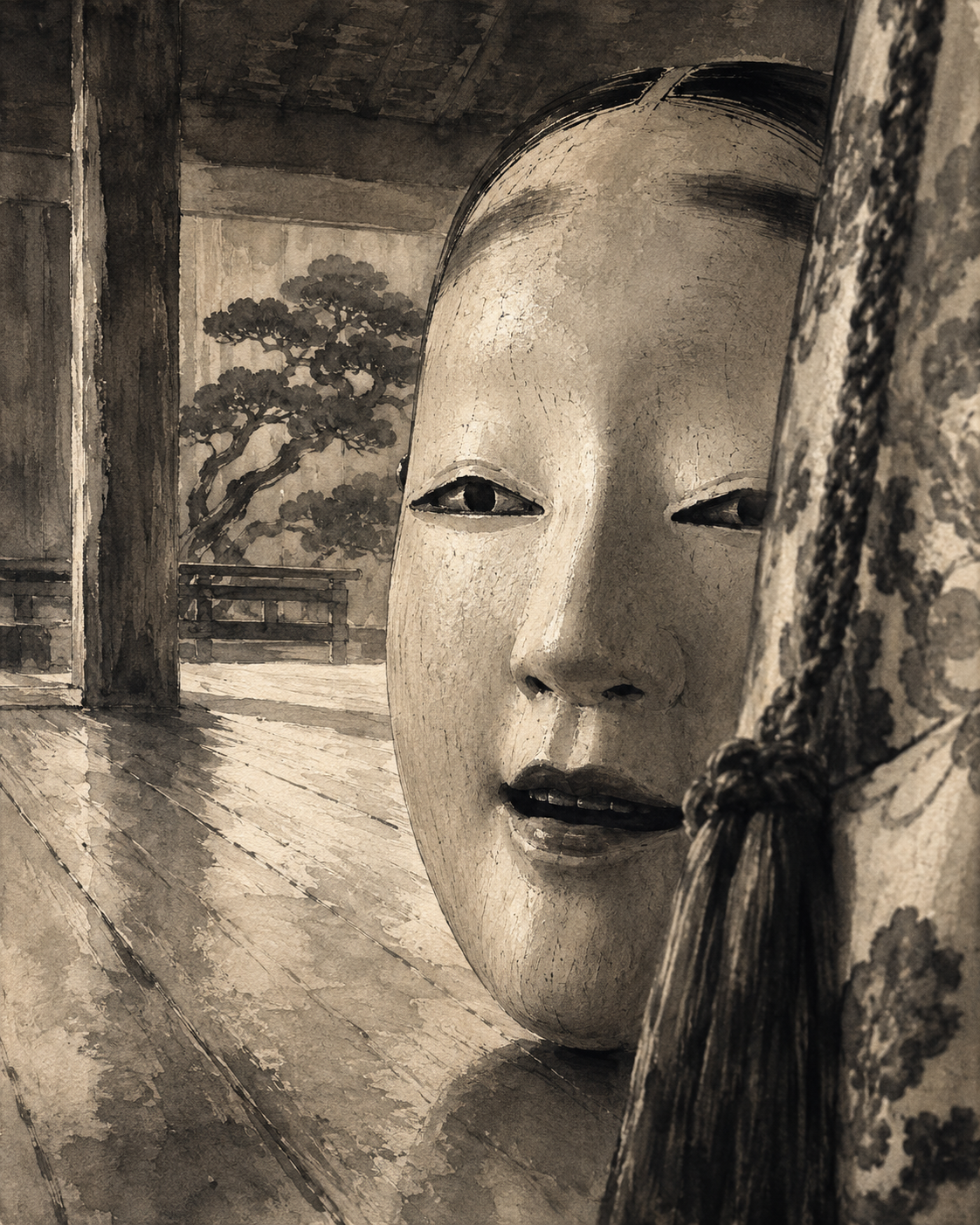
Beyond the Veil of Silence
Critique
1. Introduction This watercolor painting features a traditional Noh stage and a massive mask as its primary subjects. The mysterious space evokes the profound worldview of classical Japanese performing arts, though its creation history remains unconfirmed. The bold contrast between the serene stage and the close-up mask instantly captivates the viewer. 2. Description A gigantic female Noh mask occupies the right side of the canvas with extremely realistic textures. In the foreground, a curtain with floral patterns and a heavy tassel are depicted. The background reveals a polished wooden floor, a sturdy pillar, and a pine tree painted on the backboard in monochrome sepia. 3. Analysis The composition relies on a bold contrast between the extreme close-up mask and the distant stage. Diagonal lines of the floorboards create a strong perspective, guiding the viewer's gaze deep into the space. Gentle light from the left accentuates the smooth mask against the rough wooden textures. 4. Interpretation and Evaluation This work symbolically represents the spiritual silence and tension inherent in traditional performing arts. The creative decision to capture a classical subject from a modern close-up perspective is highly commendable. Additionally, the exceptional draftsmanship and sophisticated harmony of light and shadow elevate the piece to a universal realm of beauty. 5. Conclusion The piece captures the dramatic emotional shifts hidden within the stylized, static art of Noh. Initially resembling a simple realistic depiction, the mask eventually reveals a profound emotional depth upon closer observation. This static face serves as a quiet mirror of the viewer's own mind, representing a masterpiece of classical aesthetics.
 The Golden Echo of a Dream
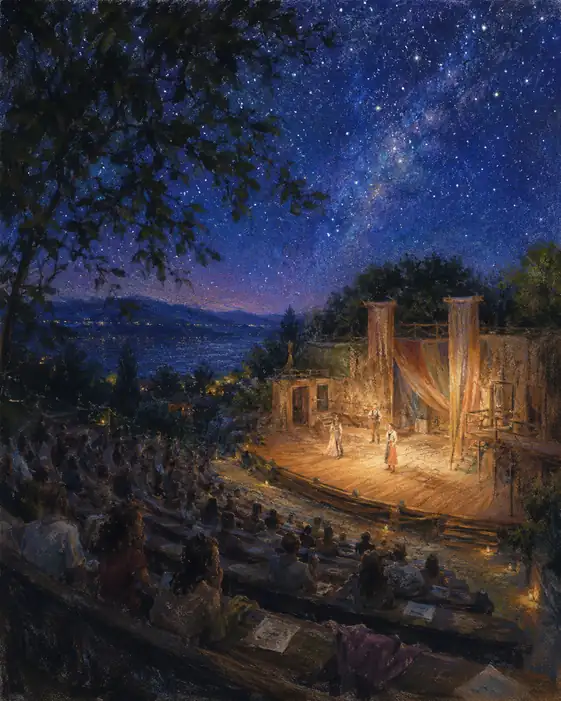 Under the Infinite Spotlight
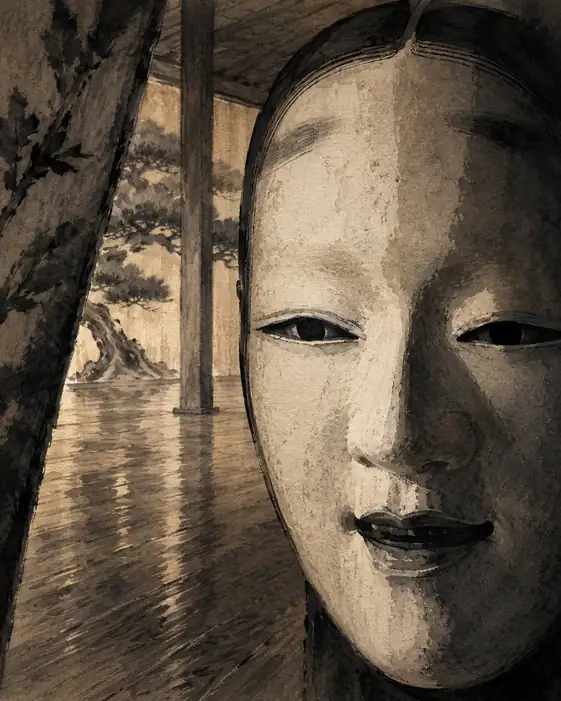 Eternity in a Fixed Smile
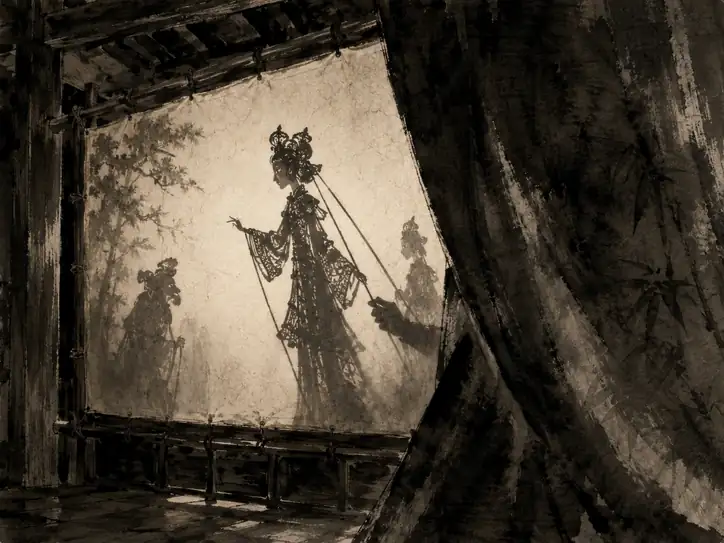 The Golden Screen: Shadows from a Forgotten Era
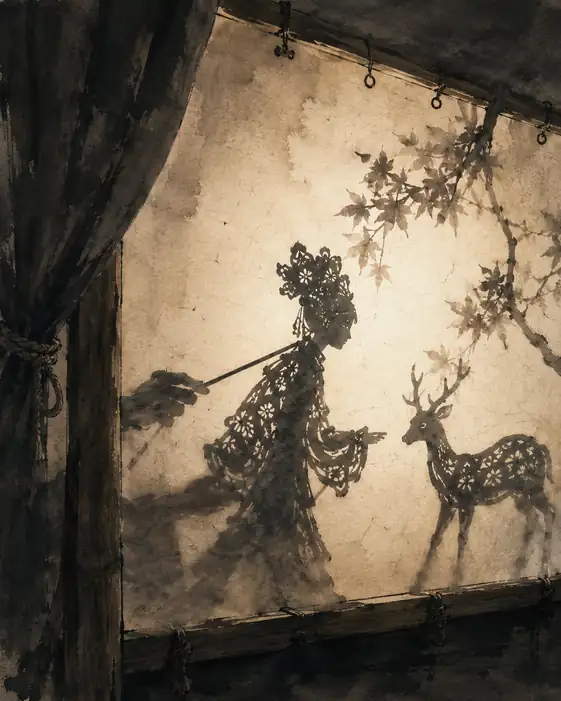 Shadows of Antiquity
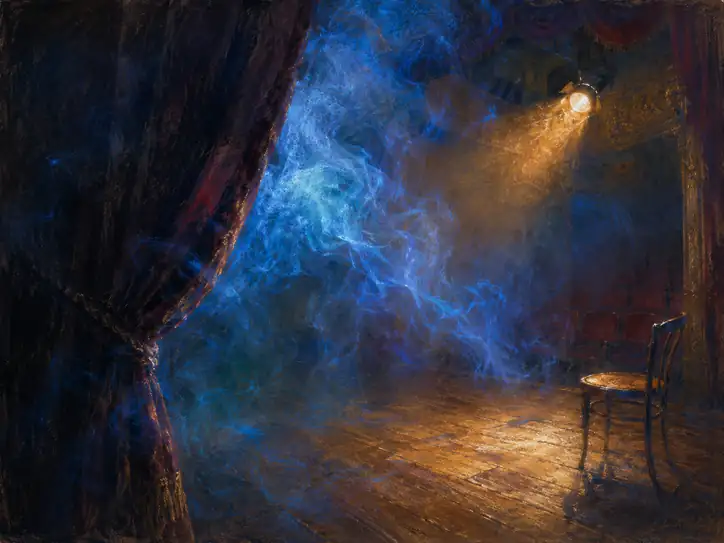 Encore of Silence
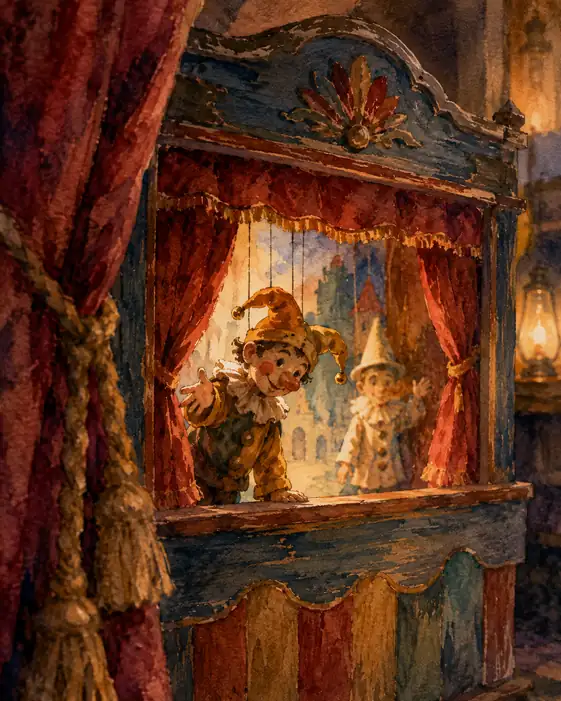 Whispers of the Antique Stage: The Joyful Jester
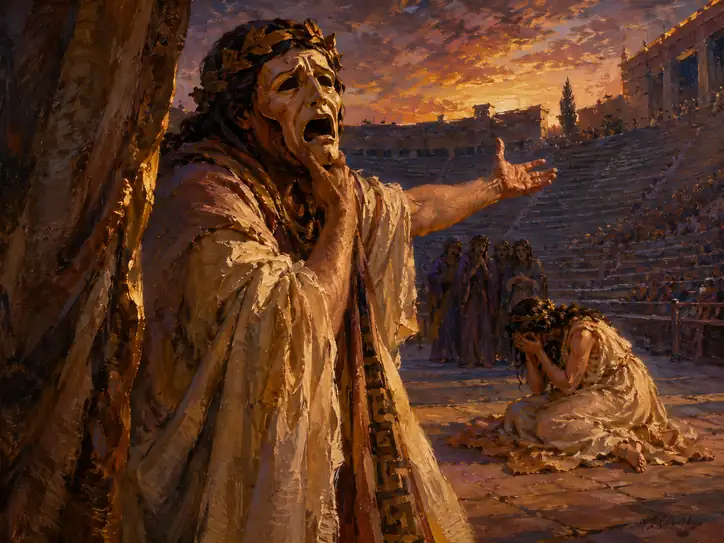 Agony of the Fallen Star
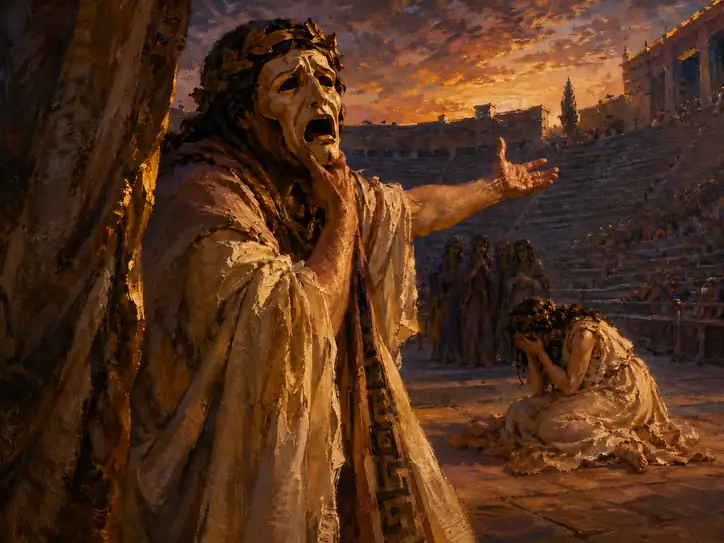 Fate's Mournful Song
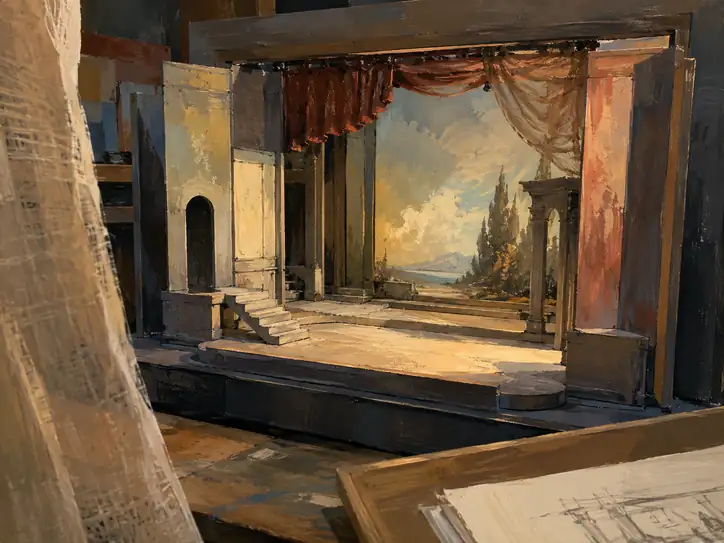 Blueprint of a Silent Stage
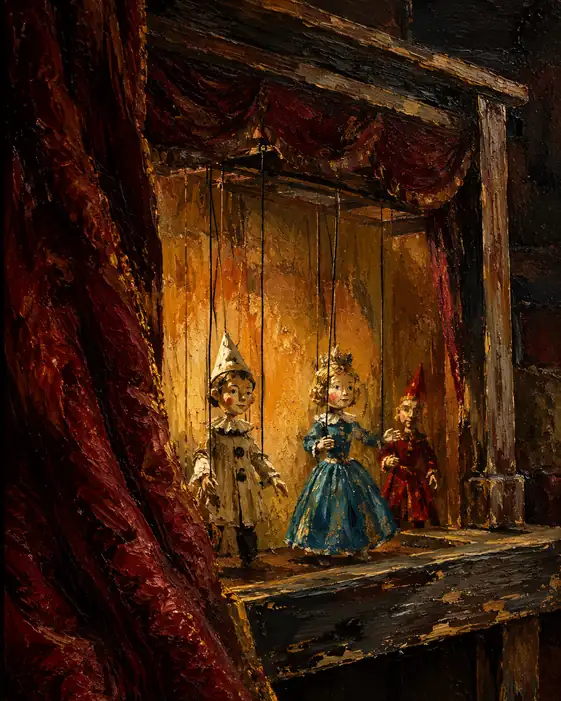 Silent Stage, Whispering Strings
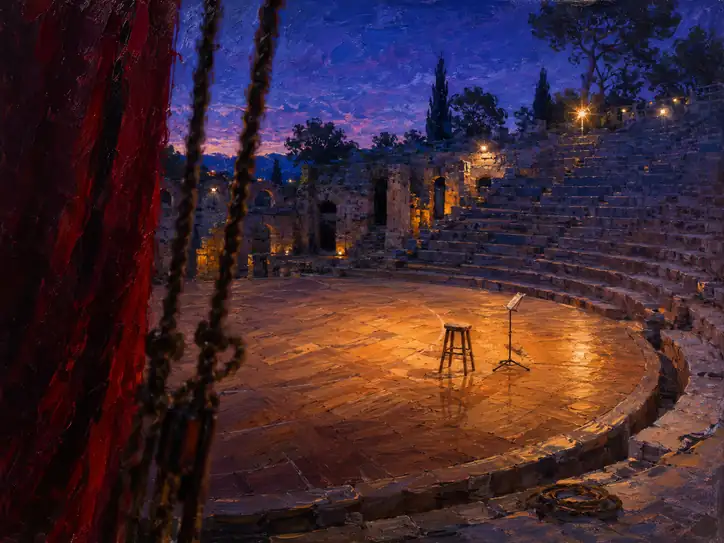 Resonance of Silence