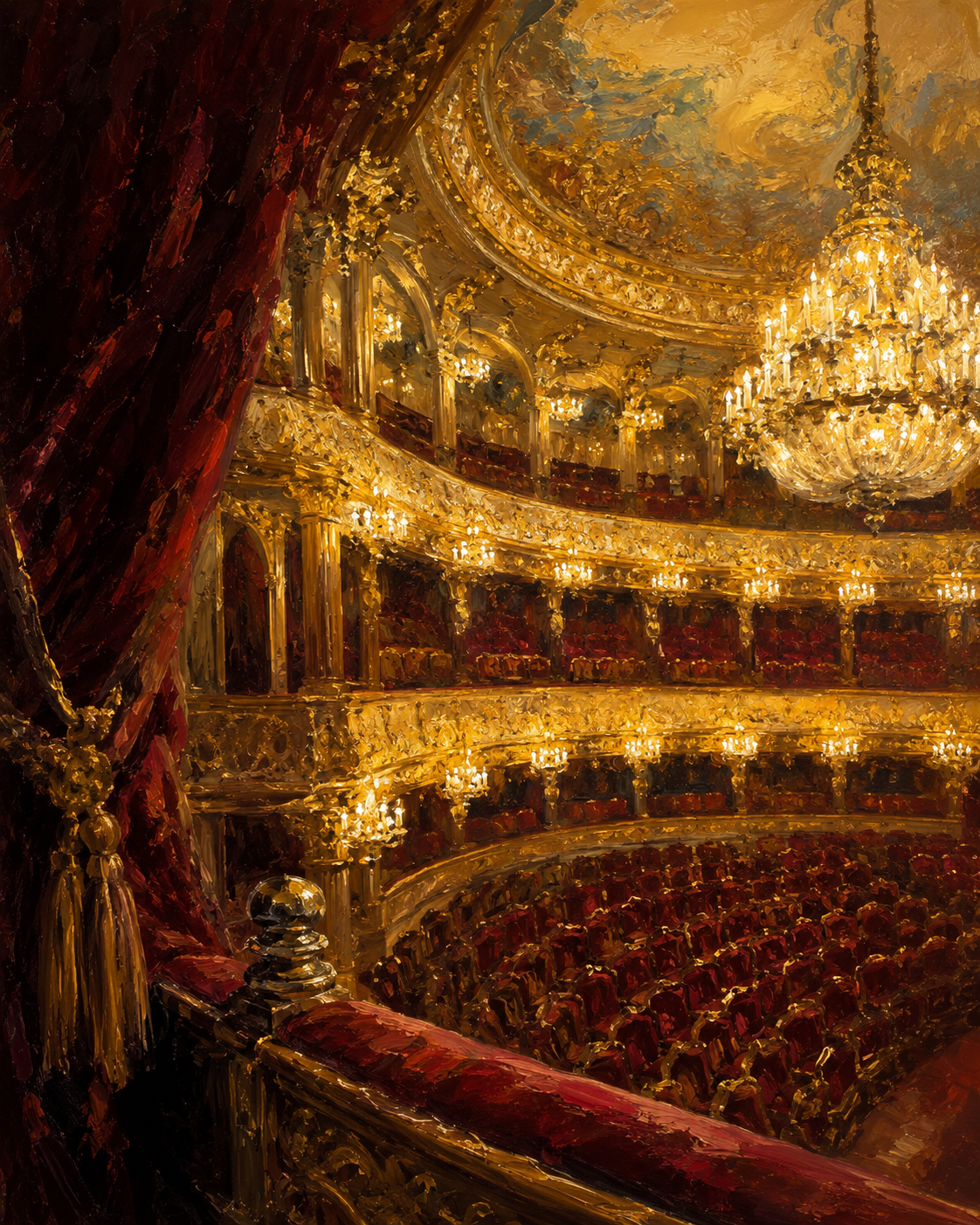
Gilded Symphony of the Silent Hall
Critique
1. Introduction This spectacular painting captures the grandeur of a lavish opera house, viewed from the perspective of a private balcony. The scene masterfully evokes the excitement of a theater night, dominated by golden balconies and a glowing chandelier. It serves as an outstanding demonstration of how complex architecture and interior light can be translated into a dynamic composition. 2. Description In the left foreground, a heavy, dark red velvet curtain with a golden tassel frames the view. Beyond it, three tiers of curved box seats adorned with gold reliefs sweep across the space. Hanging in the upper right, a colossal crystal chandelier radiates brilliant light, illuminating the rows of plush crimson seats arranged on the floor below. 3. Analysis The color palette is dominated by a majestic combination of shimmering gold and rich crimson, which unifies the theatrical space. The composition uses the curves of the balconies to lead the eye toward the light source on the right. Notably, thick impasto brushwork gives the gilded decorations a physical presence, catching and reflecting light dynamically. 4. Interpretation and Evaluation This work transcends architectural rendering, capturing the spirit of performance through light and color. The luxury of the space is elevated into a dreamlike realm where reality and theatrical fantasy blend. Technically, the artist’s bold use of texture to represent the shimmering light is highly successful, showing an integration of grandeur and expressive style. 5. Conclusion A deeper gaze at this scene reveals a meticulous structural design and tactile richness of paint. The painting successfully preserves the timeless allure of the opera house, making the viewer feel like a privileged spectator. This masterpiece remains a brilliant tribute to historic theaters, showcasing a fusion of history and powerful technique.
 A Glimpse of Grandeur from the Velvet Box
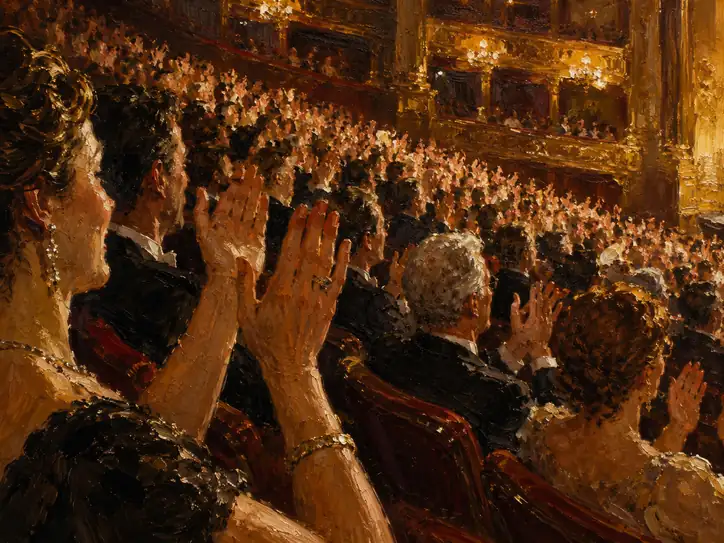 The Echo of a Thousand Hearts
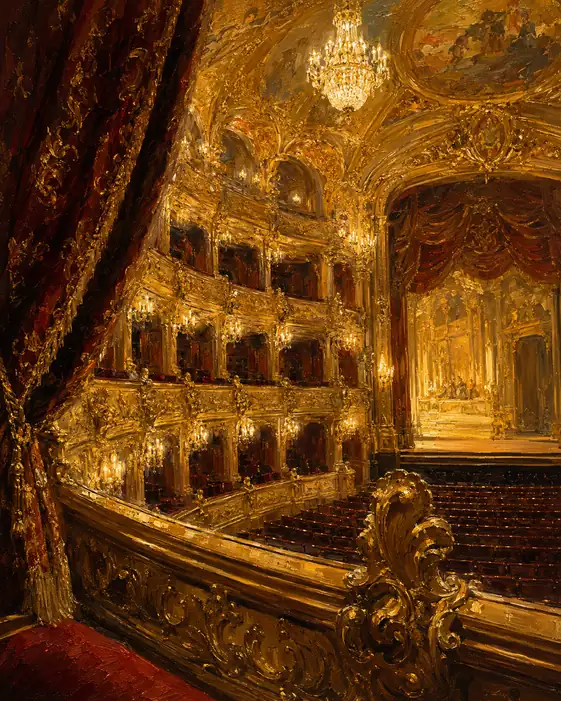 The Resonant Light of Opera
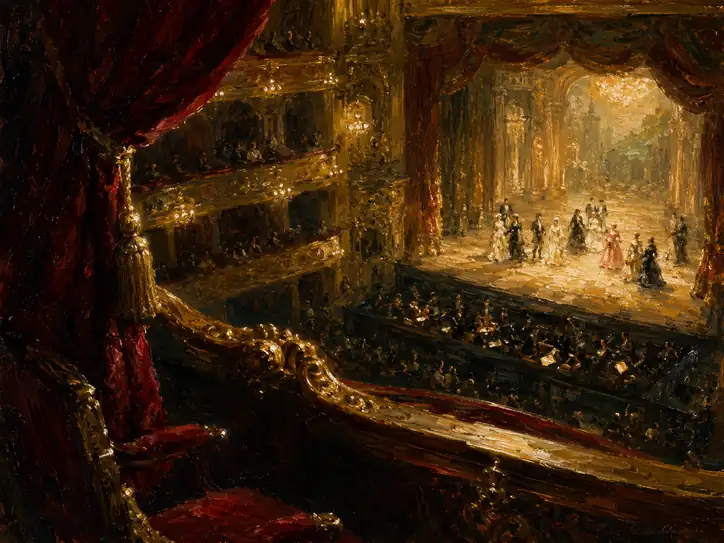 From the Velvet Shadows
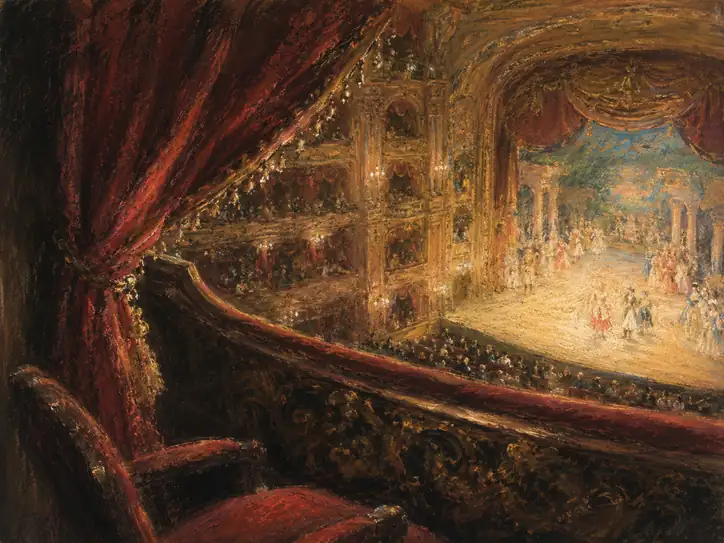 View from the Loge
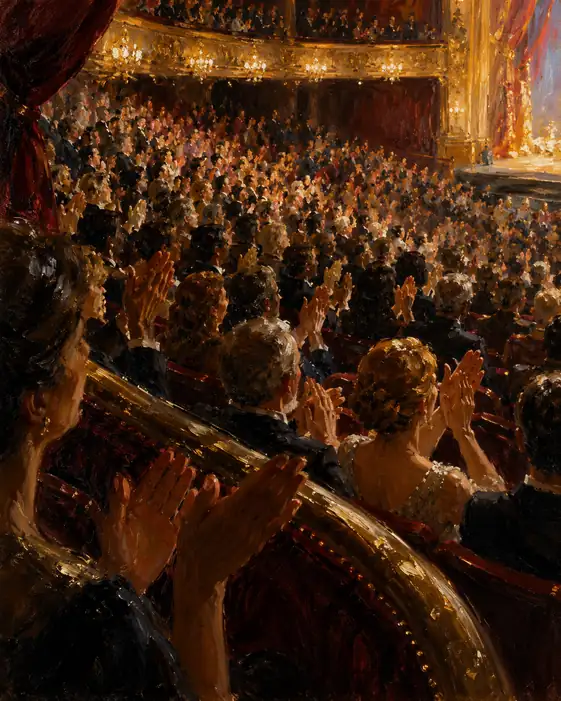 Thunderous Applause
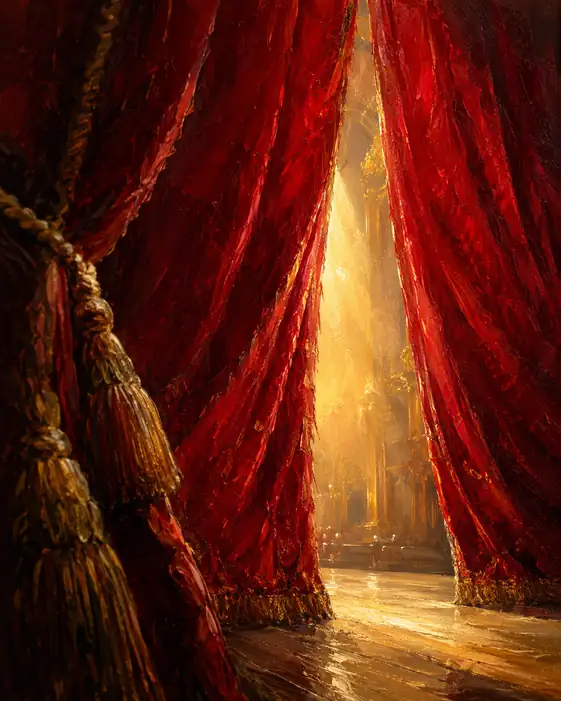 The Threshold of the Golden Dream
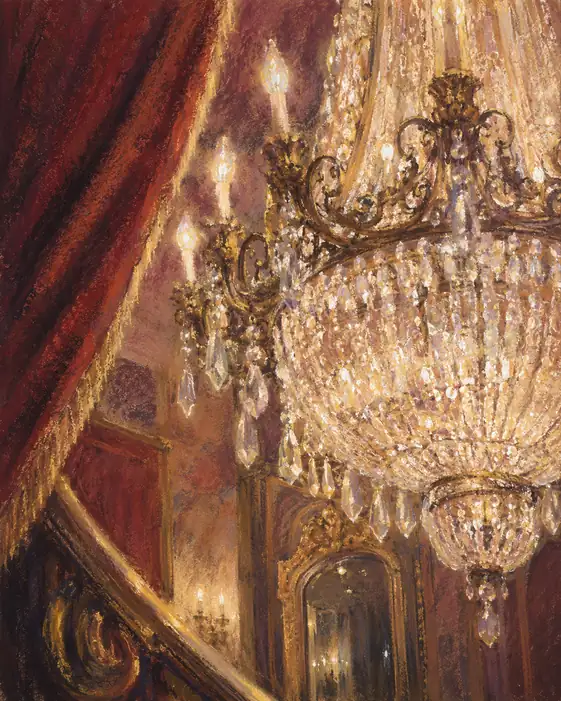 The Radiant Salon
 Threshold of the Dream
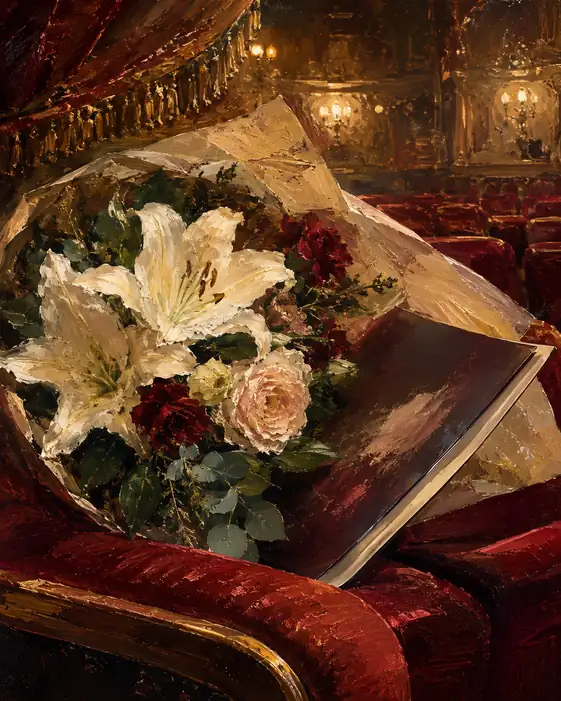 The Silent Ovation of White Lilies
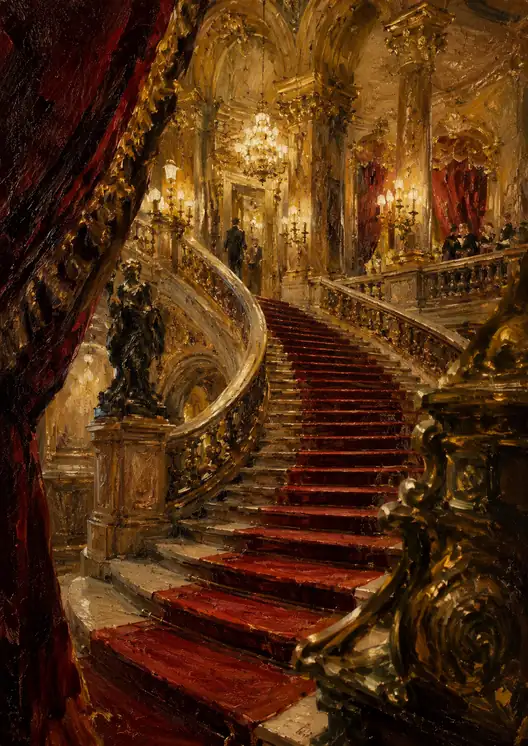 The Grand Ascent