The Cradle of Flight
Critique
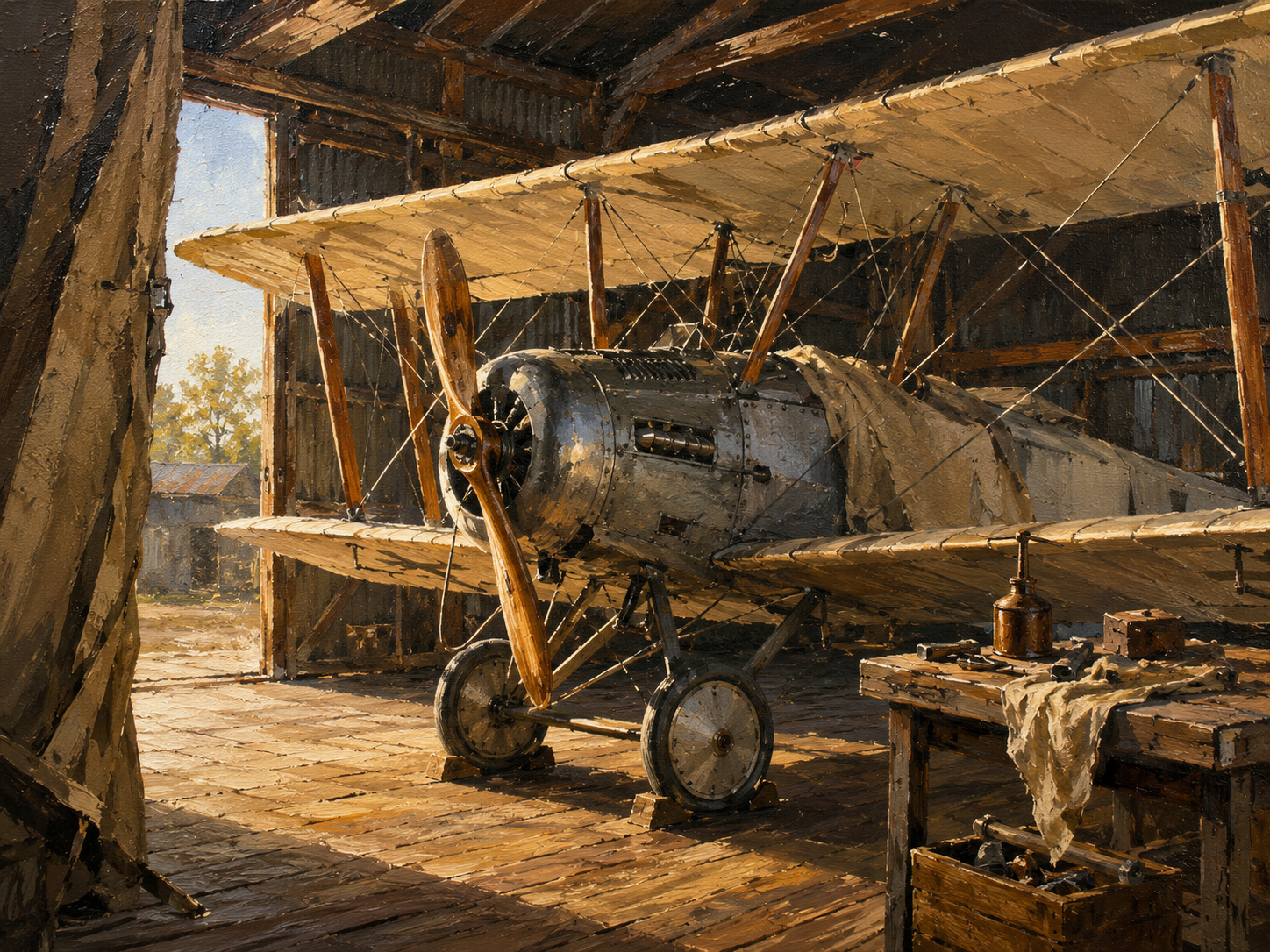
1. Introduction This artwork is an oil painting depicting a vintage biplane quietly stored inside an old wooden hangar. The artist and the creation year of the piece are unknown, and the official title cannot be confirmed. However, the exquisite impasto technique applied across the canvas demonstrates a highly powerful artistic expression. 2. Description The primary subject is the biplane featuring two large main wings, a wooden propeller, and a metallic fuselage. A beige protective cover is draped over the cockpit area, emphasizing the quiet state of the hangar. In the foreground on the right, a wooden workbench is scattered with oil cans, tools, and cloths. 3. Analysis Regarding color composition, the painting is dominated by the warm brown tones of the wood, contrasted with the silver machine. Dramatic yellow light streaming from the open doorway on the left creates a strong contrast of light and shadow. This lighting effectively highlights the textures of the shiny propeller and metallic body. 4. Interpretation and Evaluation Beyond a simple depiction of machinery, this work symbolically conveys a deep respect for past technology and early aviation romance. Through superb descriptive power and light direction, the silence inside the hangar is masterfully harmonized with the open landscape outside. The deep composition, featuring a foreground workbench, shows remarkable originality. 5. Conclusion At first glance, the painting seems a simple study of an airplane, but close observation reveals a rich narrative of light. These high-quality details evoke a lasting nostalgia that deeply captivates the viewer. In conclusion, the artistic value of this valuable work, celebrating early flight history, is highly esteemed.
 Golden Glide: The Silent Wings of Dusk
 Propeller of a Thousand Dreams
 Wings Resting in the Twilight
 Biplane Ballet: Roaming the Orange Sky
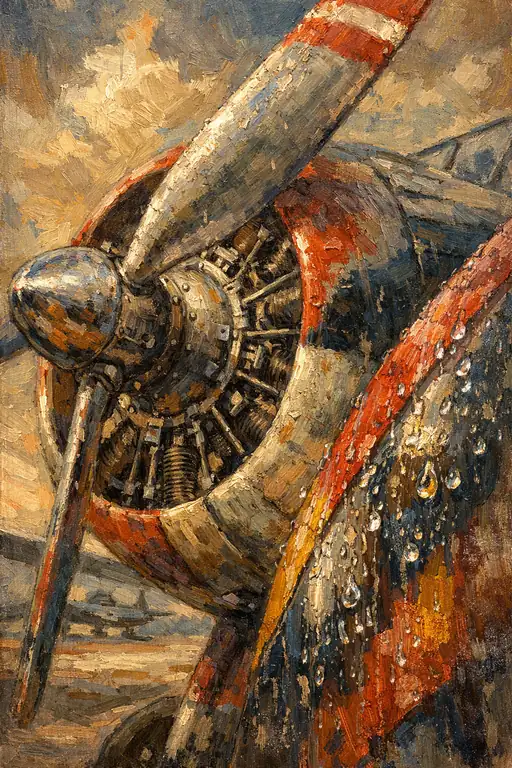 Tears on Steel Wings
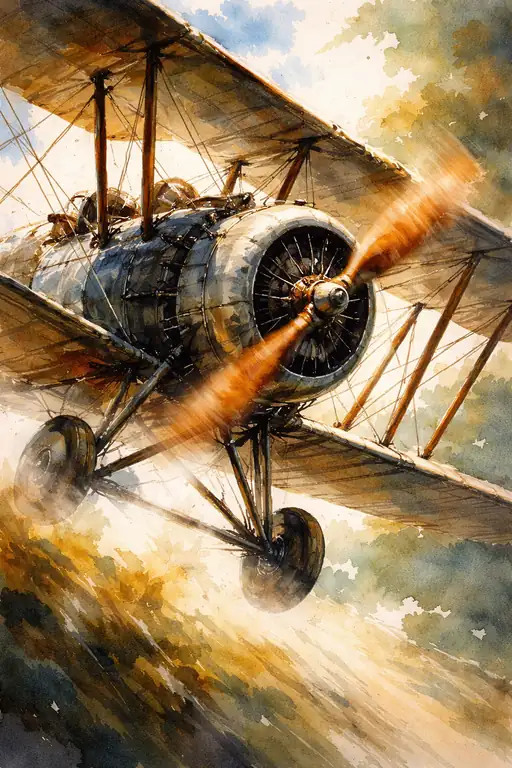 Leap of the Golden Wings
 Dust on the Leather
 What the Eyes Once Saw
 Resting After a Thousand Miles
 Whispers of a Thousand Miles
 Where the Winds Call Home