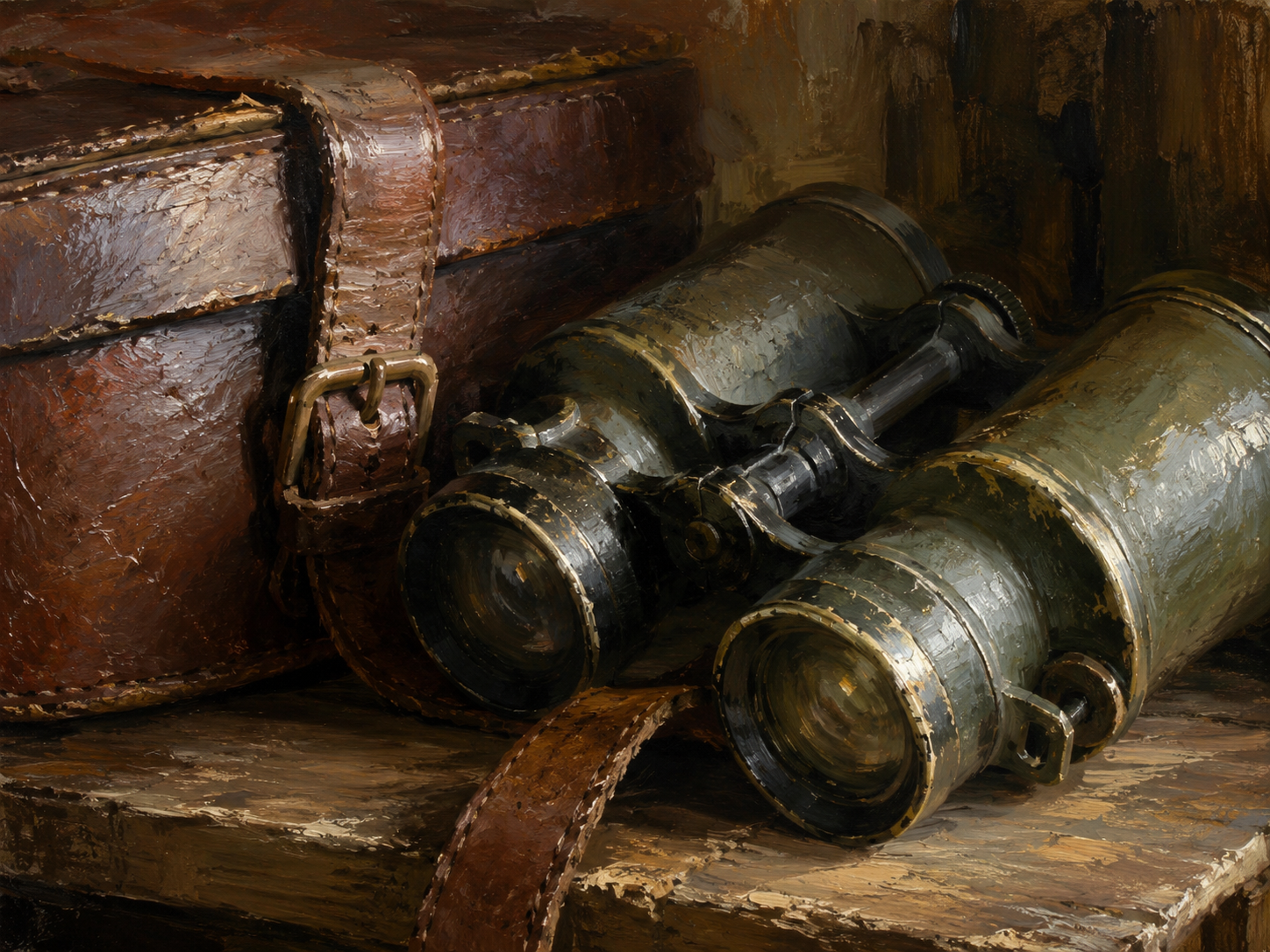
What the Eyes Once Saw
Critique
1. Introduction This still life painting presents weathered vintage binoculars and a leather case, rendered in a classical realist style. Resting on a rustic table, these objects speak of past journeys and historical memory. The dramatic light and shadow evoke nostalgia and a deep respect for the passage of time. 2. Description On the right, olive-green metal binoculars show significant wear, with paint chipped away to expose the bare metal underneath. To the left, a sturdy brown leather case with a brass buckle stands upright, its worn strap extending forward. These items rest on a wooden surface under warm light illuminating their rich textures. 3. Analysis The composition achieves balance by placing the vertical case against the horizontal binoculars along a diagonal axis. A prominent impasto technique creates a textured surface, capturing the cracked leather, oxidized metal, and coarse wood. The color palette is restricted to earthy tones of brown, green, and gold. 4. Interpretation and Evaluation As an instrument for observation, the binoculars symbolize vision, suggesting they once guided someone's eyes through historical events. The weathering on both materials represents not merely decay, but the visible accumulation of experiences. By immortalizing these details, the artwork elevates simple objects into symbols of enduring history. 5. Conclusion At first glance, the painting seems to be a simple study of old equipment. However, close observation of the scratches and textures reveals the profound gravity of time embedded in each object. Ultimately, this masterpiece successfully fuses material realism with historical sentiment, leaving a quiet, lasting impression.
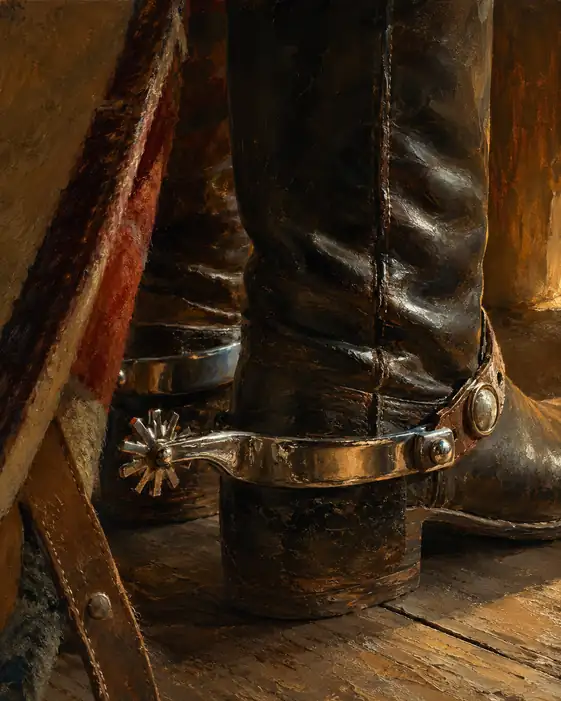 The Weight of the Journey
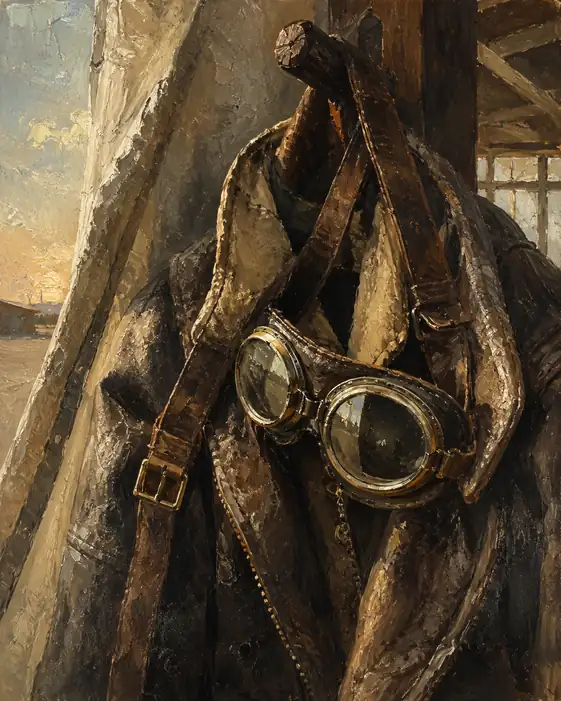 The Pilot's Evening Dream
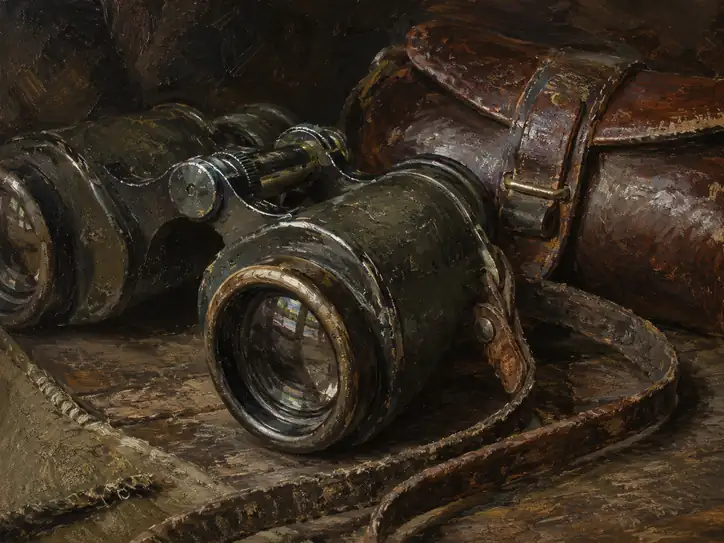 Echoes of Ancient Journeys
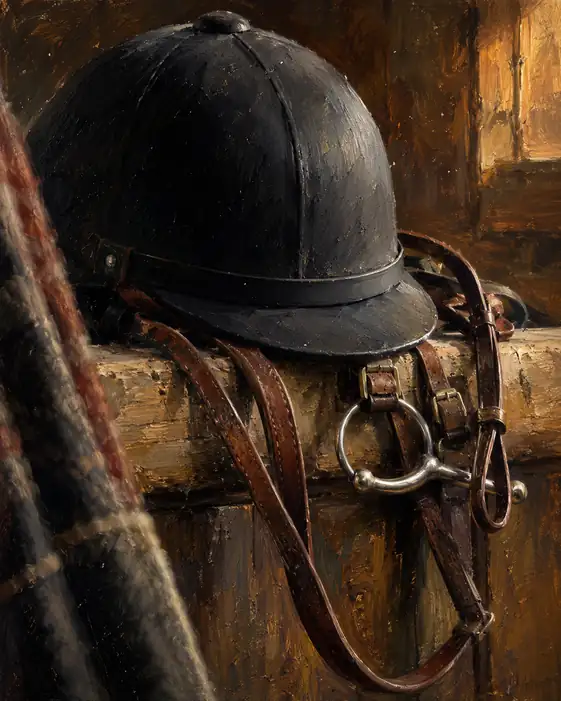 Echoes of the Saddle
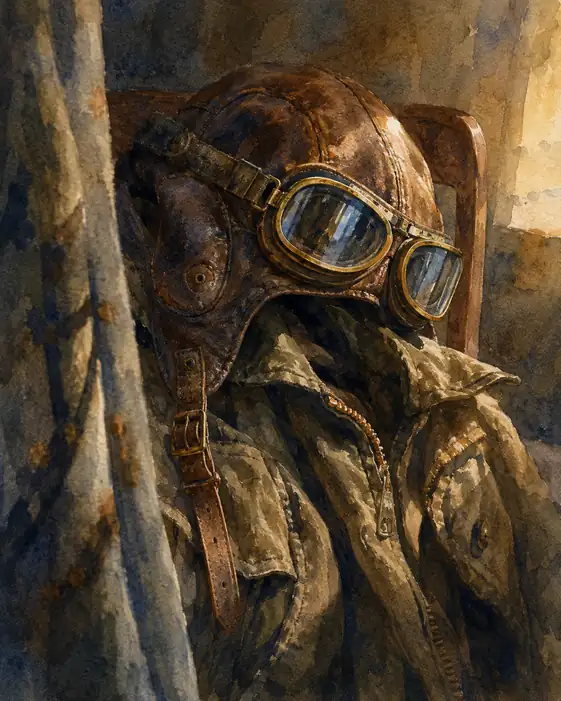 Dream of the Eternal Skies
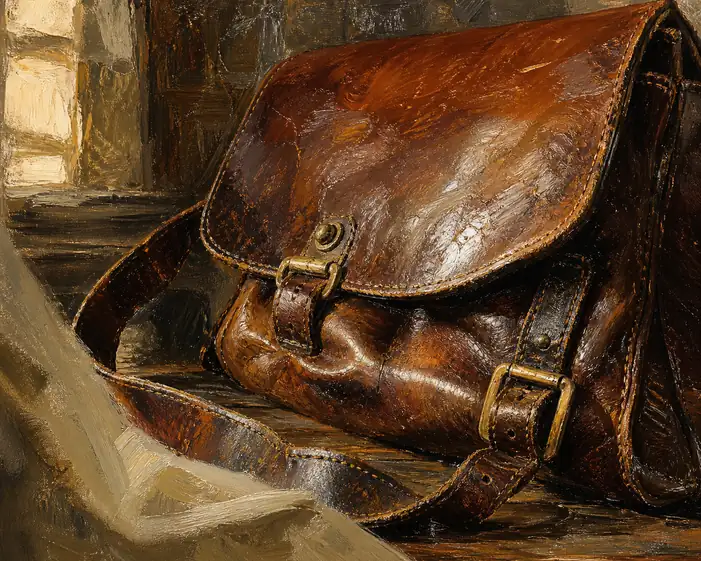 A Vessel of Time and Travel
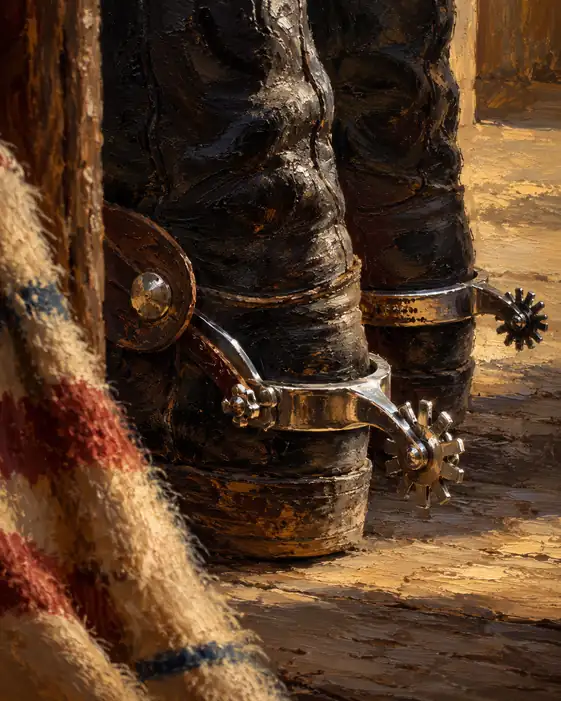 Dust on the Leather
 The Sentinel of Secrets
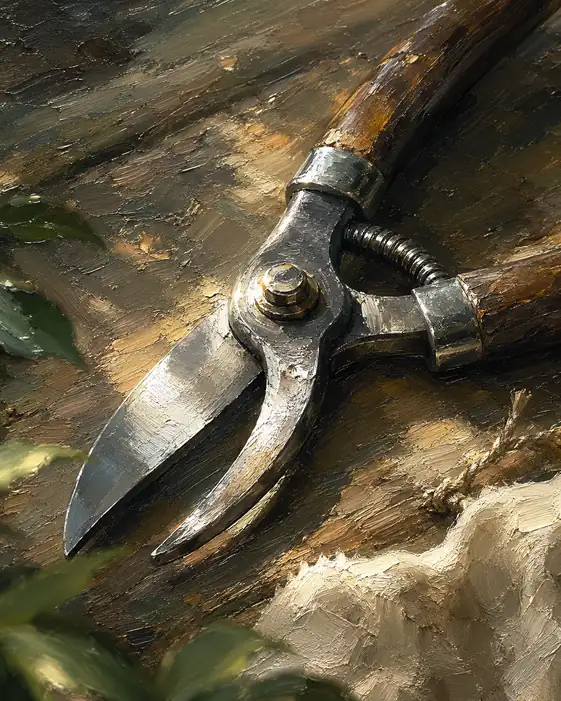 Legacy of the Soil
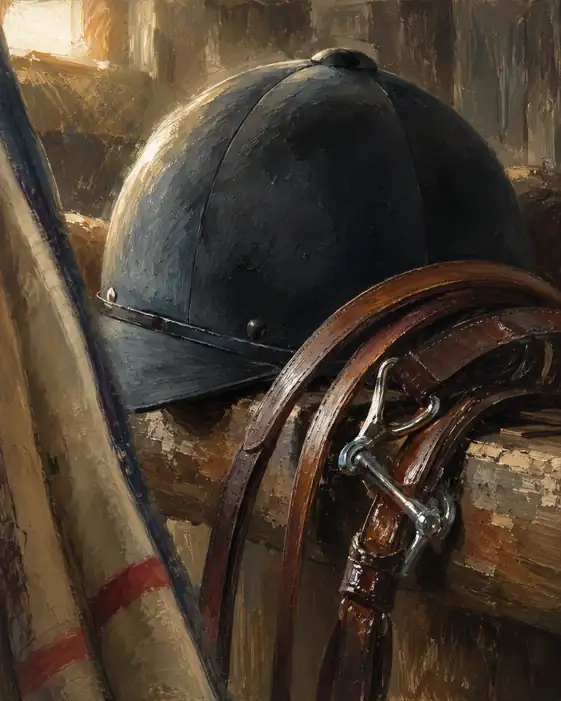 Memories of the Gallop