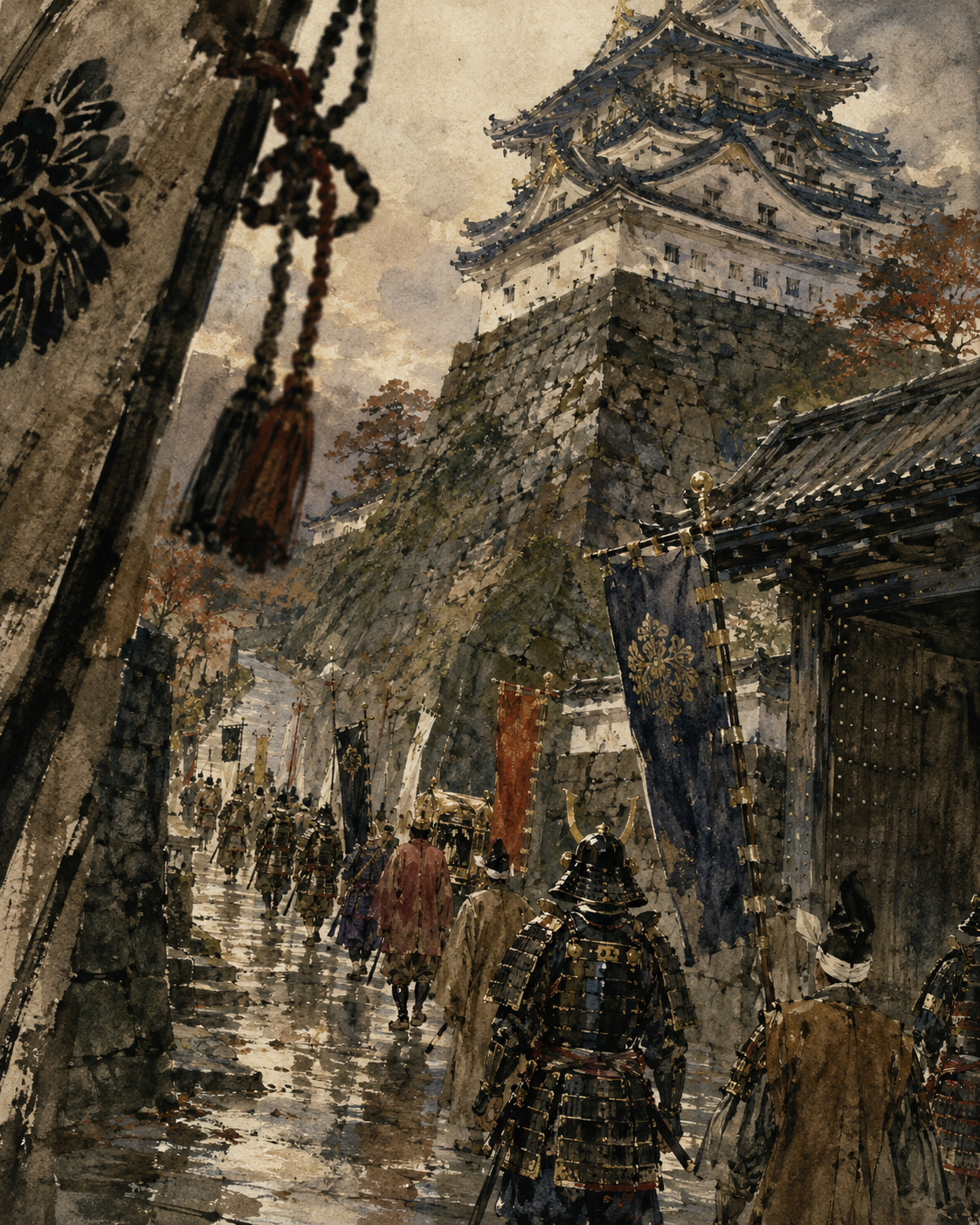
The Path of Eternal Resolve
Critique
1. Introduction This dramatic historical landscape features a towering Japanese castle built upon steep stone walls and a procession of samurai marching below. The exact name of the depicted castle or the historical facts regarding this military force's destination are unknown. Nevertheless, the sense of urgency and overwhelming scale possess a deep power that draws viewers in. 2. Description In the upper right, multiple tiers of a white castle keep rise majestically above steep, moss-covered stone walls. Along the wet slope, a procession of armored warriors and foot soldiers marches into the distance. In the foreground, the back of a samurai in black armor and a blue banner with gold patterns are visible. 3. Analysis In terms of color, the monochrome gradations of the stone walls are accented by the dark blue banners and orange autumn foliage. The steep angle looking up at the castle and the line of the marching procession creates dynamic height and depth. The reflection on the wet ground enhances the realistic atmosphere. 4. Interpretation and Evaluation This work goes beyond a mere visual record, symbolically capturing the determination of the warriors and the flow of history. The meticulous rendering of the stone walls and the dramatic perspective harmonize the dignity of the castle with the tension of the march. It successfully fuses traditional Japanese beauty with Western aerial perspective. 5. Conclusion While it initially appears to be a scene from a traditional war scroll, closer observation reveals the sound of footsteps and wind. The relentless realism in depicting details immortalizes this historical moment. Cutting out a scene from a grand epic, this highly accomplished painting encourages deep contemplation and stands as a monumental achievement.
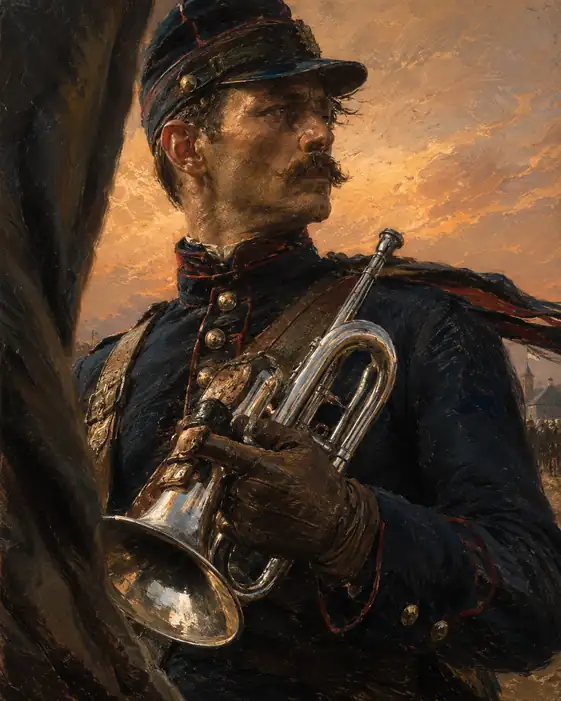 Silent Echoes in the Twilight
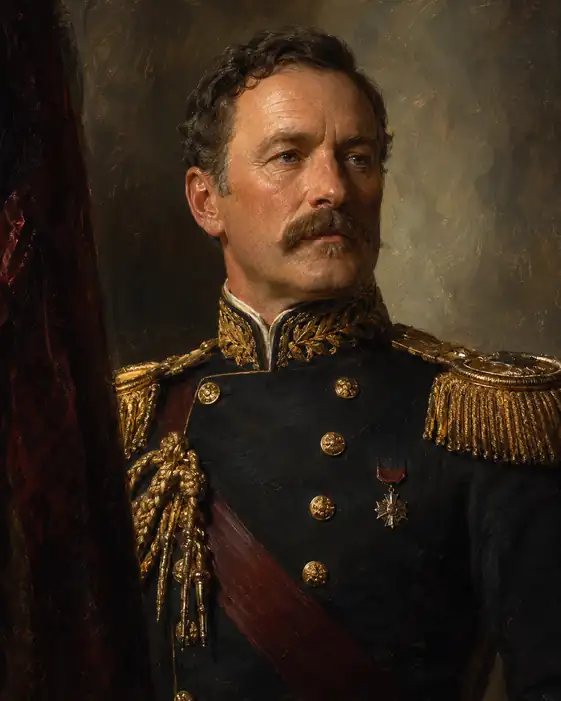 Guardian of Honor: The Weight of the Unspoken Oath
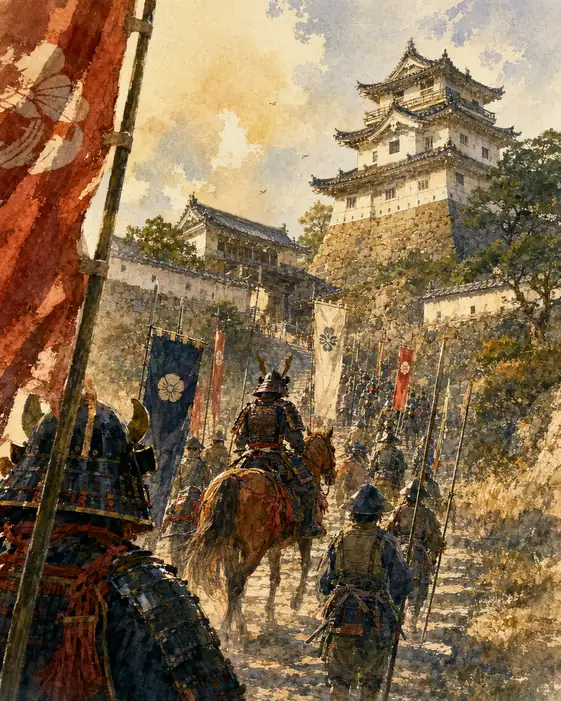 Eternal Ascent: Pursuing the Golden Light
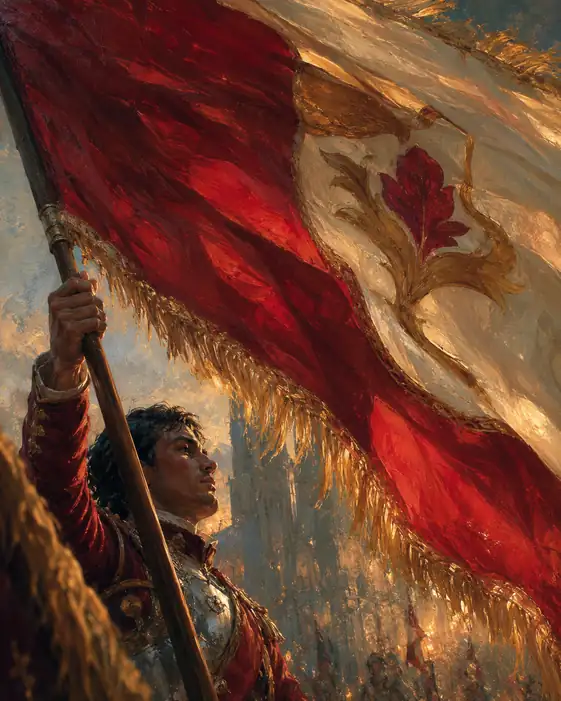 Standard of a New Era
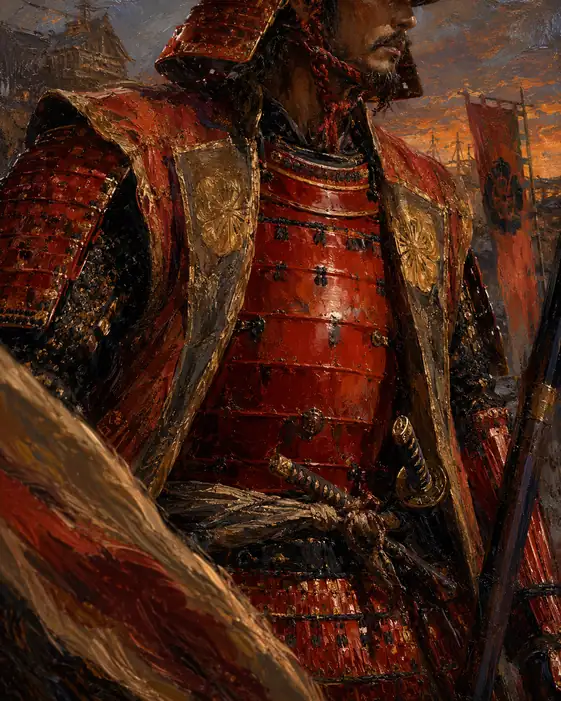 The Last Sunset of the Vermilion General
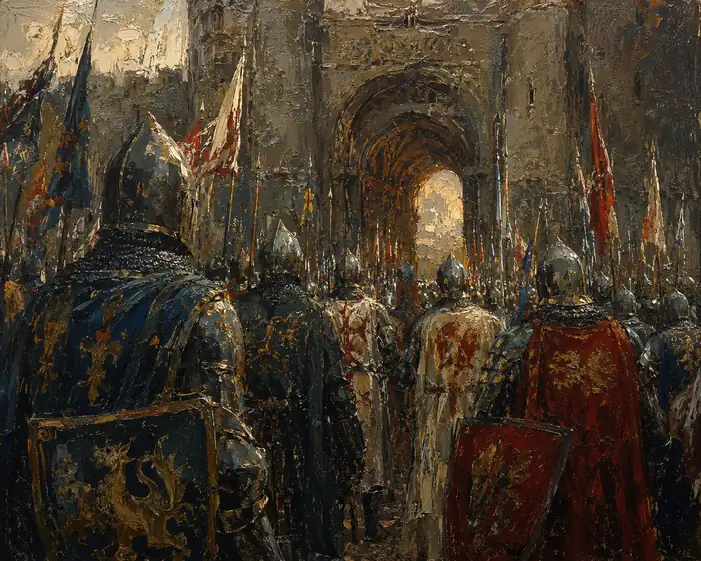 Toward the Unseen Glory
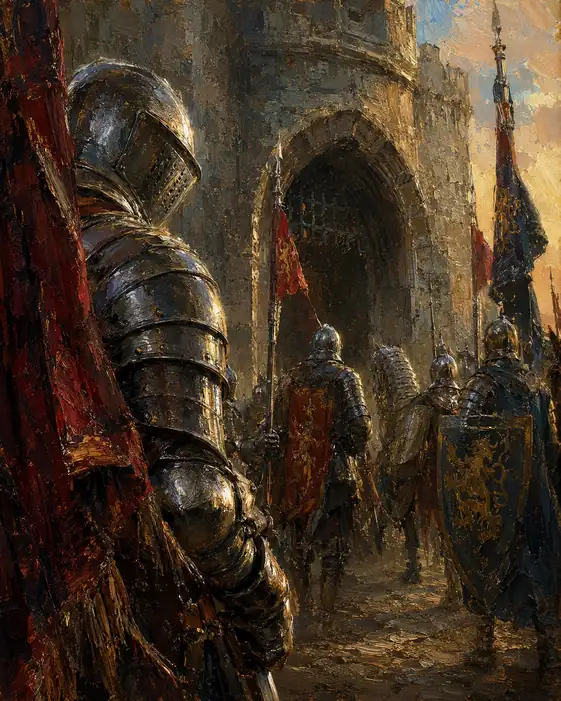 Shadows of the Citadel
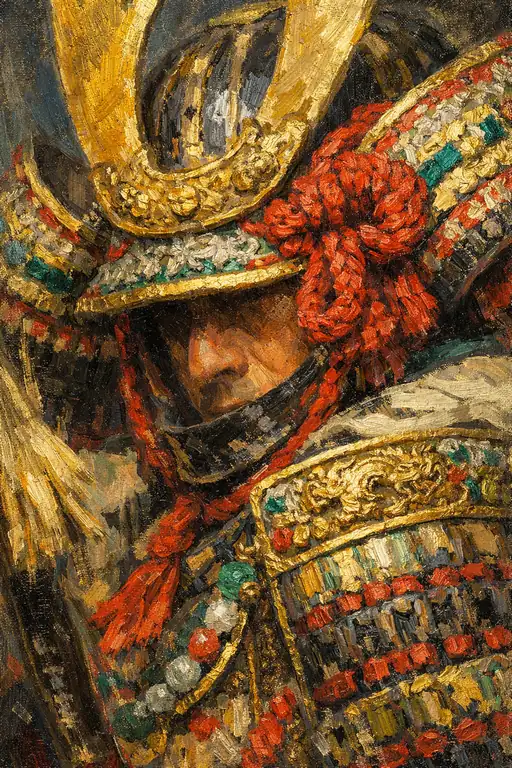 The Golden Resolve of the Warrior
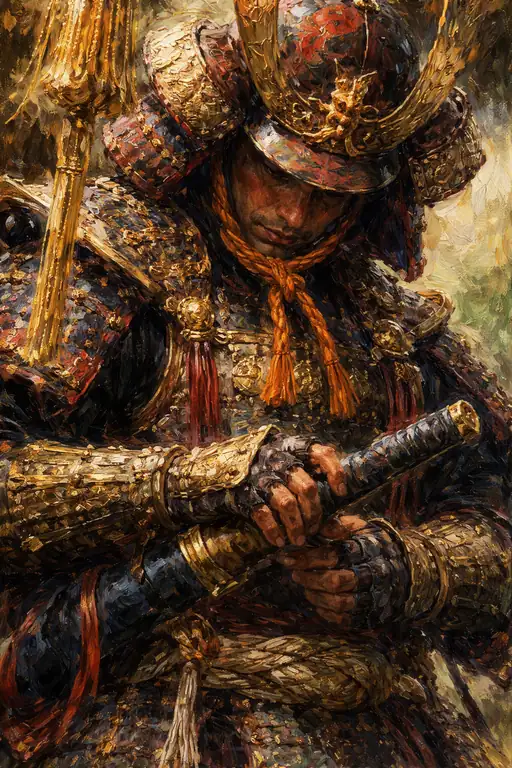 Golden Armor Shimmering in Silent Thought
 Gaze of the Golden Guardian
 Echoes of Gold and Crimson
 The Silent Aim