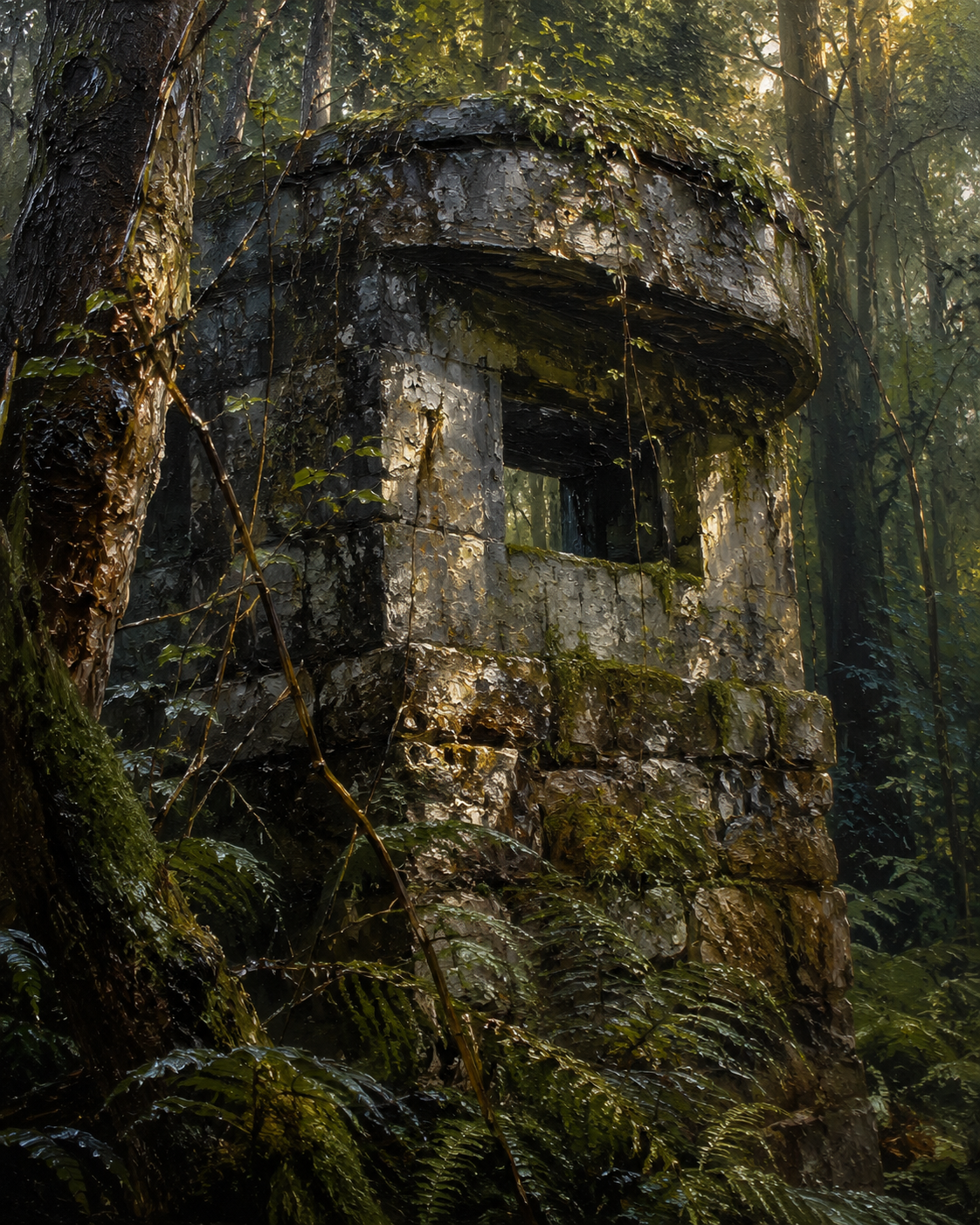
The Forest Reclaims the Watch
Critique
1. Introduction The exact title and creation date of the painting discussed here remain unidentified. However, the image of an abandoned stone watchtower standing in a dense forest instantly evokes a sense of mystery. The composition hints at themes of forgotten history and the slow passage of time, inviting audiences to contemplate nature's silent reclamation. 2. Description In the center, an ancient stone bunker covered with moss and ivy stands forgotten in the wilderness. The dark opening of its single window suggests an empty interior, while a moss-covered tree trunk frames the left foreground. Thick ferns grow abundantly at the base, and gentle sunlight filters through the forest canopy to illuminate the rugged stones. 3. Analysis The defining element of this landscape is the intense texture created by the heavy impasto technique. The thick application of paint effectively captures the rough bark of the trees and the weathered stones of the ruin. The palette relies on earthy greens and browns, creating a harmonious forest atmosphere filled with quiet depth. 4. Interpretation and Evaluation The stone tower engulfed by vegetation can be interpreted as a symbol of human impermanence and the power of nature. The soft sunlight filtering through the trees provides a contrast to the shadowy interior, suggesting hope amidst decay. Through its mastery of oil technique and light, the artwork elevates a simple ruin into a poetic sanctuary. 5. Conclusion While the initial impression highlights the solitude of the ruin, deeper looking reveals the vibrant life of the surrounding forest. The painting succeeds in engaging the viewer through its high technical execution and tranquil mood. Ultimately, this evocative work stands as a beautiful testament to the enduring relationship between humanity and nature.
Same Subcategory
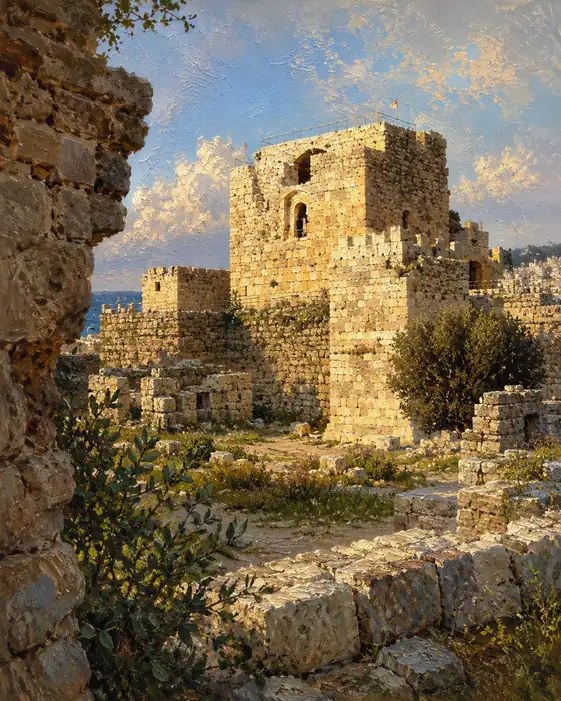 Where the Stone Remembers the Sea
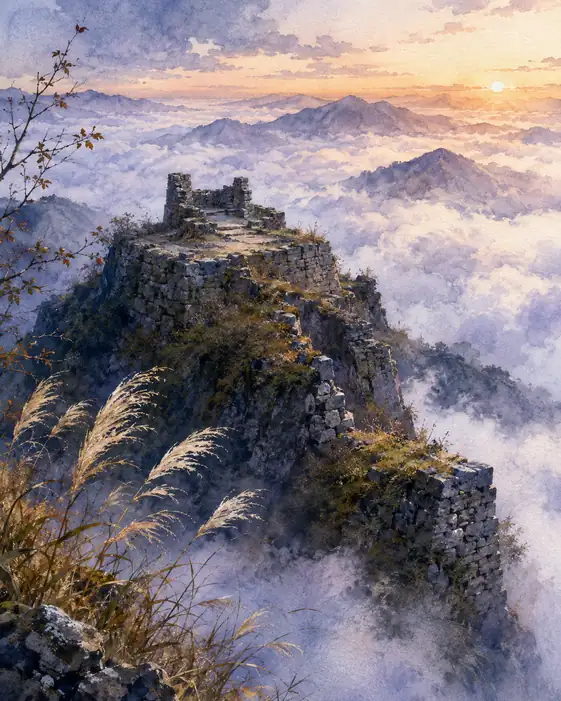 Where Time Rests Upon the Clouds
Similar Artworks
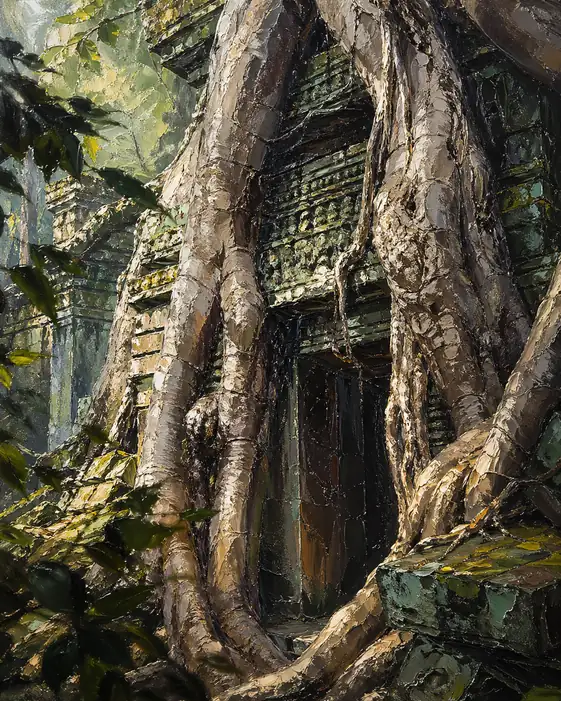 Eternal Embrace of the Jungle Root
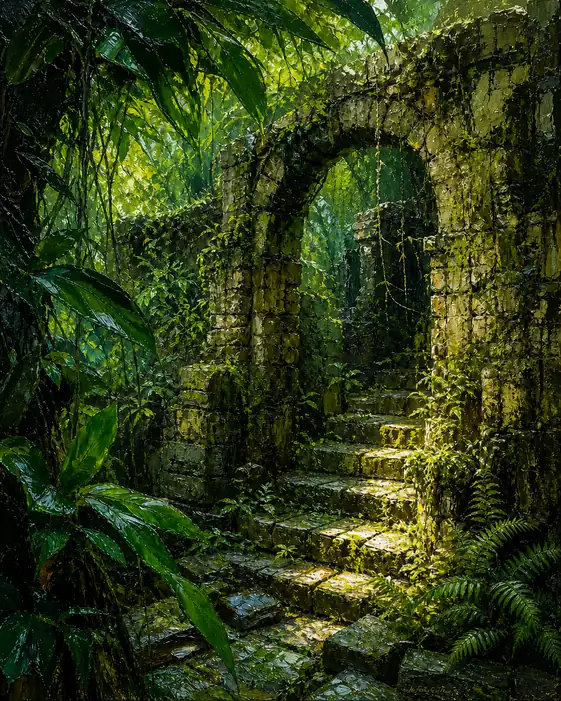 Whispers of an Overgrown Kingdom
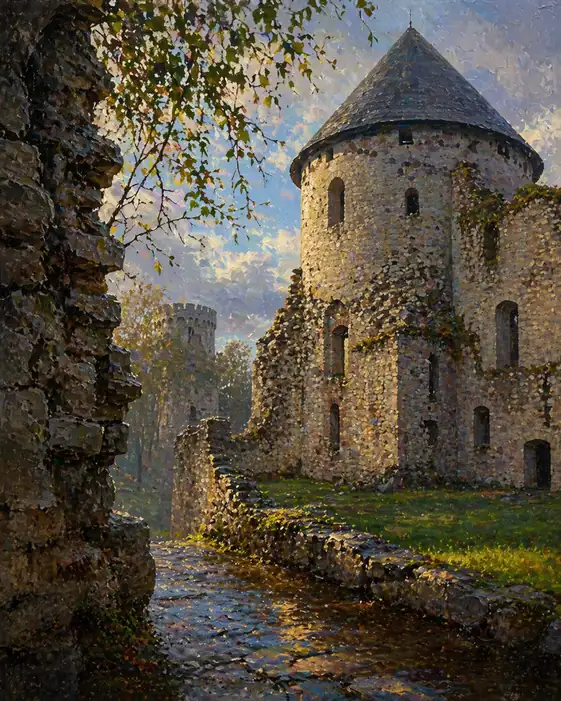 Autumn Light on Forgotten Stones
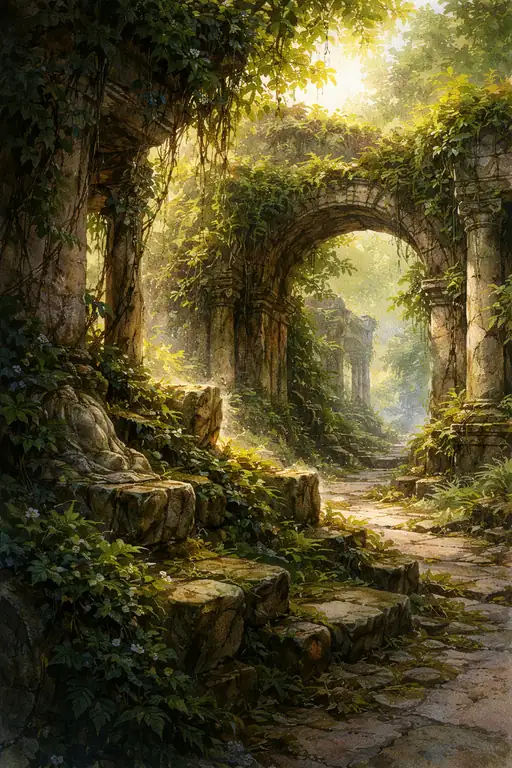 Nature's Reclaimed Archway
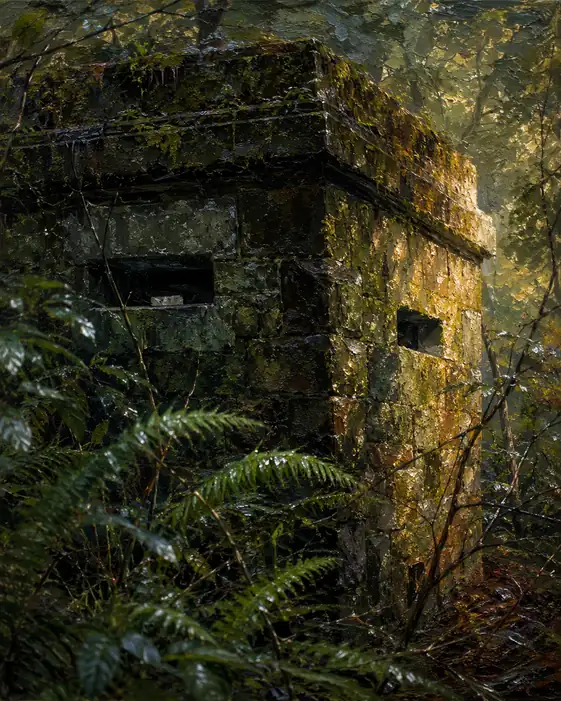 The Silent Breath of the Mossy Tower
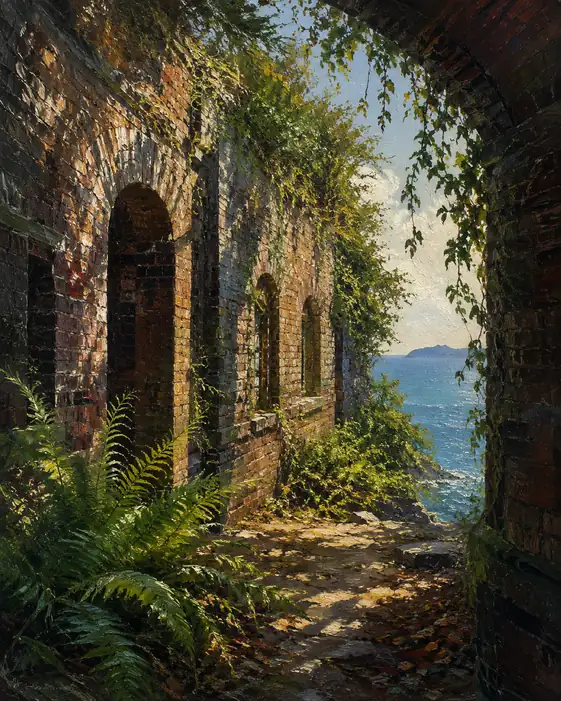 The Golden Echoes of the Ruins
 Sentinels of the Golden Hour
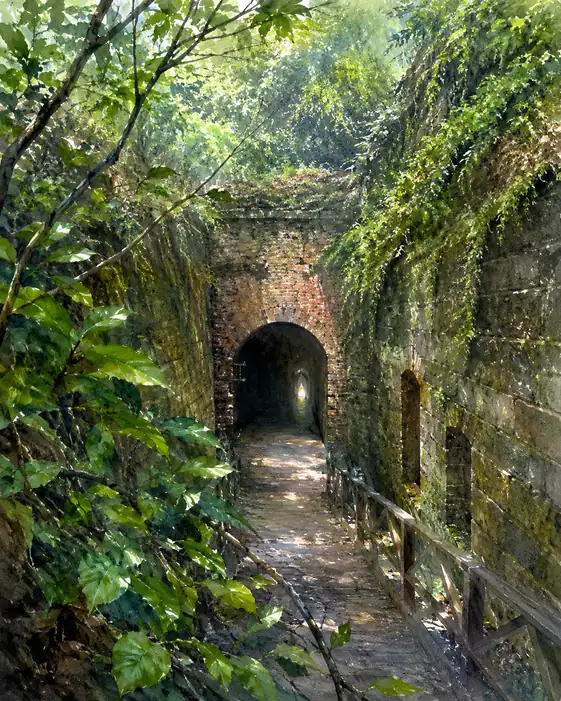 The Secret Path Through the Green Silence
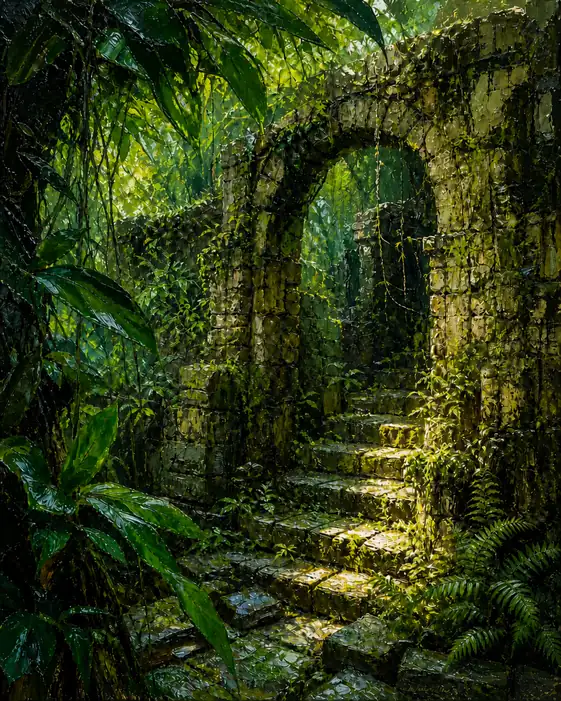 Threshold of the Emerald Silence
 Whispers of the Ancient Sentinel