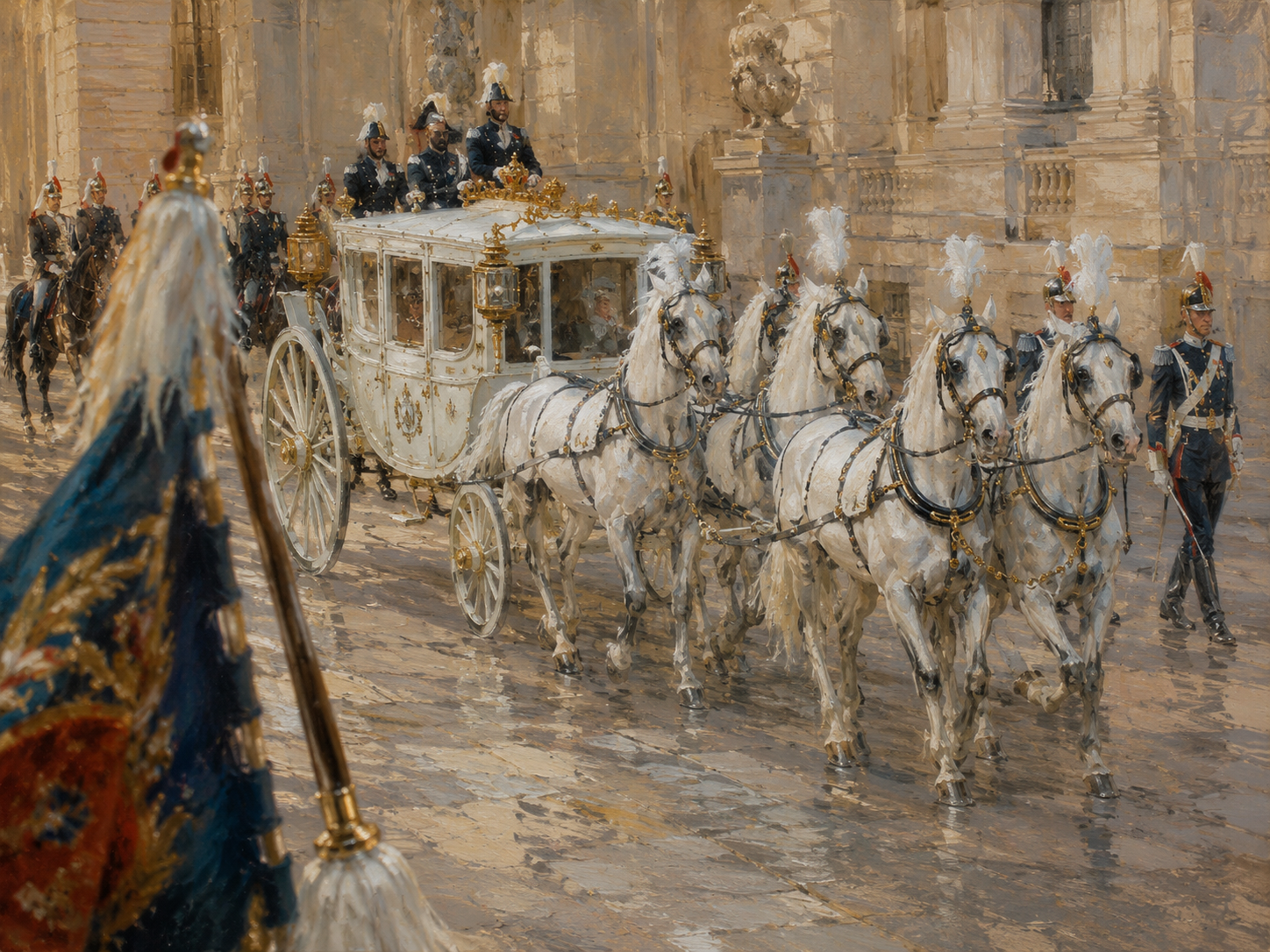
The Path of Eternal Splendor
Critique
1. Introduction This painting depicts a royal procession featuring a splendid white carriage moving past a magnificent palace. The carriage arranged diagonally across the canvas commands a powerful presence in the composition. The viewer is drawn into this grand ceremony as if witnessing the actual historical moment. This critique will examine its formal qualities and expressive intent. 2. Description In the left foreground, the tip of a blue military banner with a white tassel is prominently displayed. The center features an ornate carriage pulled by four elegant white horses. Several guards wearing ceremonial uniforms march alongside the royal vehicle. In the background, a grand Baroque palace stands tall, reflecting its light onto the wet stone street. 3. Analysis The diagonal composition stretching from the foreground banner to the palace creates a dynamic sense of depth. The color palette is dominated by the white horses and the warm cream tones of the architecture. Through thick impasto strokes, the glinting gold decorations and the wet pavement are realistically portrayed. This attention to texture gives the scene a lively rhythm. 4. Interpretation and Evaluation The painting embodies the concepts of royal authority and traditional order. The reflections on the wet stones function as a visual device to preserve the transient parade. The masterful spatial structure and dramatic lighting raise the historical illustration to a high level of aesthetic achievement. This successful balance of detailed luxury and lively action deserves high praise. 5. Conclusion This artwork captures the solemn harmony between royal elegance and military discipline. While the initial impression is of a brilliant parade, closer observation reveals the serious spirit of the state. The combination of heavy textures and soft golden light leaves a deep impression on the viewer. Ultimately, this magnificent procession stands as a quiet monument to historical splendor.
Same Subcategory
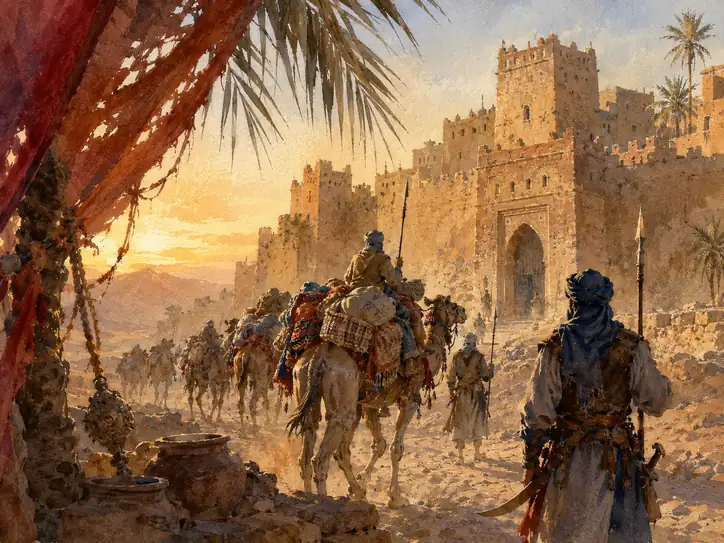 Caravan's Dream of the Golden Citadels
Similar Artworks
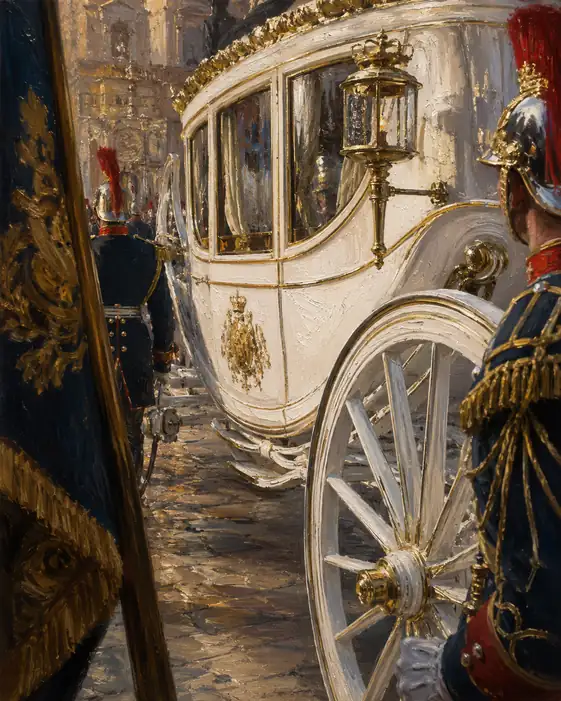 The Eternal Pageant of Sun and Gold
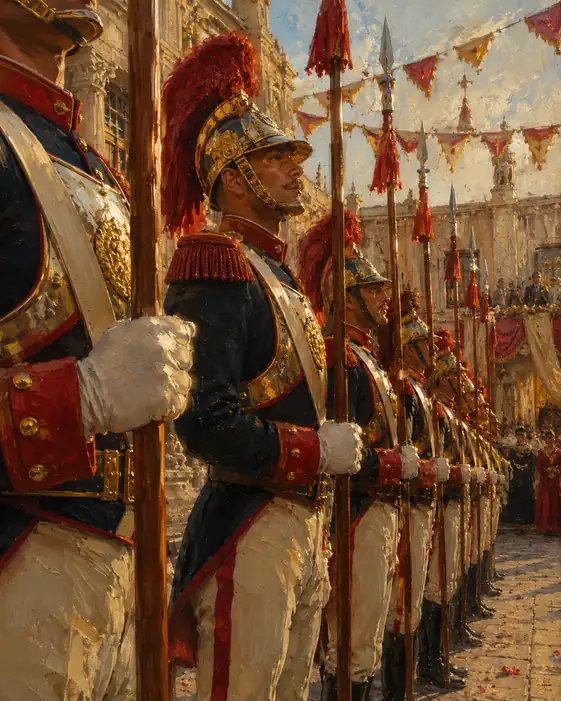 Resonance of the Scarlet Crest
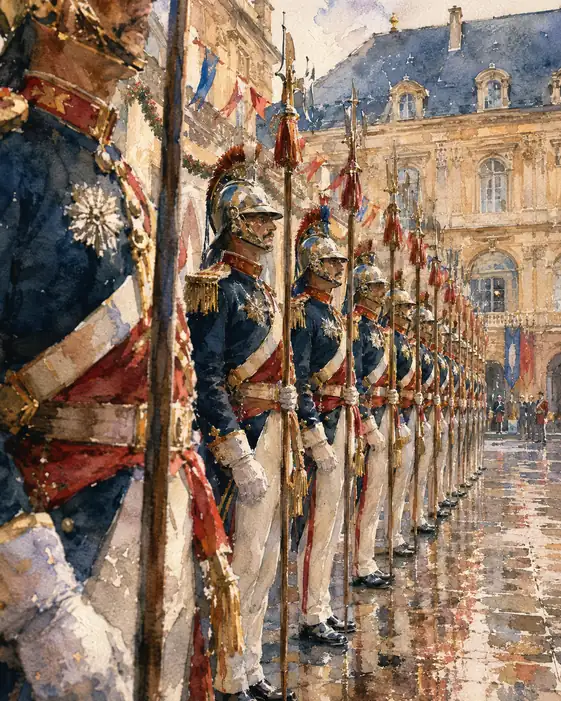 Sentinels of the Royal Sun
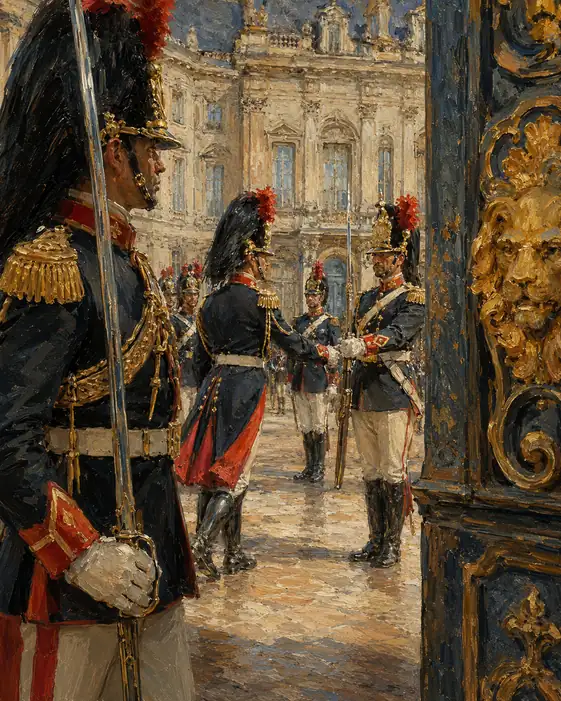 Sentinel of the Eternal Palace
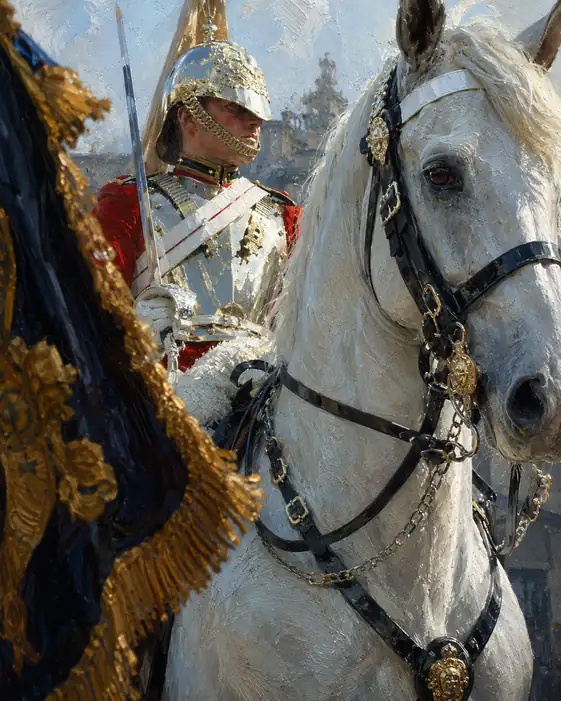 The Resplendent Guardian
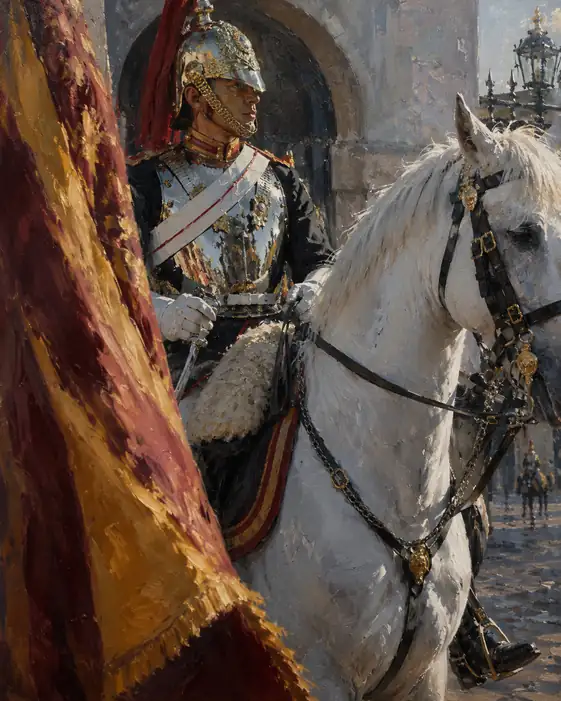 The Weight of the Vow: A Golden Moment in Time
 The Radiant March of Honor
 Triumphant Echoes of the Gilded Age
 Pulse of the Red Sentinel
 Into the Eternal Glow