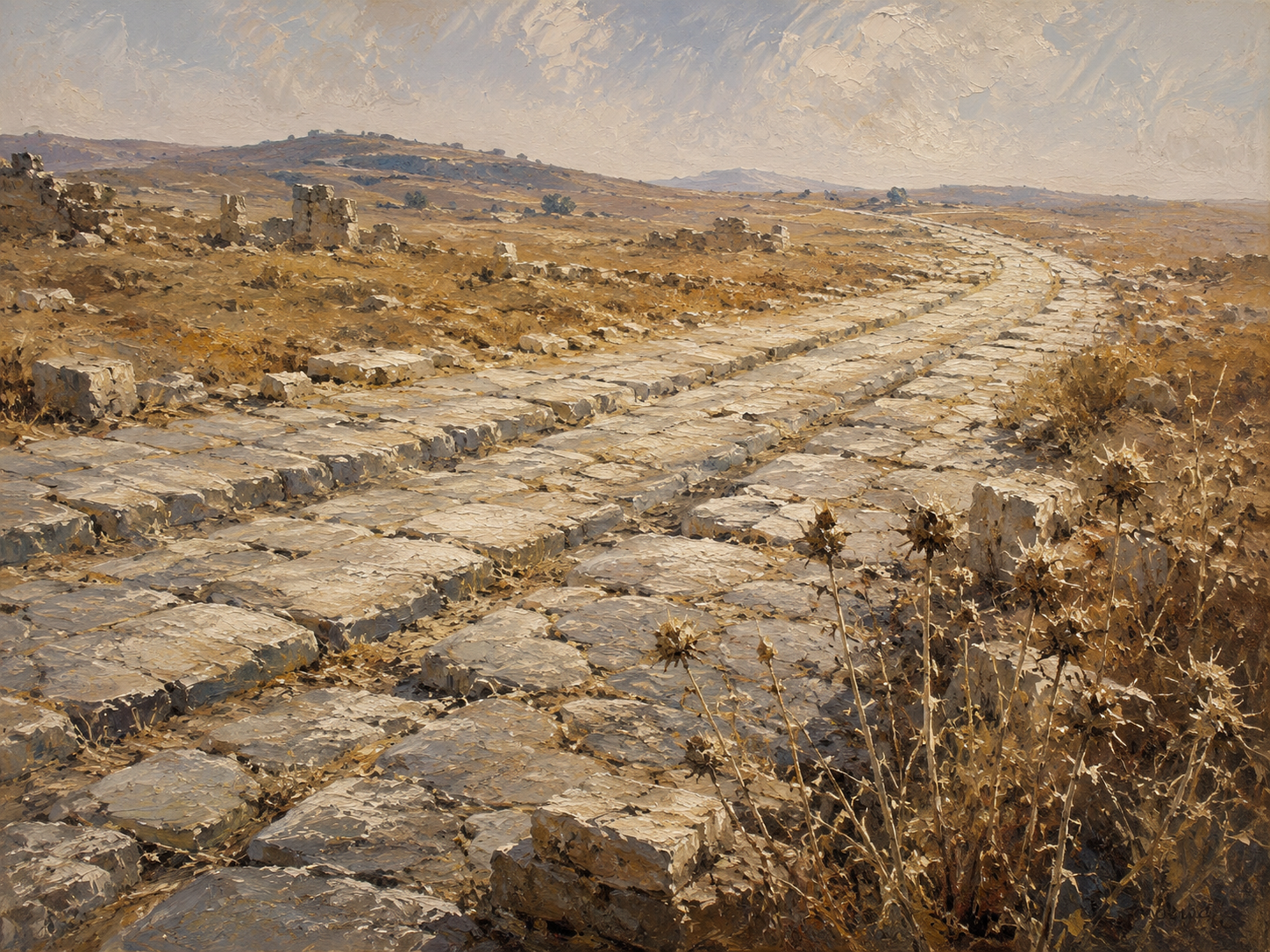
The Road to Yesterday
Critique
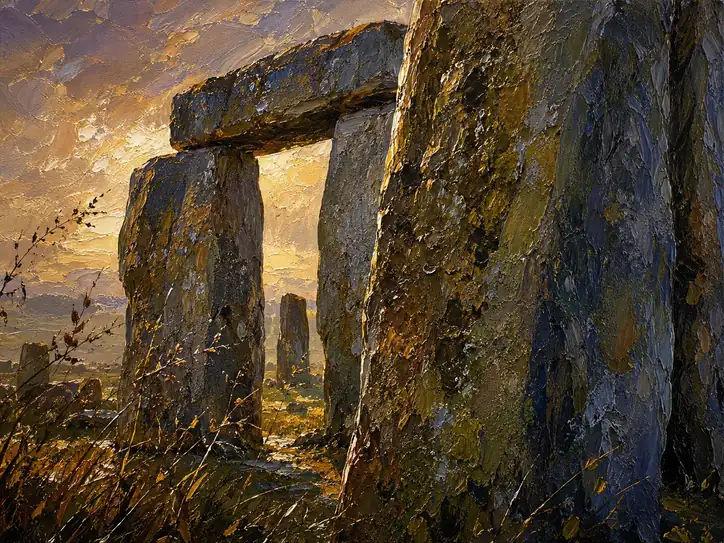
1. Introduction This impasto oil painting depicts an ancient stone road winding through a vast, arid landscape. The ruined stone walls and the serene path create a highly contemplative composition. The nostalgic light scattered across the canvas evokes the silent passage of history. The precise location of this scenic view remains unconfirmed. 2. Description The stone pavement, made of weathered flat blocks, curves gently from the foreground toward the distant hills. In the right foreground, dry thistles with sharp thorns and low shrubs are painted in detail. On the left, crumbled ruins of ancient stone structures are scattered. Pale clouds drift across a soft, calm sky. 3. Analysis The prominent feature of this artwork is the heavy impasto texture defining the stones. Heavy layers of paint applied with a palette knife emphasize the cracked, rough surfaces of the historic road. The color palette relies on dry earth tones like ochre and beige. The curving perspective guides the eyes, creating rich depth. 4. Interpretation and Evaluation This piece symbolizes the transience of human civilization contrasting with the enduring quality of nature. The dried thistles serve as a metaphor for the passage of time. The work achieves a poetic atmosphere through stable composition and delicate lighting. This unique application of texture elevates the classic ruin aesthetic with modern majesty. 5. Conclusion Ultimately, the painting invites viewers to journey along a historical path forgotten by time. While the initial impression emphasizes the loneliness of the desert, closer inspection reveals the warmth of the light and the beauty of the stones. The tactile presence of the medium ensures that this serene landscape remains eternally alive.
Same Subcategory
 Echoes of Wealth in the Golden Sands
 Caravan's Dream of the Golden Citadels
Similar Artworks
 The Path Where Empires Sleep
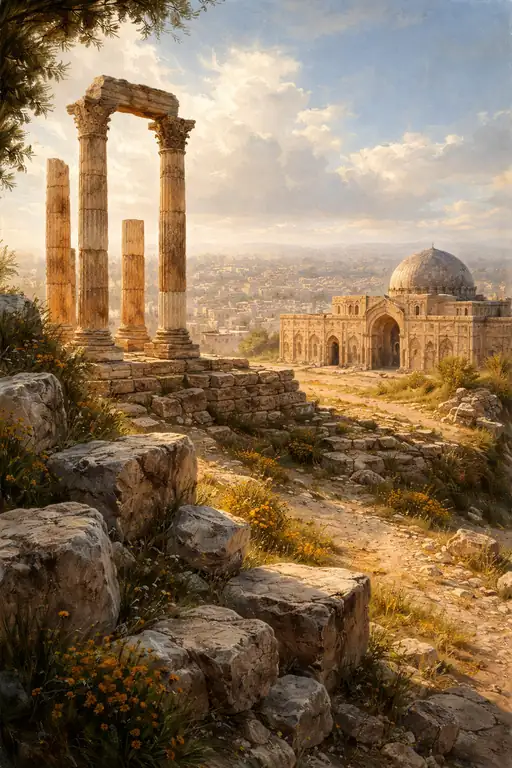 Golden Hour Over Majestic Ancient Ruins
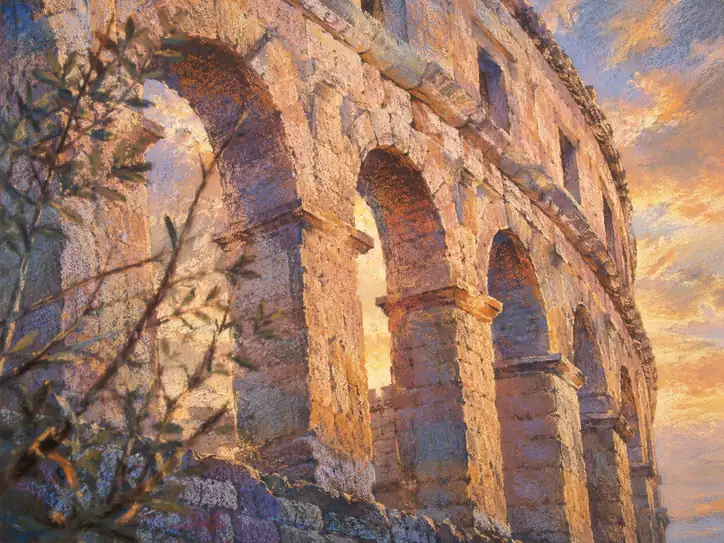 Gold Spilled on Ancient Stone
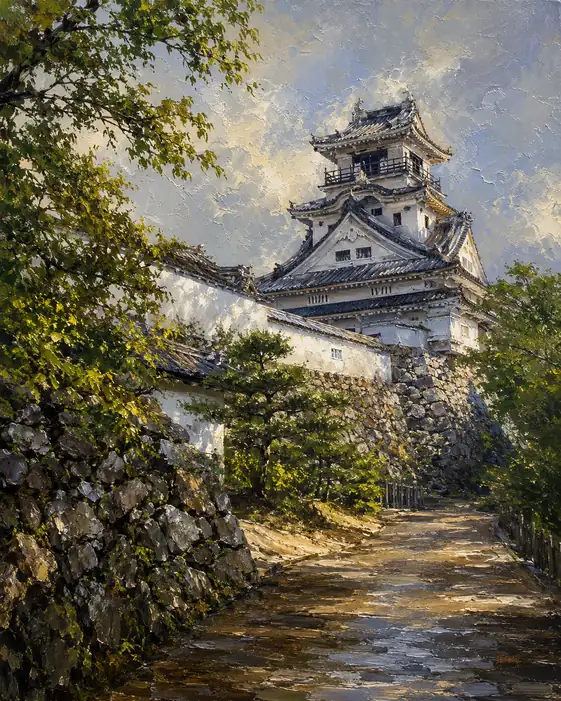 Eternal Fortress of the White Tower
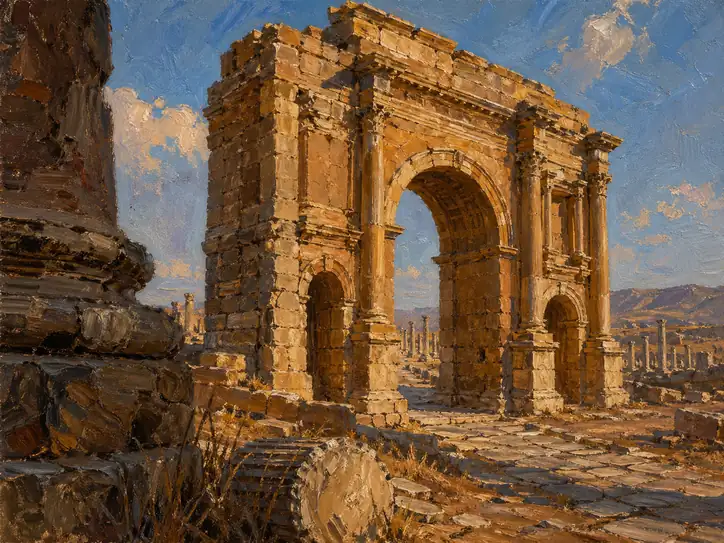 Sovereign of Silence: The Triumphal Arch of the Forgotten Sands
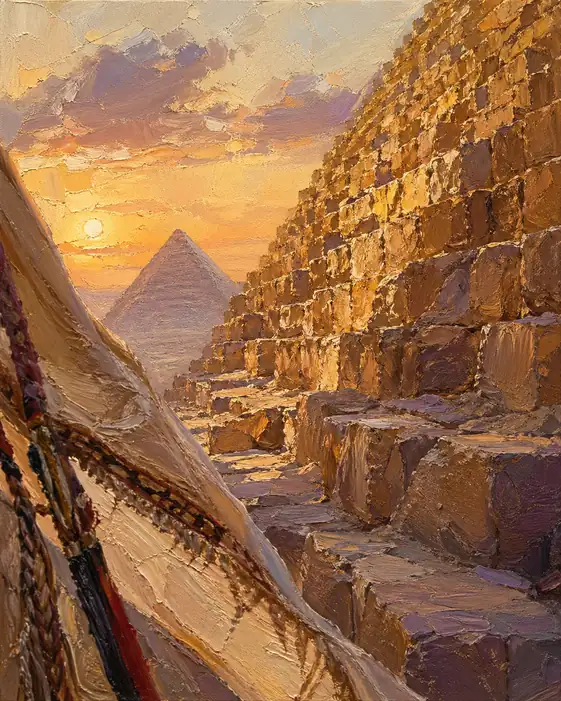 A Prayer Carved in the Sands of Time
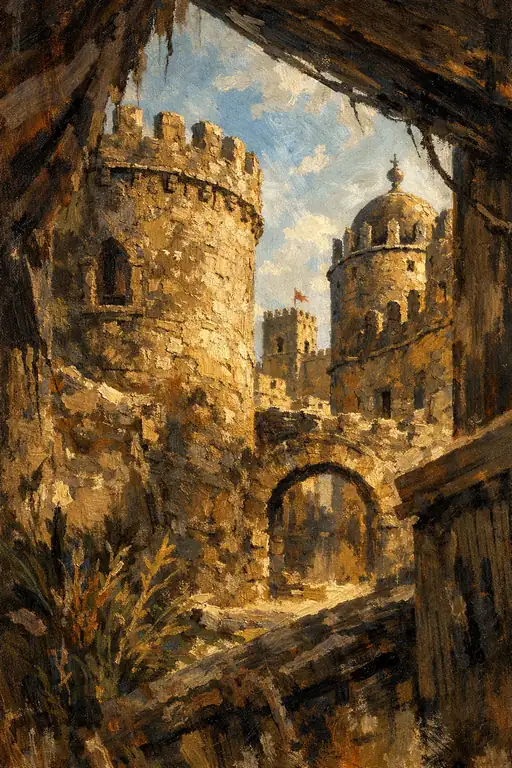 Echoes in Sunlit Stone
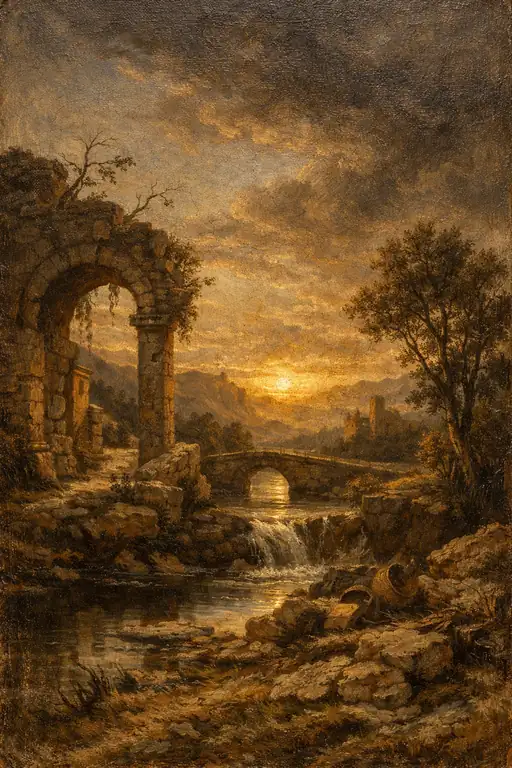 A Ruined Arch at Sunset
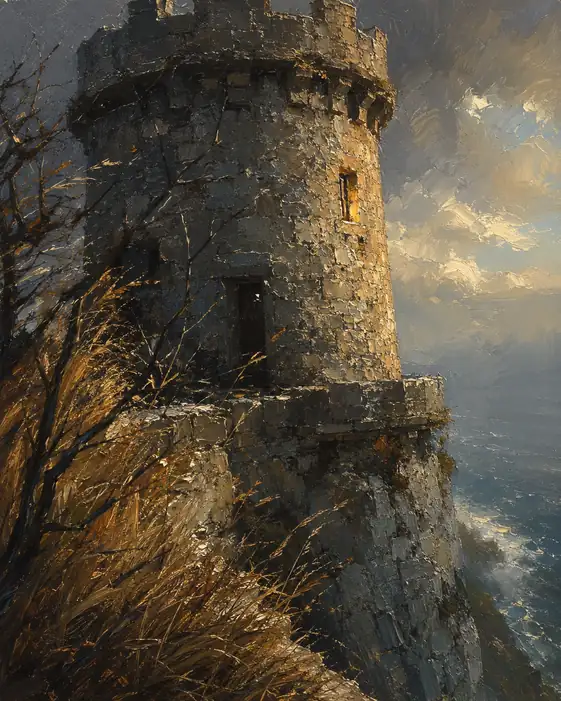 The Golden Solitude
 Monuments to an Eternal Sun