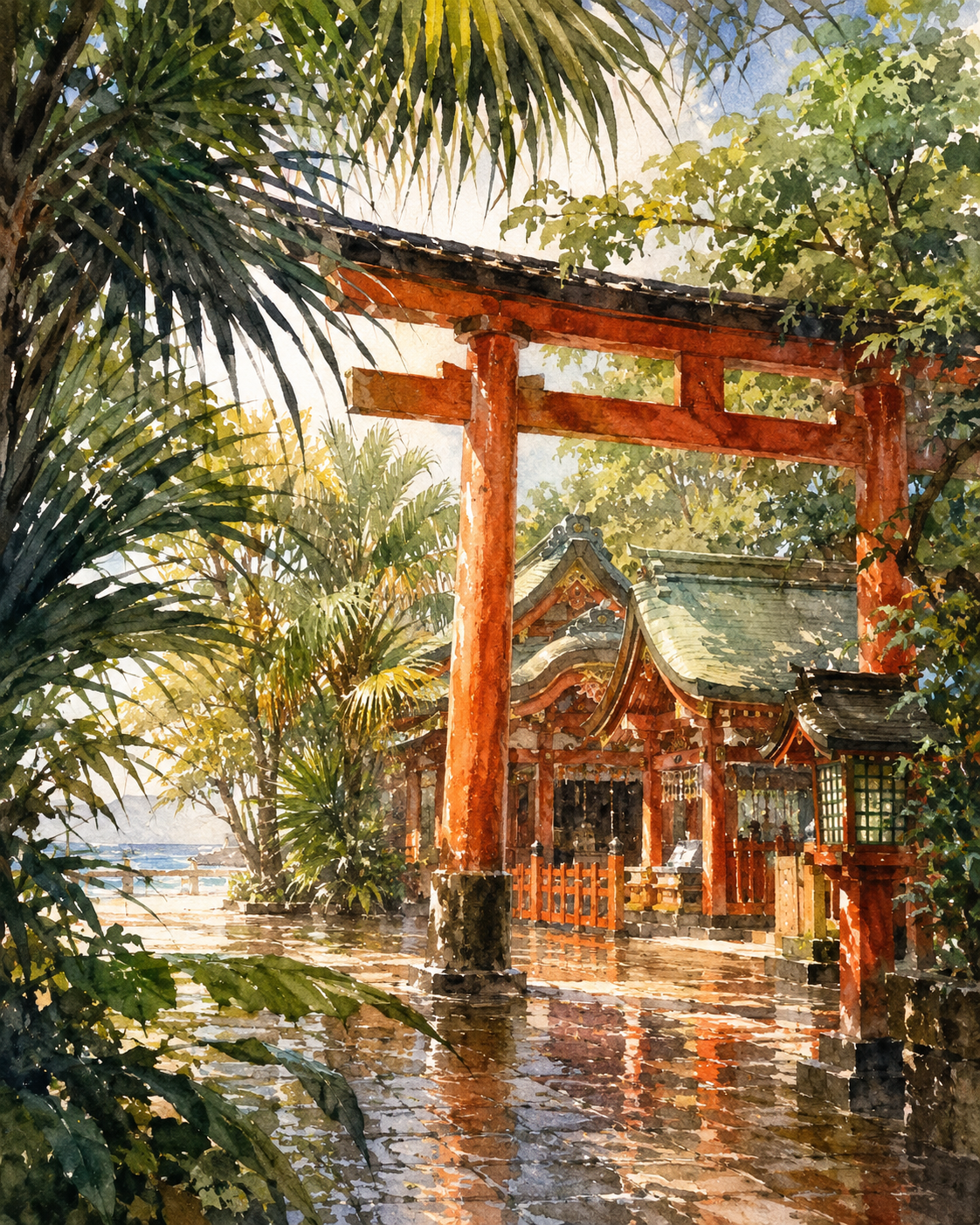
Eternity at the Sacred Shore
Critique
1. Introduction This watercolor painting is an imaginative work that brilliantly fuses a traditional Japanese shrine with tropical nature. The seemingly contrasting elements of Shinto spirituality and tropical openness are beautifully harmonized through the clear, transparent coloring characteristic of watercolor. This unique juxtaposition creates a captivating and sacred atmosphere. 2. Description In the foreground, a vibrant vermilion torii gate stands prominently, with a heavy main shrine building behind it sharing the same color. On the left, lush palm tree fronds cast detailed shadows, while a calm blue sea and beach are visible in the distance. The wet stone cobblestones beautifully reflect the brilliant light and warm vermilion. 3. Analysis In terms of color, the contrast between the warm sunshine, the vivid red of the architecture, and the lively green of the tropical foliage is highly effective. The wet-on-wet watercolor technique captures the humid atmosphere and the glossy texture of the stone pavement. Slashes of light through the palm leaves create visual rhythm. 4. Interpretation and Evaluation By joining two distinct environments that rarely meet, the composition presents a utopian aesthetic. The coexistence of the torii, a symbol of sacred order, and palm trees, representing untamed natural vitality, suggests the universal presence of sacred space. The precise control of light and color demonstrates excellent artistic mastery. 5. Conclusion What begins as a surprising combination of a tropical beach and a sacred shrine eventually reveals a deeper, serene harmony. The work successfully blends traditional motifs with exotic flavor in an ambitious and refined manner. This fresh visual experience transcends time and space, leaving a profound impression on the viewer.
Same Subcategory
 Memory of the Sun-Drenched Leaves
 Whispering Dappled Sunlight
Similar Artworks
 The Silent Breath of the Shrine
 Summer Radiance: The Luminous Path to the Sacred
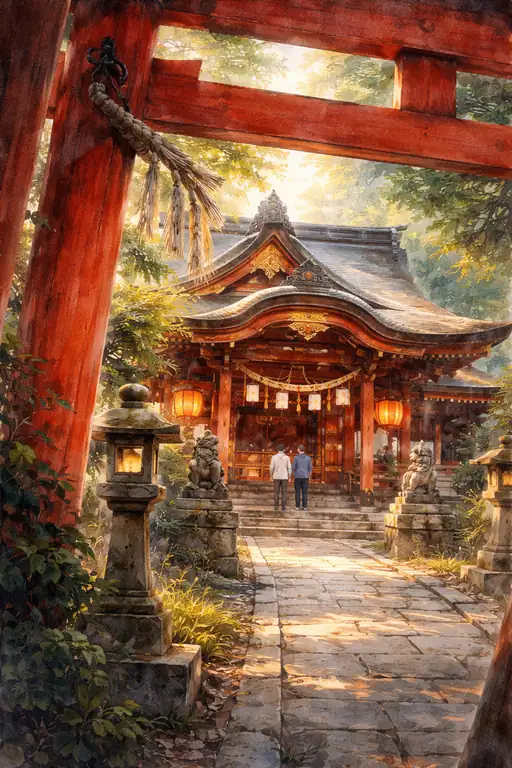 Vermilion Gateway to the Sacred
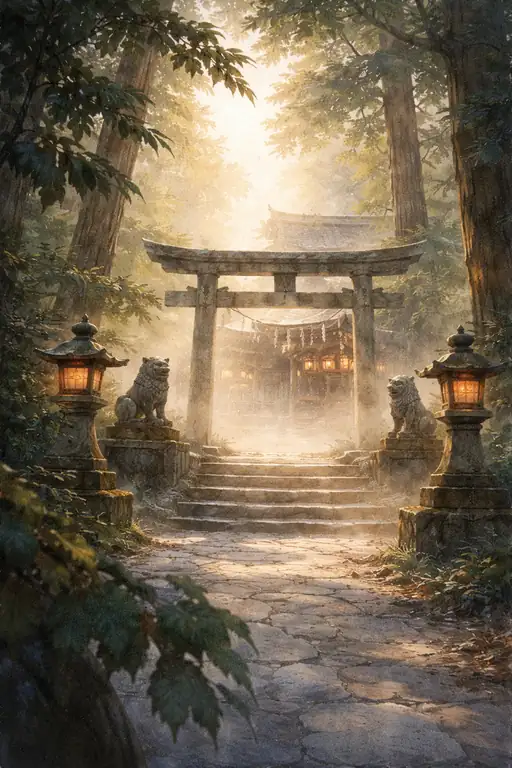 Silent Guardians of the Ethereal Dawn
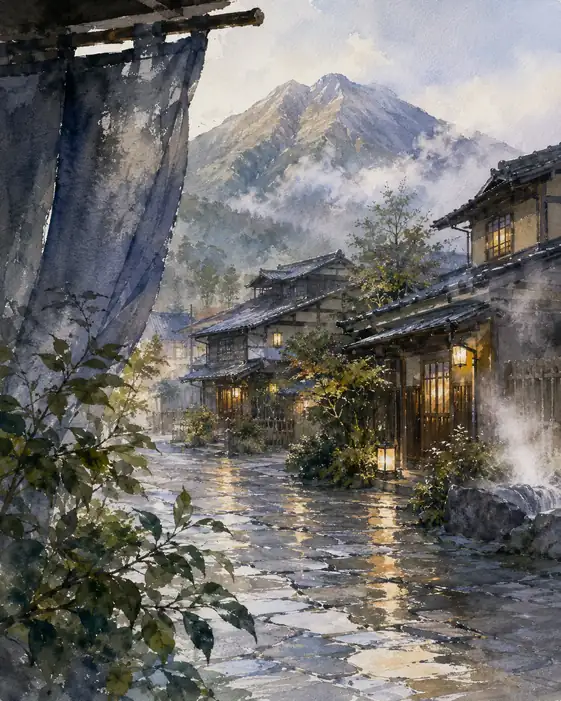 Echoes of the Mist-Bound Inn
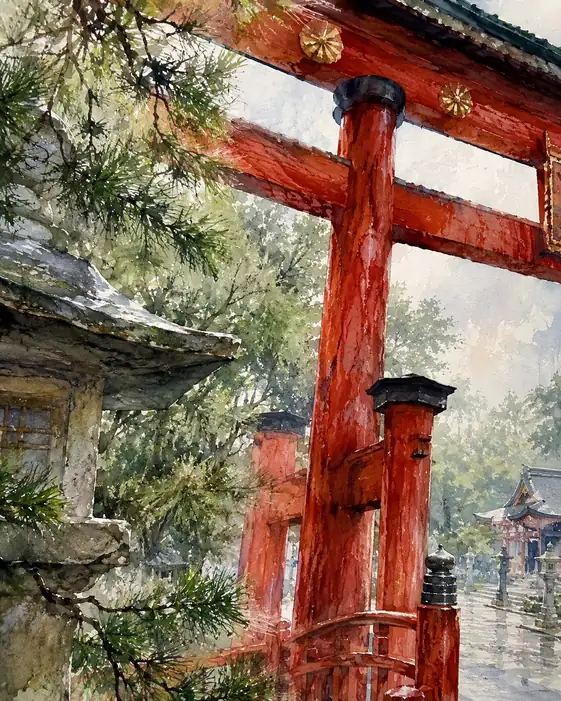 Eternal Silence of the Vermilion Gate
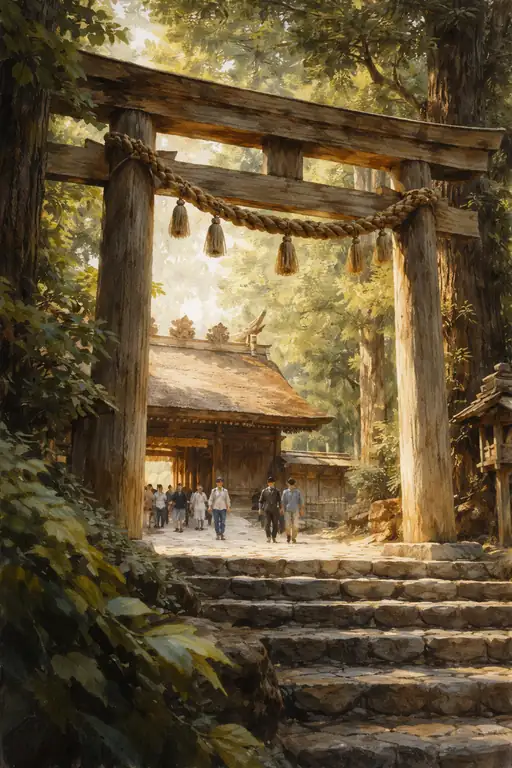 Passage to the Sacred Grove
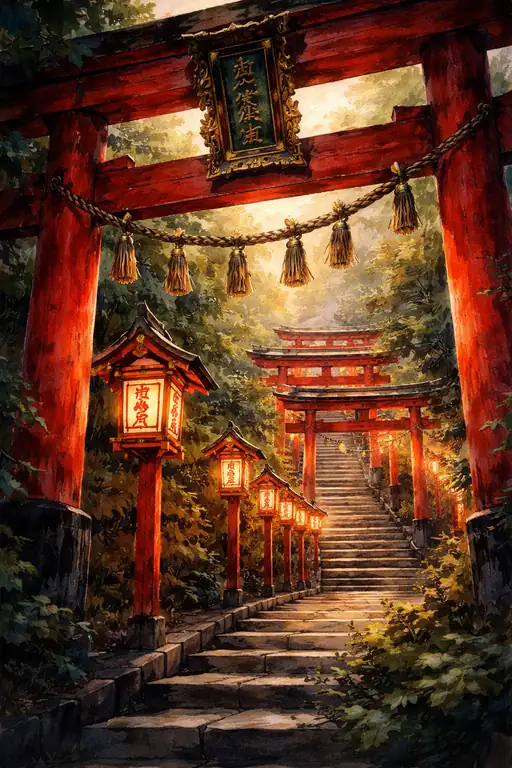 Stairway Between the Worlds
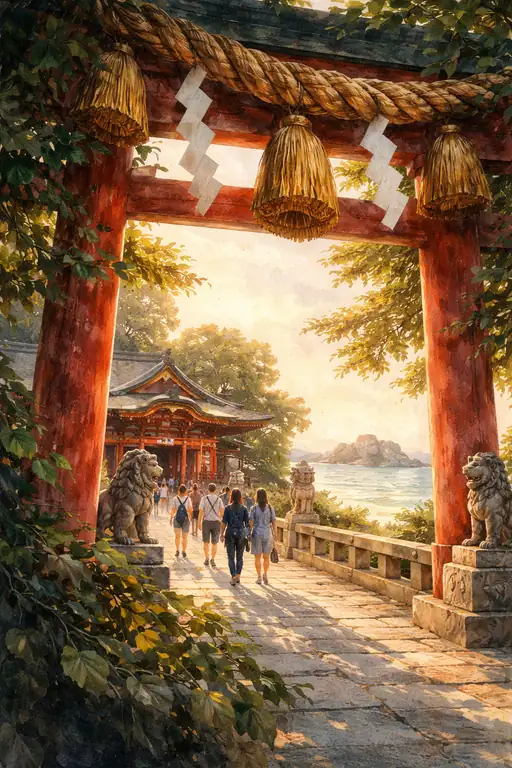 The Crimson Threshold to Peace
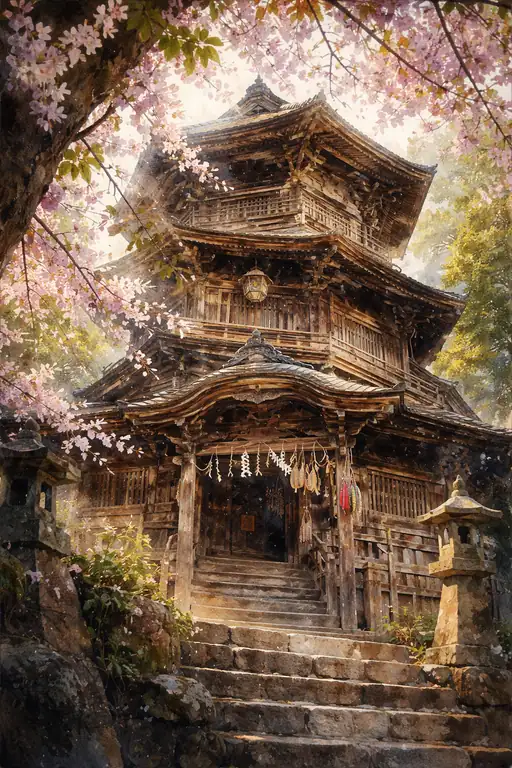 Spring's Quiet Benediction