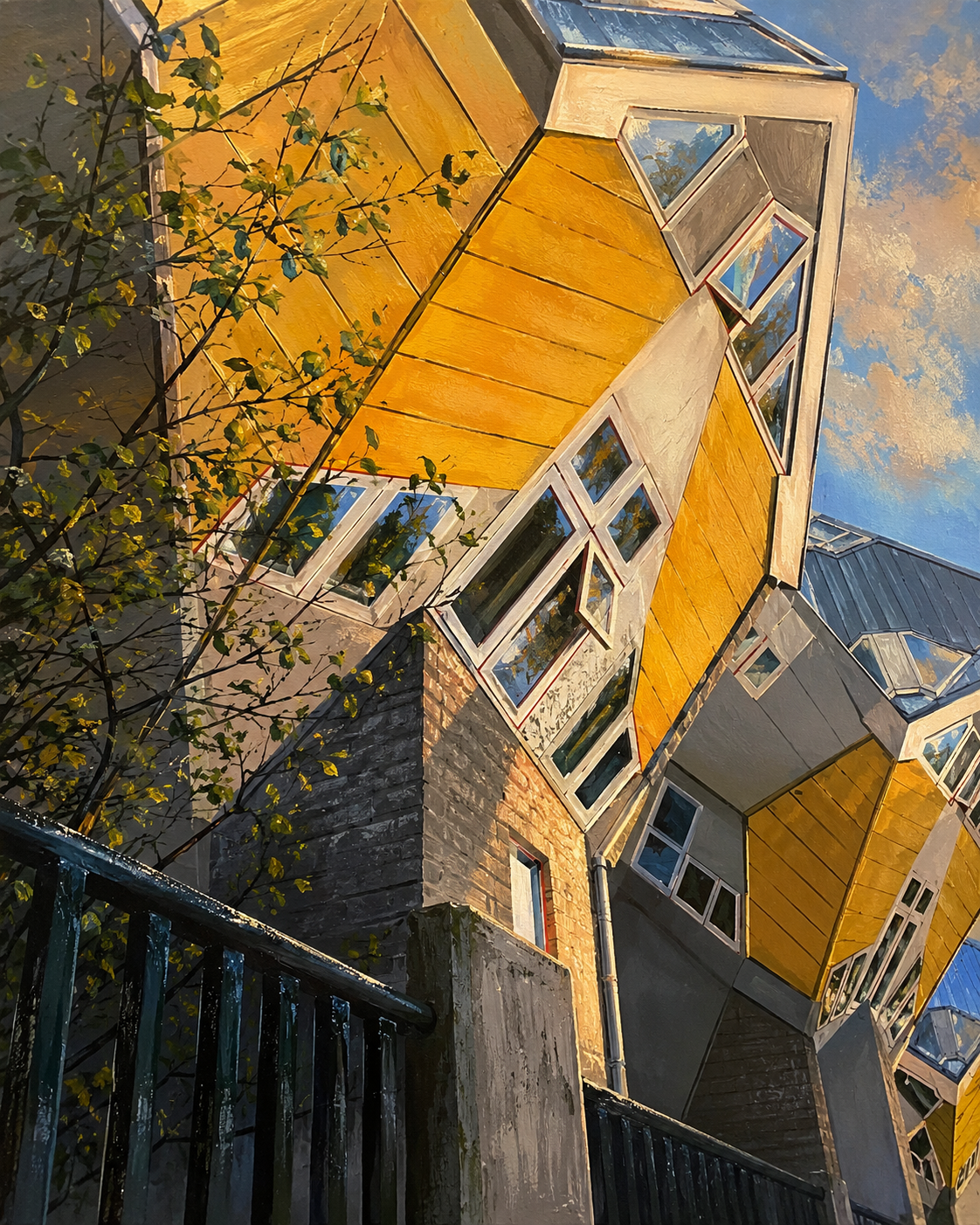
Cubes Dancing in the Daylight
Critique
1. Introduction This painting presents a striking architectural view of geometric structures, strongly reminiscent of the famous cube houses. The artwork captures the complex interplay of angled forms against a bright sky. It invites the viewer to reconsider conventional residential design and urban landscapes. 2. Description The composition is dominated by large, yellow cube-shaped building segments tilted at a forty-five-degree angle. These structures feature multiple windows that reflect the blue sky and scattered clouds above. In the foreground, a dark iron fence and a brick pillar establish the viewing distance, while a tree with green leaves partially obscures the left side of the buildings. 3. Analysis The artist effectively utilizes a low-angle perspective to emphasize the towering and dynamic nature of the architecture. The bright yellow facades contrast sharply with the cooler blue tones of the sky and the reflections in the glass. The organic shapes of the foliage provide a necessary visual counterbalance to the rigid, geometric lines of the buildings, enhancing the overall depth of the composition. 4. Interpretation and Evaluation The painting skillfully captures the tension between human-made geometry and the natural environment. The dramatic lighting and precise shadows highlight the three-dimensional volume of the structures, making them appear almost sculptural. The artist's handling of color and perspective demonstrates a strong command of technique, resulting in a composition that is both structurally engaging and visually harmonious. 5. Conclusion Initially, the painting appears as a simple architectural study, but further observation reveals a complex exploration of perspective and light. The careful balance of natural elements and rigid forms elevates the scene beyond mere representation. Ultimately, this work offers a compelling and aesthetically pleasing interpretation of innovative urban architecture.
Same Subcategory
Similar Artworks
 Morning Dance of the Yellow Cubes
 Rhythm of the Cubes
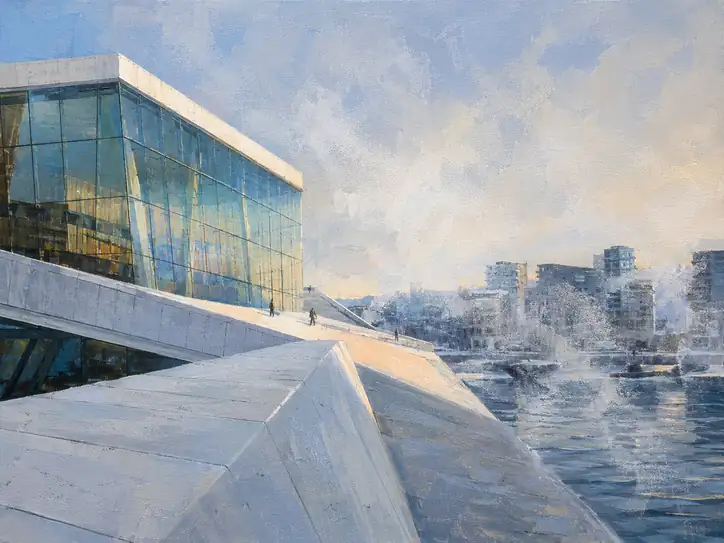 The Geometry of Quietude
 Twilight Reflections in the Glass Prism
 Urban Gravity Unbound
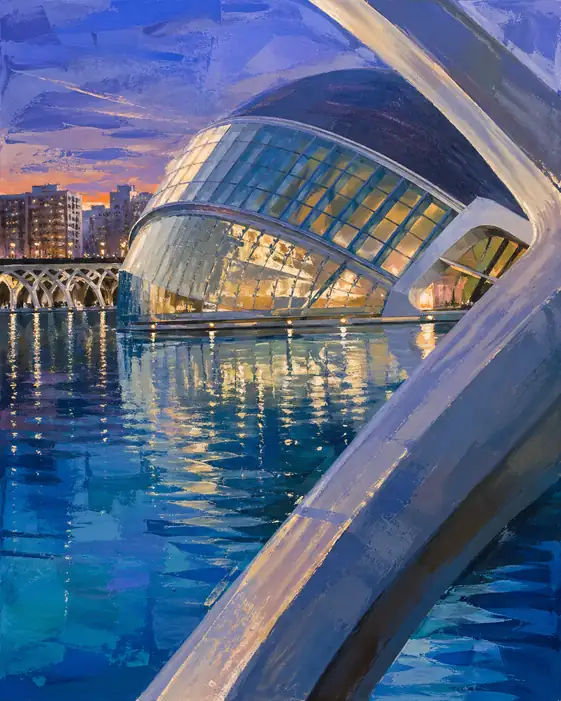 Reflections of a Future Dream
 Whispers of the Crystal Sanctuary
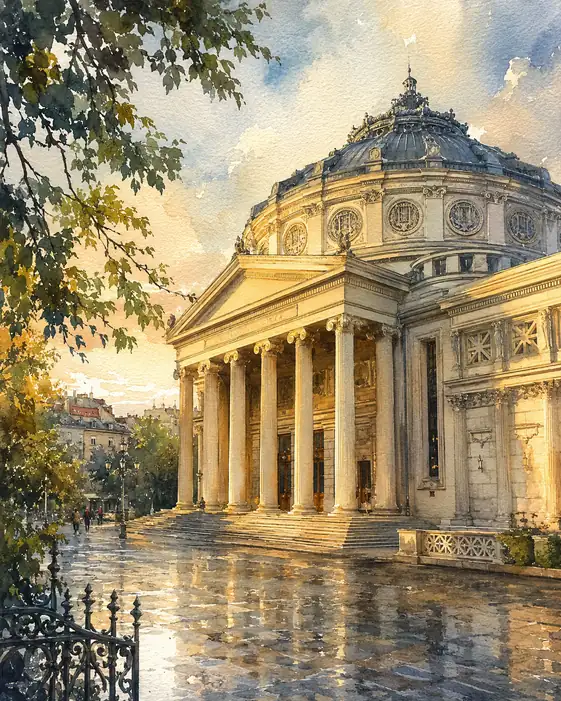 Golden Reverie of the Athenaeum
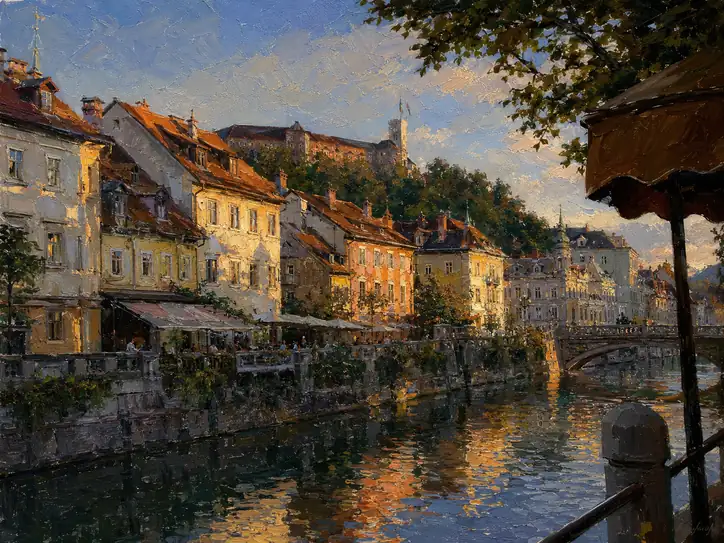 Serenade of the Shimmering Canal
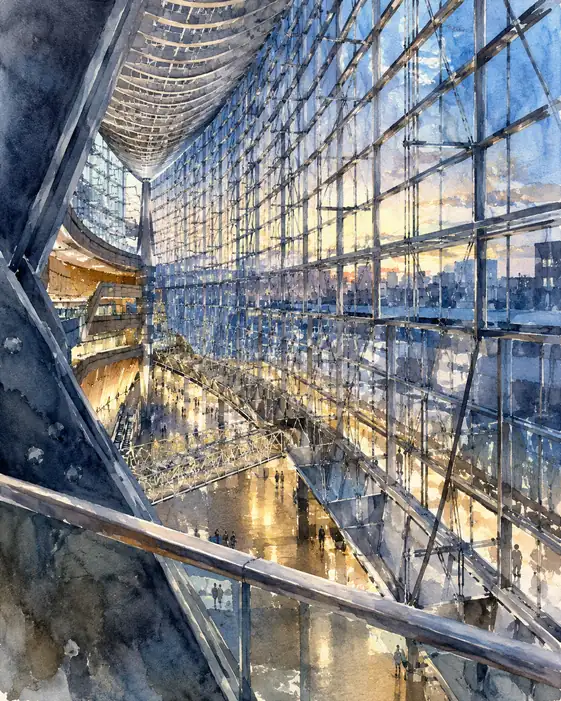 Resonating Light in the Glass Vessel