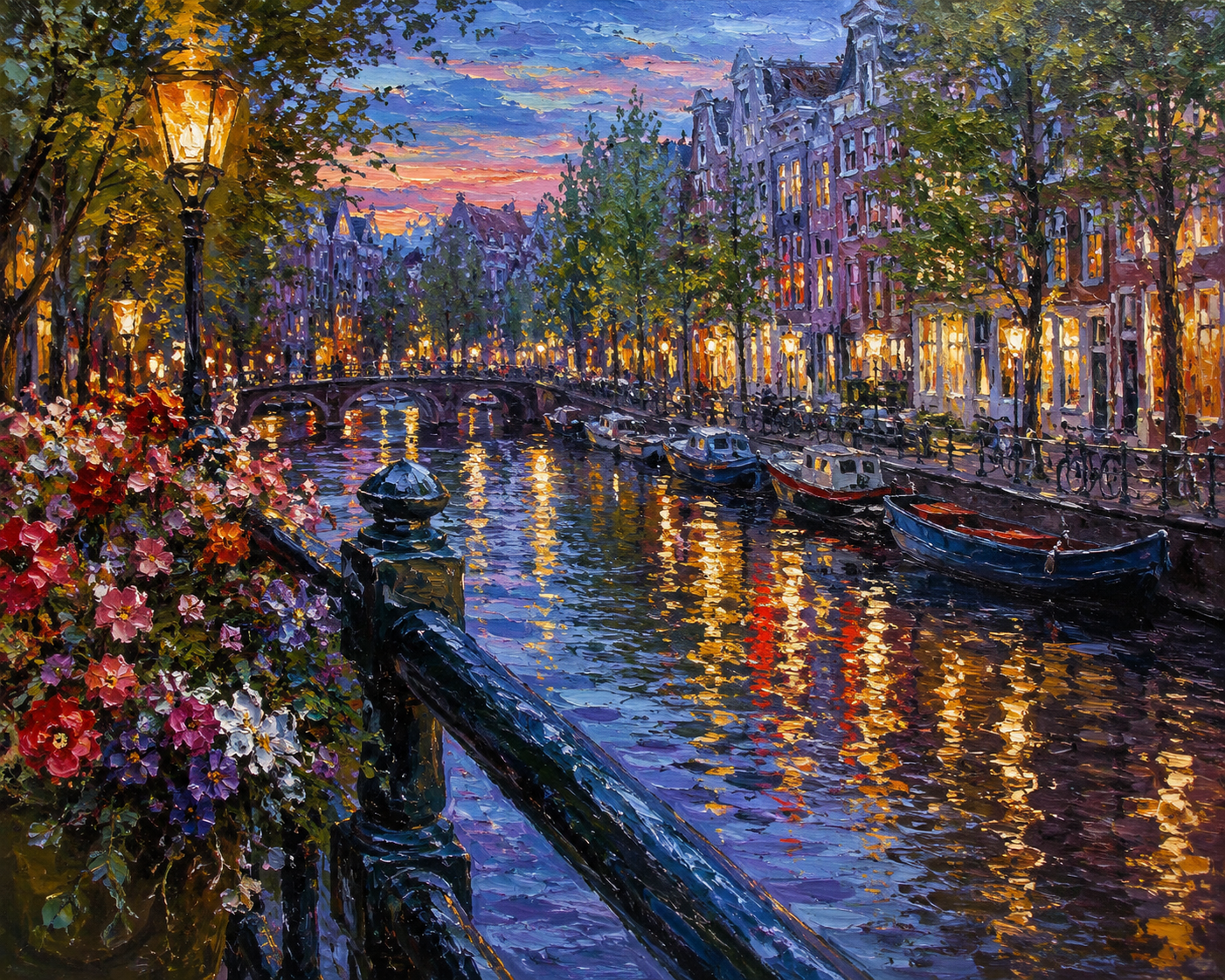
Canal of Lost Dreams
Critique
1. Introduction This painting presents a vibrant evening scene of an urban canal, likely inspired by historic European cityscapes. The composition captures the dynamic interplay between the twilight sky, glowing city lights, and the reflective water surface. Through a textured application of paint, the artwork constructs a luminous atmosphere that invites sustained observation. 2. Description In the foreground, colorful flowers and an ornate railing anchor the viewer's perspective. The midground features a calm canal lined with moored boats, flanked by tall row houses with illuminated windows. Streetlamps cast warm yellow light that reflects brilliantly across the rippling water. In the background, arched bridges cross the canal beneath a sky filled with hues of purple, orange, and blue. 3. Analysis The artist employs a thick impasto technique, using bold strokes to create physical depth and enhance the play of light. The composition utilizes strong linear perspective, guided by the receding canal and building facades, drawing the eye toward the distant bridges. A striking contrast is achieved by juxtaposing the cool blues and purples of the environment against the intense warm yellows of the lighting. 4. Interpretation and Evaluation This work effectively conveys the vibrant energy of a city at dusk. The exaggeration of color and texture suggests a romanticized atmosphere rather than strict realism. The artwork demonstrates strong technical proficiency, particularly in its masterful handling of light reflections and confident architectural framing. The integration of foreground floral elements with the urban setting creates a harmonious visual balance. 5. Conclusion The painting transforms a familiar urban waterway into an expressive sensory landscape. The initial impression of a classic evening scene deepens into an appreciation for the confident brushwork and distinct color harmony. Ultimately, it stands as a captivating study of light, texture, and atmospheric depth.
Same Subcategory
 Echoes of a Sun-Drenched Seville
Similar Artworks
 Twilight Glow along the Amsterdam Canal
 Twilight Echoes of Ghent
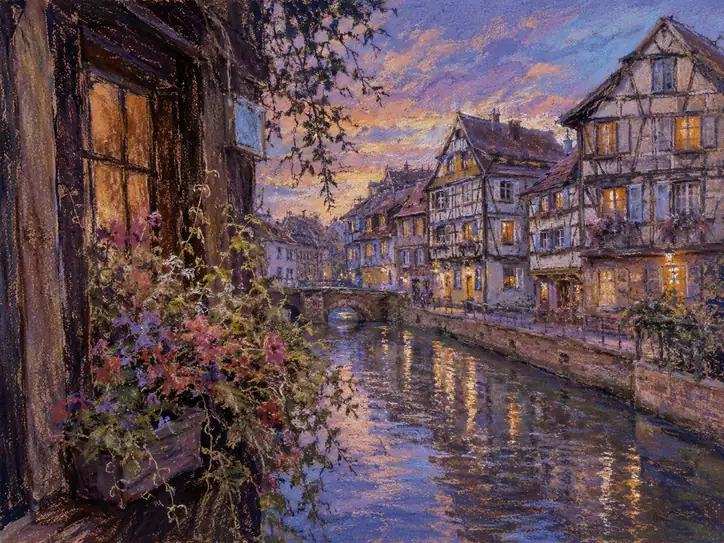 Beyond the Window's Glow
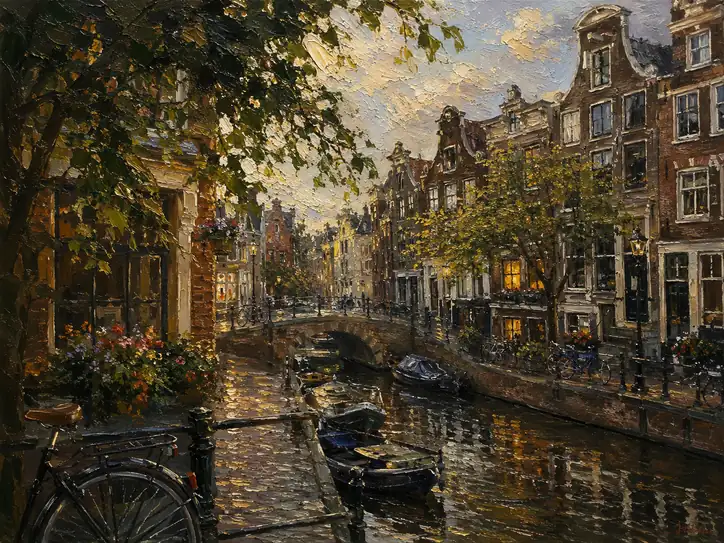 Nocturne on the Water
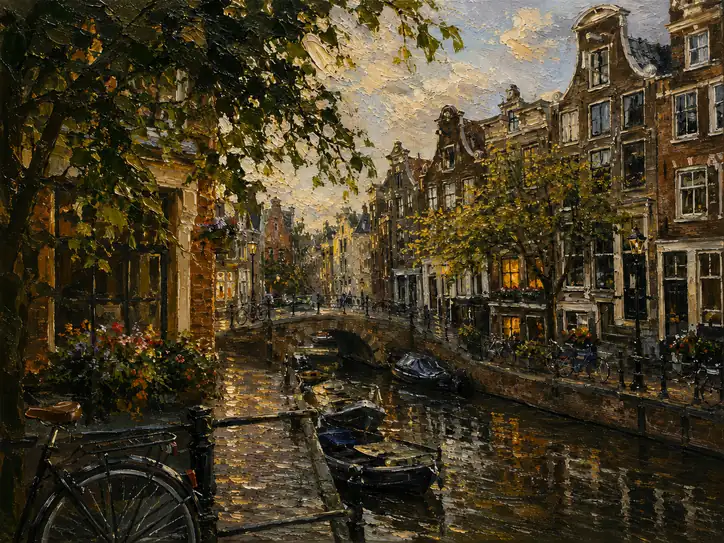 Memory’s Golden Glow
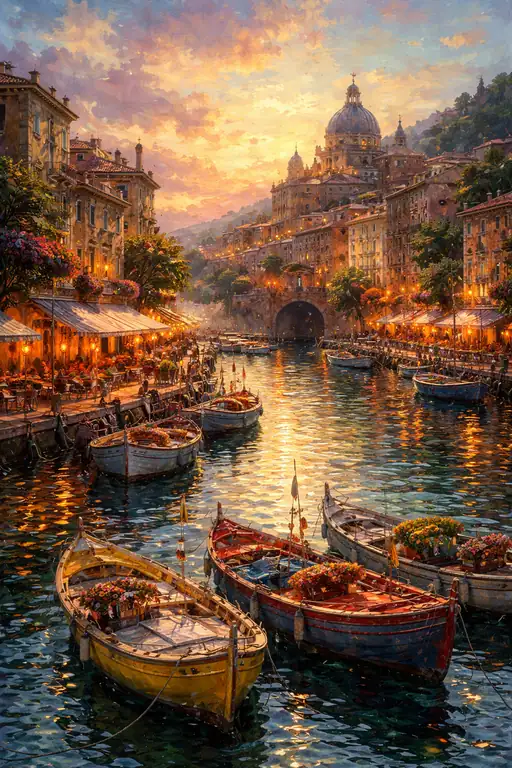 Golden Echoes of the Grand Canal
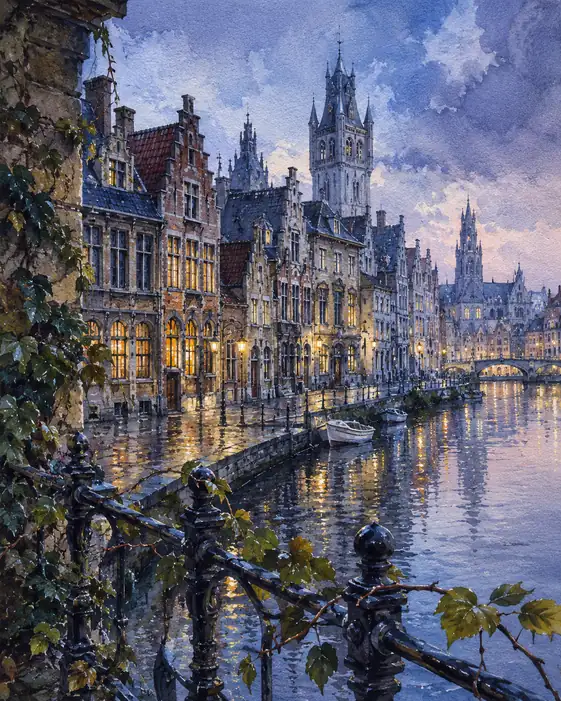 A Golden Lullaby on the Water
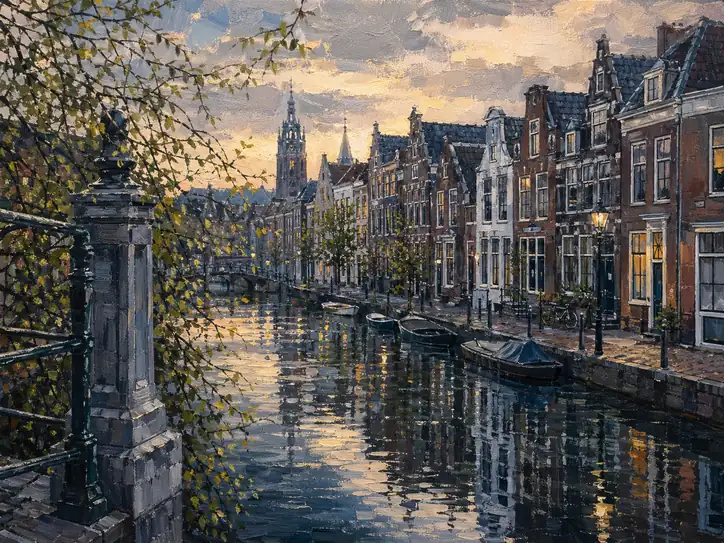 Golden Whispers of the Twilight City
 A Lullaby of Lanterns on the Twilight Tide
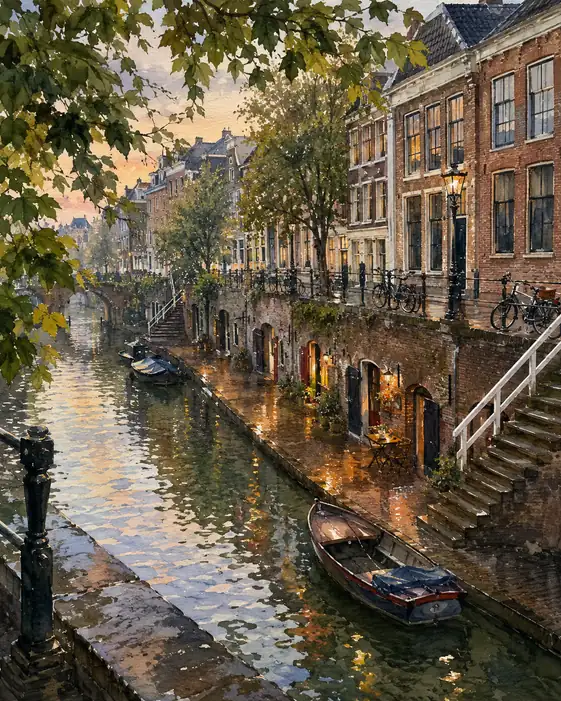 Gilded Dusk on the Ancient Canal