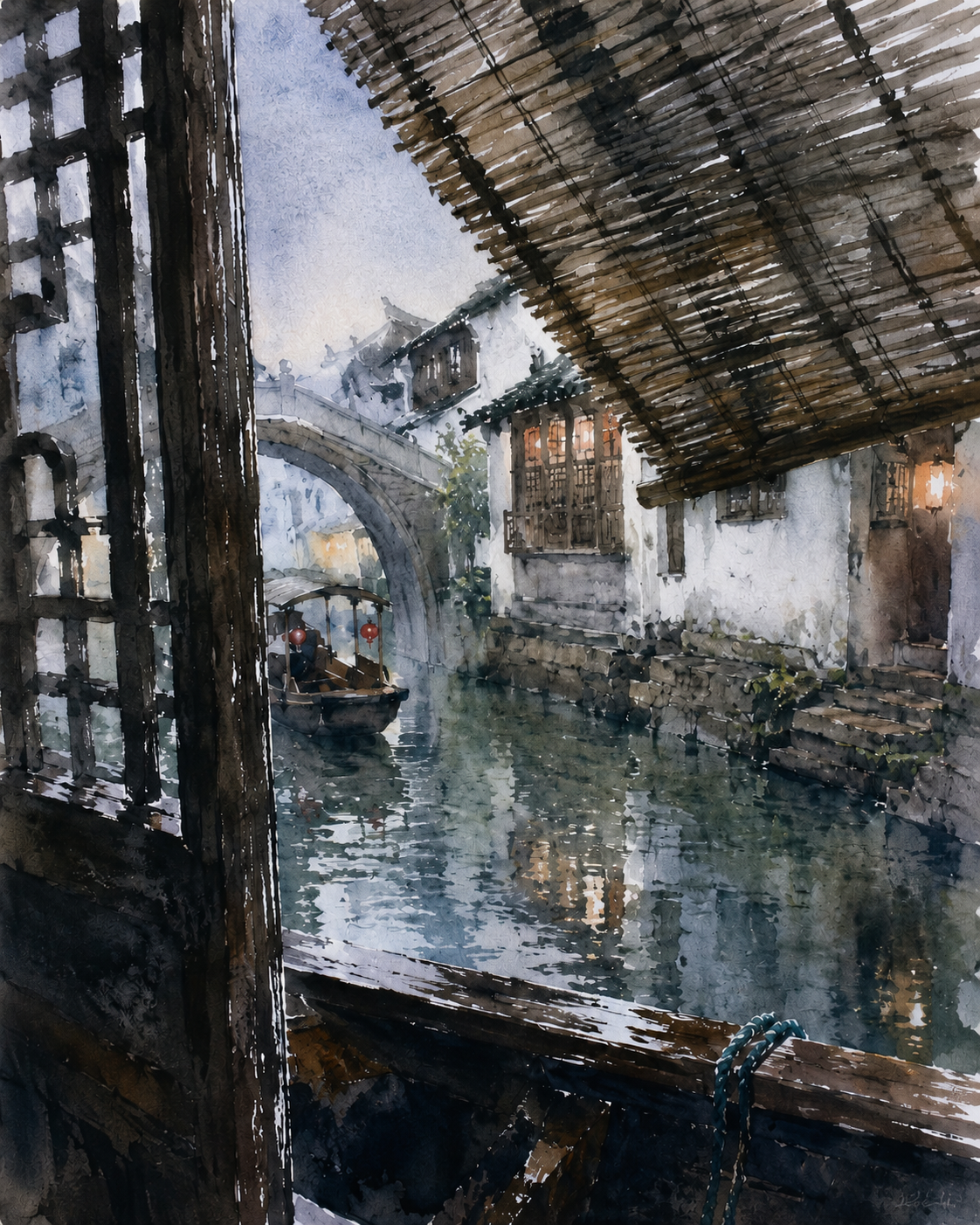
Waiting in the Quiet Dusk
Critique
1. Introduction This captivating painting offers an intimate perspective of a traditional East Asian canal town. The scene is enveloped in atmospheric twilight, capturing the quiet elegance of historic waterside living. Through an interplay of expressive washes and careful detailing, the artwork creates a compelling sense of dampness and tranquility. 2. Description The composition is framed by dark, weathered wooden structures and a bamboo awning. A thick rope rests on the bottom railing. Beyond this framing, a narrow canal flows past whitewashed buildings on stone foundations. Warm light glows from a window, casting reflections on the rippling water. In the midground, a stone arch bridge connects the banks, while a wooden boat with red lanterns glides silently beneath. 3. Analysis The artist uses fluid techniques to evoke the misty environment characteristic of a water town. The high contrast between the heavy, dark foreground and the softly illuminated background establishes a strong sense of depth. Cool blues of the water are harmoniously balanced by isolated spots of warm orange light. The bridge's arch acts as a gentle focal point. 4. Interpretation and Evaluation The artwork evokes a profound feeling of nostalgia and romantic solitude. The framing places the viewer as a hidden observer, enhancing the sense of contemplation. The technical execution shows a high degree of skill in rendering diverse textures, from the rough rope to the fluid water. It is a deeply atmospheric landscape piece. 5. Conclusion Initially, the painting appears as a moody study of historic architecture, but deeper engagement reveals a sophisticated narrative of light and texture. The delicate washes elevate a classic subject into an immersive visual experience. Ultimately, the work stands as a beautiful homage to tradition and ancient waterways.
Same Subcategory
Similar Artworks
 Where the Water Forgets the Time
 Tranquil Passages of Time
 Lantern Whispers on the Water
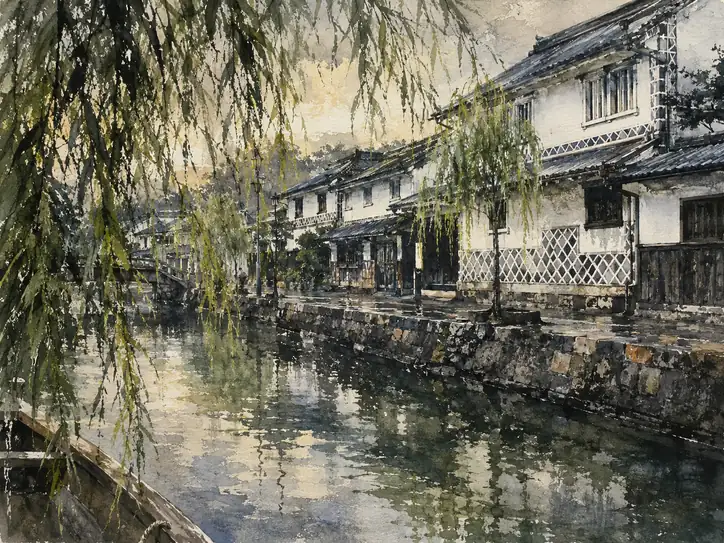 Sigh of the Willow, Mirror of the Ages
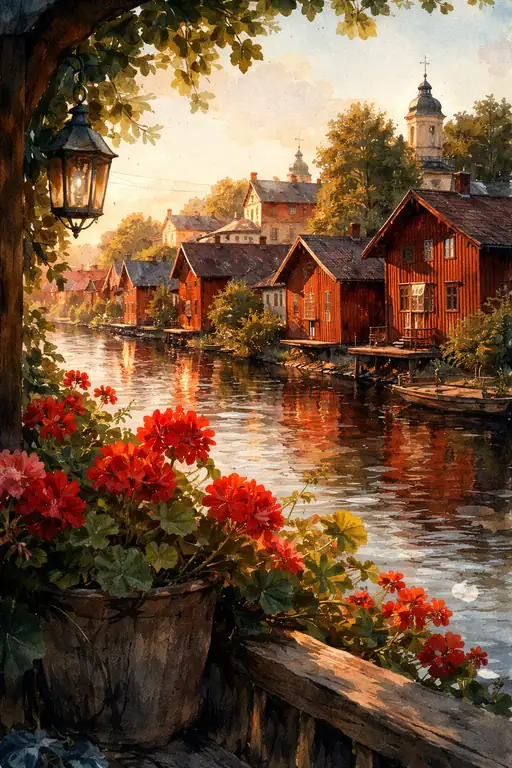 Porvoo Riverside: A Golden Afternoon
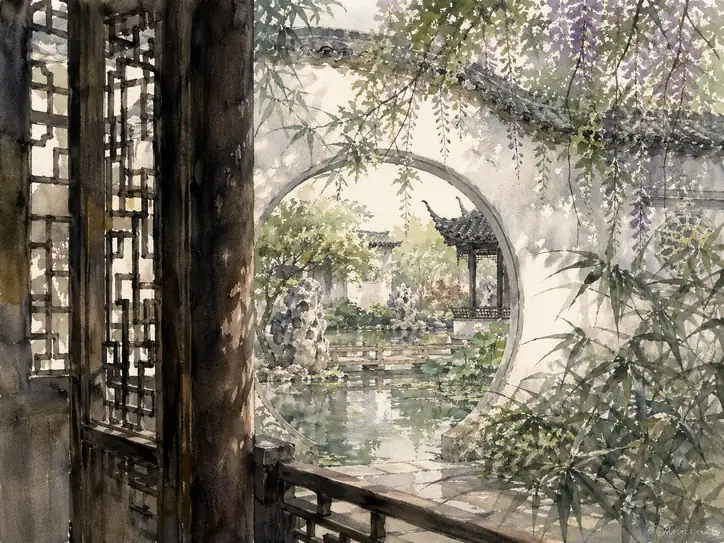 Through the Moon Gate: A Whisper of Serenity
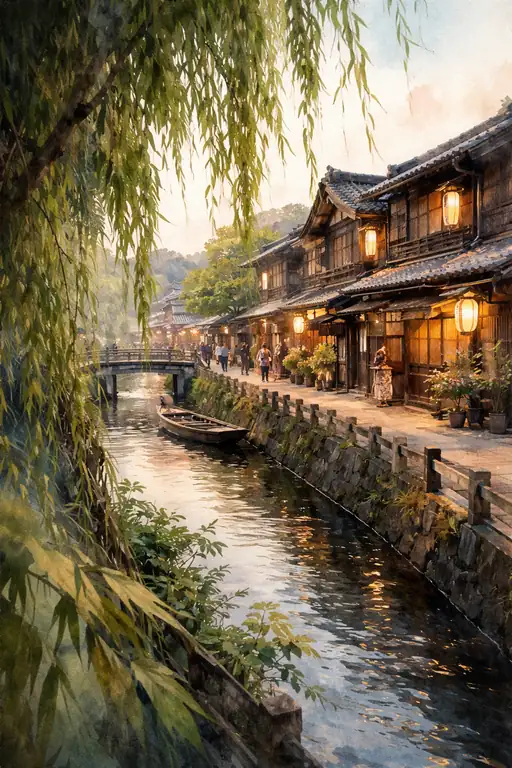 Dusk at the Old Waterway
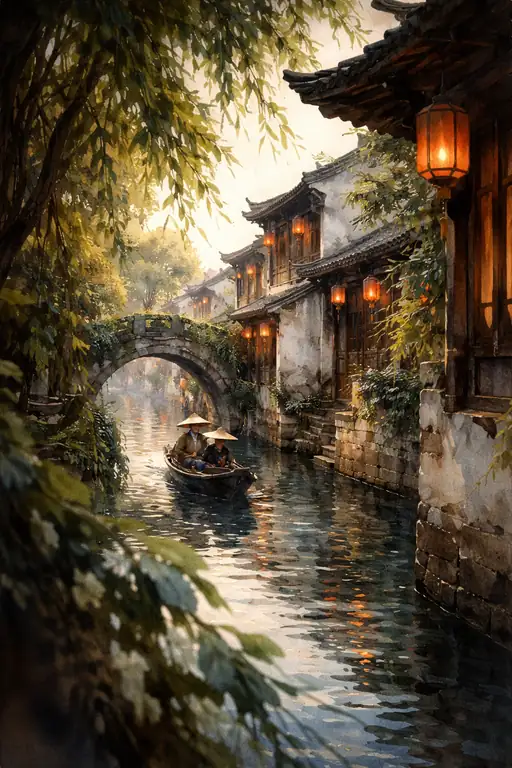 Whispers of the Willow in the Morning Light
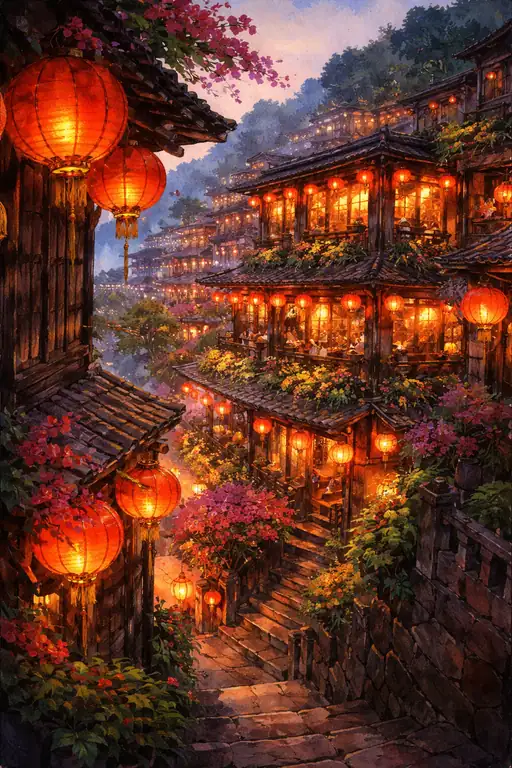 The Festive Glow of the Tiered Village
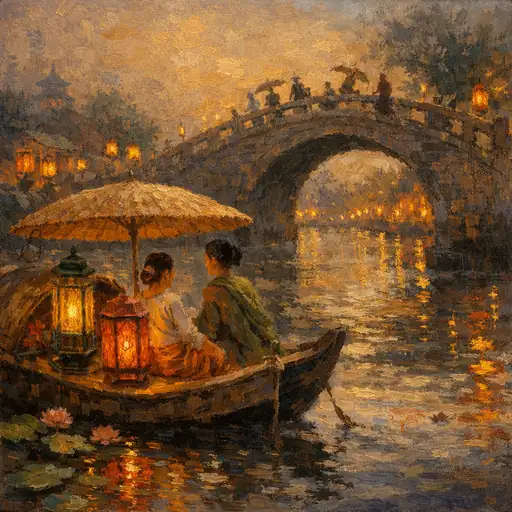 Serenade of Lanterns on the Velvet River