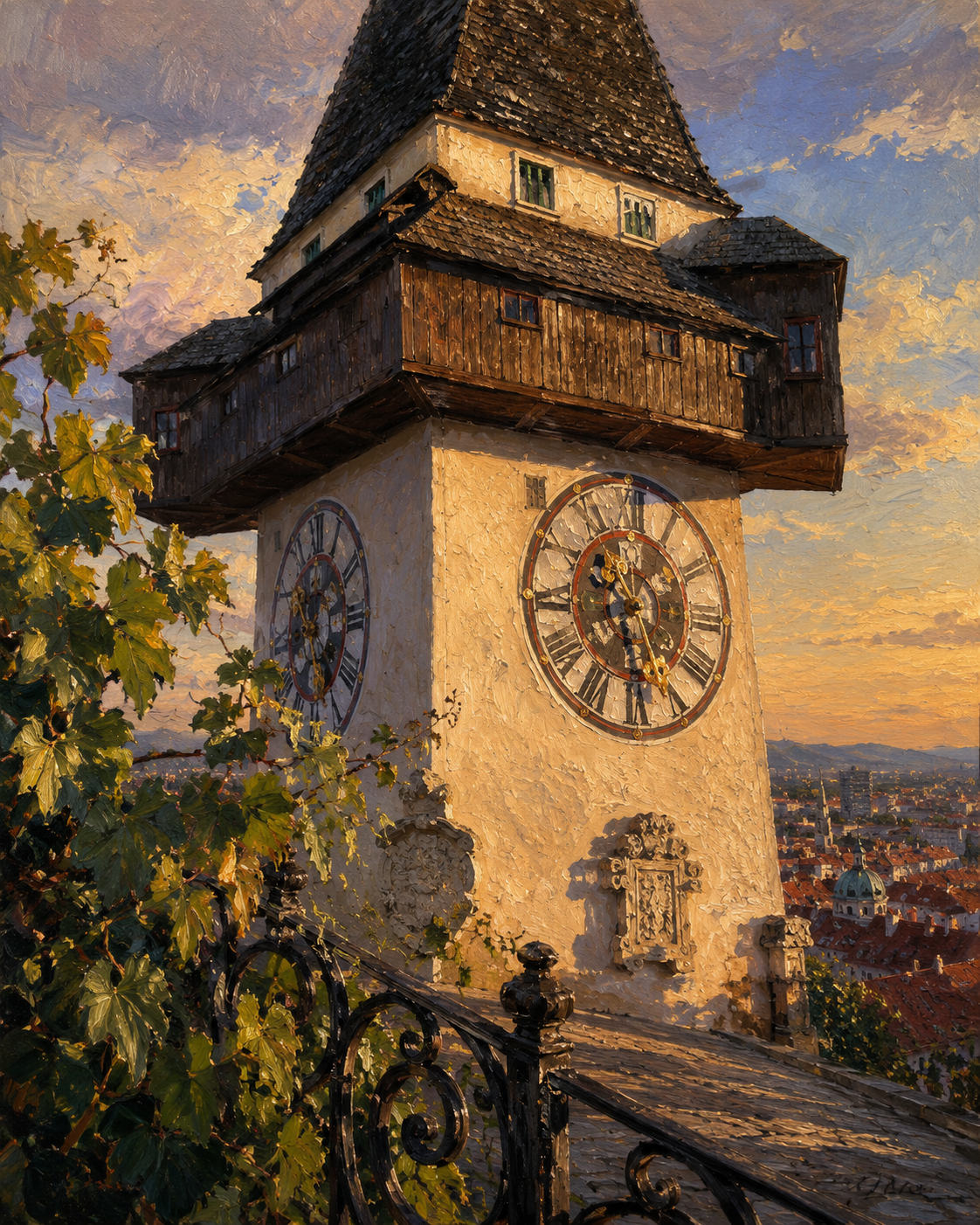
Guardian of the Golden Hour
Critique
1. Introduction This striking oil painting features a commanding view of a historic clock tower, perched prominently above a sprawling cityscape. The artwork captures the imposing architectural presence of the landmark bathed in the warm, golden light of late afternoon or early evening. The composition effectively balances the monumental scale of the tower with the expansive urban valley stretching out into the distance. 2. Description The dominant subject is a massive, square-based tower constructed with highly textured, light-colored walls. It features a distinctive overhanging wooden gallery and a steeply pitched, dark shingled roof. Two large, ornate clock faces with Roman numerals are visible on adjacent sides of the tower. In the left foreground, lush grapevines climb over a decorative wrought-iron fence. Beyond the tower, the background opens up to reveal a dense city characterized by terracotta roofs and scattered church domes, extending toward distant, hazy mountains under a sky filled with textured clouds. 3. Analysis The artist employs a vigorous impasto technique, applying thick layers of paint that create a highly tactile surface, particularly noticeable on the rough walls of the tower and the foliage. The low angle of the sun casts strong shadows that accentuate the three-dimensional form of the architecture and the stone reliefs. The color palette is rich and warm, contrasting the glowing ochres and oranges of the sunlight against the deep greens of the vines and the cool blues and purples in the shadowed areas and the sky. 4. Interpretation and Evaluation The painting powerfully conveys a sense of historical endurance, presenting the clock tower as an unyielding guardian watching over the city below. The heavy, sculpted brushstrokes suggest a robustness that mirrors the enduring nature of the structure. By juxtaposing the monumental foreground with the expansive background, the artist successfully establishes a profound sense of place and atmosphere, celebrating the landmark's iconic status. 5. Conclusion What begins as an architectural portrait unfolds into a rich sensory experience through the artist's masterful use of texture and light. The expressive impasto style not only defines the physical characteristics of the historic tower but also imbues the entire scene with a vibrant, glowing energy that captures the enchanting essence of the city.
Same Subcategory
Similar Artworks
 Sentinel of the Eternal Moment
 The Golden Hour Over Graz's Heart
 Gilded Memories of the Alpine Square
 The Sentinel of Sunset
 White Resonance in the Azure Sky
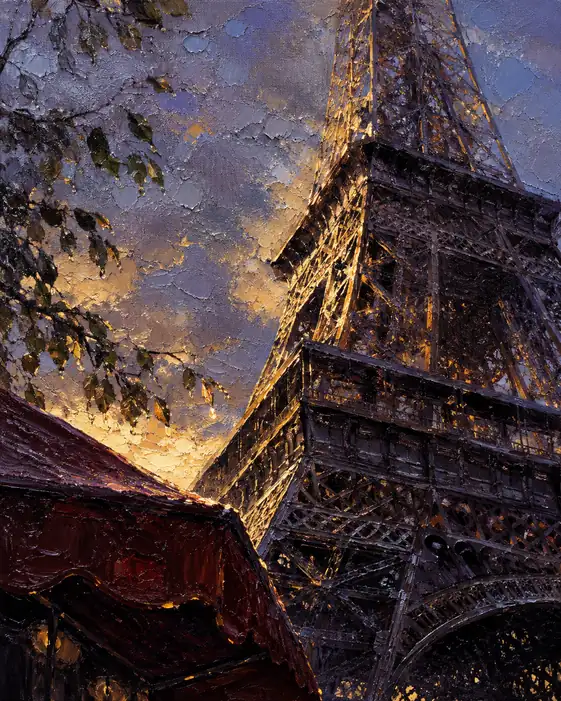 Iron Majesty in the Golden Twilight
 Golden Legacy of the Hilltop Citadel
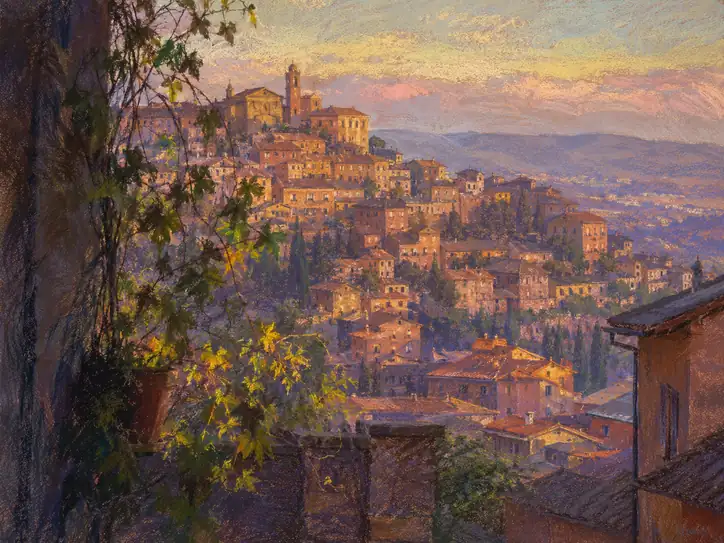 Resonance of the Golden Hillside
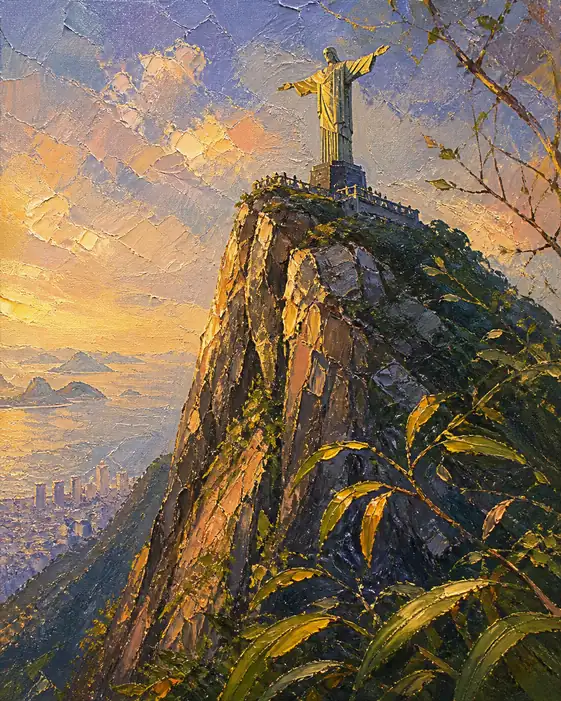 The Gilded Embrace of Corcovado
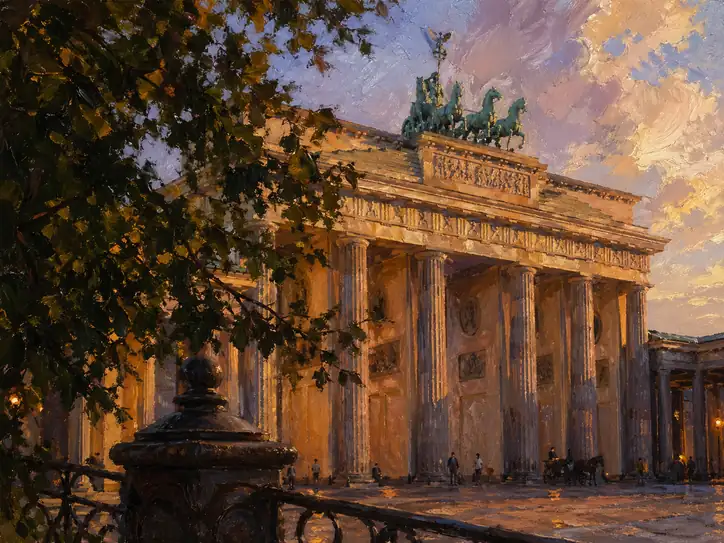 The Majestic Brandenburg Gate Bathed in a Golden Sunset Glow