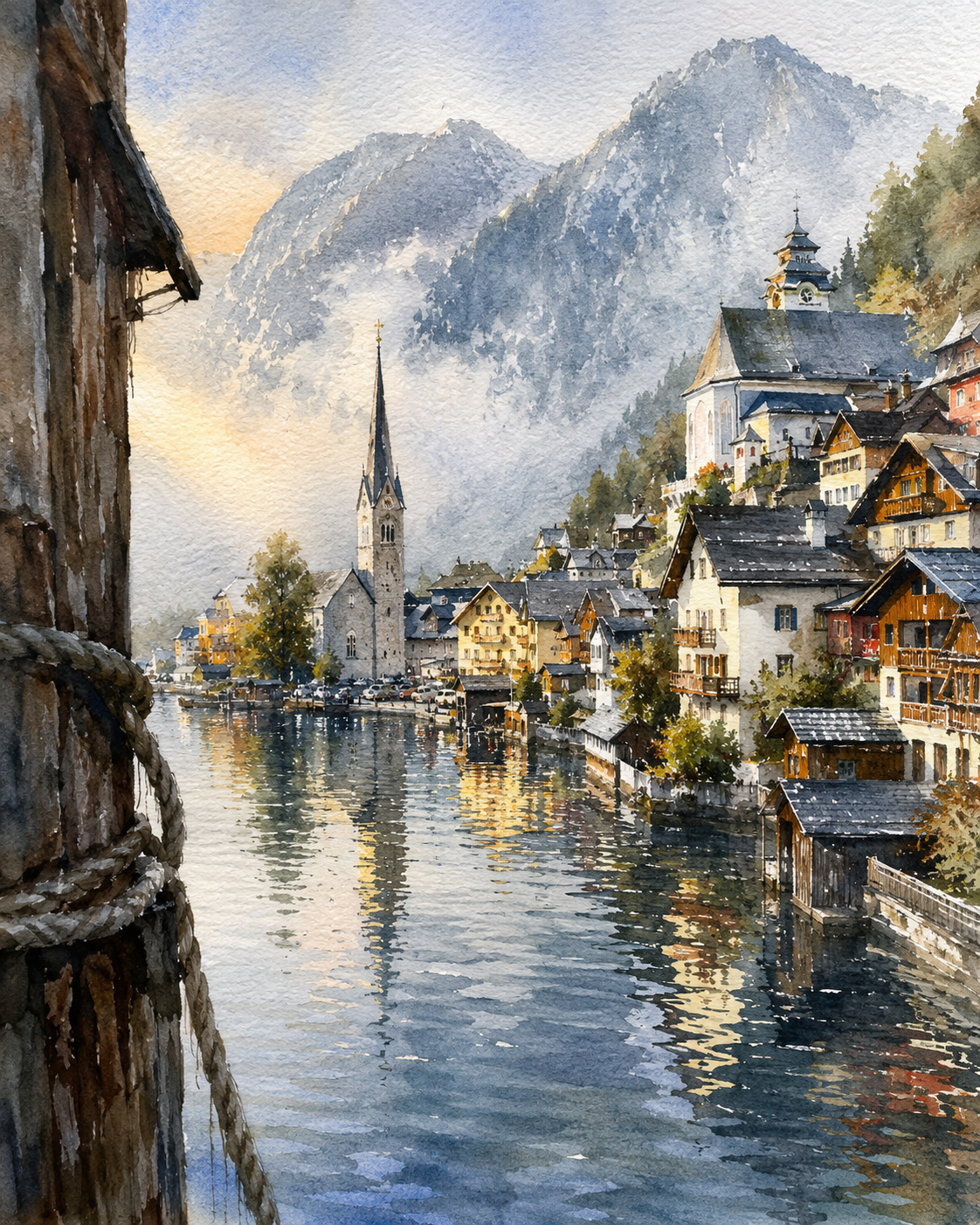
Serenity in the Shadows of Giants
Critique
1. Introduction This watercolor painting presents a breathtaking view of a lakeside alpine village, nestled at the foot of towering, mist-shrouded mountains. The scene captures the serene beauty of a mountainous region, where traditional architecture harmoniously coexists with the dramatic natural landscape. The composition invites the viewer to explore the intricate relationship between human settlement and the imposing environment. 2. Description In the foreground on the left, a textured wooden post wrapped in thick, weathered ropes anchors the scene. Beyond this structural element, the calm, deep blue waters of the lake reflect the surrounding scenery with remarkable clarity. The middle ground features a cluster of multi-story houses with pitched roofs and warm-toned facades, climbing the steep hillside. A prominent church with a tall, slender spire stands close to the water's edge, drawing the eye. In the background, majestic mountains rise steeply, their peaks partially obscured by atmospheric mist and bathed in the soft, golden light of the sky. 3. Analysis The artist effectively utilizes a repoussoir technique with the foreground wooden post to create a strong sense of depth and scale. The atmospheric perspective is masterfully handled, transitioning from the crisp, detailed architectural elements in the village to the softer, less defined forms of the distant mountains. The color palette balances cool blues in the water and misty peaks with warm yellows, ochres, and browns in the buildings, creating a visually pleasing contrast. The fluid, transparent nature of watercolor is used to depict the reflective surface of the water and the hazy atmosphere. 4. Interpretation and Evaluation The painting evokes a profound sense of tranquility and timelessness, celebrating the enduring charm of traditional European lakeside settlements. The meticulous rendering of the architecture juxtaposed with the loose washes of the natural elements highlights the artist's technical versatility. This contrast emphasizes the enduring solidity of human construction against the ephemeral qualities of mist and light. The work successfully captures not just the physical appearance of the location, but also its serene atmosphere. 5. Conclusion Initially appearing as a straightforward landscape, the artwork reveals itself as a carefully constructed composition that guides the viewer through varying layers of distance and detail. The watercolor technique proves highly effective in capturing both the architectural precision of the village and the atmospheric grandeur of the surrounding mountains, resulting in a captivating and deeply evocative piece.
Same Subcategory
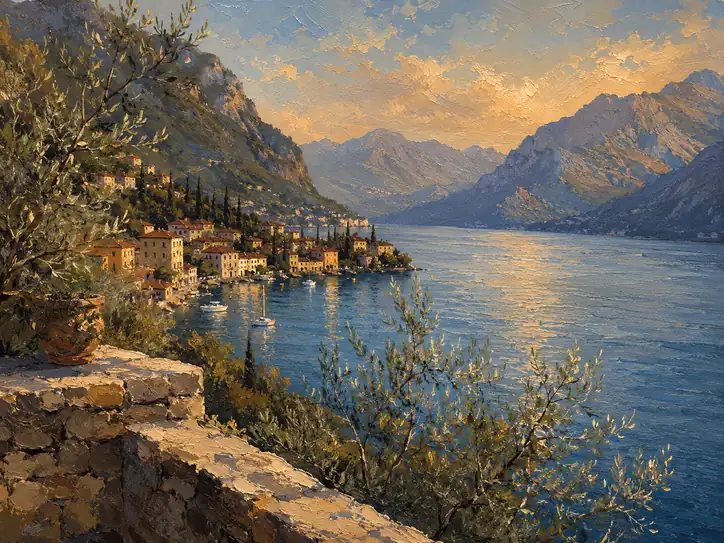 Sunset Serenade on the Quiet Shore
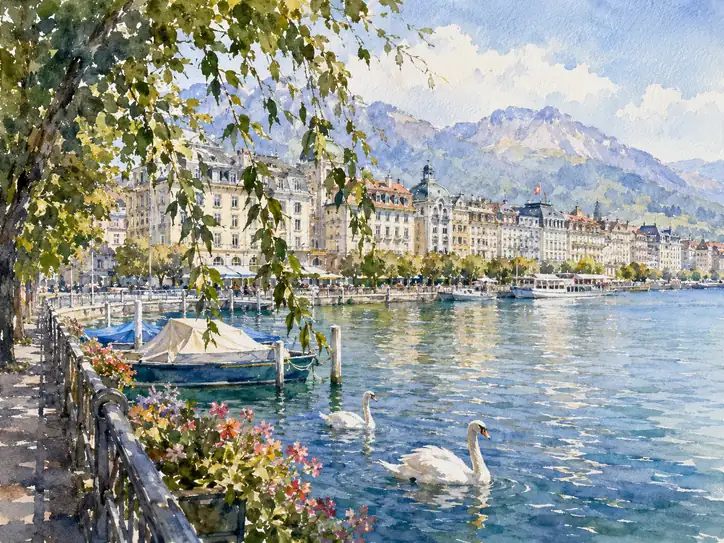 A Gentle Breeze on the Lakeside
Similar Artworks
 The Lake's Eternal Lullaby
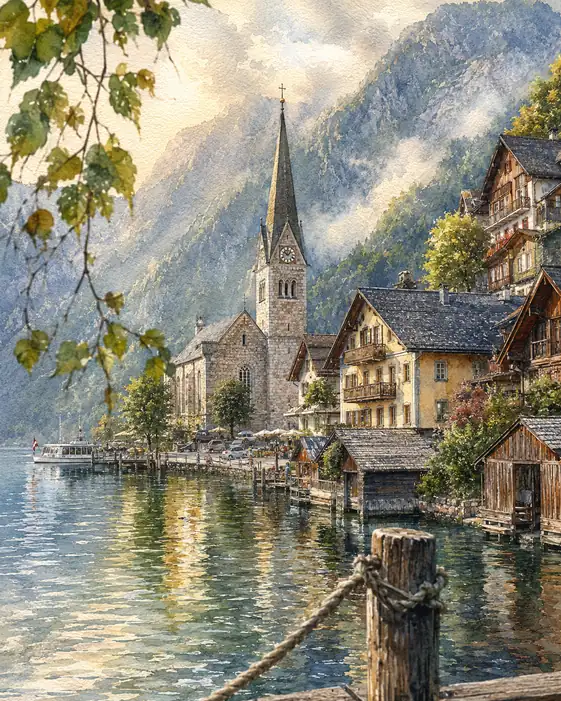 Sanctuary of the Alpine Mirror
 The Silent Vigil: An Alpine Village at Twilight
 Serenity Along the Lakeside Spire
 Serenity Reflected in the Alpine Mirror
 Morning Bloom by the Alpine Spire
 Whispers of the Sunlit Lake
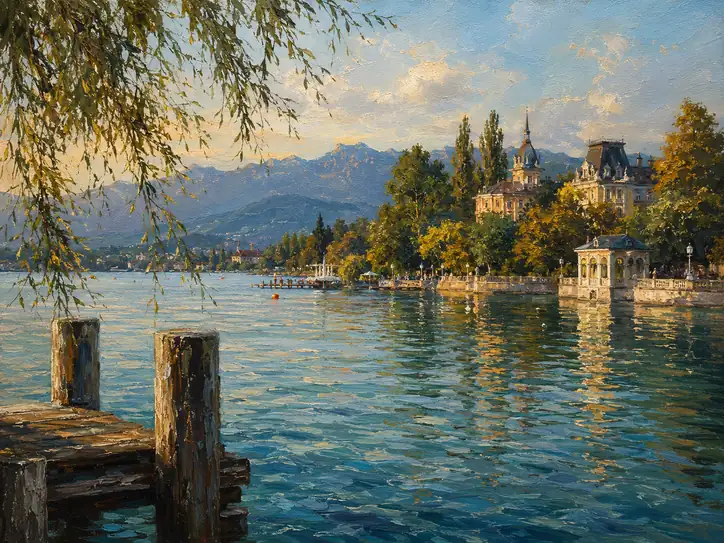 Twilight Reflections by the Lake
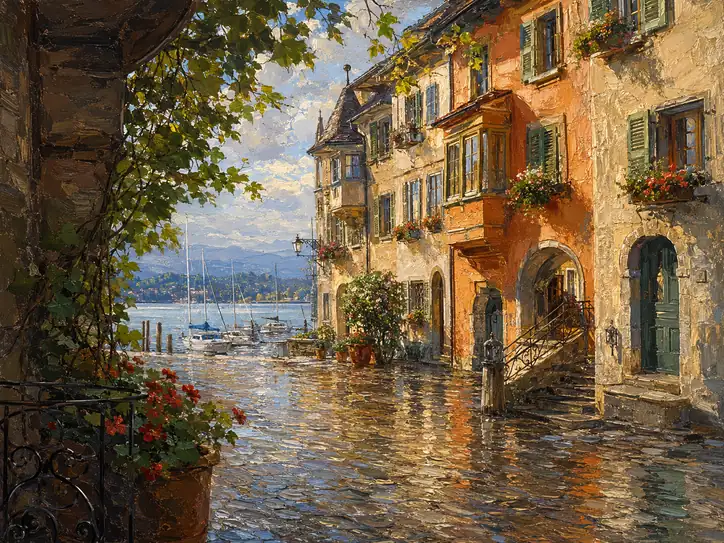 Sun-Drenched Whispers of the Azure Lake
 A Serenade of Shimmering Waters